
- Scientific Identity and Classification
- Is Chinese Wisteria Poisonous? Safety and Precautions
- Global Footprint: From China to India and Beyond
- Cultural Symbolism: The Poetry of the Vine
- The 1,300-Year-Old Wisteria of Jiangyin – A Living Relic
- Practical Value: More Than Just a Pretty Face
- Conclusion: Welcoming the "Purple Rain"
- References & Further Reading:
- More from The Plant World:
As spring reaches its crescendo, few sights in the botanical world are as breathtaking as the Chinese Wisteria. With its cascading amethyst falls and woody, twisting vines, it has transformed from an ancient Chinese symbol of longevity into one of the most beloved ornamental plants in gardens from London to New Delhi and New York.
This guide explores the scientific identity, global distribution, safety concerns, and the 2,000-year history of this magnificent climber.
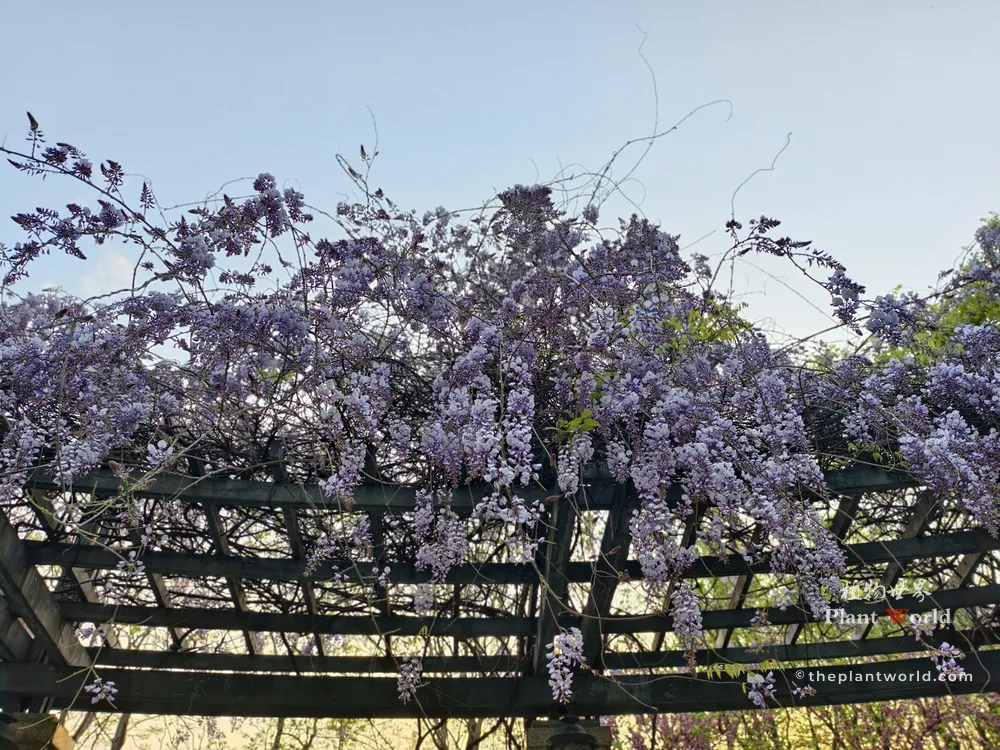
Wisteria in Full Bloom on Trellis. Photo by the author, taken in Jiangsu, China.
Scientific Identity and Classification
- Scientific Name: Wisteria sinensis (Sims) Sweet
- Family: Leguminosae (Pea Family)
- Genus: Wisteria
- Origin: Central and Southern China
The specific epithet sinensis literally means “from China.” While it is often compared to its Japanese cousin, the Chinese Wisteria is distinct for its ability to bloom all at once before its leaves emerge, creating a solid “curtain” of purple.
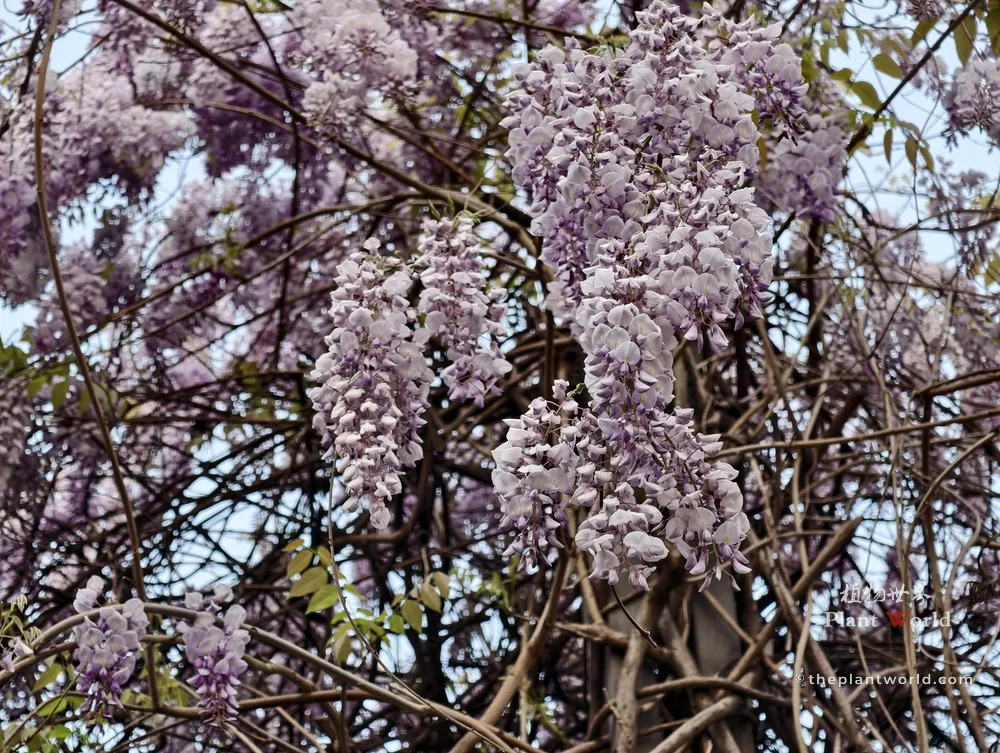
Breathtaking cascading wisteria blooms. Photo by the author, taken in Jiangsu, China.
Chinese Wisteria vs. Japanese Wisteria: How to Tell the Difference
For gardeners and hikers, distinguishing between the two is a common challenge:
- Twining Direction: Chinese Wisteria (W. sinensis) twines counter-clockwise (left to right), whereas Japanese Wisteria (W. floribunda) twines clockwise.
- Blooming Habit: Chinese varieties bloom simultaneously on the vine, offering a massive burst of color. Japanese varieties bloom sequentially from the base of the cluster to the tip.
- Fragrance: Chinese Wisteria is renowned for its heavy, sweet, musky scent, often stronger than the Japanese species.
Is Chinese Wisteria Poisonous? Safety and Precautions
A frequent question for pet owners and parents is: Is Chinese Wisteria poisonous?
Yes, the entire plant is toxic if ingested.
- The Culprit: The plant contains Wisterin (a glycoside) and a toxic resin.
- The Danger Zones: The seeds and pods are the most concentrated sources of toxins. Ingesting just a few seeds can cause severe gastroenteritis, vomiting, abdominal pain, and diarrhea in humans, dogs, and cats.
- Cultural Nuance: Interestingly, in China, the flowers are sometimes prepared as a delicacy (such as “Teng Luo” cakes), but this requires rigorous professional processing and cooking to neutralize certain compounds. Do not attempt to eat any part of the plant without expert guidance.
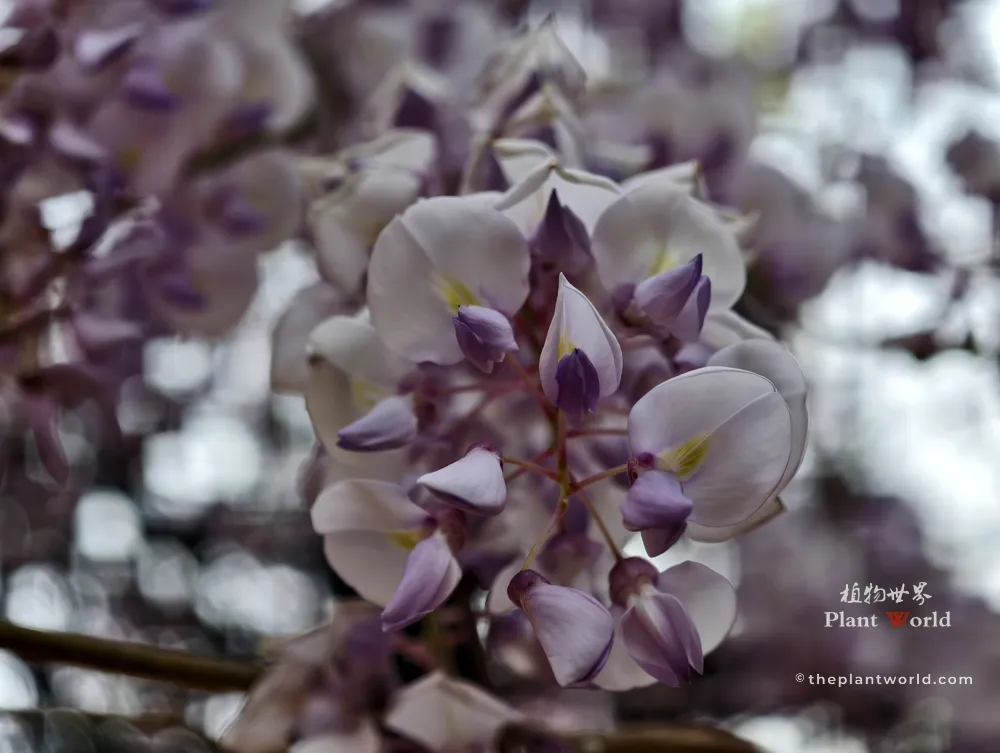
Exquisite Detail of Wisteria Petals. Photo by the author, taken in Jiangsu, China.
Global Footprint: From China to India and Beyond
Chinese Wisteria in India
Can you grow Chinese Wisteria in India? The answer is yes, but with regional caveats. Wisteria requires a “chilling period” in winter to set flowers.
- The Himalayas: It thrives in hill stations like Shimla, Mussoorie, and Darjeeling, where the climate mimics its native Chinese mountain habitat.
- The Plains: In hotter cities like Delhi or Mumbai, the plant may grow vigorously as a green vine but often struggles to produce the iconic purple flowers due to the lack of winter cold.
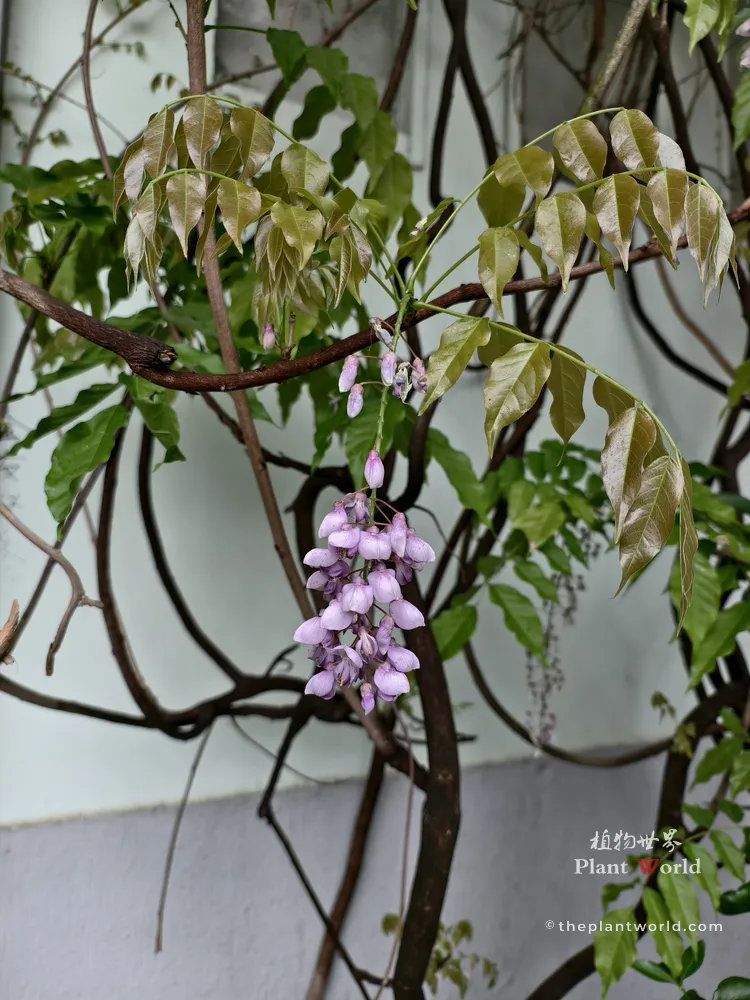
Early Spring Wisteria: New Leaves and First Blooms.Photo by the author, taken in Jiangsu, China.
Growing Zones and Climate
Quick Growing Guide
🌡️USDA Hardiness Zones: Chinese Wisteria is best suited for Zones 5 through 8.
❄️Resilience: It is famously tough, capable of withstanding temperatures as low as -20°C (-4°F), though late spring frosts can sometimes nip the emerging flower buds.
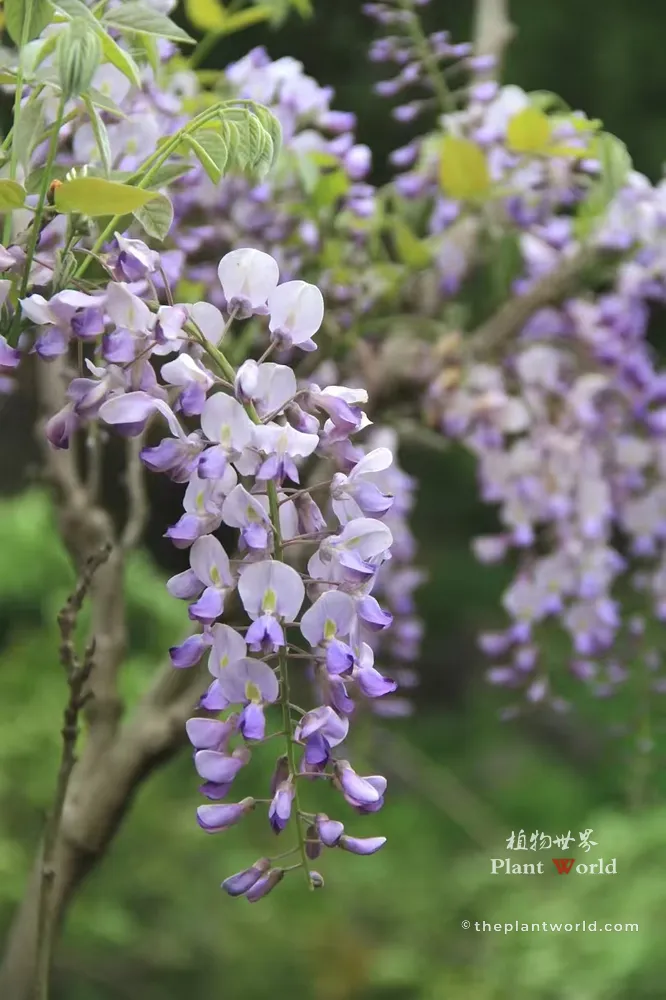
Detailed Bloom of Chinese Wisteria
Growth Habits and Varieties
Chinese Wisteria is a “vigorous” grower—a polite way of saying it is incredibly powerful. Its woody stems can reach up to 25 meters (80 feet) in length and are strong enough to crush wooden lattices or strangle gutters.
Popular Varieties:
‘Blue Sapphire’
Features deep blue-violet flowers and an exceptional scent.
‘Alba’
Stunning white-flowering cultivar with a heavy fragrance.
‘Prolific’
Known for blooming at a younger age than the wild species.
Cultural Symbolism: The Poetry of the Vine
In China, the Wisteria is more than a plant; it is a “Purple Cloud” from the heavens. Its symbolism has remained consistent for millennia:
1. Love and “Life-and-Death” Bond
Because the vine clings so tightly to its support, it is the ultimate Chinese symbol of unwavering love and interdependence. Ancient legends tell of lovers who jumped from cliffs to escape arranged marriages, only to turn into a tree and a wisteria vine, forever entwined.
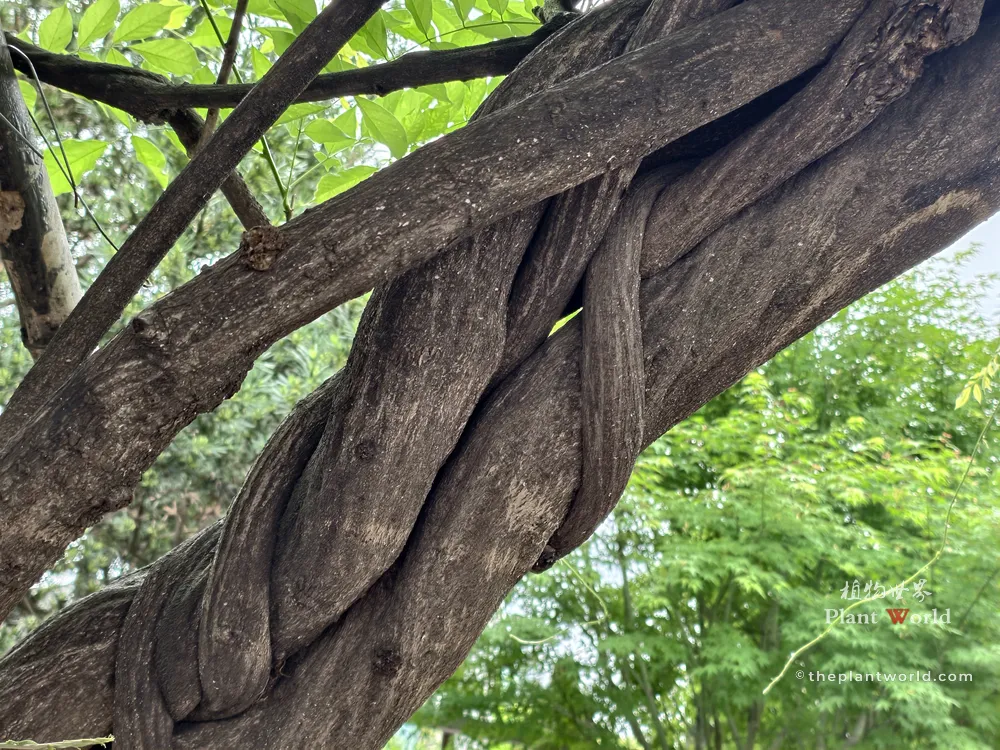
The spiraling trunk of the wisteria represents a love that never wavers.
2. The Scholar’s Muse
During the Tang Dynasty (618–907 CE), Wisteria became a staple of the literati garden. The legendary poet Li Bai famously wrote:
“Wisteria hangs from the cloud-high tree, its flowering shoots fit for the bright spring… its fragrance wafts to the beautiful lady.”

Teng Luo Tu (Wisteria Painting), Fan Painting by Liao Yunjin, Qing Dynasty.

Fragrant Woods and Purple Snow (Xiang Lin Zi Xue), Wisteria Fan Painting, Qing Dynasty. Artist: Yun Shouping
3. Longevity and Nobility
The color purple was historically reserved for the high nobility in China. A thousand-year-old Wisteria vine, with its gnarled, dragon-like trunk, represents immortality and the endurance of a family lineage.
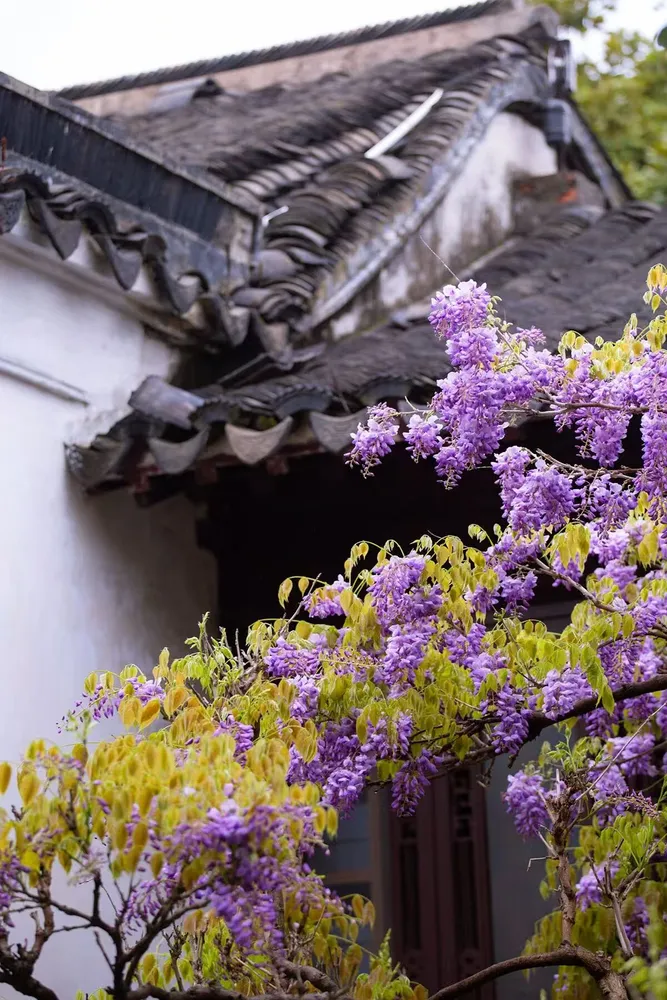
Wisteria Sinensis and Ancient Chinese Architecture
The 1,300-Year-Old Wisteria of Jiangyin – A Living Relic
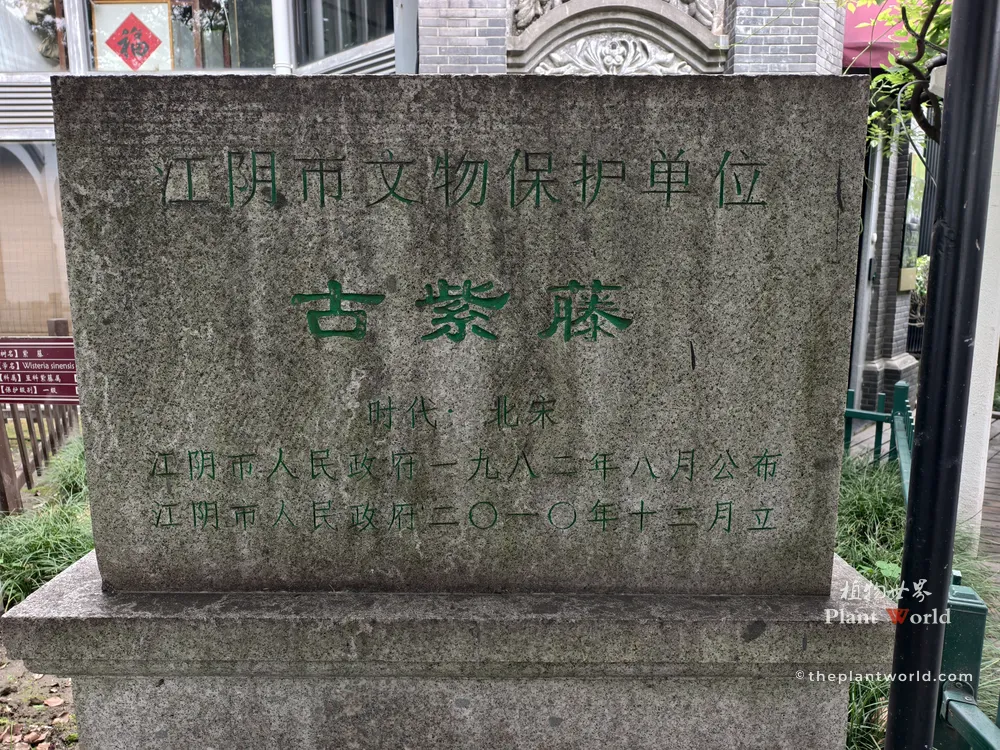
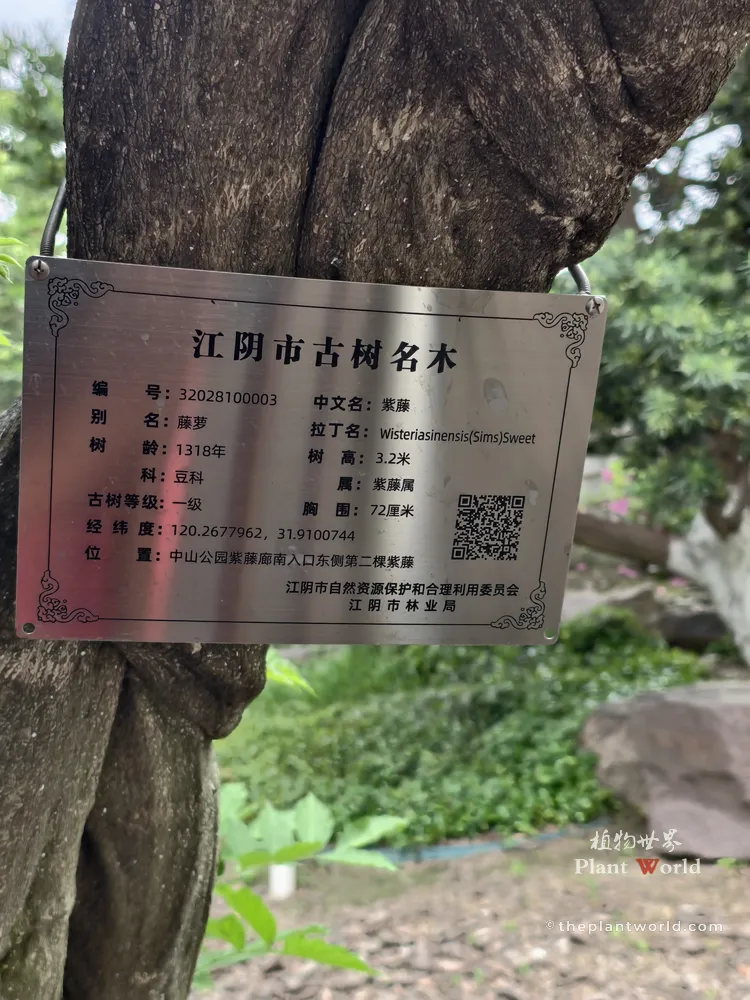
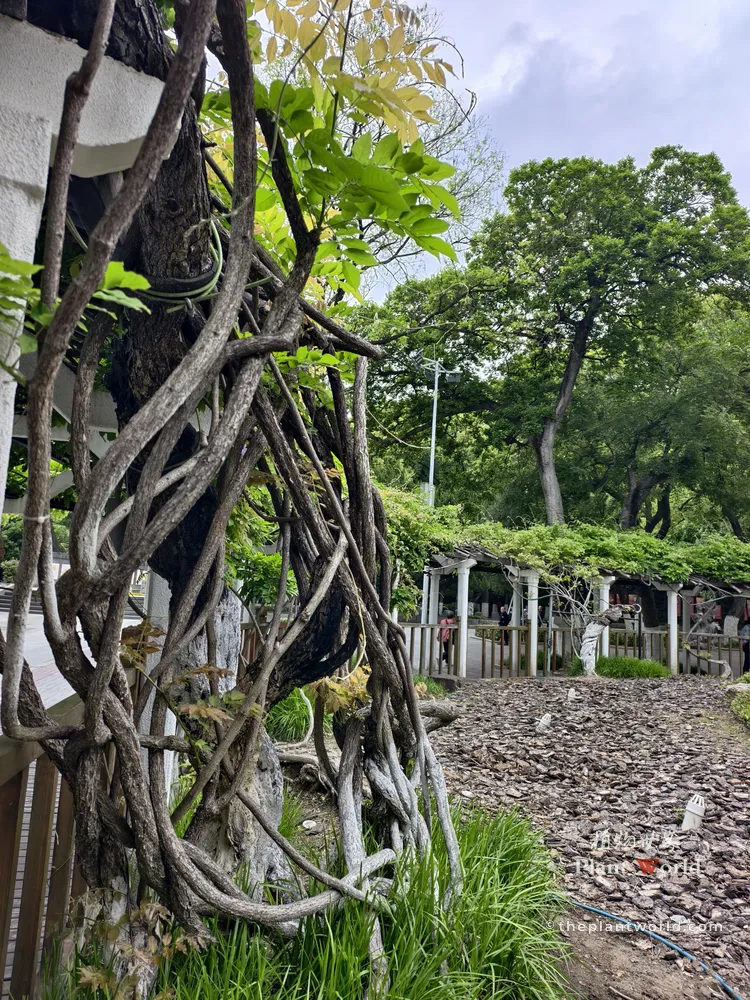
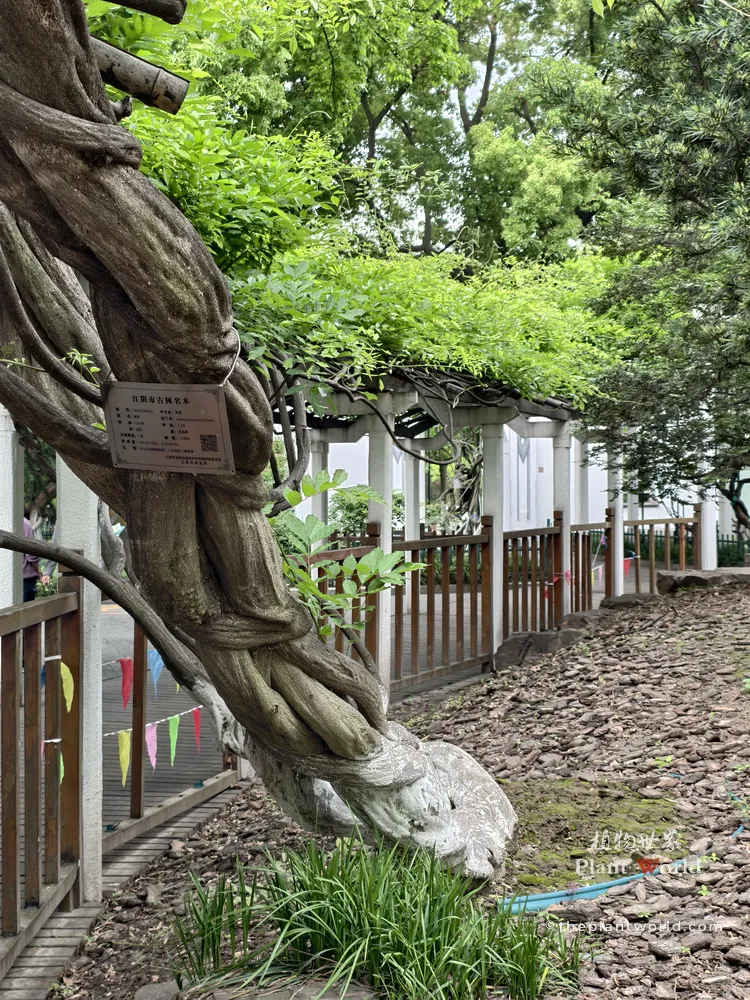
One of the oldest and most revered living specimens of Wisteria sinensis stands in Zhongshan Park, Jiangyin, Jiangsu Province. Planted during the Northern Song Dynasty, this ancient Chinese wisteria is over 1,300 years old—dated to approximately 700–800 CE—making it one of the oldest documented wisteria plants in China. Local records indicate it was part of the imperial garden “Wan Chun Yuan” and is now protected as a national first-grade cultural relic tree.
With gnarled, dragon-like trunks and sprawling branches, the Jiangyin wisteria has survived dynasties, storms, and wars, blooming vigorously every April with long, drooping racemes of pale purple flowers that fill the air with a rich, sweet fragrance. It is often called “Shou Teng” (Longevity Vine) by locals and is celebrated each spring as a symbol of resilience, longevity, and the enduring beauty of Chinese classical gardens.
Practical Value: More Than Just a Pretty Face
Beyond its beauty, Wisteria sinensis offers functional benefits:
🛡️Ecological Shield:It is highly resistant to air pollution (sulfur dioxide) and is excellent for “green lung” projects in urban areas.
🌿Traditional Medicine: In Chinese herbology, the roots and stalks are used to treat joint pain and edema, though this is strictly regulated due to the plant’s natural toxicity.
🧵Craftsmanship: The tough, flexible fibers of the bark were historically used to make ropes and paper in rural China.
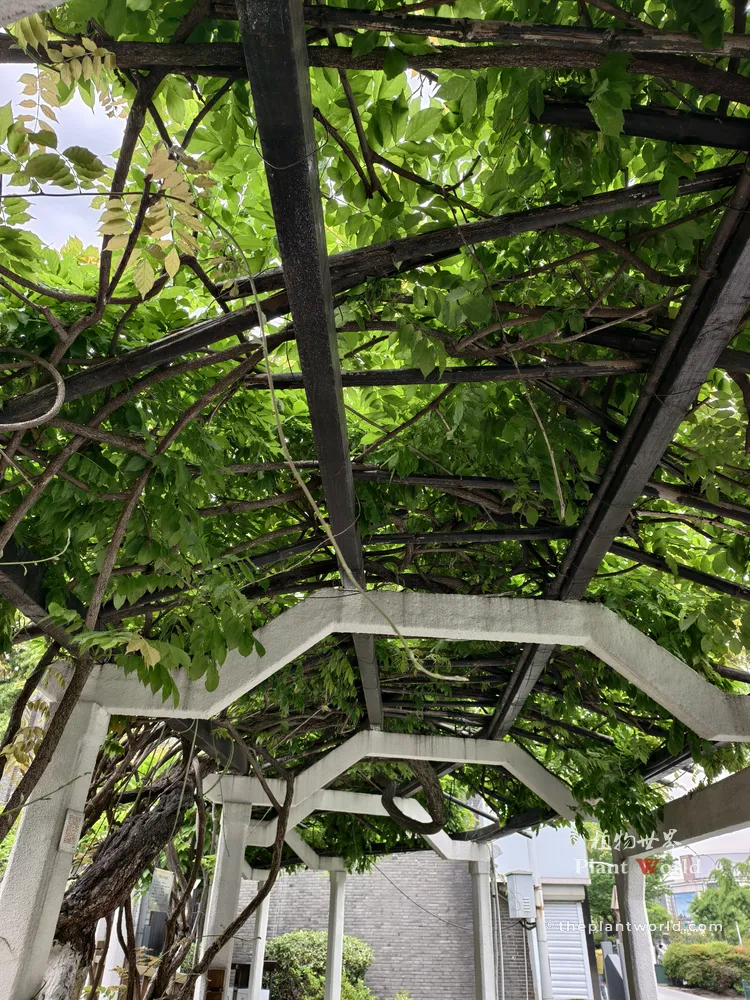
Wisteria Shading Canopy and Vine Structure.Photo by the author, taken in Jiangsu, China.
Conclusion: Welcoming the “Purple Rain”
The Chinese Wisteria is a bridge between the wild mountains of the East and the refined gardens of the West. Whether you are admiring a 500-year-old vine in a Suzhou garden, standing in awe before the 1,300-year-old Jiangyin wisteria, or planting a sapling in a backyard in Virginia, you are participating in a 2,000-year-old tradition of beauty and resilience.
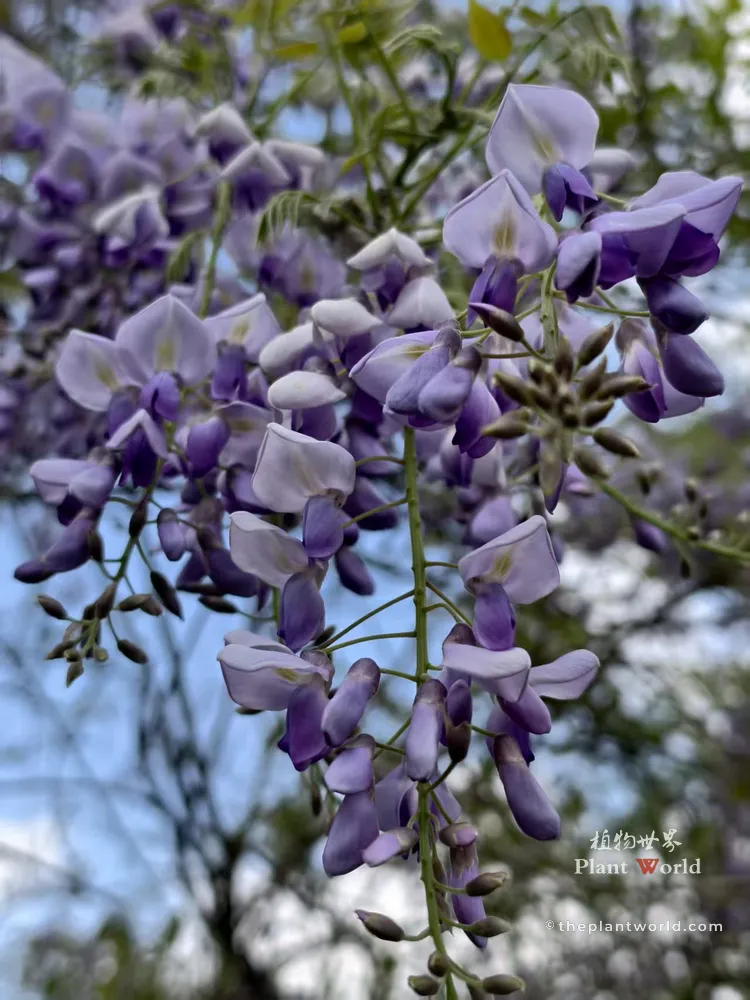
Wisteria Blossoms.Photo by the author, taken in Jiangsu, China.
Pro-Tip for Gardeners: To keep your Chinese Wisteria in check, prune twice a year—once in late winter and once after flowering. This ensures the plant directs its energy into those magnificent “purple rain” clusters rather than just green leaves.
References & Further Reading:
- Learn more about the Wisteria sinensis (Wikipedia).
- View “Xiang Lin Zi Xue (Fragrant Woods and Purple Snow)” in the Palace Museum’s digital collection.
- Explore Teng Luo Tu (Wisteria Painting) by Liao Yunjin in the Palace Museum’s digital collection.
More from The Plant World:
- Chinese Wingnut: The Romantic “Ingot Tree” and Its Cultural Charm
- Plum Blossom Meaning: Symbolism & Cultural Significance
- Peach Blossoms in China: History, Culture, and Symbolism
- Chinese Crepe Myrtle: Guide to Origins & Symbolism
- Ginkgo Leaf Meaning: 5 Secrets of This Ancient Fossil
- Chinese Loquat Tree: Guide to Benefits & History
- Rose of Sharon Tree: Guide to Meaning & Care
- Hosta Plant Benefits: 5 Surprising Uses & Planting Guide
- Strawberry Begonia Care: How to Grow Saxifraga Stolonifera
- Chinese Tulip Tree Care: Liriodendron chinense & Folklore
Discover more from The Plant World
Subscribe to get the latest posts sent to your email.