
A Flowering Tree That Stitches Together Botany, Myth, and History
Among the many ornamental trees admired around the world, few weave together science, culture, and poetry as exquisitely as the crepe myrtle (Lagerstroemia indica), a beloved staple within Chinese plant culture and stories.
Belonging to the Lythraceae family and Lagerstroemia genus, it is a deciduous flowering shrub or small tree. Native to China and now beloved across East Asia, Southeast Asia, Australia, and the American South, this summer-blooming tree offers not only clusters of ruffled flowers but also a richly layered cultural legacy.
To understand why this flowering specimen is so treasured, we must look beyond its long blooming season. Hidden within its bark, blossoms, folklore, and even its name are centuries of aesthetic ideals and celestial symbolism that span from ancient astronomy to imperial ritual.
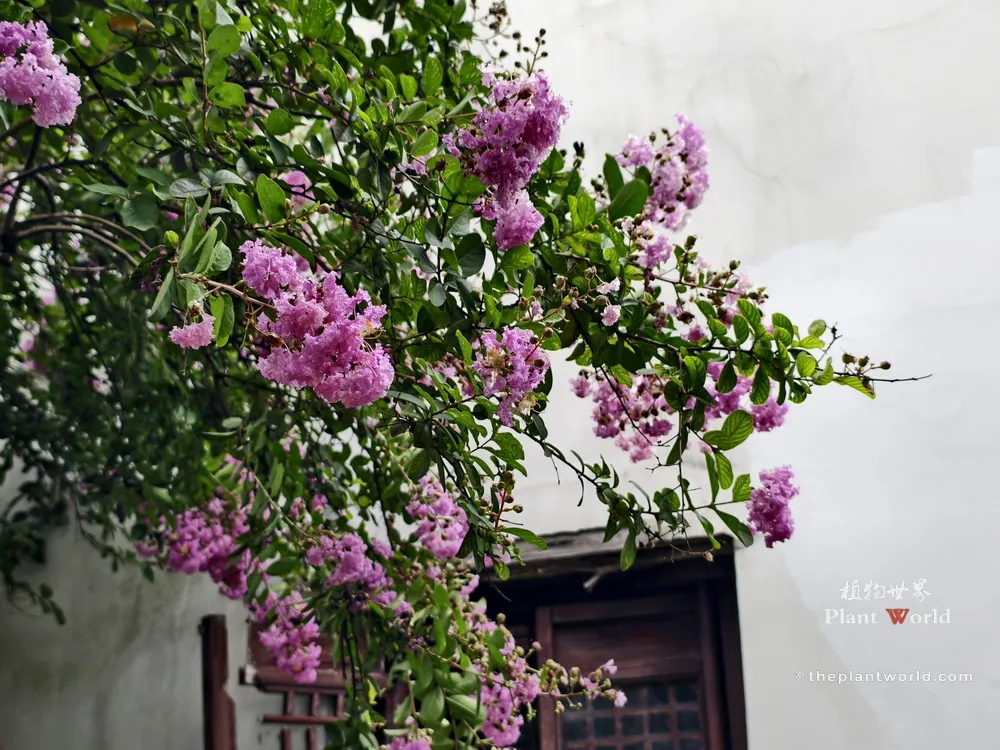
Ancient Crepe Myrtle in a Suzhou Classical Garden
- A Flowering Tree That Stitches Together Botany, Myth, and History
- Scientific Identity: What Makes Lagerstroemia indica Unique
- Why Crepe Myrtles Bloom for Up to 100 Days
- Cultural Symbolism: From Ziwei Star to Imperial Gardens
- A Floral Bridge Between Worlds
- FAQ
- Conclusion
- References
- More from The Plant World:
Scientific Identity: What Makes Lagerstroemia indica Unique
A Relict of Ancient Flora
Modern genetics suggests that Lagerstroemia indica is a relic species from ancient China—part of a plant lineage that survived geological upheavals and climatic shifts. It is native to southern China but has been planted for over 2,000 years across Jiangsu, Zhejiang, Sichuan, Chongqing, Yunnan, and Guizhou.
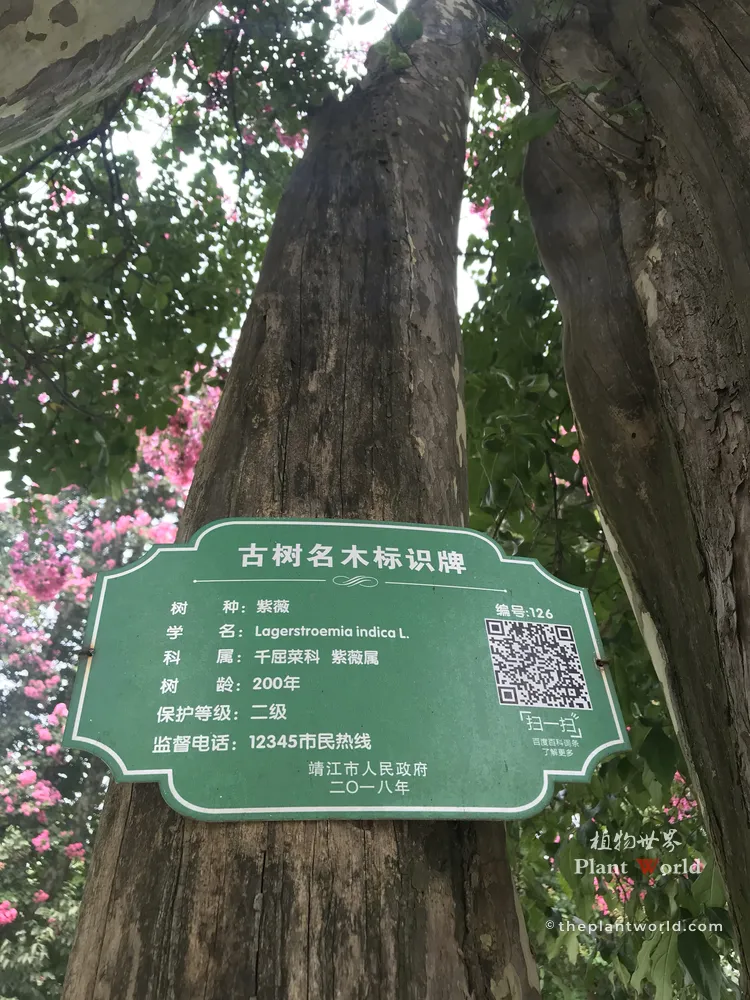
200-Year-Old Ancient Crepe Myrtle in Zhenjiang, Jiangsu (Photographed by Author)
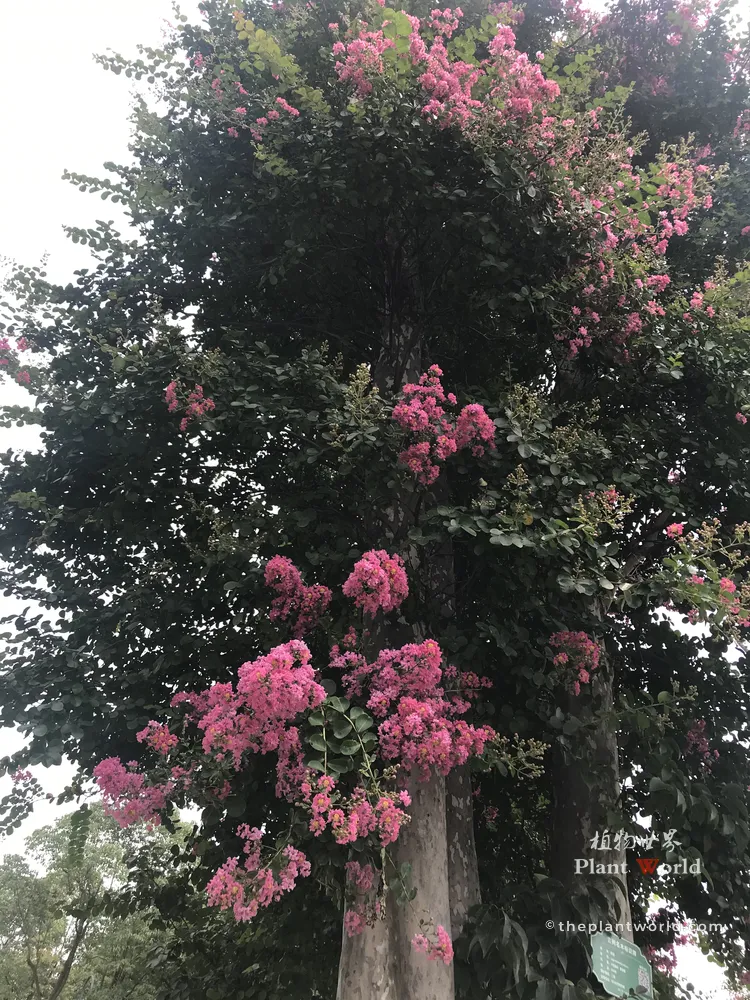
The blooming canopy of a 200-year-old ancient Crepe Myrtle. Photographed by the author in Zhenjiang, Jiangsu.
A Summer Flowering Tree Loved Worldwide
Today, crepe myrtles are widely cultivated in:
China: (Origin and cultural heart)
Japan: Known as sarusuberi (“the monkey-slipping tree”).
Korea & Australia: Thriving in temperate climates.
American South: A staple of garden and street landscaping.
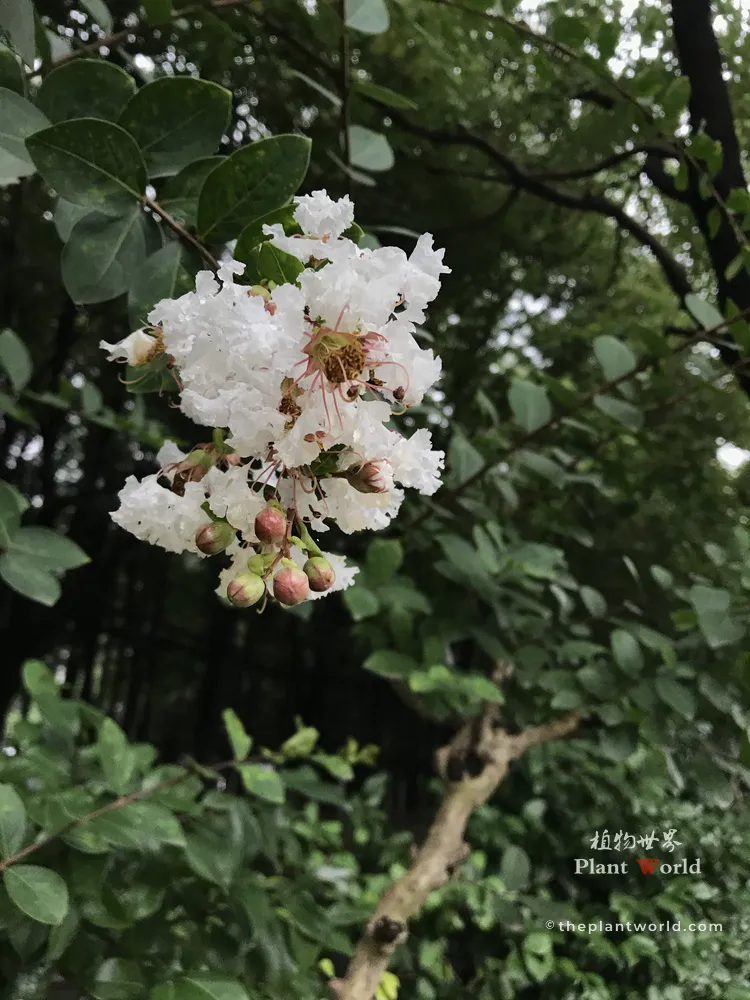
Elegant White Crepe Myrtle (Yinwei) in Bloom
Why Crepe Myrtles Bloom for Up to 100 Days
The nickname “hundred-day red” comes from Lagerstroemia indica’s exceptionally long flowering season. From June to September, it continuously produces new flower panicles as old ones fade, offering months of vibrant color when many other ornamental trees have stopped blooming.
Boasting bright and profuse blossoms, an extremely long flowering period and a long lifespan with ancient specimens living for more than 200 years, it is widely cultivated in tropical regions as a classic Chinese Garden Plant that can also be pruned and shaped into elegant bonsai material.
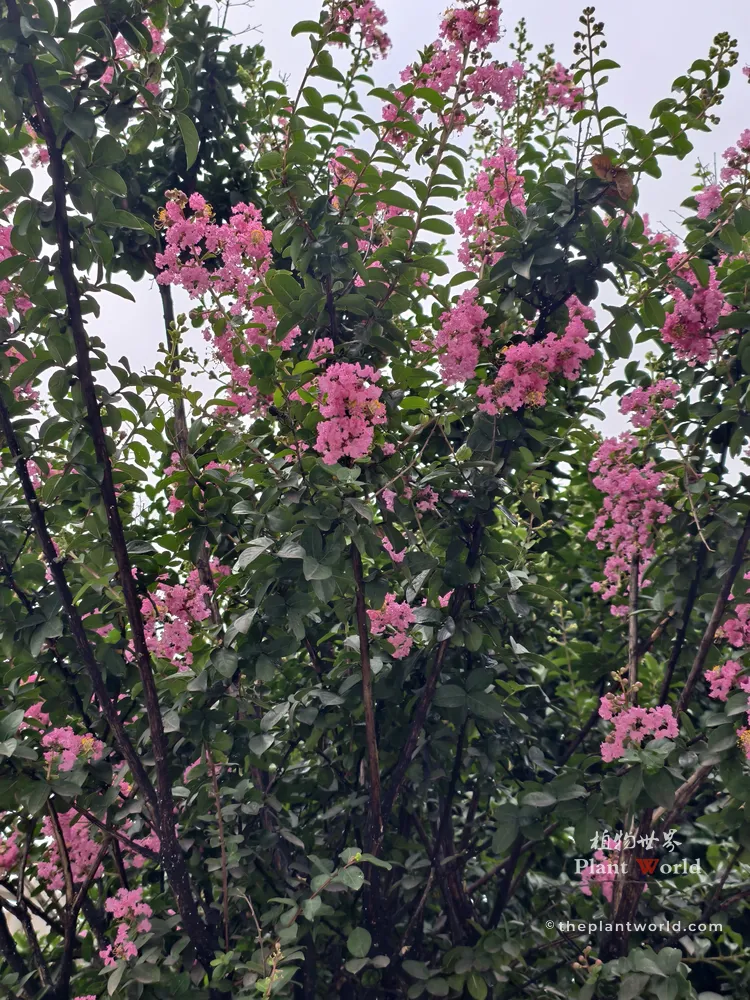
Beautiful Pink Crepe Myrtle Tree in Full Bloom
Crinkled Petals: Nature’s Tissue-Paper Art
A defining feature of the crepe myrtle is its crepe-like petals—delicate, wrinkled, and softly translucent. Their surface has microscopic wrinkles that scatter sunlight, creating a luminous, fluttering effect in the breeze. Western horticulturists compare them to “tissue paper”; Chinese poets describe them as “silk flames,” a vivid metaphor that captures their delicate yet vibrant appearance.
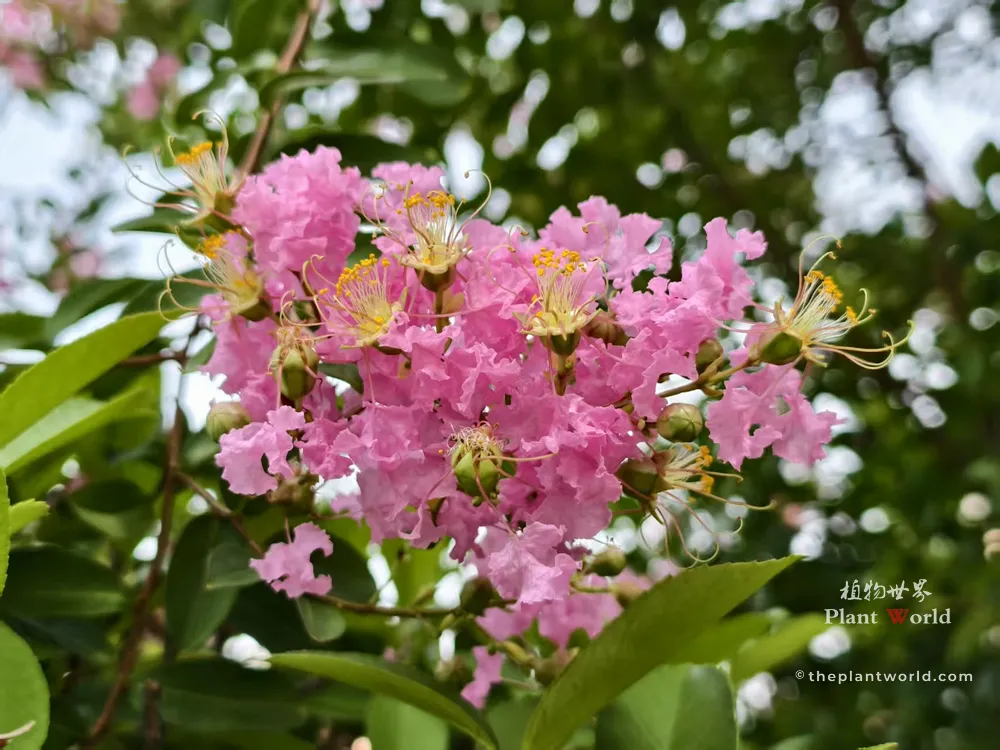
The unique ruffled petals of the Crepe Myrtle, often described as “nature’s crepe paper” for their delicate, crinkled texture.
The Science Behind the “Ticklish Tree” Phenomenon
In Chinese folklore, crepe myrtles were once believed to blush and tremble when touched—a charming exaggeration rooted in real plant mechanics.
A Botanical Explanation
The branches are slender and flexible
The wood fibers are highly elastic
The petioles respond quickly to vibration
The panicles have low mass and high sensitivity
As a result, even a slight contact or a gust of wind can set the whole cluster trembling—almost as if the tree were “ticklish.” It is a work of biological engineering: a combination of mechanical resonance, light branching, and flexible equilibrium that creates a surprisingly lively response.
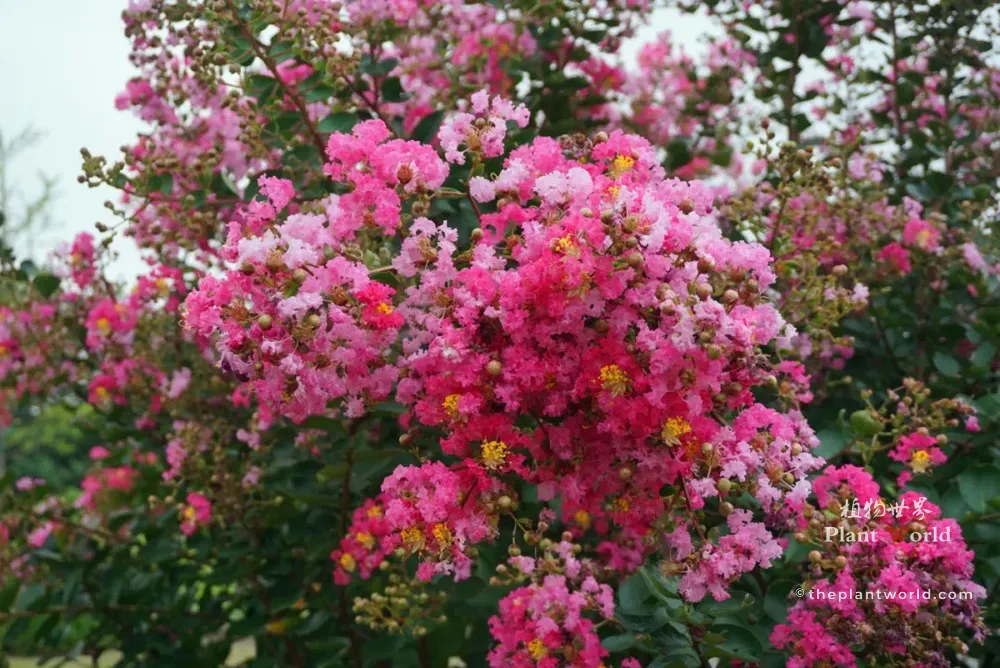
Spectacular Prolific Blooming Pink Crepe Myrtle Cluster
Why Crepe Myrtle Bark Exfoliates
One of the tree’s most elegant traits is its exfoliating bark. Each year, the outer bark peels away in patches, revealing smooth, mottled colors beneath—pale gray, russet, green, or lavender.
Functional Beauty
Peeling bark is not just for show; it serves vital biological functions:
- Pest Control: Reduces the buildup of harmful insects and fungi.
- Gas Exchange: Improves the tree’s ability to “breathe” through the trunk.
- Self-Renewal: Sheds damaged outer layers to maintain health.
- Thermal Regulation: Helps regulate the tree’s internal temperature.
Gardeners prize this exfoliating bark for its sculptural, marble-like patterns—particularly in winter when the tree stands bare and architectural.
A Spectrum of Colors: The Anthocyanin Story
Although the best-known crepe myrtle colors are pink, purple, and red, horticultural selections now include:
| Horticultural Selections | The Science of Color |
| Includes vibrant White, Lavender, Crimson, and Magenta, along with modern near-black foliage cultivars. | Driven by three primary anthocyanins: Cyanidin, Delphinidin, and Pelargonidin. |
Scientific Basis
Pigmentation is driven by three main anthocyanins:
- Cyanidin
- Delphinidin
- Pelargonidin
Variations in cell pH and co-pigmentation produce the full palette seen in modern cultivars.
Practical Wood & Medicinal Value
Beyond ornamental beauty, crepe myrtle also carries practical economic and medicinal value.
Its timber is dense, hard and highly rot-resistant, commonly crafted into farm tools, household furniture and construction materials.
In traditional herbal medicine, the bark, leaves and flowers act as a powerful purgative. Decoctions made from its roots and bark have long been used in folk remedies to relieve symptoms such as hemoptysis, hematemesis and bloody stool.
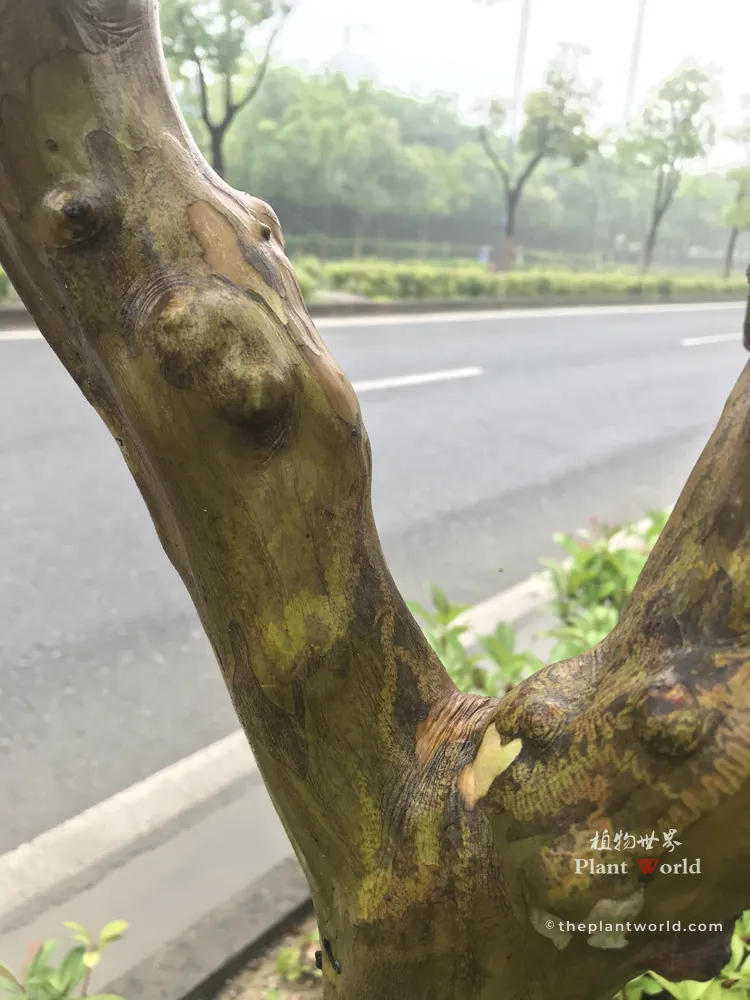
Smooth Marble-like Bark of a Mature Crepe Myrtle (Photographed in Wuxi, Jiangsu)
Cultural Symbolism: From Ziwei Star to Imperial Gardens
Few ornamental trees carry as much cultural resonance in China as the crepe myrtle.
Ziwei: The Purple Star of Destiny
The word “ziwei” (紫薇) originally referred not to the flower, but to the Ziwei Star—a celestial body associated with the emperor, auspiciousness, and cosmic order.
In traditional Chinese culture, the color purple has always been a herald of good fortune and noble omens, encapsulated in the classic saying ‘Purple air comes from the east’ (紫气东来). This celestial connection is why the Ziwei star was believed to protect rulers, and why the tree itself carries an aura of imperial elegance.
When the tree was named “ziwei,” it inherited this aura of imperial elegance.
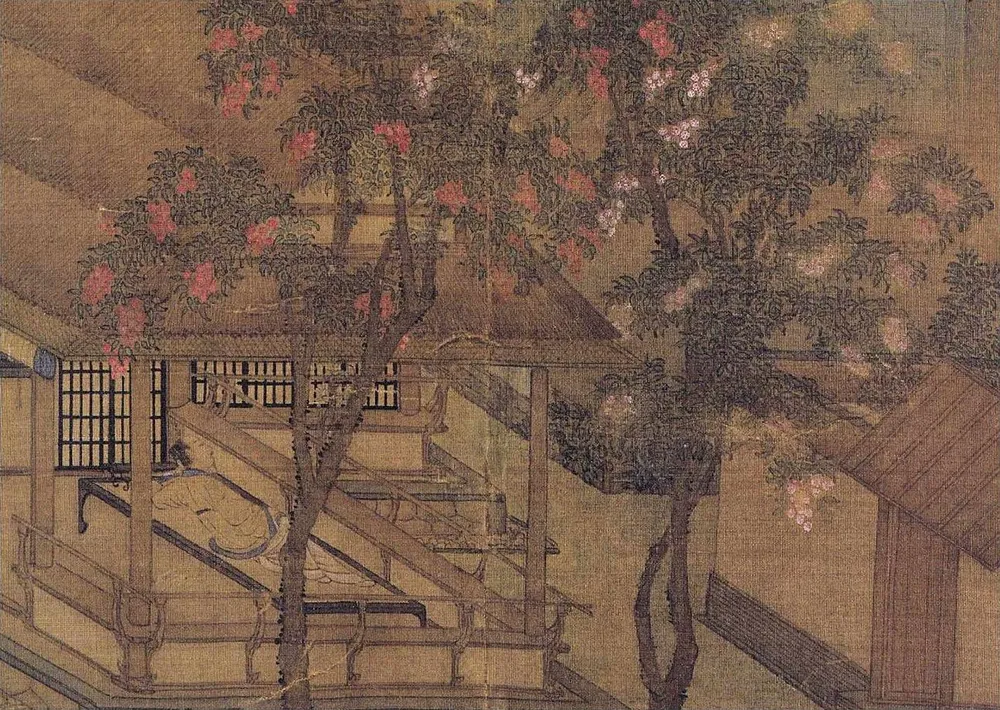
Detail of “Resting in the Myrtle Pavilion” (薇亭小憩图) by Zhao Daheng, Song Dynasty.
A Tree of Scholars, Palaces, and Poetry
From the Han and Tang dynasties onward, crepe myrtles adorned palaces, academies, and scholar gardens. Their long blooming period, graceful bark, and gentle movements embodied:
- Longevity
- Nobility
- Scholarly refinement
- Dignified resilience
Many classical poems celebrate the tree as a symbol of quiet elegance.
Ancient Crepe Myrtles and Living History
Some of China’s oldest crepe myrtles, counted among revered ancient sacred Chinese trees, still stand today—particularly in Jiangsu, Zhejiang, and Sichuan—often exceeding 500 years in age. Their twisted, polished trunks resemble flowing sculptures.
For travelers visiting Jiangsu, these ancient trees are breathtaking living relics of China’s horticultural history.
A Floral Bridge Between Worlds
Today, when a Western gardener admires the rippling petals or the smooth, marbled trunk of a crepe myrtle, they are unknowingly touching layers of history—astronomy, mythology, court culture, and centuries of aesthetic philosophy.
This tree is both a masterpiece of botanical design and a bearer of cultural memory.
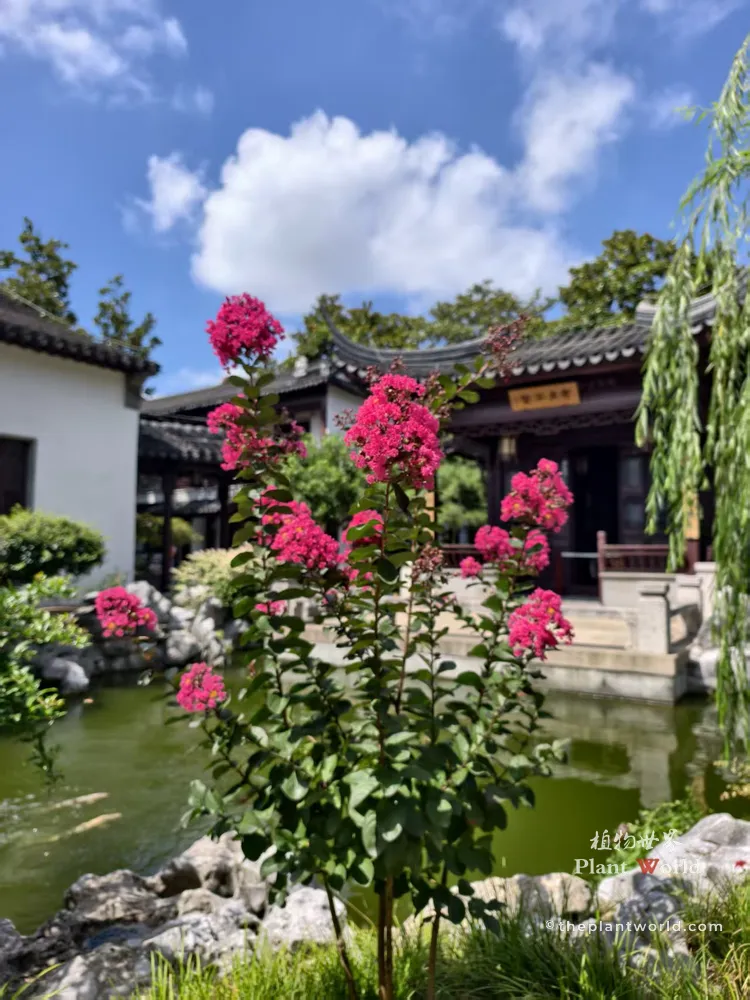
Photographed by the author in a Suzhou classical garden.
FAQ
Conclusion
To encounter a crepe myrtle in full summer bloom is to encounter more than a tree.
It is a long-lived botanical treasure with gorgeous blossoms, practical wood applications and traditional medicinal uses, shaped by ancient natural evolution and thousands of years of Chinese cultural aesthetics.
Whether planted in ancient Chinese imperial gardens, tropical landscape parks, or suburban backyards across the globe, crepe myrtle remains an enduring symbol of oriental elegance and the timeless blessing of “purple auspice rising from the east.”
References
Flora of China Editorial Committee. (2007). Flora of China (Vol. 13). Science Press; Missouri Botanical Garden Press.
Zhou, Y., Zheng, T., Cai, M., et al. (2023). Genome assembly and resequencing analyses provide new insights into the evolution, domestication and ornamental traits of crape myrtle. Horticulture Research, 10, uhad146.
Li, S. Z. (1596). Compendium of materia medica (Bencao gangmu) (X. Luo, Trans. & Annot.; 2003 ed.). Foreign Languages Press.
More from The Plant World:
- Chinese Wingnut: The Romantic “Ingot Tree” and Its Cultural Charm
- Plum Blossom Meaning: Symbolism & Cultural Significance
- The Hidden Meanings Behind Red Plum Blossoms
- Chinese Wisteria: History, Symbolism, and Identification
- Peach Blossoms in China: History, Culture, and Symbolism
- Chinese Crepe Myrtle: Guide to Origins & Symbolism
- Chinese Loquat Tree: Guide to Benefits & History
- Rose of Sharon Tree: Guide to Meaning & Care
- Hosta Plant Benefits: 5 Surprising Uses & Planting Guide
- Strawberry Begonia Care: How to Grow Saxifraga Stolonifera
- Chinese Tulip Tree Care: Liriodendron chinense & Folklore
- Golden Rain Tree Care: Koelreuteria paniculata & History
- Chinese Parasol Tree (Firmiana simplex): Care, Garden Design & Cultural Legends
- Juniperus chinensis (Chinese Juniper): Care, Bonsai Art & 1,900-Year-Old Legends
- Creeping Fig (Ficus pumila): Care, Wall Growth & Ancient Chinese Cultural Vine
- Confederate Rose: Chinese Cultural Meaning & Color Change
- Chinese Bayberry (Yangmei): Growing Tips & Cultural History
- Cattail (Typha): Care, Uses & Chinese Heritage
Discover more from The Plant World
Subscribe to get the latest posts sent to your email.