
The red plum blossom (Prunus mume), a small deciduous tree of the Rosaceae family, is native to China with a cultivation history spanning over 3,000 years. Beyond its role as a premier ornamental plant, the red plum meaning serves as a profound cultural totem, embodying the moral ideals and resilient character of the Chinese nation.
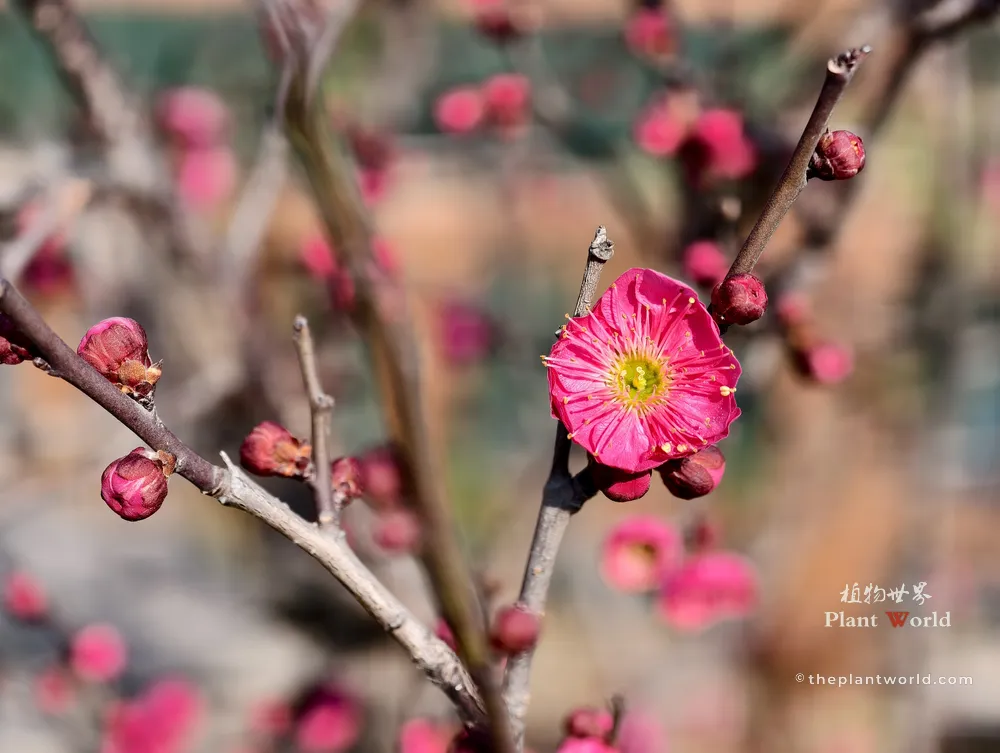
A Chinese red plum blossom, photographed in Jiangsu, China
I. Botanical Definition and Taxonomic Classification
1.1 Scientific Classification and Origins
In botanical taxonomy, the red plum blossom belongs to the genus Prunus. It originated in the high-altitude regions of southwestern China. In horticultural circles, it is the primary member of the Cinnabar Plum group, recognized for possessing the deepest and most vibrant red pigments within the red plum species.
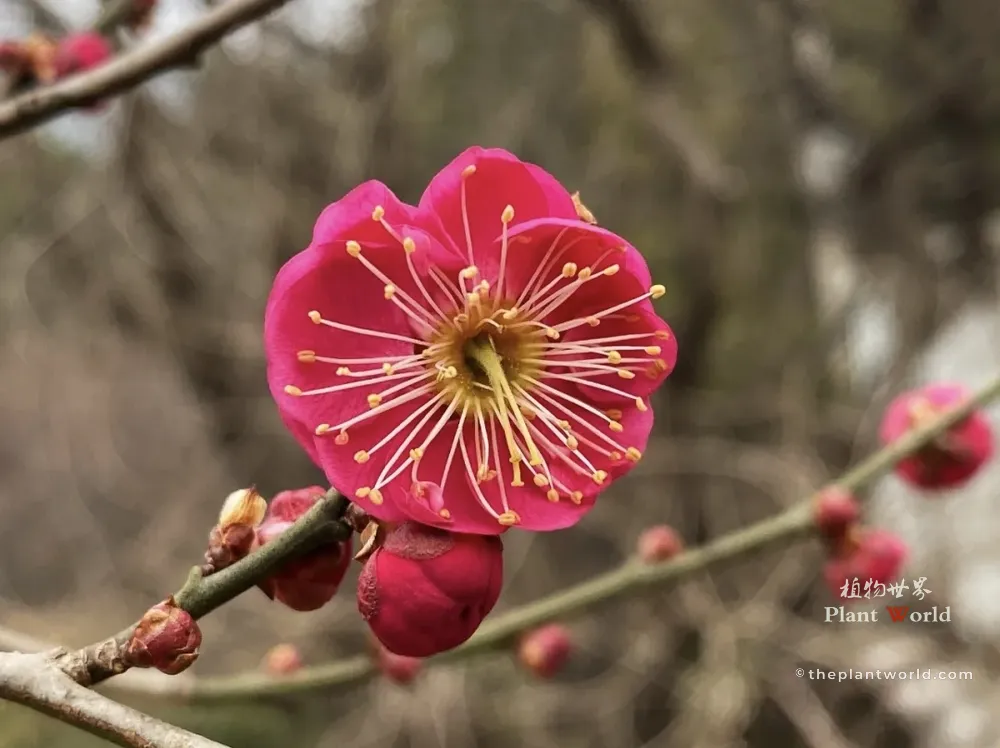
Detailed view of a vibrant red plum blossom, captured at Beijing Botanical Garden.
1.2 Defining Characteristics
While the general public often uses “red plum” loosely, true botanical red plum blossoms must meet three strict criteria:
Saturated Floral Color: Petals must exhibit deep crimson, vermilion, or rose-red hues with stable pigmentation, excluding pale pink or mottled varieties.
Red-Veined Wood (Guli Hong): This is the most critical anatomical distinction. In these varieties, the xylem (wood) exhibits a pronounced purplish-red hue due to high anthocyanin accumulation. Cross-sections reveal the characteristic “red-veined wood,” separating it from all other plum varieties.
Consistent Pigmentation: Sepals, pedicels, and young stems typically mirror the reddish-brown or purplish tones of the flowers, maintaining high aesthetic consistency.
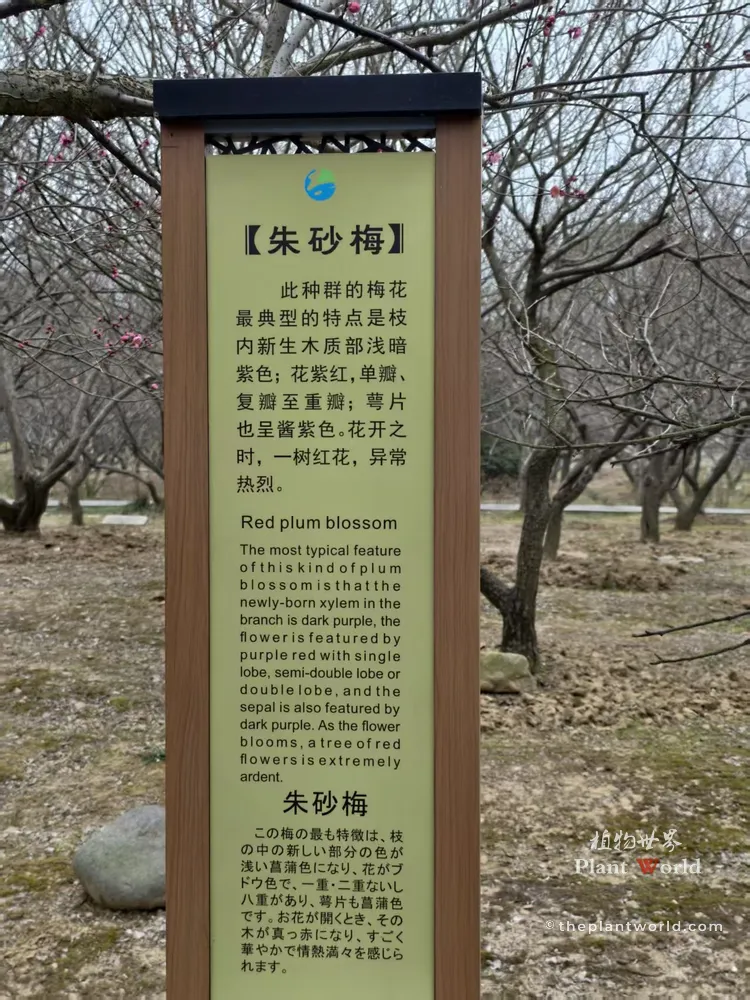
Multilingual botanical sign for red plum blossoms at Suzhou Xiangxuehai Plum Garden.
II. Morphological Traits and Iconic Varieties
2.1 Morphology and Growth Habits
The red plum blossom is a deciduous tree with “iron-like” branches. Its most striking trait is “flowering before leafing.” Between January and March, these winter red plum blossoms emerge on bare branches, releasing a rich, crisp fragrance.
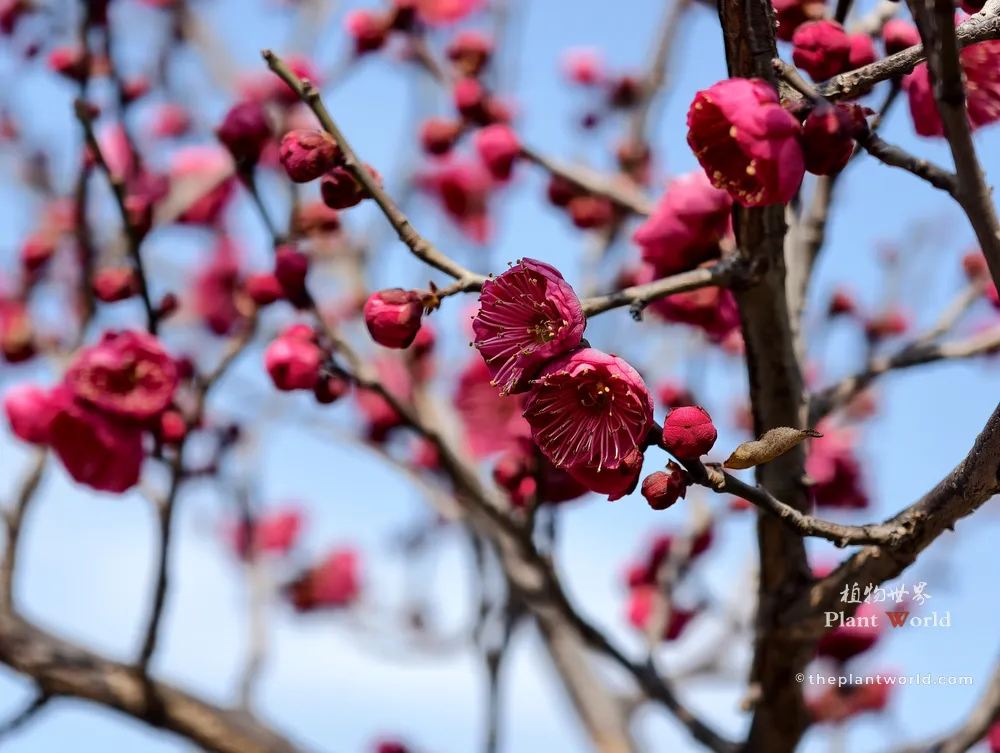
Vibrant Red Plum Flowers Blooming on Bare Branches
2.2 Representative Cultivars
The genetic lineage of all red-flowered plum varieties traces back to wild populations in Southwest China. Two iconic examples include:
Guli Hong (Bone-Red): Considered the pinnacle of the species. Its deep crimson flowers are matched by wood that runs entirely purplish-red, embodying the imagery of “iron-clad resolve and a heart of crimson.”
Hongxu Zhusha: A premier representative of the Cinnabar group, distinguished by its vermilion petals and vivid red stamens, offering exceptional ornamental value.
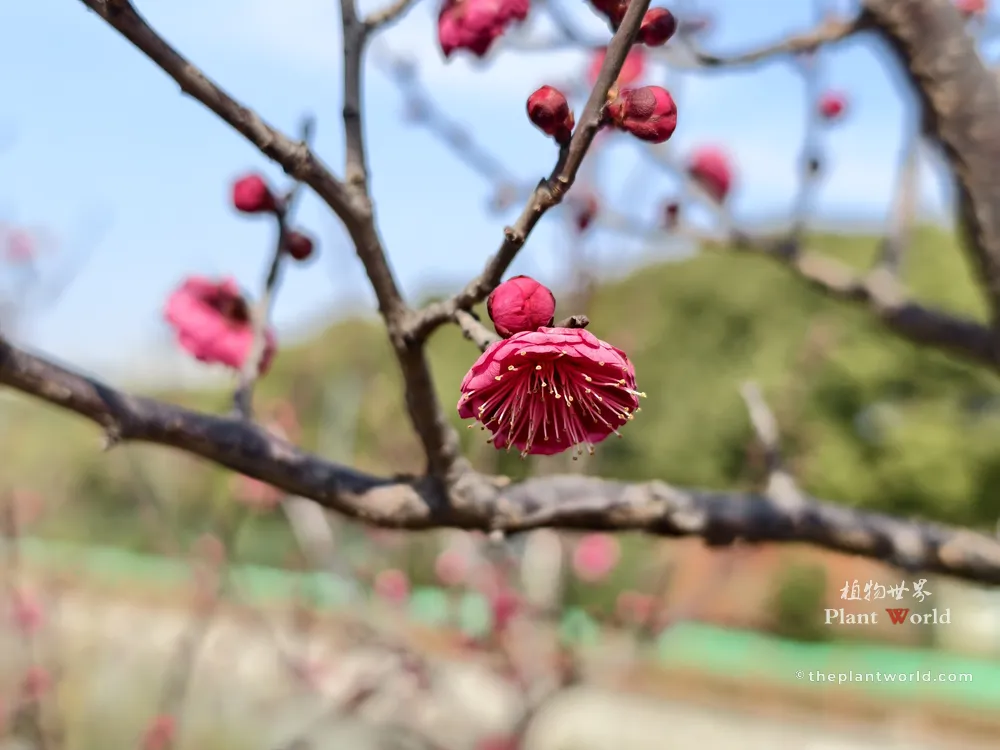
Red plum blossom and buds on bare branches, Jiangsu, China.
III. The Cultural Spirit: From Biology to Philosophy
The symbolism of the red plum is a philosophical extension of the plant’s unique biological resilience.
3.1 Resilience in Adversity
Blooming in temperatures as low as -15℃,the red plum is the “Winter Herald.” This biological hardiness has been imbued with the human virtue of perseverance—the indomitable spirit that refuses to yield or compromise under the “frost and snow” of hardship.
3.2 Integrity and the “Crimson Heart”
The anatomical trait of “red-veined wood” is poetically translated into the Chinese ethical concept of “Iron Bones and a Crimson Heart.” Its sturdy branches, as resilient as iron, symbolize incorruptible integrity; its scarlet flower centers embody unwavering sincerity and passion.
3.3 The Spirit of the Trailblazer
As the first woody plant to bloom in early spring, the plum blossom represents innovation and courage. It is a pioneer that breaks the silence of winter, a metaphor often used in modern contexts to describe entrepreneurial drive and the boldness of reformers.
3.4 Modesty and Selfless Devotion
The plum blossom announces the arrival of spring but quietly “withdraws” once the season’s other flowers begin to compete in splendor. This embodies the virtue of selfless contribution—providing hope to the world without seeking personal glory.
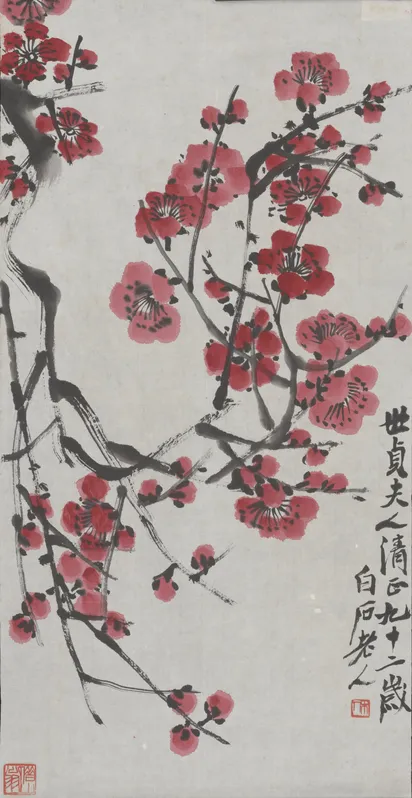
Qi Baishi’s “Red Plum Blossoms”: A Masterpiece of Traditional Chinese Floral Painting
IV. Artistic Expression and Folklore
4.1 The Five Blessings
In folklore, the five petals of the red plum blossom symbolize the “Five Blessings”: Prosperity, Health, Longevity, Virtue, and a Peaceful End.
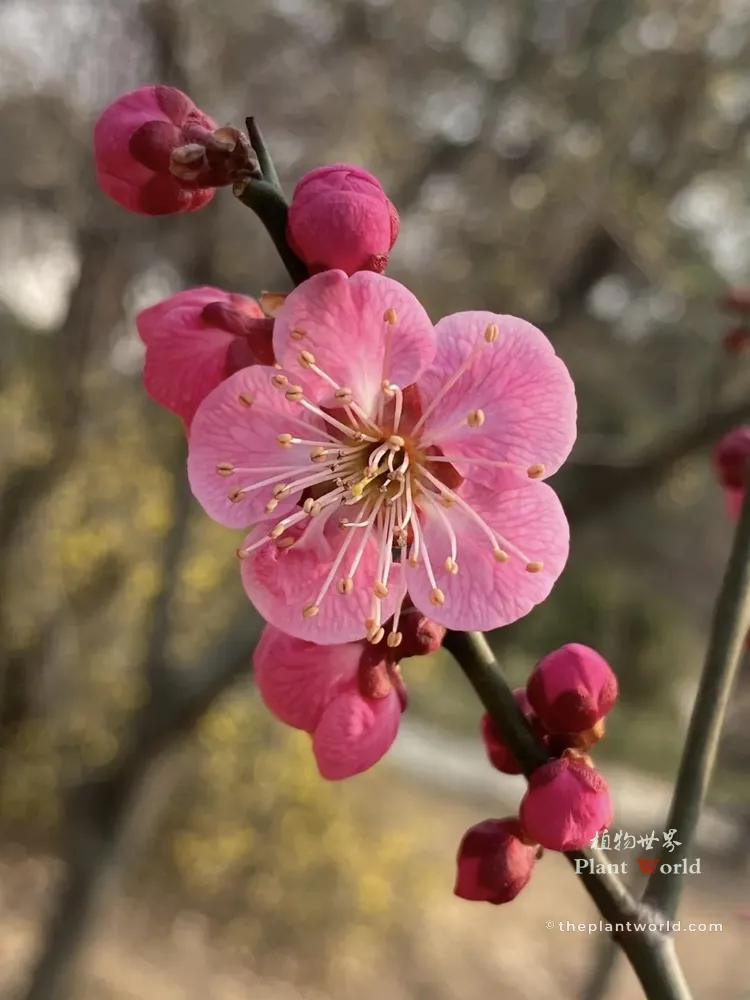
A close-up of a five-petaled plum blossom, a symbol of good fortune and the “Five Blessings” in Chinese culture.
4.2 The “Four Gentlemen” of Art
In art history, the red plum blossom leads the “Four Gentlemen.” It is a staple of traditional ink wash painting, symbolizing a life tempered by experience but blooming with hope.
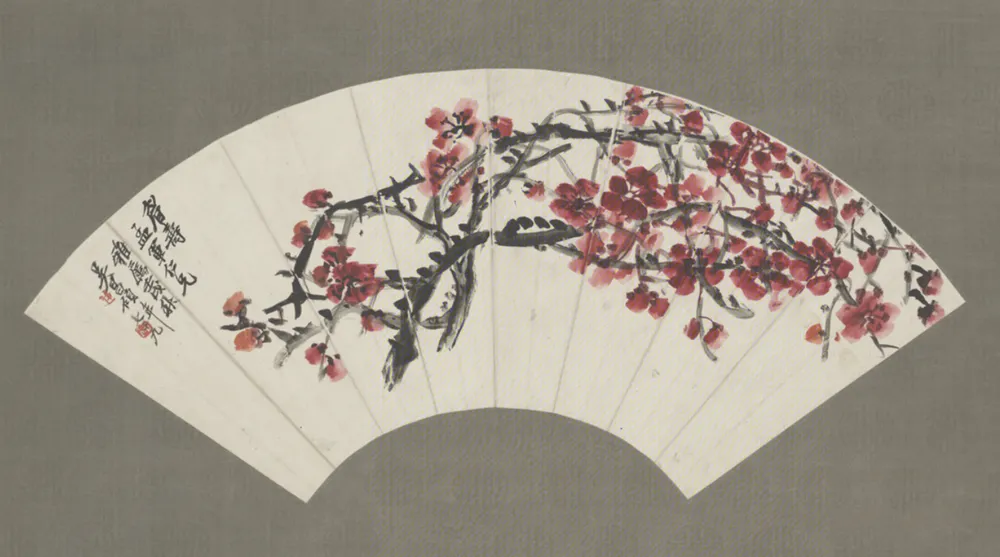
Qing Dynasty Wu Junqing Red Plum Blossom Fan, Palace Museum
Conclusion
The red plum blossom is more than a botanical specimen; it is a living bridge between nature and human virtue. Its biological resilience aligns perfectly with the red plum meaning of tenacity and integrity. It remains a vivid embodiment of the national character—a fusion of natural beauty and the humanistic spirit.