
Introduction
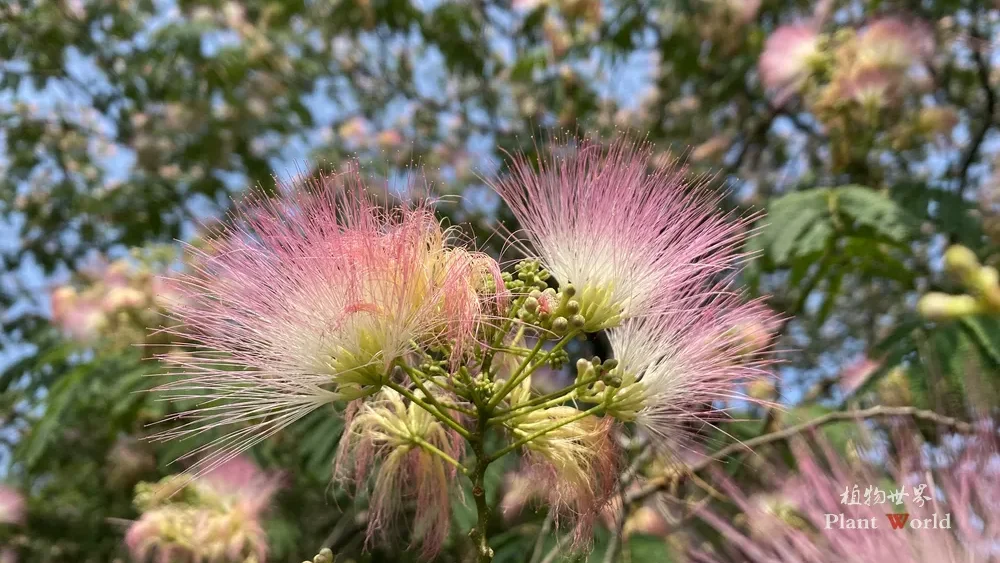
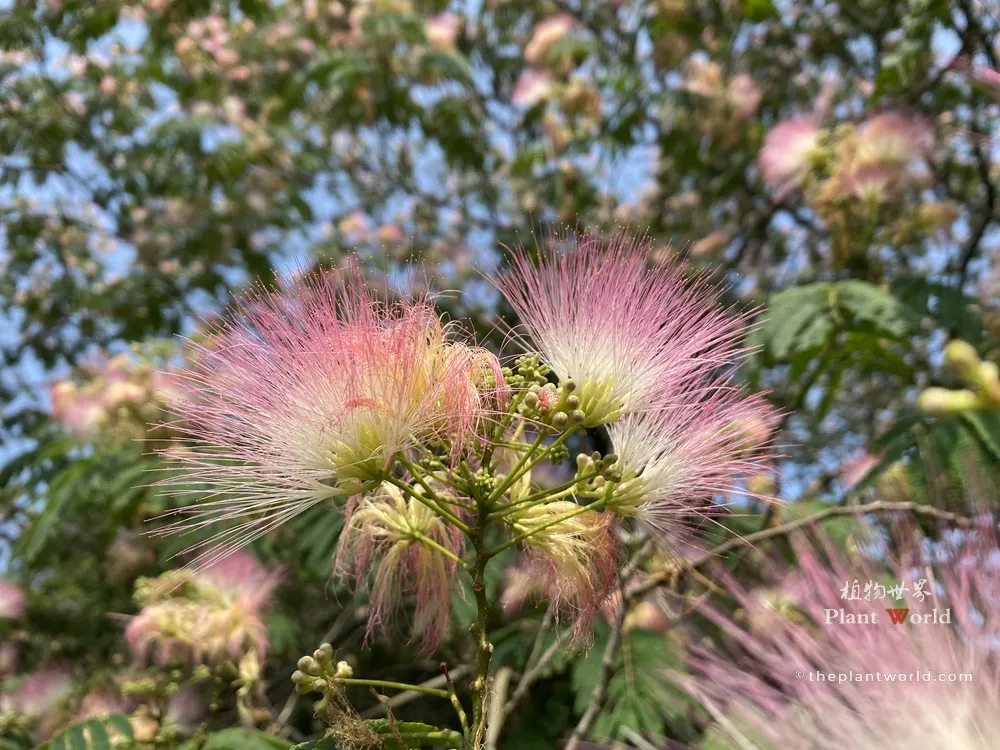
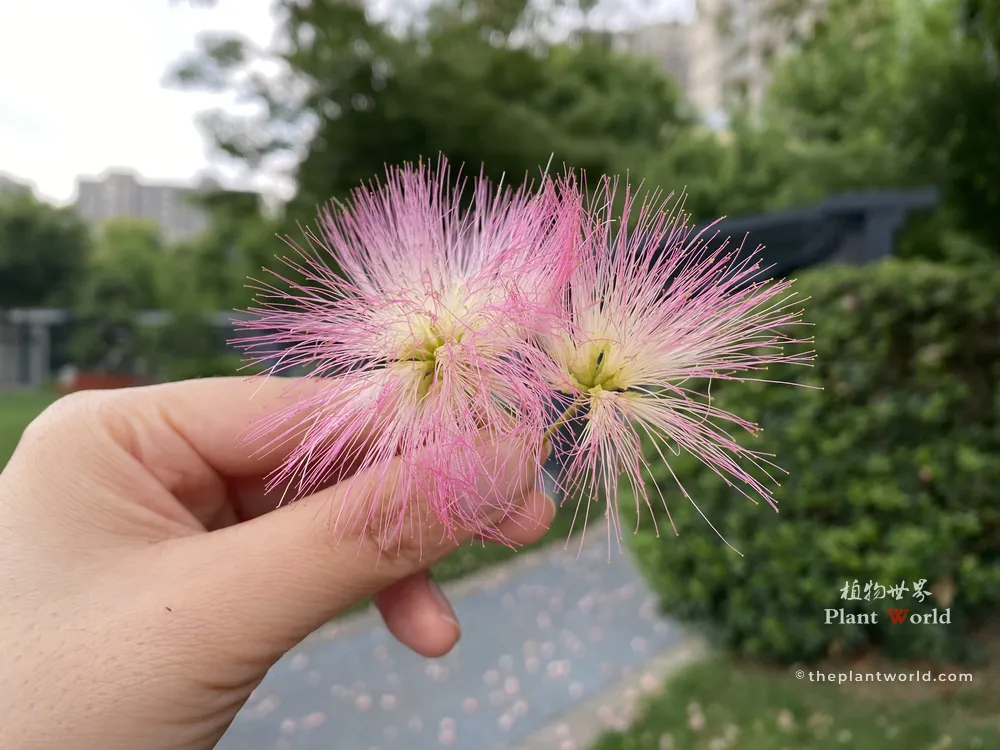
As June arrives and midsummer beckons, soft pink blossoms begin to unfurl on one of the most ethereal trees of the Orient: the Persian Silk Tree, known botanically as Albizia julibrissin. Unlike standard garden blooms, each blossom forms delicate, feathery tufts of fine, silky threads, floating like faint pink clouds drifting above a vibrant sea of green foliage.
⚠️ Critical Note for Western Gardeners:
In North America, this species is commonly referred to by the regional informal name “Mimosa Tree.” Do not mistake it for the low-growing sensitive plant (Mimosa pudica). The Persian Silk Tree is a large deciduous canopy tree; while its bipinnate leaves fold gently at dusk via its natural circadian rhythm, they do not instantly curl upward when touched by human hands.
Beyond its physical beauty, this ancient tree carries a profound emotional legacy. Cultivated in traditional Chinese landscapes for over two millennia, it has evolved from a practical shade tree for gardens into a cherished symbol of emotional healing, family harmony, and romantic devotion.
Plant Profile: What Is Albizia julibrissin?
- Scientific Name: Albizia julibrissin Durazz.
- Common Names: Persian Silk Tree, Pink Silk Tree, Mimosa Tree, Hehuan Tree
- Family: Fabaceae (Pea/Legume Family)
This fast-growing, deciduous broadleaf tree inhabits warm regions across Asia, with its natural range stretching from Iran through China and eastward to Korea and Japan.
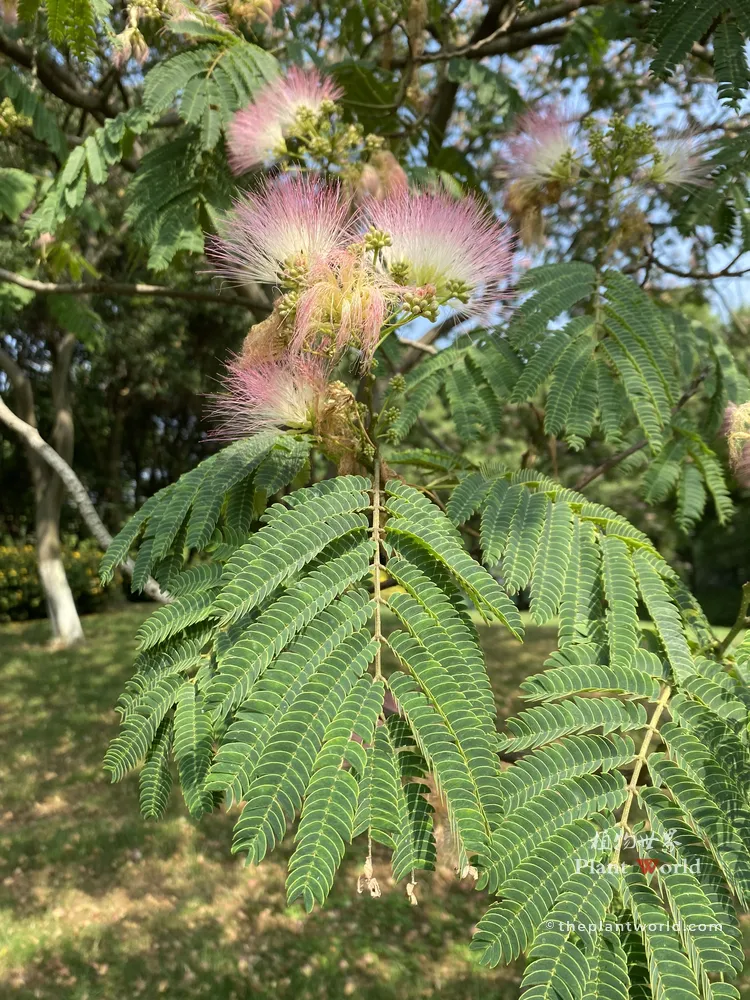
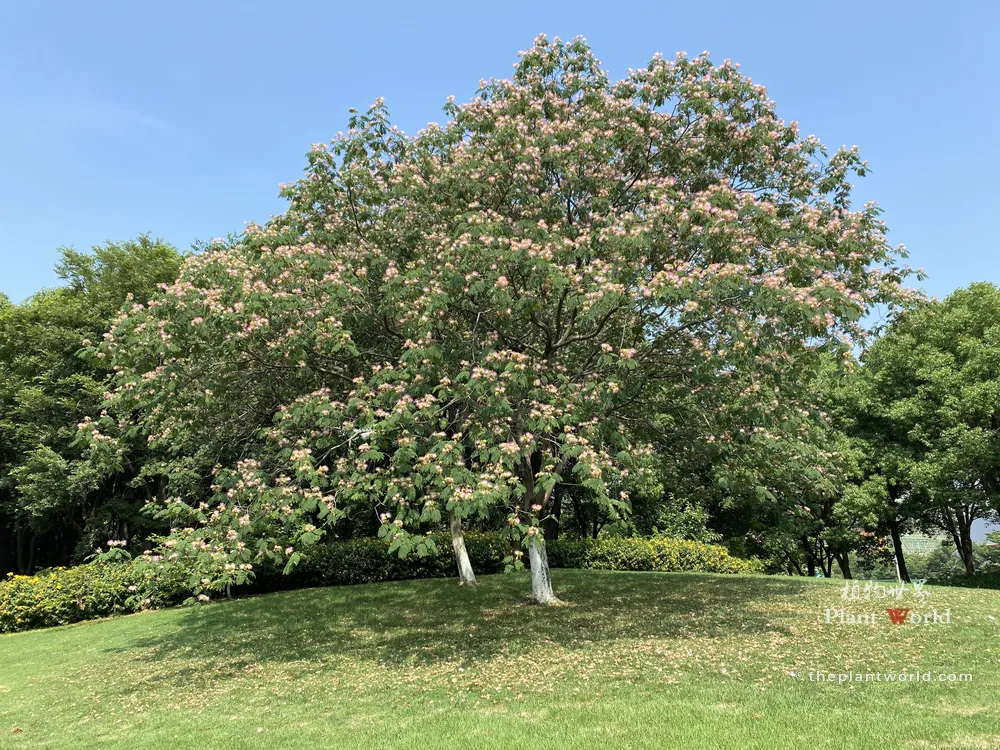
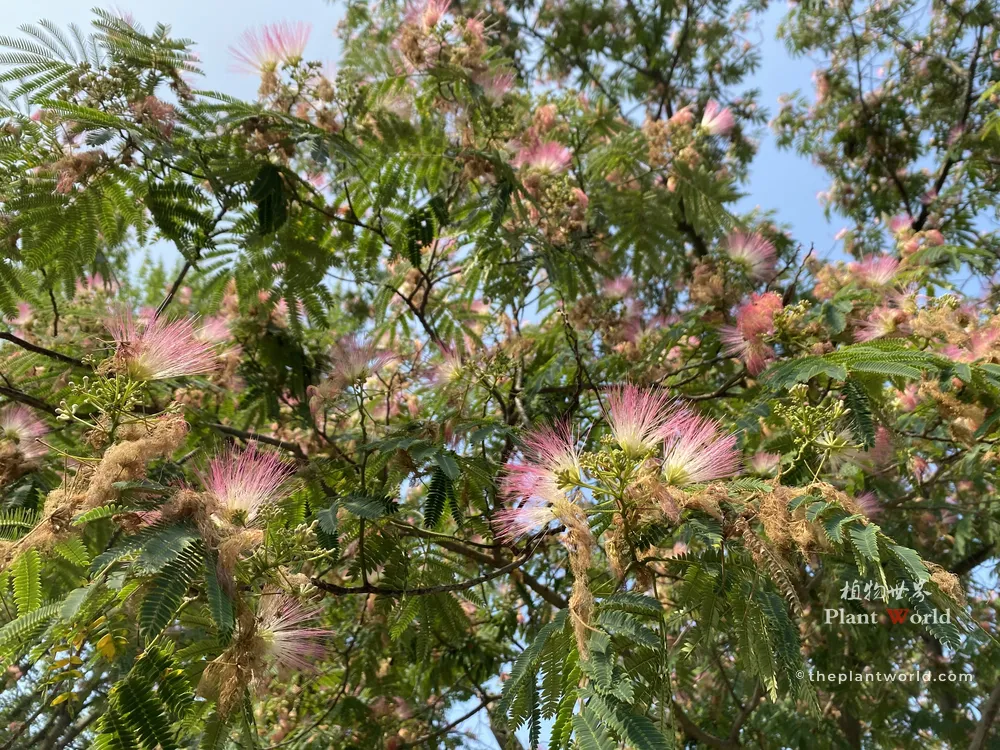
The tree is highly prized in landscape design for its signature V-shaped branching habit and delicate, twice-divided (bipinnate) fern-like leaves. Throughout the scorching summer months, this airy foliage casts light, dappled shade, allowing smaller shade-tolerant shrubs beneath it to thrive.
From late spring into early summer — right as vibrant early-season plum blossoms fade into memory — clusters of fluffy, thread-like pink blossoms emerge atop the canopy. Gentle summer breezes carry a faint, exotic sweet aroma far across the garden. Viewed from a distance, the mass of pale pink stamens looks like a soft, rosy haze hovering peacefully above the green landscape.
Fine morphological details include angular young twigs covered in soft pubescence on new shoots, inflorescences and leaf axes. The midrib of each tiny leaflet lies close to the leaf’s upper margin.
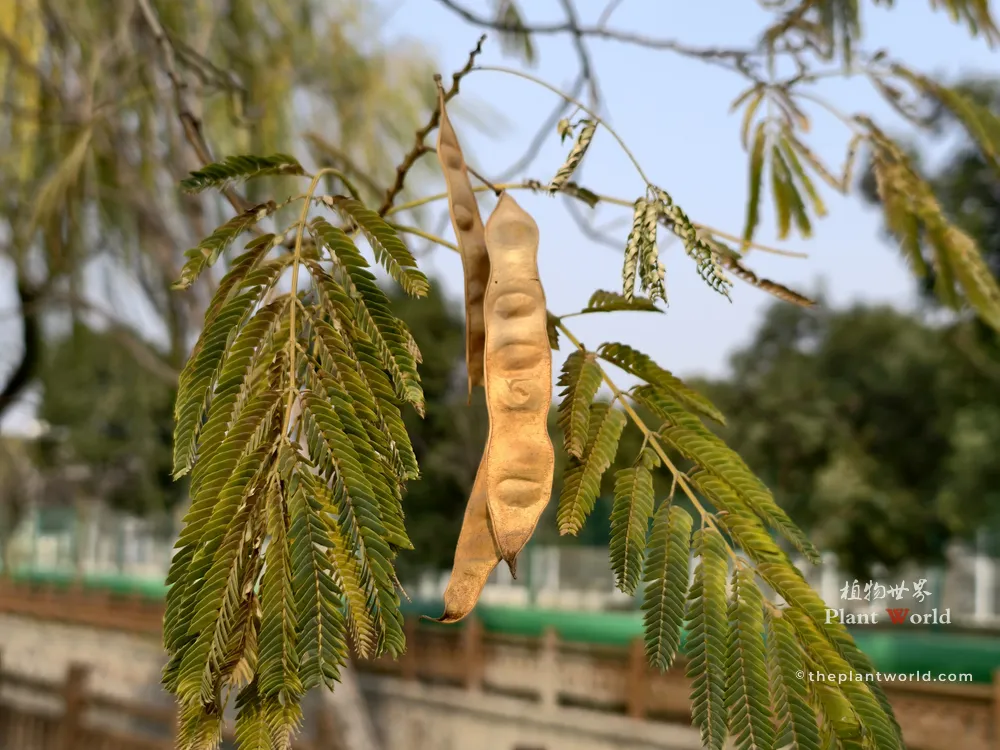
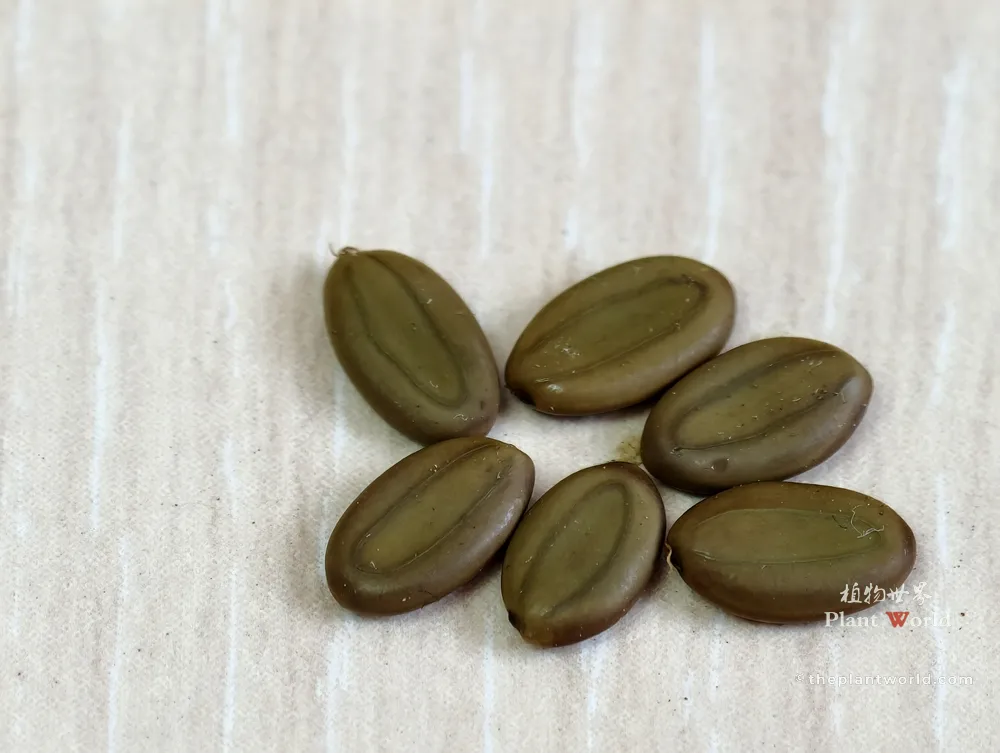
After flowering, flat, strap-shaped legume pods form and ripen from August to October. These dry brown pods often cling to bare branches well into winter. Inside sit smooth, oval brown seeds protected by a rigid seed coat, which generally needs scarification to break dormancy for germination.
Cultivation & Care Guide for the Persian Silk Tree
Hardiness & Climate
- USDA Hardiness Zones: 6–9. It easily tolerates light seasonal winter frosts; however, protecting young saplings with a thick layer of organic mulch is highly recommended in Zone 6. It thrives spectacularly in hot, dry summers and adapts beautifully to temperate, Mediterranean, and subtropical conditions.
Light & Placement
- Requirements: Requires full, direct sunlight (at least 6 hours daily) to encourage heavy, explosive summer flowering.
- Garden Design: It works wonderfully as a standalone focal specimen tree for large suburban yards, oriental garden borders, and dedicated sensory fragrance gardens. Because its fine leaves create a translucent canopy rather than a heavy block of darkness, it introduces a unique structural lightness to the landscape.
Soil & Water
- It is remarkably adaptable to almost all well-drained soil profiles, including nutrient-poor, sandy, or slightly alkaline grounds. However, you must absolutely avoid permanently waterlogged locations, which quickly trigger fatal root rot. Provide moderate watering while the root system is young; established trees develop rock-solid drought tolerance.
📌 Critical Growing Reminders: Lifespan & Ecology
While highly rewarding, modern growers must be aware of three distinct management factors:
- Self-Seeding Risk: This species produces abundant bean-like seed pods that drop in autumn. In parts of the southern United States and warmer regions of Australia, it is actively monitored or restricted due to its high self-seeding invasive potential. Always check local agricultural extension guidelines before planting.
- Fungal Wilt: The tree has a relatively limited lifespan, usually living between 40 and 50 years. Its primary threat is Fusarium wilt, a soil-borne fungal disease that can impact mature silk trees. For gardeners seeking a similarly dramatic, long-lived, and disease-resistant vertical accent, integrating the virtually bulletproof Lady Banks’ Rose vine over nearby structures offers a great alternative layout.
- Pruning: Carry out structural pruning exclusively in late winter during dormancy to tidy broken branches or manage canopy shape.
Folklore & The “Tree of Mutual Joy” in Chinese Tradition
In traditional Chinese culture, Albizia julibrissin bears the deeply meaningful name Hehuan (合欢), which translates literally to the “Reconciliation Tree” or the “Tree of Mutual Joy.” Ancient philosophers believed that the tree possessed a unique spiritual frequency capable of dissolving deep-seated resentment, calming domestic conflict, and nurturing harmony between souls.
Two beloved folk legends have surrounded the tree for centuries:
Legend One: The Spirit of Loyal Lovers
In high antiquity, the legendary Emperor Shun traveled south on an expedition and tragically passed away near the wilderness. His two devoted wives, Ehuang and Nüying, wandered the banks of the Xiang River endlessly in search of him. They wept until their tears turned to blood, eventually passing away from pure grief.
Folk tradition holds that their spirits finally united with Emperor Shun’s soul, transforming into the very first Hehuan tree. Because the tree’s paired leaflets open wide by day to welcome the sun and fold together closely at night, it became the ultimate symbol of devoted couples staying faithful, reuniting through adversity, and sharing a single breath.
Legend Two: The Tree of Longing and Waiting
In an alternative, poignant regional folktale, the plant was originally called the “Tree of Sorrow.” A brilliant young scholar left his wife to travel to the imperial capital to sit the civil examinations. Before he stepped out the door, she pointed to the green tree outside their window and begged him not to forget his humble home. Tragically, the scholar never returned.
The lonely wife waited year after year until her black hair turned completely white. On her deathbed, she swore an emotional oath: “If my husband’s heart has wandered, let this sorrowful tree finally bloom. I shall be the flower, he shall be the leaves. As long as the bloom lingers, the leaf will never fall. We shall share one life, united for all time.”
Soon afterward, the tree burst into soft pink blossoms for the first time. The blooms open at dawn and fade by dusk, serving as a quiet, beautiful reminder of fleeting time and unfulfilled longing.
The Culture of Peace
For centuries, Chinese families intentionally planted the Hehuan tree beside central courtyards and reflecting ponds. It was a beautiful custom to present fresh silk tree blooms to quarreling couples, or quietly place a sprig beneath a loved one’s pillow to dissolve anger and invite peaceful dreams. Friends who had suffered a bitter falling out would also exchange the delicate flower as a silent gesture to mend their misunderstanding.
The famous Qing Dynasty lifestyle writer Li Yu beautifully summarized its psychological power in his essays:
“Daylilies excel at erasing sorrow, but the Hehuan tree excels at completely dissolving anger. Anyone who sits beneath these blossoms will naturally turn from frustration into pure joy.”
Traditional & Ethnobotanical Uses
Beyond its folklore, the bark (Cortex Albiziae, known as Hehuan Pi) and the dried intense pink flowers (Flos Albiziae) have a documented history extending back over a thousand years in Traditional Chinese Medicine (TCM). It was historically prescribed in herbal formulations designed to “soothe the liver, relieve emotional stagnation, calm the spirit, and ease profound anxiety.”
⚠️ Ethnobotanical Disclaimer: All traditional herbal information shared here is purely for historical, botanical, and cultural reference. This content absolutely does not constitute medical advice. Modern readers should never harvest or consume wild Albizia materials for self-treatment. Always consult a qualified healthcare professional or licensed practitioner.
Ecological Value & Economic Uses
Beyond its striking ornamental beauty, Albizia julibrissin exhibits remarkable ecological resilience. It demonstrates high tolerance to atmospheric pollutants, particularly sulphur dioxide (SO₂) and hydrogen chloride (HCl). Thanks to its robust adaptability, the species is widely utilized for urban street planting, waterside landscapes (planted above maximum water levels), recreational parks, industrial green belts, and even ecological restoration in abandoned mining areas. Recognizing its deep cultural and environmental significance, the city of Weihai in Shandong Province, China, has officially designated the Persian Silk Tree as its official city tree.
In addition to its environmental benefits, the tree yields a reddish-brown timber with straight grain and fine texture. Although the wood requires careful drying to prevent cracking, it is traditionally used for crafted furniture and regional railway sleepers. Furthermore, its versatile bark serves as a valuable natural source for tannin extraction.
Final Conclusion
Albizia julibrissin, the Persian Silk Tree, offers modern landscapes far more than a simple display of fluffy pink summer blossoms.
Drought-tolerant, structural, and steeped in rich, romantic Chinese legends of emotional reconciliation and eternal love, it brings an unmistakable, living narrative to large landscape settings. If you seek a low-maintenance canopy tree that delivers airy, feathery foliage, long-lasting seasonal color, and fascinating historical backstories, the Persian Silk Tree remains an unforgettable botanical choice.
References
- Flora of China (English Edition): Albizia julibrissin Species Profile & Mimosoideae Taxonomy — Maintained collaboratively by the Missouri Botanical Garden and Harvard University Herbaria.
- Plants of the World Online (POWO): Albizia julibrissin Durazz. Native Range and Synonyms — Hosted by the Royal Botanic Gardens, Kew.
- Royal Horticultural Society (RHS): Albizia julibrissin (Persian Silk Tree) Cultivation & Award of Garden Merit Guidance — London, UK.
- North Carolina State University Extension: Albizia julibrissin Plant Toolbox: Ecological Impact and Fungal Wilt Management — Academic horticultural database.
- Xianqing Ouji (Sketches of Idle Leisure) by Li Yu (Qing Dynasty) & Classical Xiang River Mythology Archives — Historical References.
More from The Plant World:
- Chinese Wingnut: The Romantic “Ingot Tree” and Its Cultural Charm
- Plum Blossom Meaning: Symbolism & Cultural Significance
- The Hidden Meanings Behind Red Plum Blossoms
- Chinese Wisteria: History, Symbolism, and Identification
- Peach Blossoms in China: History, Culture, and Symbolism
- Chinese Crepe Myrtle: Guide to Origins & Symbolism
- Ginkgo Leaf Meaning: 5 Secrets of This Ancient Fossil
- Chinese Loquat Tree: Guide to Benefits & History
- Rose of Sharon Tree: Guide to Meaning & Care
- Hosta Plant Benefits: 5 Surprising Uses & Planting Guide
- Strawberry Begonia Care: How to Grow Saxifraga Stolonifera
Discover more from The Plant World
Subscribe to get the latest posts sent to your email.