
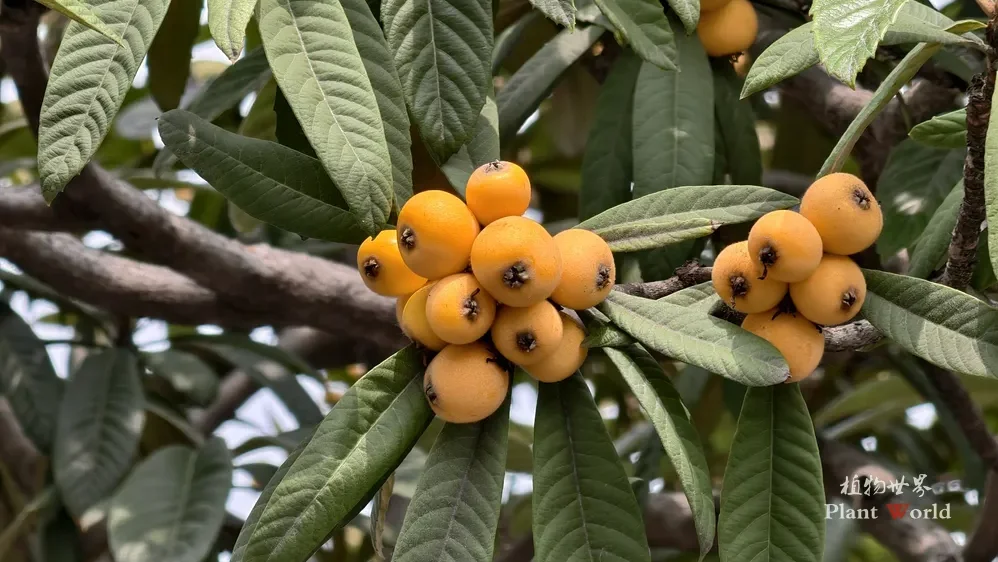
Clusters of sun-kissed Chinese loquats ripening in early summer. / © theplantworld.com
Introduction: An Eastern Icon of Resilience
The loquat (Eriobotrya japonica), a standout among Chinese Fruit Trees, is a distinctive evergreen fruit tree native to China. Modest in appearance, it boasts a unique growth cycle, profound cultural heritage, and versatile practical benefits. For thousands of years, this resilient tree has been an integral part of Chinese daily life and traditional culture.
- Introduction: An Eastern Icon of Resilience
- The Chinese Name: A Musical Linguistic Coincidence
- The Growth Cycle: A Reverted Pattern Through Four Seasons
- Winter Blossoms: A Symbol of Fortitude Amid Frost
- Summer Fruits: The Sun-Kissed Harvest
- Historical Legacy: Over 2,000 Years of Cultivation
- Artistic Influence: A Beloved Motif in Classical Paintings
- Traditional Wellness: The Medicinal Value of Loquat Flowers
- Nature's Partnership: Premium Artisanal Loquat Honey
- Herbalism Cornerstone: The Power of Loquat Leaves
- Cultural Symbolism: Auspicious Meanings in the Home Garden
- References
The Chinese Name: A Musical Linguistic Coincidence
To truly understand this plant, one must look at its Chinese name: 枇杷.
- The Pronunciation: In Mandarin, it is pronounced as pí pa (sounds like “pee-pah”).
- The Linguistic Origin: Its common English name, “Loquat,” is actually a beautiful historical linguistic relic. It was adapted into English from the Cantonese pronunciation of its ancient southern Chinese name, “Lou Gwat” (芦橘, literally meaning “reed tangerine”).
- The Visual Metaphor: As an evergreen small tree, the loquat generally grows 3 to 5 meters tall. Its broad, textured leaves are covered with fine yellow fuzz on the underside. Ancient Chinese people noticed that the elegant, oval silhouette of the leaf closely resembles the Pipa (琵琶)—a traditional Chinese pear-shaped lute (similar to a mandolin). Because the leaf shapes mirror the musical instrument so perfectly, the tree earned its poetic name, 枇杷.
The Growth Cycle: A Reverted Pattern Through Four Seasons
What makes the loquat truly extraordinary is its rare, inverted growth pattern, summarized by ancient Chinese botanists as “sprouting in autumn, blooming in winter, bearing fruit in spring, and ripening in summer.” Unlike most temperate plants that blossom in spring and yield fruit in autumn, the loquat thrives through all four seasons, quietly absorbing the essence of every weather.
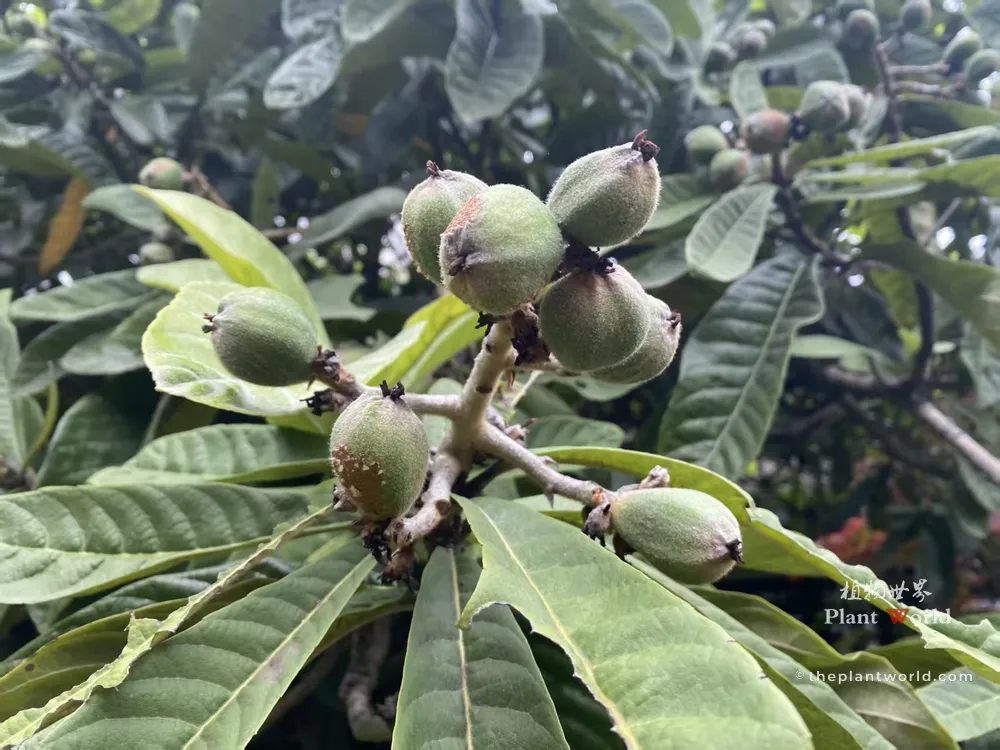
Young, green loquats developing in late spring, protected by a layer of fine velvety fuzz as they absorb the essence of the seasons. / © theplantworld.com
Winter Blossoms: A Symbol of Fortitude Amid Frost
When winter arrives and nature turns bleak, the loquat bursts into bloom. Even as temperatures drop to single digits, clusters of tiny flowers brave the frost. Dozens or even hundreds of creamy-white florets form delicate panicle inflorescences. Protected by calyxes covered in blanket-like brown hairs, these winter blossom clusters resemble miniature golden-brown pagodas blending quietly into the snowy scenery. Though easily overlooked, they release a subtle, lingering fragrance. Blooming amid frost and ice, loquat flowers have long symbolized perseverance and fortitude in traditional Chinese culture, held in the same high regard as pine and bamboo.
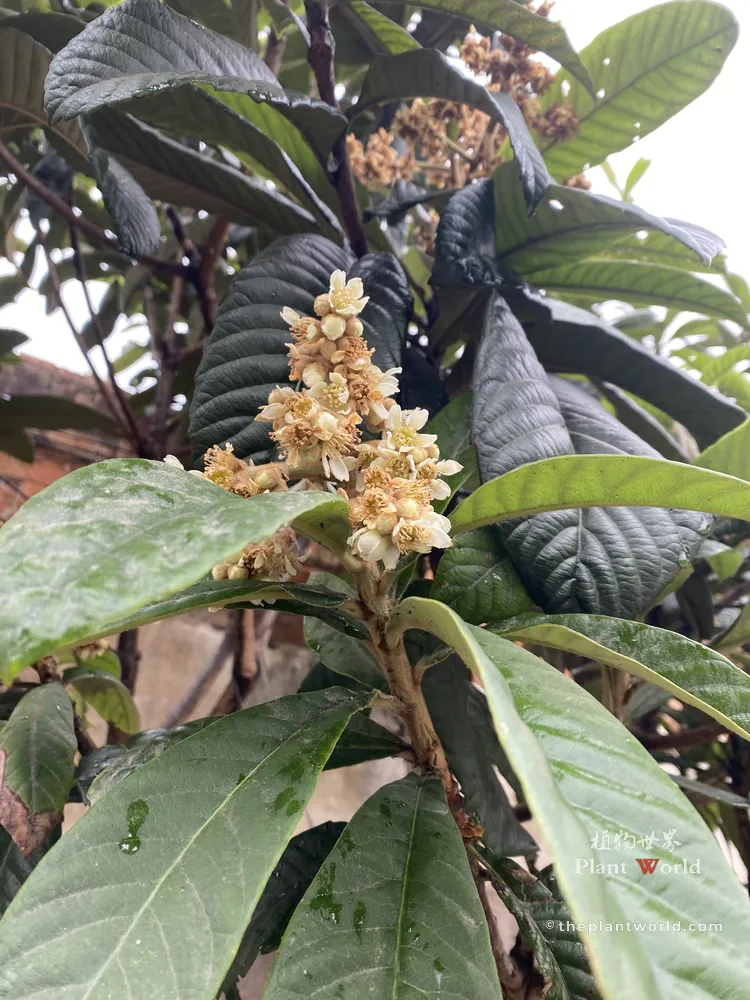
The subtle, fragrant winter blossoms of the Chinese loquat tree, traditionally celebrated as a symbol of fortitude. / © theplantworld.com
Summer Fruits: The Sun-Kissed Harvest
In late spring and early summer, the tree becomes laden with round, sun-kissed fruits. Ripe loquats feature pale yellow or orange-red skins covered with soft, protective down. These golden, orb-like fruits are delightfully sweet and juicy, ranking among the most anticipated seasonal delicacies in China.
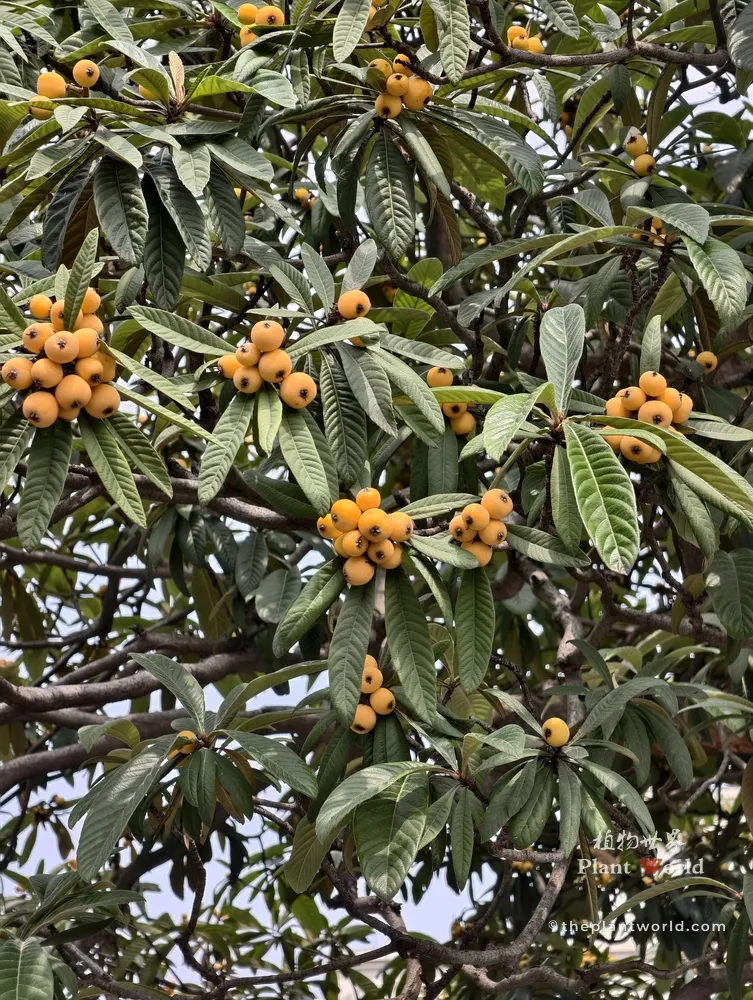
A thriving Chinese loquat tree in early summer, showcasing the timeless symbol of abundance and prosperity. / © theplantworld.com
Historical Legacy: Over 2,000 Years of Cultivation
The loquat boasts a history of more than 2,000 years of cultivation in China, with records dating back to the Western Han Dynasty. It was celebrated in the famous Han Dynasty masterpiece, “Rhapsody on the Shanglin Garden,” by the legendary poet Sima Xiangru. When Emperor Wu of the Han constructed his grand imperial gardens, loquats were prized as exotic, precious tributes presented by officials from the southern regions.
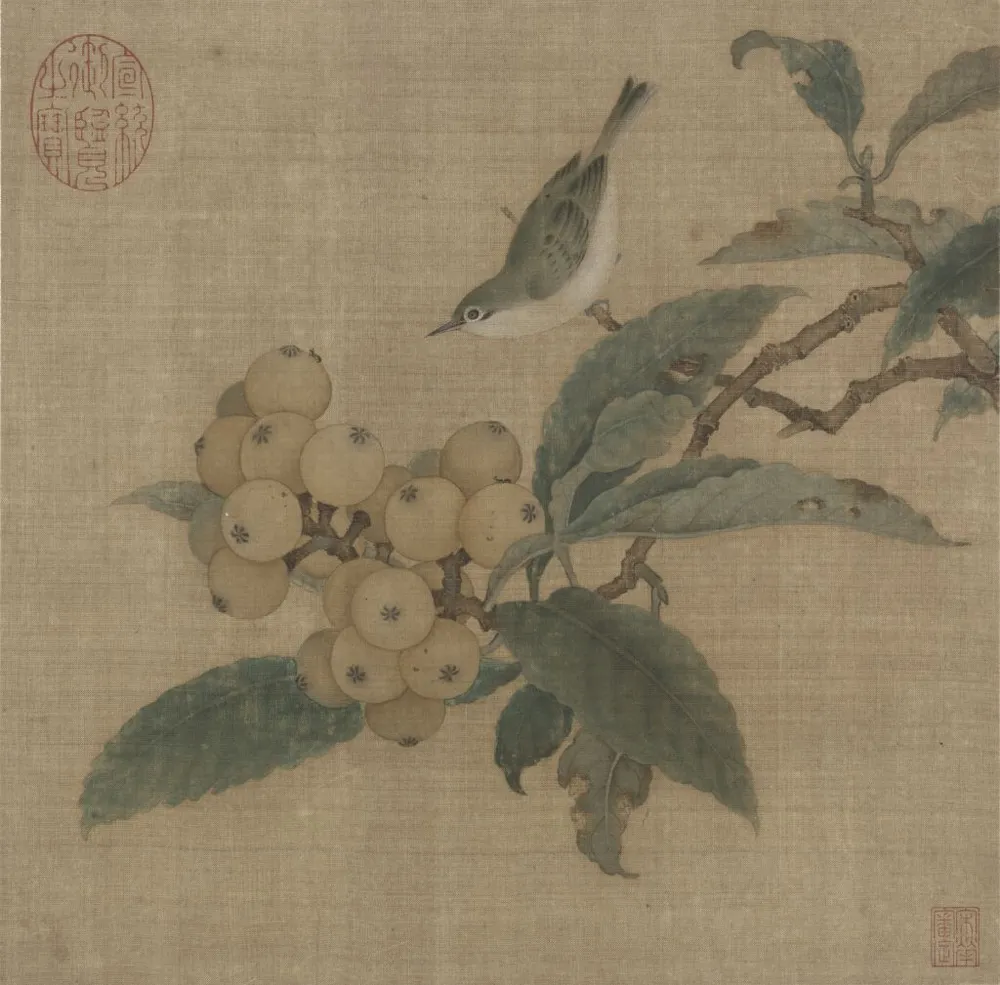
Lin Chun (Southern Song Dynasty), “Loquats and Mountain Bird” (枇杷山鸟图页). Ink and color on silk. Beautifully preserved in the Palace Museum, Beijing.
Artistic Influence: A Beloved Motif in Classical Paintings
By the Tang Dynasty, loquats were widely cultivated, inspiring countless poets to depict their amber fruits. During the Song and Ming dynasties, the tree was thoroughly documented in botanical literature and medical compendiums. It also became a beloved motif for court painters. Two celebrated masterpieces—Loquats and Mountain Bird from the Song Dynasty and Loquat painted by Shen Zhou in the Ming Dynasty—are beautifully preserved today in the Palace Museum in Beijing.
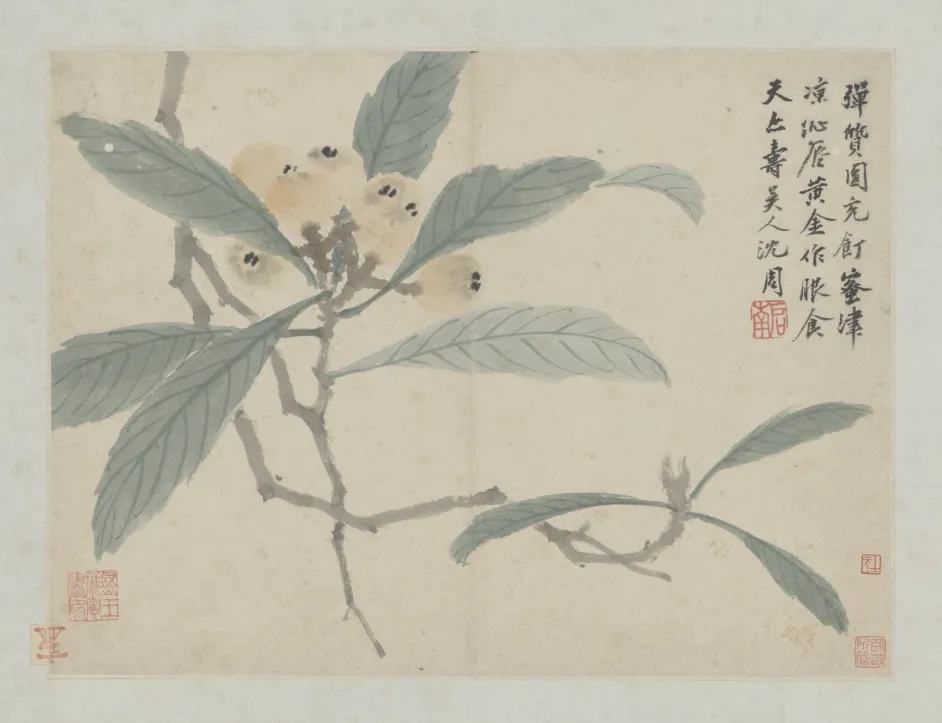
Shen Zhou (Ming Dynasty), “Loquat” (枇杷图) from the Album of Wo You (卧游图册). Ink and color on paper. Beautifully preserved in the Palace Museum, Beijing.
Traditional Wellness: The Medicinal Value of Loquat Flowers
Beyond its ornamental and edible appeal, the loquat is a treasured wellness plant in traditional Chinese medicine (TCM), with nearly every part harnessed for holistic health. Loquat flowers, affectionately called “winter flowers” in folk culture, are gentle and balancing in nature. In traditional remedies, they are highly regarded for soothing nasal congestion and relieving persistent coughs. Today, dried loquat flower buds are commonly brewed into premium herbal teas. The clear, golden infusion offers an elegant aroma and a mellow, soothing taste, which pairs beautifully with rock sugar or raw honey.
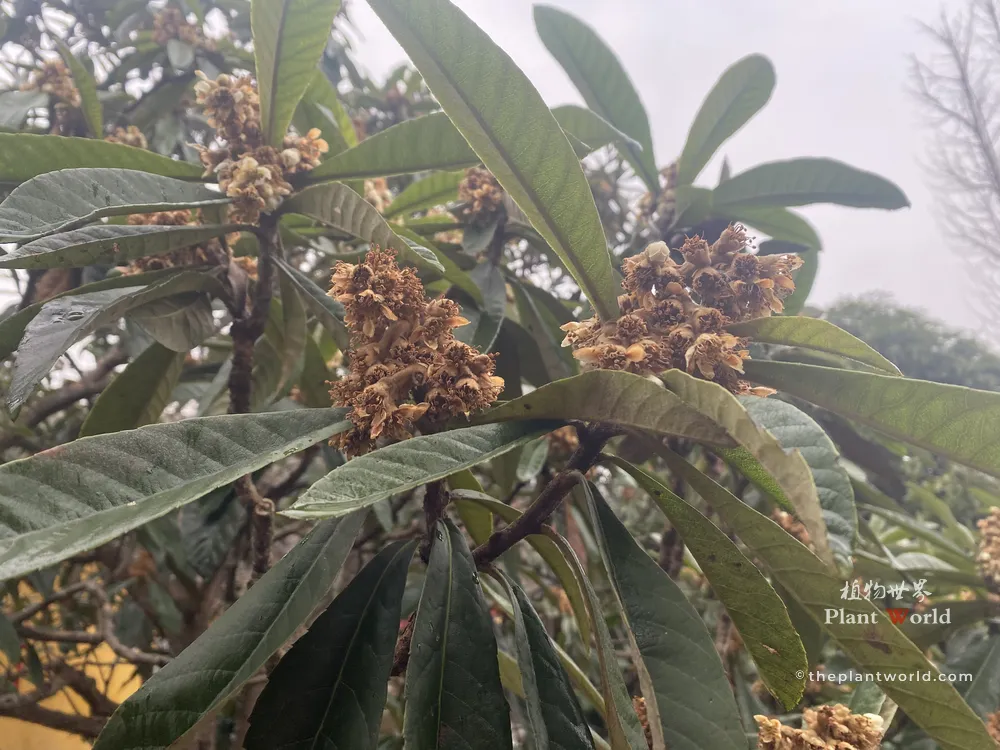
The transition of life: Loquat blossoms fading at the end of winter, quietly channeling energy into the growth of upcoming spring fruits. / © theplantworld.com
Nature’s Partnership: Premium Artisanal Loquat Honey
The loquat tree is also a vital sanctuary and nectar source for honeybees during the barren winter months. Loquat honey is considered a top-grade artisanal variety, prized for its light amber hue and unique, herbal scent. Rich in natural glucose, it crystallizes into a smooth, buttery texture, widely used to soothe respiratory discomfort and nourish the skin.
Herbalism Cornerstone: The Power of Loquat Leaves
Furthermore, loquat leaves (Folium Eriobotryae) are a cornerstone of traditional Asian herbalism. Ancient medical classics, including the Records of Famous Physicians and Li Shizhen’s Compendium of Materia Medica, documented their power to soothe the respiratory tract (traditionally described as “clearing lung heat”), ease coughs, and harmonize digestion. Modern pharmacological research has confirmed that loquat leaves are rich in bioactive compounds such as amygdalin and ursolic acid. Today, these time-tested extracts remain the active star ingredients in global cough syrups, wellness supplements, and natural skincare lines.
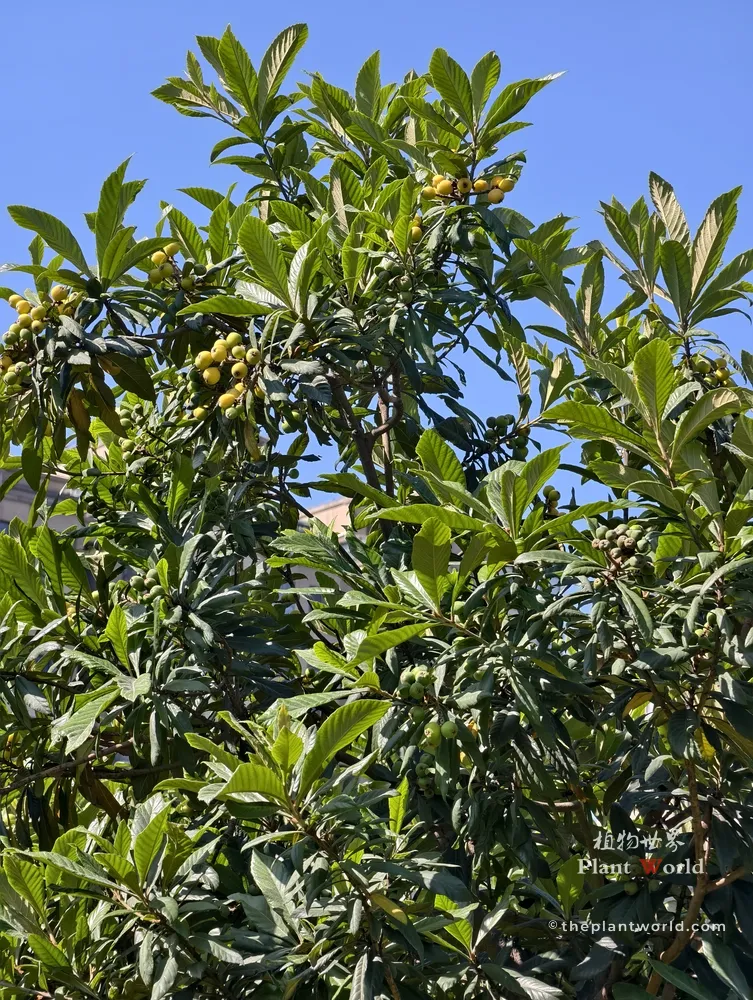
The rhythm of nature: A mature Chinese loquat tree against a brilliant blue sky, beautifully displaying both developing green fruits and golden, sun-kissed clusters. / © theplantworld.com
Cultural Symbolism: Auspicious Meanings in the Home Garden
For centuries, planting a loquat tree in one’s courtyard has been a beloved tradition. With its perpetual green foliage, courageous winter blossoms, and abundant summer fruits, the loquat stands as a living symbol of auspicious fortune, resilience, and prosperity. It never competes with spring flowers for fleeting attention, nor vies with autumn crops for praise. Instead, it moves steadily through the cycle of the year, quietly anchoring the garden with its timeless oriental charm and nurturing gifts, a time‑honored Chinese Garden Plants.
References
- Flora of China (Volume 9: Rosaceae, Eriobotrya japonica)
- iNaturalist & Wikipedia: Eriobotrya japonica (Loquat)
- Ancient Chinese Classics: Rhapsody on the Shanglin Garden (Western Han Dynasty), Records of Famous Physicians (Wei and Jin Dynasties), Compendium of Materia Medica (1578)
- The Palace Museum, Beijing: Anonymous, Loquats and Mountain Bird (枇杷山鸟图), Ink and color on silk, Song Dynasty Collection.
- The Palace Museum, Beijing: Shen Zhou, Loquat (枇杷图), Ink on paper, Ming Dynasty Collection.
More from The Plant World:
- Chinese Wingnut: The Romantic “Ingot Tree” and Its Cultural Charm
- Plum Blossom Meaning: Symbolism & Cultural Significance
- The Hidden Meanings Behind Red Plum Blossoms
- Chinese Wisteria: History, Symbolism, and Identification
- Peach Blossoms in China: History, Culture, and Symbolism
- Ginkgo Leaf Meaning: 5 Secrets of This Ancient Fossil
- Strawberry Begonia Care: How to Grow Saxifraga Stolonifera
- The Hollyhock Flower: Hidden Meanings & Surprising Benefits
- Chinese Tulip Tree Care: Liriodendron chinense & Folklore
Discover more from The Plant World
Subscribe to get the latest posts sent to your email.