
Golden Flowers Emerging in the Cool Season
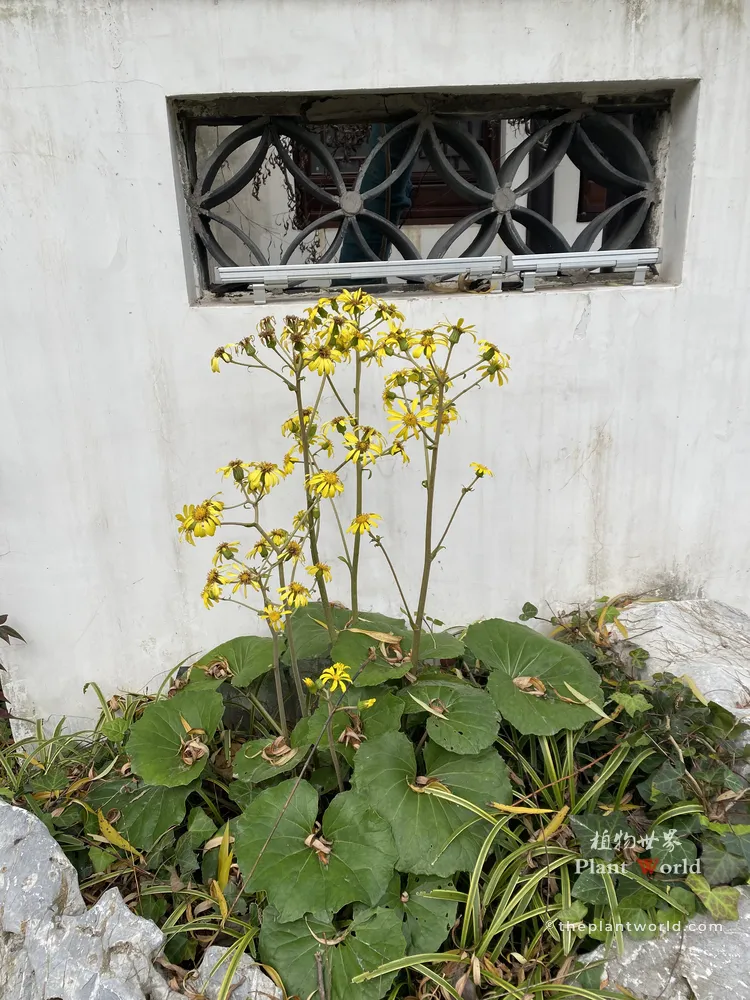
As late autumn fades into early winter, Farfugium japonicum begins its most magical transformation. Its slender cylindrical buds slowly unfurl into radiant, golden-yellow daisylike blooms—one of the few perennials that flower when most of the garden has gone quiet. Combined with its round, lotus-like evergreen leaves, this shade-loving perennial offers year-round beauty and rare seasonal interest. As a standout variety among Chinese Herbaceous Plants, it brings unique ornamental charm to shaded oriental garden spaces.
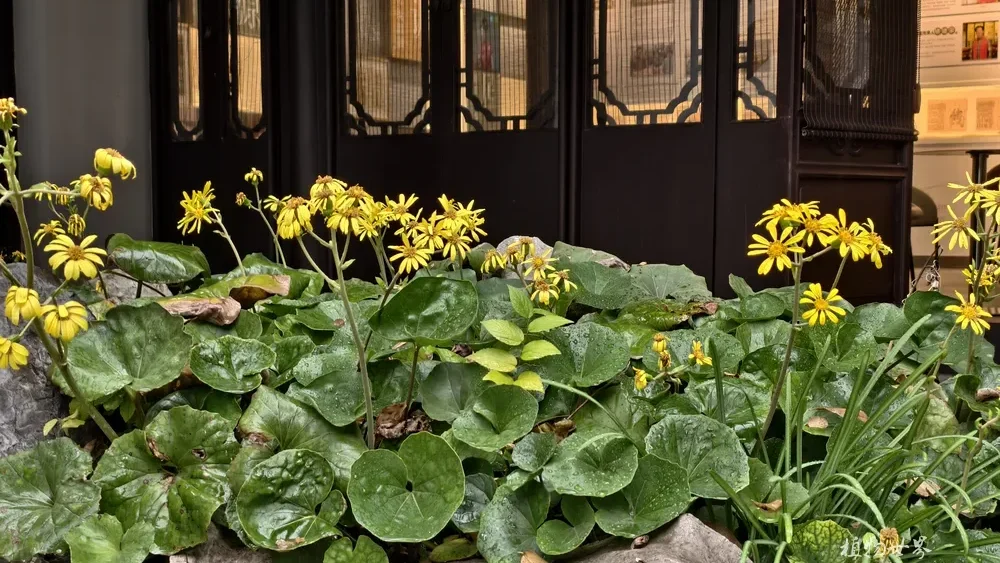
- Golden Flowers Emerging in the Cool Season
- Botanical Profile
- Key Characteristics
- The Signature Lotus-Shaped Leaves
- A True Member of the Daisy Family
- Seed Dispersal: Nature’s Floating Parachutes
- Native Range & Global Cultivation
- Cultural Significance & Chinese Folk Background
- Flower Language & Symbolism
- Is Farfugium Japonicum Invasive?
- Gardening Tips: How to Grow Leopard Plant
- Landscape Uses
- Why Gardeners Love It
- FAQ
- Final Thoughts
- References
- Disclaimer
- More from The Plant World:
Botanical Profile
– Common Names: Chinese Leopard Plant, Leopard Plant, Japanese Silverleaf, Farfugium, Tsuwabuki (Japan)
– Scientific Name: Farfugium japonicum
– Family: Asteraceae (Daisy Family)
– Genus: Farfugium (monotypic, the only species within this genus)
– Type: Herbaceous perennial
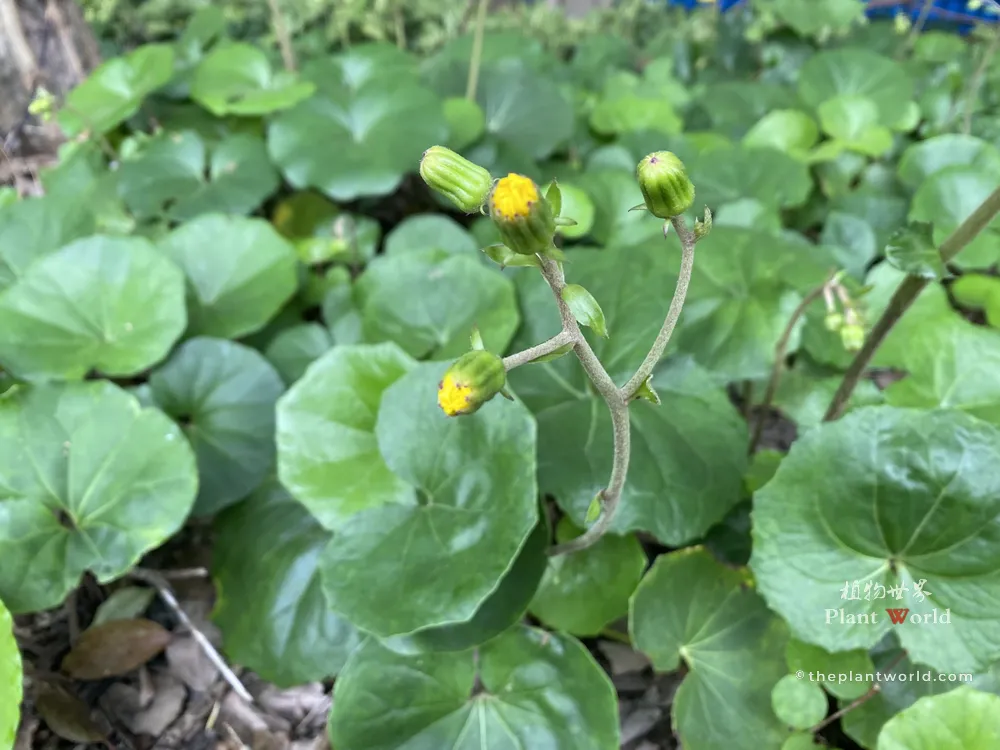
Key Characteristics
– Rhizome: Thick, creeping, and long-lived
– Flower Stems: Scapose, light gray-brown, 30–70 cm tall
– Leaves: Basal, rosette-forming, evergreen; typically round or kidney-shaped, 4–15 cm long and 6–30 cm wide
– Flowers: Bright yellow capitula with a bell-shaped involucre
– Fruit: Cylindrical achenes; fruiting extends from August through March of the following year
The Signature Lotus-Shaped Leaves
Although admired for its cheerful winter blooms, Farfugium japonicum is most beloved for its dramatic foliage. Its glossy, perfectly rounded leaves resemble miniature lotus pads—thick, leathery, jade-green, and softly wax-coated. Large leaves look like dinner plates; small ones like jade saucers. In shaded gardens, this architectural foliage becomes a striking, year-round focal point.
Many garden cultivars exist, most famously the spotted form Farfugium japonicum ‘Aureomaculatum’. Its leaves are dotted with golden speckles, which gave rise to the widely used common name Leopard Plant. Solid green varieties are the wild-type native form.
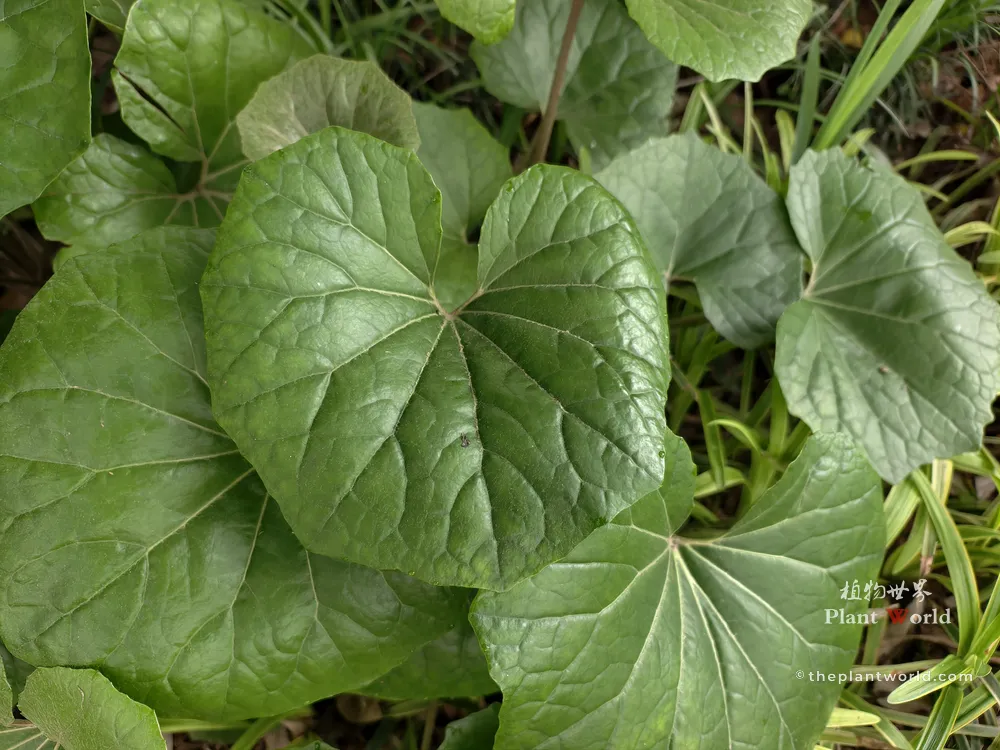
Perfect for dim corners beneath trees, the Chinese leopard plant shares growing preferences with Hosta Plant and Strawberry Begonia, forming a cohesive layered planting combination for shaded woodland gardens.
A True Member of the Daisy Family
Though it bears little visual resemblance to typical garden chrysanthemums, Farfugium japonicum belongs to the Asteraceae (daisy) family. Its flower heads display the classic composite structure:
- Ray Florets: Sterile, yellow, ligulate petals along the edge
- Disc Florets: Fertile, tubular florets tightly packed in the center
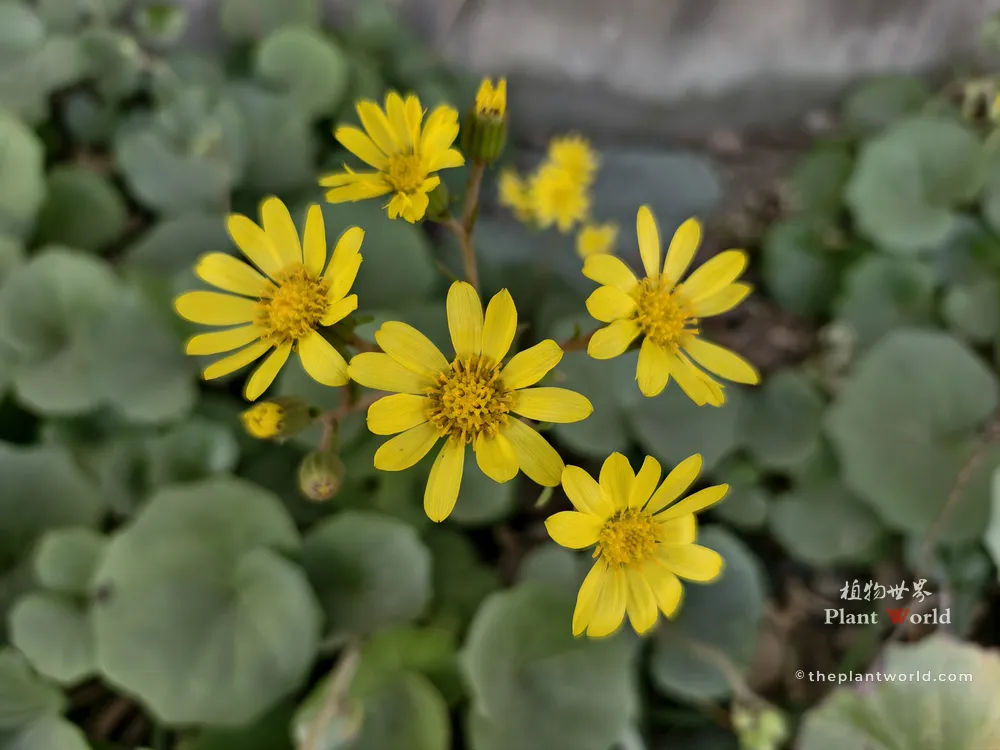
This combination forms the iconic “daisy-like” inflorescence known as a capitulum.
Seed Dispersal: Nature’s Floating Parachutes
As the blossoms fade, the plant develops fluffy white seed heads—beautiful pom-poms reminiscent of dandelions. Each seed is attached to a fine parachute (pappus) and drifts away with the gentlest breeze, allowing the plant to slowly colonize nearby areas.
Native Range & Global Cultivation
Wild populations grow naturally across eastern and southern China, including Hubei, Hunan, Guangdong, Fujian, and Taiwan, alongside Japan and Korea. It was collected from Chinese classical gardens and introduced to Western horticulture in 1856 by plant hunter Robert Fortune.
Now Widely Grown For:
- Excellent shade tolerance
- Low maintenance
- Evergreen architectural foliage
- Winter-season blooms
- Hardy performance in USDA Zones 7–10
Cultural Significance & Chinese Folk Background
In Chinese folk culture, Farfugium japonicum carries multiple local aliases: Ba Jiao Wu (八角乌), Huo Xue Lian (活血莲), Big Horseshoe Scent, Horseshoe Angelica, and One-Leaf Lotus. These names come from its distinct leaf shape and traditional herbal applications.
In traditional Chinese folk medicine, the rhizomes of Farfugium japonicum have been used as herbal remedies.
Safety Note: Do not consume any parts without professional guidance, as raw plant material contains irritant compounds.
In Japan, Farfugium japonicum is called 石蕗 (Tsuwabuki) and carries deep cultural meaning. Its name appears in poetry, folklore, and even Japanese surnames—a reflection of how deeply this plant is woven into traditional life.
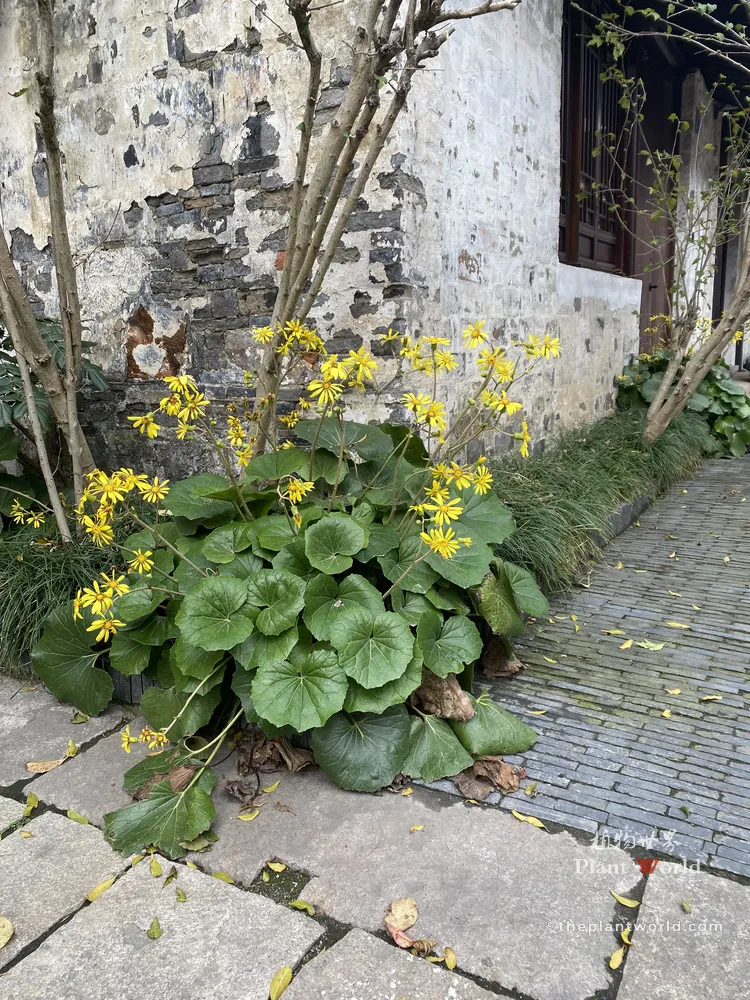
Beyond Japanese cultural symbolism, it is valued in Chinese gardening for its quiet endurance through cool autumn and winter weather. Its layered symbolic meaning fits perfectly within Chinese Flower Symbolism and East Asian garden traditions.
Flower Language & Symbolism
Winter-blooming plants have long been tied to emotional depth, and Farfugium japonicum is no exception.
Symbolic Meanings
1. Remembrance & Reflection
Blooming during the stillness of late autumn and early winter
2. Silent Reverence
Unobtrusive yet deeply expressive flower form
3. Resilience & Fortitude
Endures cold, shade, and drought with grace
Its presence in a garden is often seen as a reminder of strength, tranquility, and perseverance.
Is Farfugium Japonicum Invasive?
No. It spreads slowly by rhizomes and self-seeds lightly, but it is not considered invasive in most regions. Its growth habit is contained and easy to manage.
Gardening Tips: How to Grow Leopard Plant
– Light: Partial shade to full shade (ideal for woodland or north-facing gardens)
– Soil: Moist, well-draining, rich humus soil
– Water: Moderate; more frequent in summer heat
– Fertilizer: Light feeding in spring
– Propagation: Division in spring or fall; occasional self-seeding
– Pests: Generally pest-free; protect young leaves from slugs and snails
Landscape Uses
– Shade-garden centerpiece
– Groundcover beneath trees
– Containers and patio pots
– Japanese-style gardens
– Winter-interest plantings
Why Gardeners Love It
✔ Evergreen, architectural foliage
✔ Flowers during late autumn and winter
✔ Thrives in deep shade
✔ Low maintenance and highly adaptable
✔ Non-invasive and well-behaved
✔ Adds a serene oriental aesthetic
FAQ
Is it toxic to pets?
Mildly—similar to many Asteraceae plants. Keep curious pets from chewing leaves.
Does it grow in full shade?
Yes. It is one of the best-performing full-shade perennials.
Is it drought tolerant?
Once established, yes—but prefers consistent moisture.
Can it handle frost?
It survives light freezes (USDA 7–10). In colder zones, grow in containers.
Can Leopard Plant grow indoors as a houseplant?
It can survive indoors in bright indirect shade, though it performs far better in outdoor shaded garden conditions.
Final Thoughts
Farfugium japonicum stands out as one of the most elegant shade perennials originating from East Asia. Its lotus-like leaves, combined with its rare golden blooms that emerge in cool weather, bring calm, beauty, and quiet strength to any landscape. For gardeners seeking year-round interest—especially in the darker corners of the garden—this plant is an exceptional choice.
As a distinguished representative of Chinese Garden Plants, Farfugium japonicum brings both ornamental beauty and cultural depth to any collection. Explore more stories of botanical heritage, legends, and ancient flora in Chinese Plant Culture.
References
NC State University Extension: Plant Toolbox – Farfugium japonicum (Herbaceous Perennial Identification and Native Range).Flora of China: Farfugium japonicum (Linnaeus f.) Kitamura
Flora of China: Farfugium japonicum (Linnaeus f.) Kitamura. English version of Flora Reipublicae Popularis Sinicae, Vol. 20-21.
Royal Horticultural Society (RHS): Farfugium japonicum (Leopard Plant) Profile & Award of Garden Merit (AGM) Plant Guide.
Missouri Botanical Garden: Plant Finder – Farfugium japonicum (Leopard Plant) Characteristics and Cultivation.
Disclaimer
All herbal, medicinal, and ethnobotanical usages documented here are shared strictly for historical, cultural, and educational reference. This article serves botanical reference purposes only. Do not consume raw wild plant parts, ingest extracts internally, or apply homemade external tonics without professional guidance from a certified medical practitioner or qualified TCM specialist.
More from The Plant World:
- Chinese Wingnut: The Romantic “Ingot Tree” and Its Cultural Charm
- Plum Blossom Meaning: Symbolism & Cultural Significance
- The Hidden Meanings Behind Red Plum Blossoms
- Chinese Wisteria: History, Symbolism, and Identification
- Peach Blossoms in China: History, Culture, and Symbolism
- Chinese Crepe Myrtle: Guide to Origins & Symbolism
- Ginkgo Leaf Meaning: 5 Secrets of This Ancient Fossil
- Chinese Loquat Tree: Guide to Benefits & History
- Rose of Sharon Tree: Guide to Meaning & Care
- Hosta Plant Benefits: 5 Surprising Uses & Planting Guide
- Strawberry Begonia Care: How to Grow Saxifraga Stolonifera
Discover more from The Plant World
Subscribe to get the latest posts sent to your email.