
Introduction
Together with the Linden, Ginkgo, Plane Tree, and Horse Chestnut, the Chinese Tulip Tree, known botanically as Liriodendron chinense, proudly ranks among the World’s Five Great Avenue Trees.
Native to China, this majestic deciduous giant grows naturally across the mountain woodlands of Anhui, Zhejiang, Jiangxi, and Fujian at elevations of 900 to 1,000 meters. Due to weak natural reproduction rates in the wild, it is strictly cataloged as a Class II National Rare and Endangered Protected Plant.
Fortunately, through advanced nursery propagation, this ancient relict ornamental has stepped out of remote valleys to grace modern landscapes, where its distinctive blossoms, unforgettable foliage, and geometric fruit carry an air of timeless, elegant beauty.
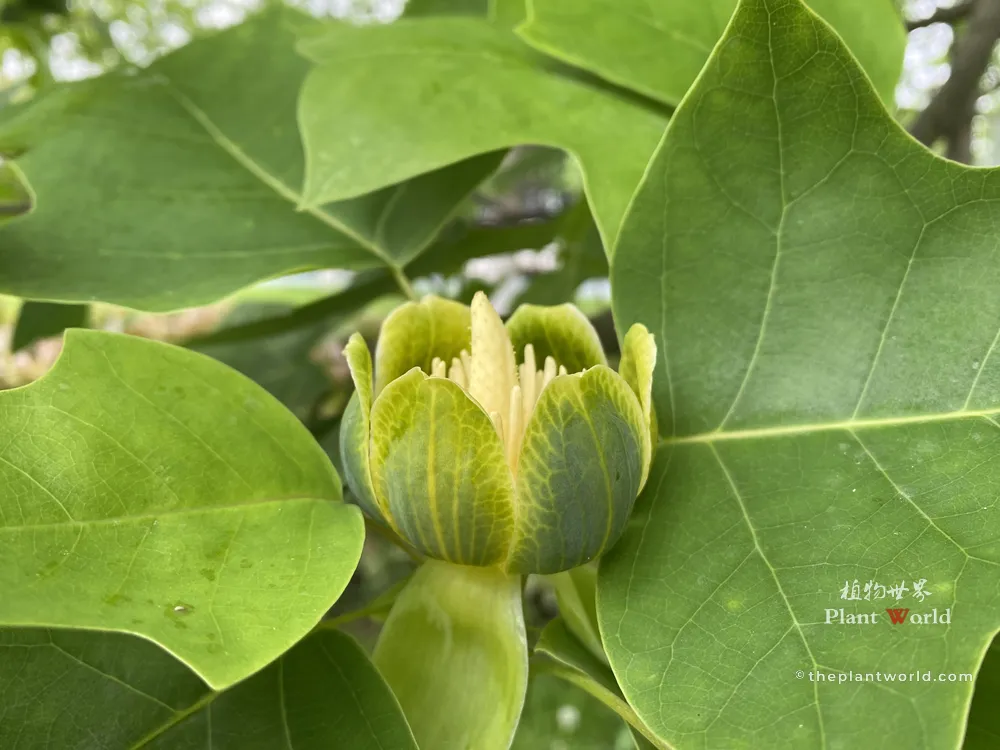
An inside view of the blossom revealing its striking center. The fused emerald-green pistils cluster tightly like the tip of a fine Chinese writing brush, beautifully encircled by slender stamens.
Plant Profile & Key Species Distinction
- Scientific Name: Liriodendron chinense (Hemsl.) Sarg.
- Common Names: Chinese Tulip Tree, Chinese Saddle Tree, Mandarin Robe Tree, Chinese Whitewood
- Family: Magnoliaceae (Magnolia Family)
- Conservation Status: China Class II National Protected Wild Plant
📌 Critical Species Distinction for Western Gardeners
Only two living species remain in the ancient post-glacial genus Liriodendron. To ensure botanical precision in your landscape design, do not confuse them:
- Liriodendron chinense (Chinese Tulip Tree): Native exclusively to China. Features deeply lobed, saddle-shaped leaves and pure, pale greenish-yellow tulip blossoms completely devoid of bright interior bands.
- Liriodendron tulipifera (American Tulip Poplar): Native to eastern North America. Tends to grow slightly larger with shallower leaf lobes; its flowers feature bold, bright orange bands near the base of the petals.
- Liriodendron × sinoamericanum: A vigorous horticulturally developed hybrid between the Chinese and American species, widely utilized for urban reforestation across East Asia due to its rapid growth rate.
Comparison of the “Three Brothers” of the Liriodendron Family
| Feature | Chinese Tulip Tree(Liriodendron chinense) | American Tulip Poplar(Liriodendron tulipifera) | Hybrid Tulip Tree(Liriodendron × sinoamericanum) |
| Parentage | Native Species | Native Species | Artificial Hybrid |
| Leaves | Saddle-shaped; typically features 1 large lateral lobe on each side of the lower-middle part, resembling “two shoulders.” | Saddle-shaped; features 2–3 short, gradually tapering lobes on each side. | Mating-robe shaped, but the apex is slightly concave; different leaves with 1 or 2 lobes often grow mixed on the same tree. |
| Flowers | Cup-shaped; tepals are green on the outside, and the inner 2 whorls feature yellow longitudinal streaks (devoid of bright bands). | Cup-shaped; outer tepals are green, inner 2 whorls are grayish-green with an irregular bright orange-yellow band near the base. | Bell-shaped; flower color is intermediate between the parents, with a yellowish-green base on the inner whorls turning a honey-orange hue. |
| Blooming Period | May | May | Similar to both parent species |
| Aggregate Fruit | Relatively long, roughly 7–9 cm in length. | Slightly shorter, around 7 cm in length. | The volume is typically larger than both parents. |
| Seeds (Samaras) | Winged samara with a blunt or subacute apex. | Winged samara with a pointed apex. | Long-winged samara. |
| Fruiting Period | September–October | September–October | Similar to both parent species |
| Twigs | Gray or grayish-brown | Brown or purplish-brown | Purplish-brown |
Four Seasons of Beauty: Blooms, Leaves, and Winged Fruit
1. Zen-Like Tulip Blossoms
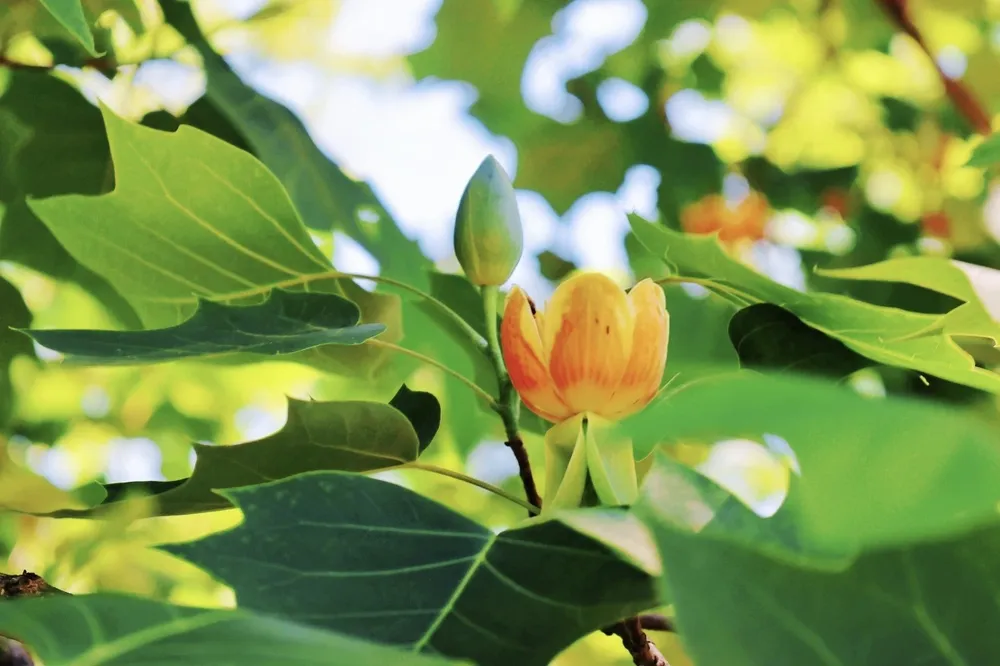
In late spring and early summer, the tree unfurls delicate, cup-shaped flowers singly at the tips of its branchlets. Each blossom bears nine tepals: the outermost three are soft green and curve gracefully outward like sepals, while the inner six stand strictly upright, overlapping layer upon layer.
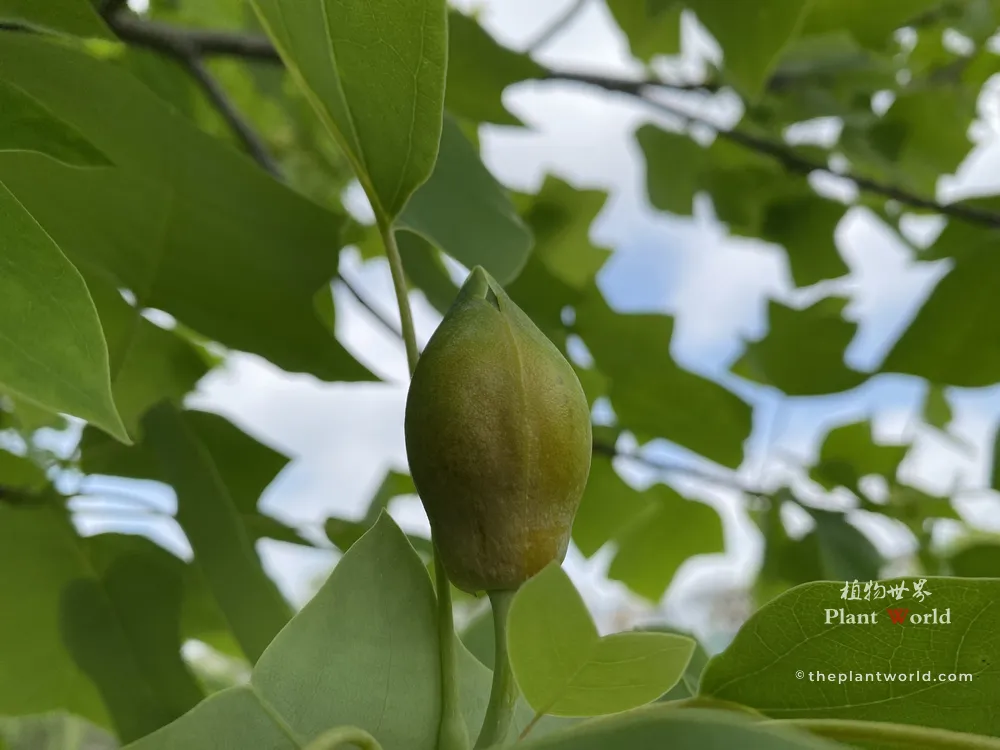
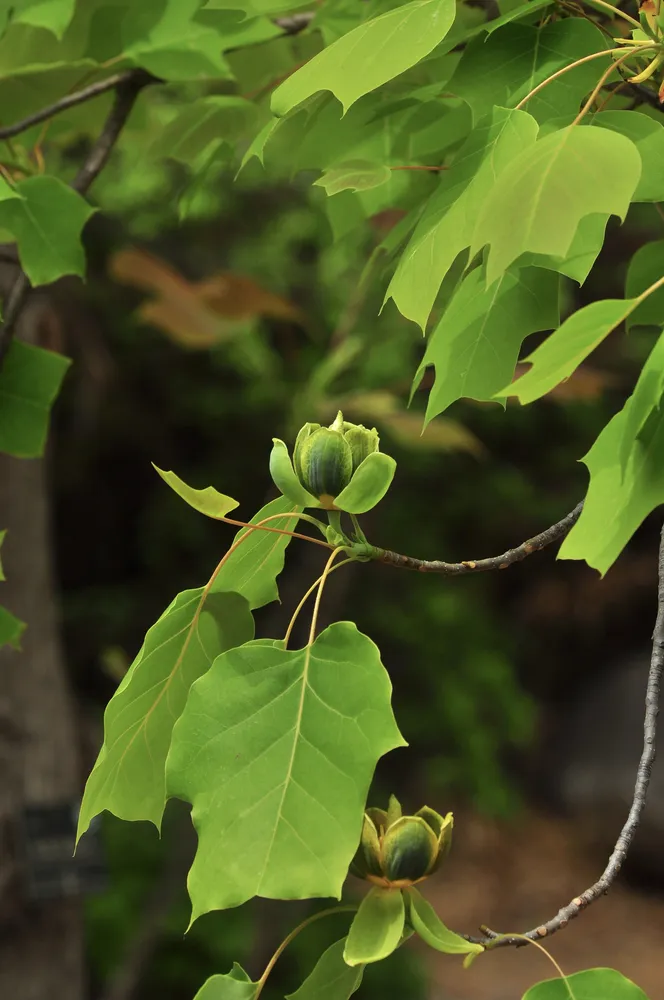
Before transforming into a delicate, cup-shaped blossom, the Liriodendron chinense flower remains tightly wrapped in this elegant, teardrop-shaped bud. It stands as a beautiful symbol of late spring anticipation in the garden.
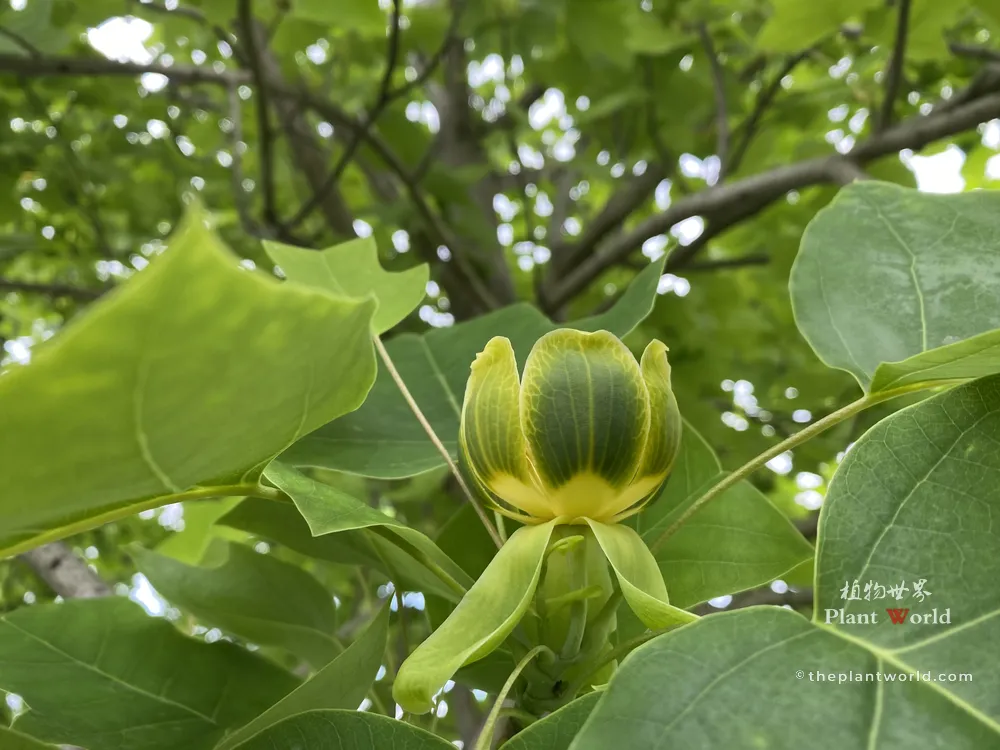
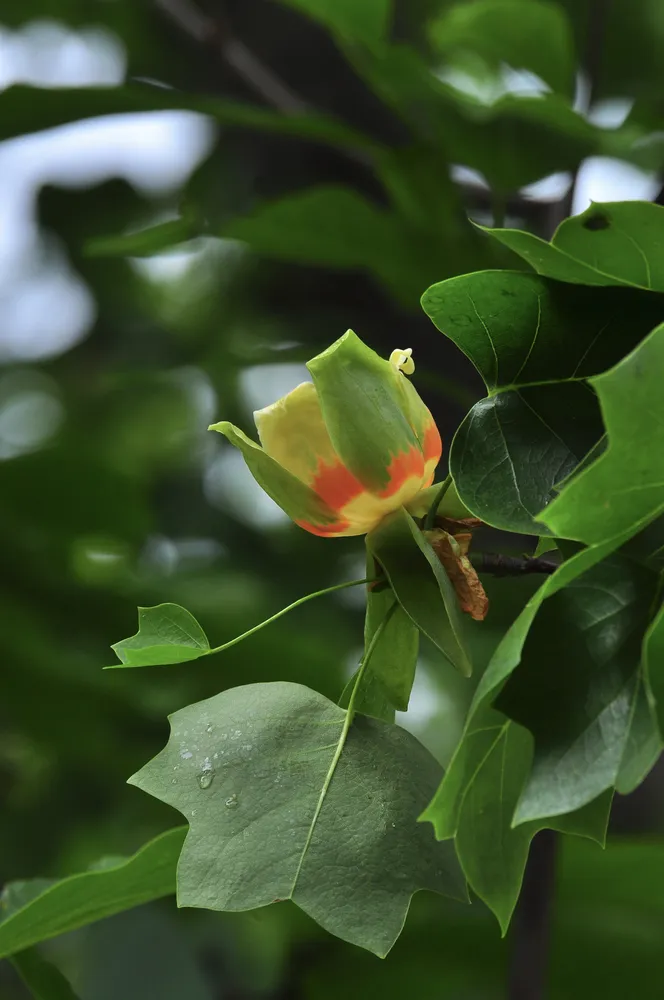
In late spring, Liriodendron chinense unfurls delicate, cup-shaped flowers with an understated elegance. The outermost tepals curve gracefully outward like sepals, while the inner ones stand strictly upright.
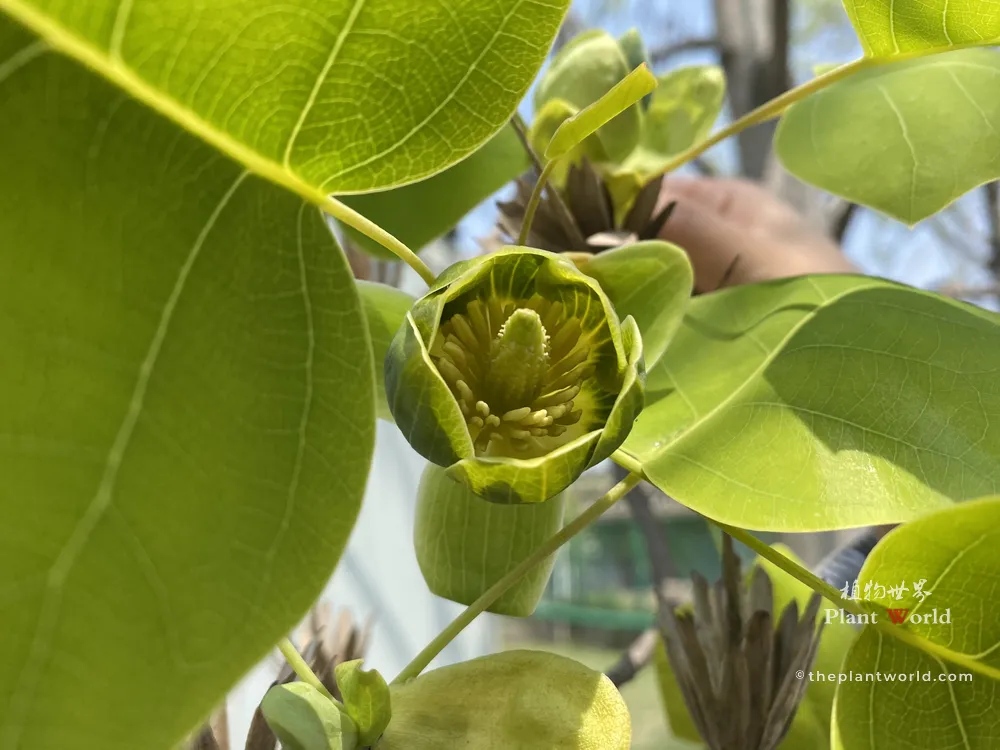
Predominantly pale green with thin yellow streaks at the base, these flowers exude a quiet, understated elegance. From an interior view, the flower center is equally striking—fused emerald-green pistils cluster tightly like the tip of a fine Chinese writing brush, encircled by slender golden stamens.
2. Iconic “Mandarin Robe” Leaves
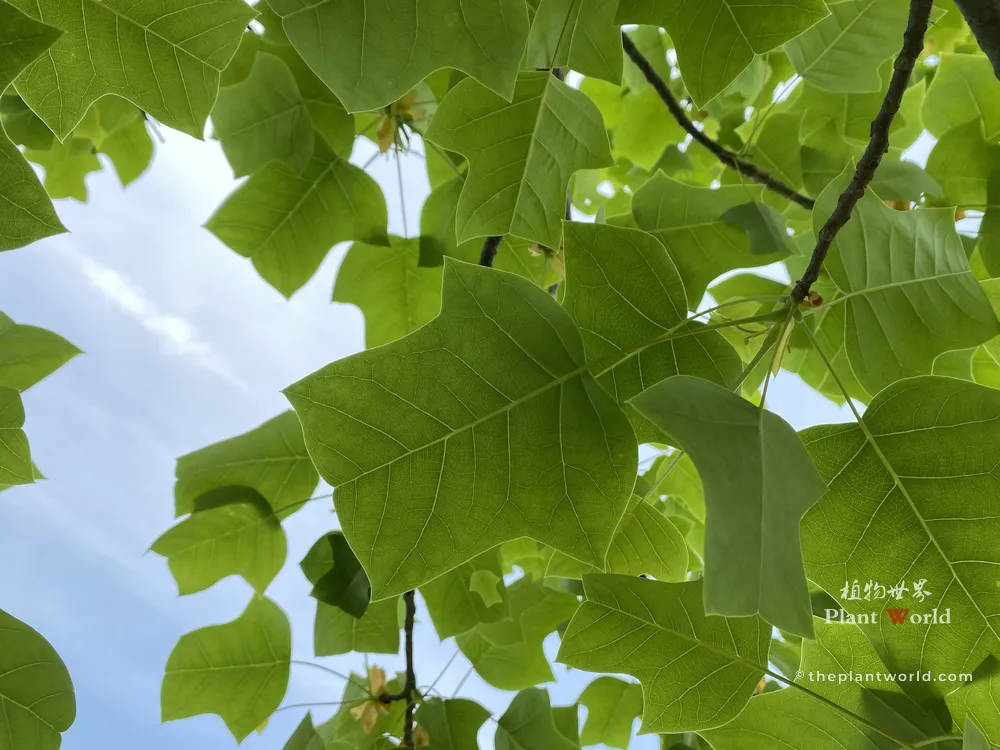
Beyond its lovely blooms, the foliage makes Liriodendron chinense instantly recognizable globally. Each massive leaf forms a unique, deeply indented saddle shape that looks exactly like the clean lines of a traditional Chinese scholar’s robe, with lateral lobes mimicking wide, flowing sleeves.
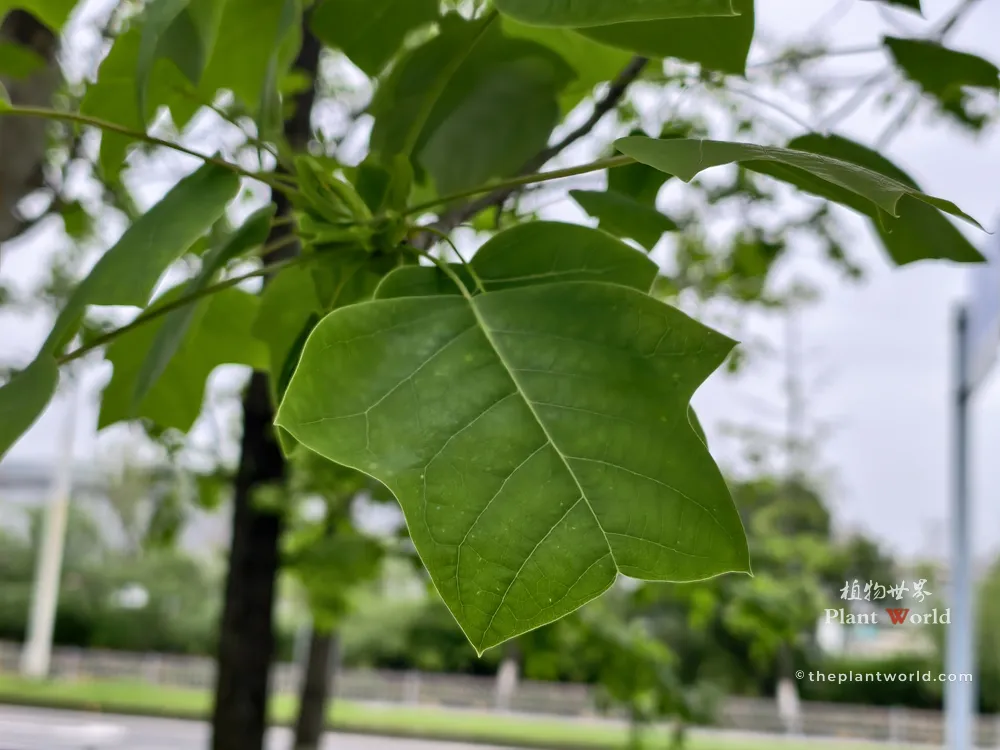
The unique, deeply indented leaf of Liriodendron chinense perfectly mimics the clean lines of a traditional Chinese scholar’s robe. This unforgettable foliage gives the Chinese Tulip Tree its global recognizability and architectural elegance.
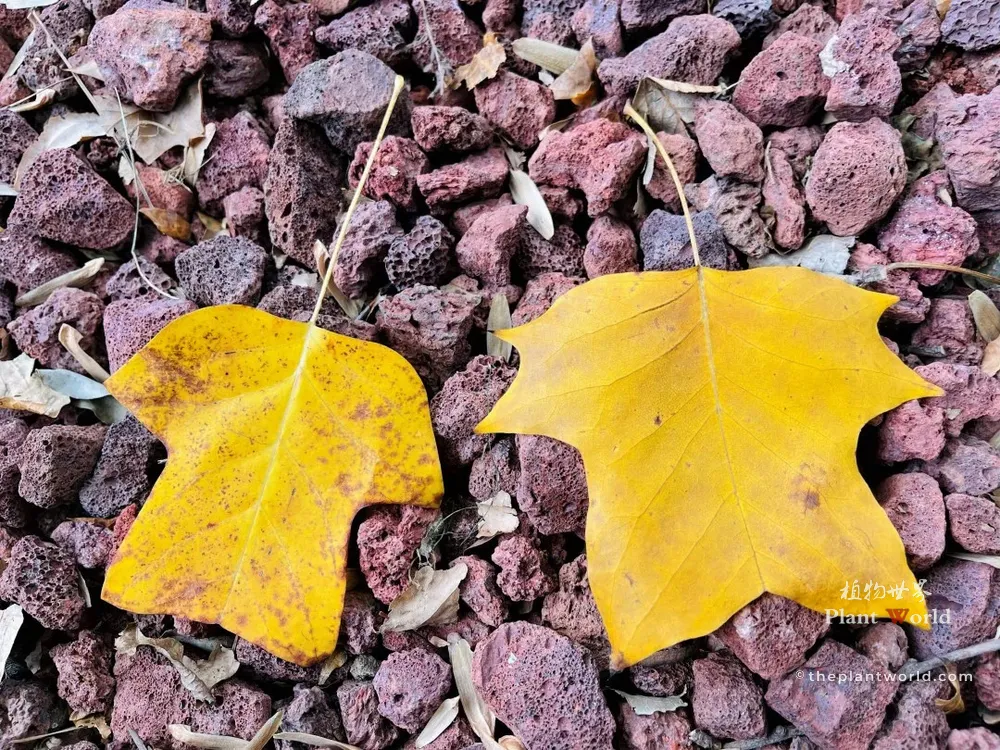
As autumn temperatures drop, the chlorophyll fades, and rich carotenoids transform the entire canopy into a brilliant, uniform imperial gold—as if the tree were draped in royal robes. This stunning visual display has earned it the beloved regional nickname “Mandarin Robe Tree” (马褂木).

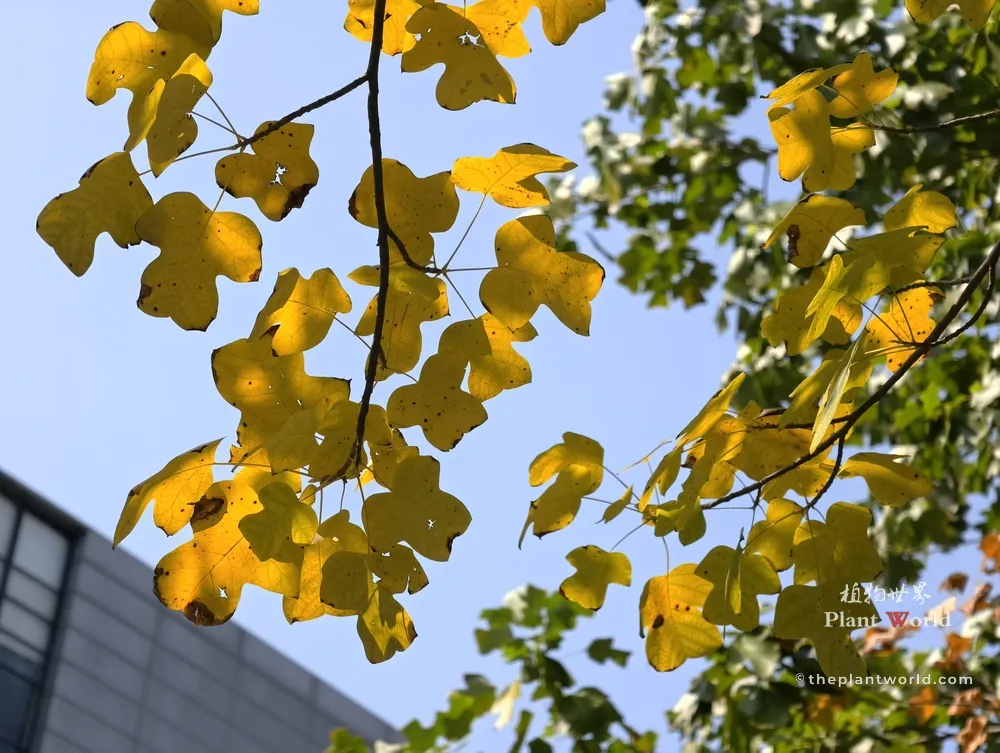
As autumn matures, the foliage of Liriodendron chinense undergoes a dramatic transformation, turning a uniform, brilliant golden-yellow. These iconic “Mandarin robe” leaves catch the crisp autumn light, glowing luminous against the clear sky and demonstrating why this ancient species is celebrated as one of the world’s premier avenue trees.
“If you look closely at the shape of the Tulip Tree’s leaves (Liriodendron), you’ll notice a striking resemblance to the Imperial Yellow Magua (as shown in the historical artifact image above/below). This unique, coat-like foliage is precisely why the tree is widely known as the ‘Magua Tree’ (马褂木) in China.”
3. Helicopter Seeds and Winter Cones
After the summer flowering ends, woody aggregate fruit structures develop. Dozens of flat, winged samaras spiral tightly around a central axis, shaping a pointed cone that resembles a miniature oriental pagoda.
When sharp autumn breezes blow, the winged samaras of the tulip tree spin downward like tiny helicopter rotors to disperse via the wind — this seasonal shift arrives right around the same time the fiery scarlet foliage of the Chinese Tallow Tree blazes across autumn landscapes.
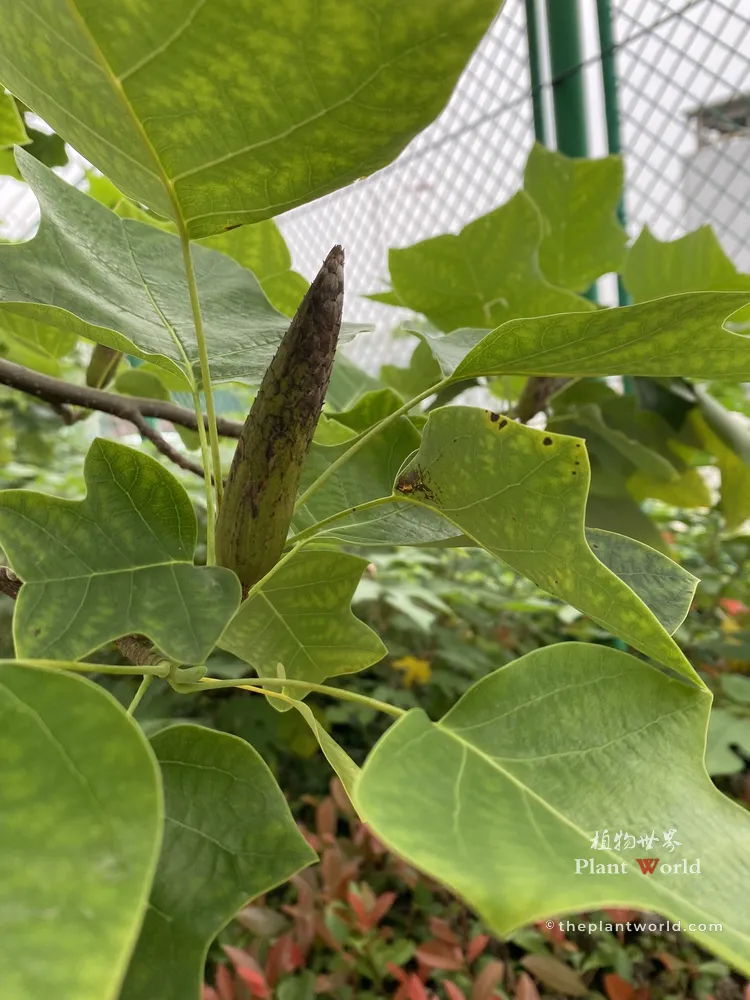
Following the summer blooms, Liriodendron chinense develops these distinctive aggregate fruits. Dozens of winged samaras spiral tightly around a central axis, creating a pointed cone that beautifully resembles a miniature oriental pagoda.
The upper seeds fall first, leaving behind elegant, cup-like empty woody bases. Hundreds of these golden-brown cups remain on the bare branches throughout the winter, glowing warmly in the low winter sunlight until the new spring buds unfurl.
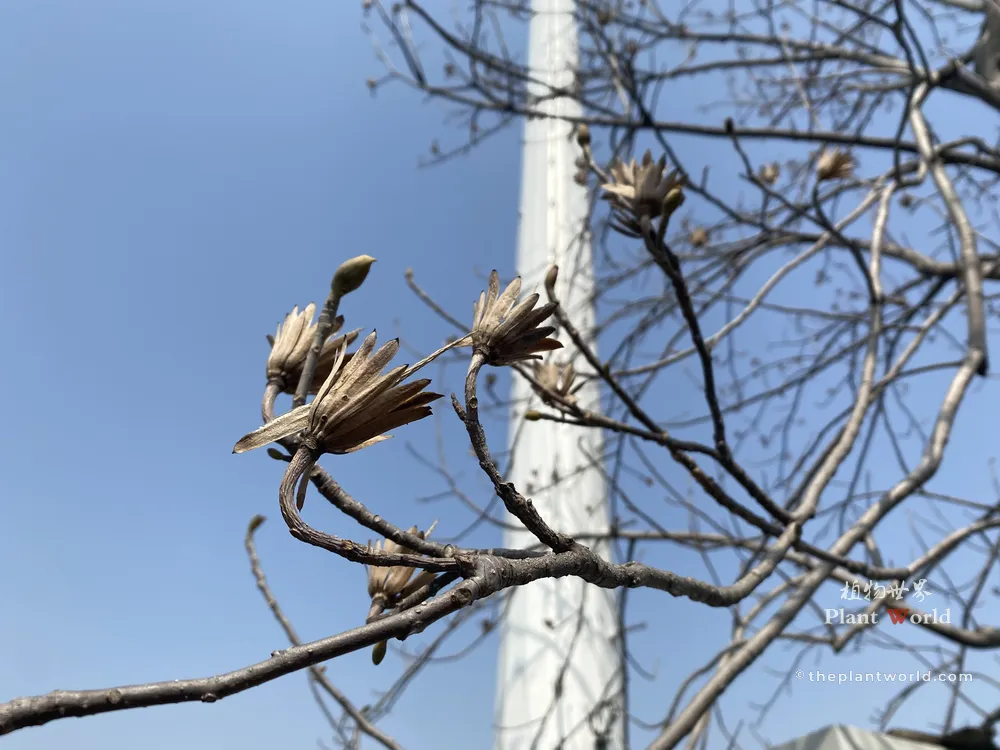
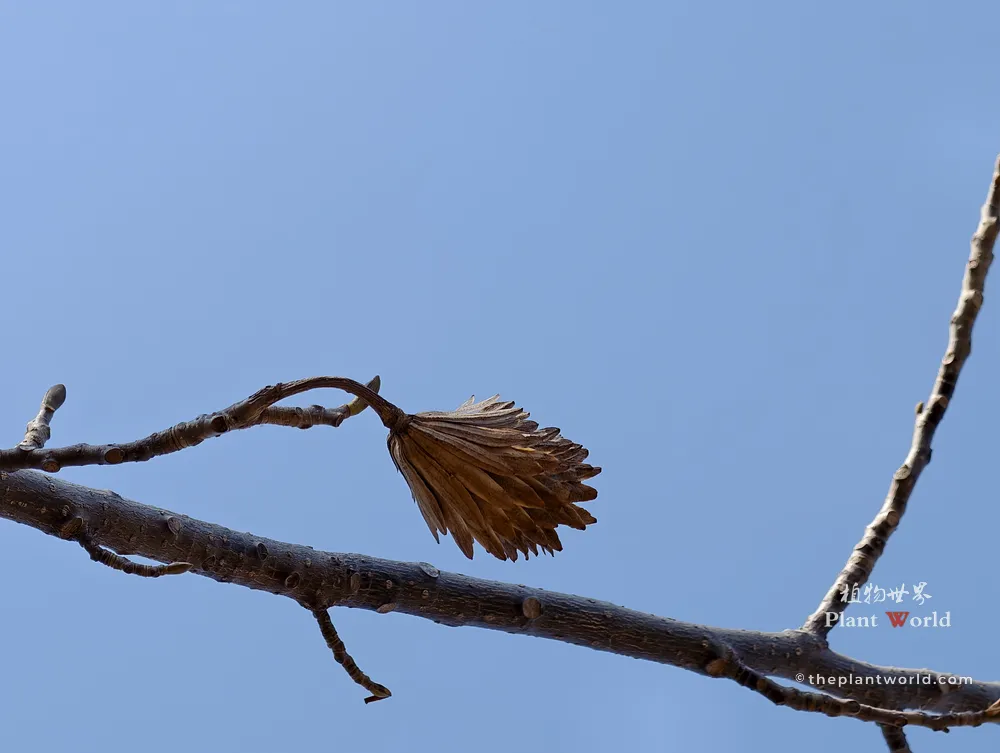
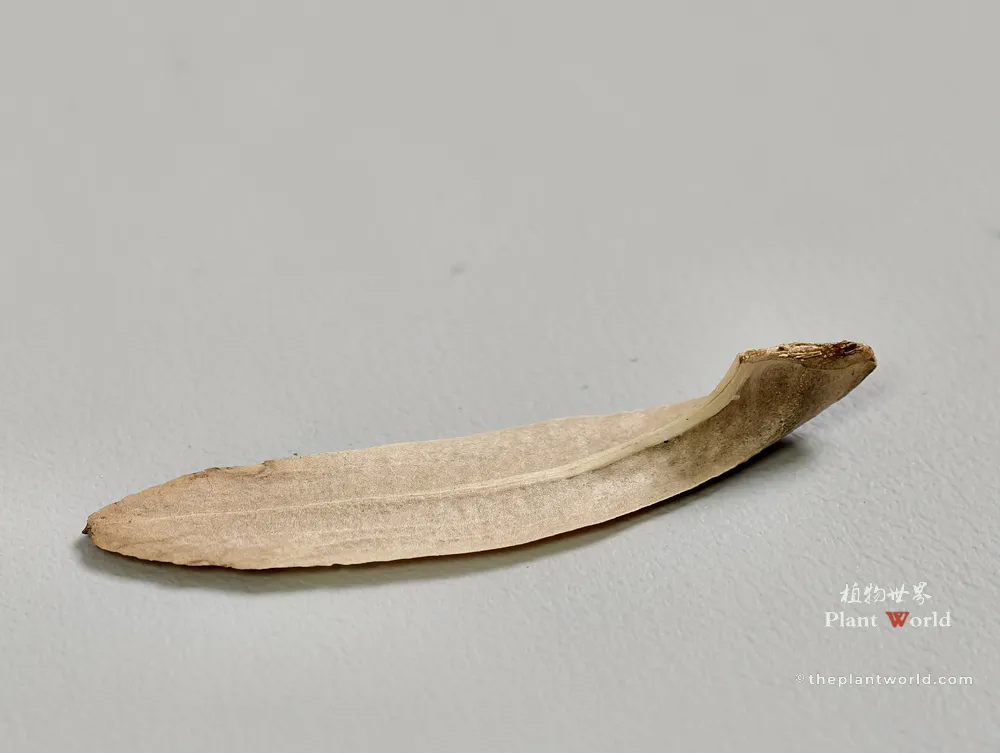
A close-up study of a single samara detached from the aggregate fruit of Liriodendron chinense. This lightweight, wing-like structure is an evolutionary marvel, designed to catch the autumn breeze and spin away from the parent tree like a miniature helicopter to disperse its seeds.
Prehistoric Heritage & Geological Survival
The Chinese Tulip Tree is a profound prehistoric relict, sharing an evolutionary timeline with other iconic native long-lived sacred ancient Chinese trees such as the Ginkgo and dawn redwood.The genus Liriodendron originally arose during the Cretaceous period, over 100 million years ago.
During the Tertiary epoch, more than ten diverse species flourished across the temperate zones of the Northern Hemisphere, with fossil records uncovered as far apart as France, Greenland, and Japan.
However, the onset of the devastating Quaternary Ice Age wiped out almost the entire genus due to massive glacial shifts. Only two resilient sister species survived in isolated, ice-free geographic refugia: one in the warm river valleys of central China, and the other in the southeastern United States.
Cultivation & Care Guide for the Chinese Tulip Tree
Climate & Hardiness
- USDA Hardiness Zones: 6–9. It exhibits excellent cold hardiness once established. However, applying a deep layer of organic root mulch to safeguard young saplings during severe winter freezes is highly recommended in Zone 6. It thrives best in warm temperate and humid subtropical climates.
Light & Placement
- Requirements: Requires full, direct sun (at least 6 hours daily) to develop its fastest vertical growth rate and achieve its signature brilliant autumn color profile. It can tolerate light, partial afternoon shade.
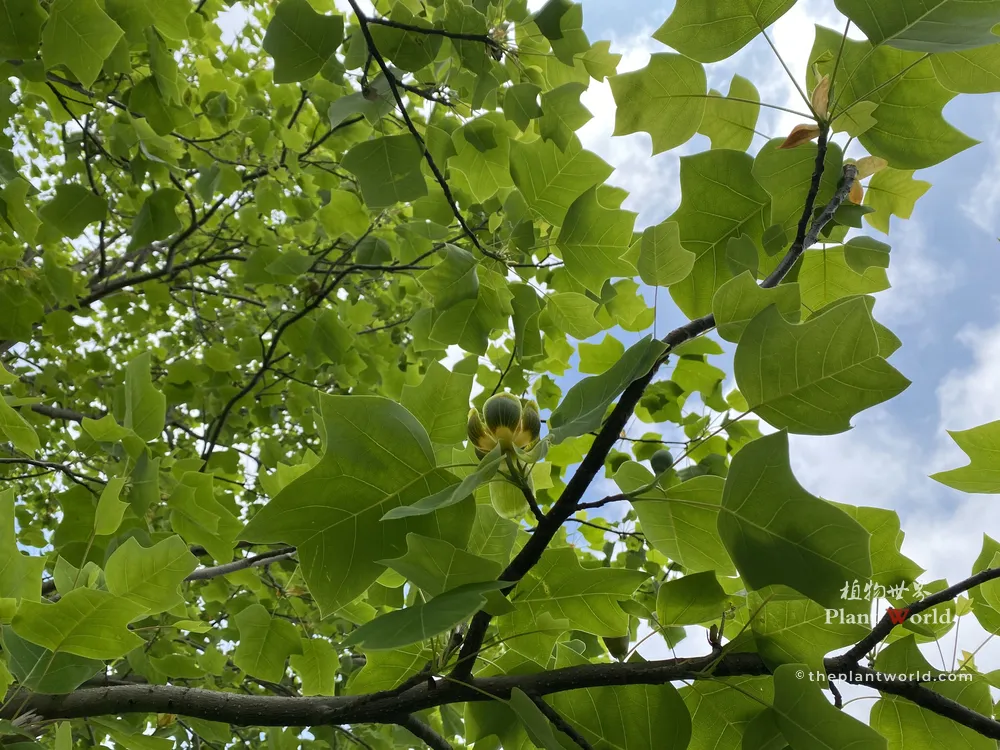
- Garden Architecture: Because it eventually grows into a towering canopy, it serves as a spectacular focal specimen tree for expansive estate lawns, open park avenues, and riparian borders. It functions beautifully as a majestic overstory anchor, towering elegantly above structured, mid‑tier evergreens like buddhist‑pine framework, making it a remarkable Chinese Garden Plants.
Soil & Water Management
- Prefers deep, highly fertile, organically rich, and slightly acidic loamy soils with excellent internal drainage. You must absolutely avoid heavy, compacted, and permanently waterlogged low ground, which starves the roots of oxygen and triggers root rot. Provide regular, deep irrigation to young trees through summer dry spells; mature specimens develop moderate drought tolerance.
Pruning & Maintenance
- Pruning requirements are low. Carry out light structural trimming exclusively in late winter during dormancy to clear away broken or storm-damaged branches. Avoid heavy canopy topping or aggressive shearing, as severe cutting disrupts its naturally formal, straight vertical silhouette and heavily inhibits future flowering cycles. Note that young trees require several years of vegetative growth before producing their first tulip blooms.
Practical Traditional Values
- Fine Woodcraft & Furniture: The fine-grained timber of Liriodendron chinense is exceptionally lightweight yet tough, highly stable, and easy to work, making it a prized choice for high-end solid wood furniture, internal joinery, and artisanal wood carvings.
- Ethnobotanical History: In historical regional folk practices, the thick bark was carefully harvested and dried to prepare traditional warm tonics aimed at easing seasonal coughs and mild swelling brought on by damp, cold winter microclimates.
Final Conclusion
Beyond its outstanding landscape value, every seasonal trait and ancient origin of Liriodendron chinense carries rich meaning woven into Chinese plant culture and stories.
The Chinese Tulip Tree (Liriodendron chinense) represents an elite choice for modern landscape designers seeking a tree with immense architectural stature and deep geological history.
By combining its unique, zen-like spring blossoms, unforgettable mandarin-robe leaves that turn imperial gold in autumn, and captivating pagoda-like winter cones, it infuses any large landscape with profound oriental seasonal narrative and effortless low-maintenance vigor.
References
- Flora of China (English Edition): Liriodendron chinense Species Profile & Magnoliaceae Taxonomy — Maintained collaboratively by the Missouri Botanical Garden and Harvard University Herbaria.
- Royal Horticultural Society (RHS): Liriodendron Cultivation, Hardiness Profiles, and Botanical Groupings — London, UK.
- International Palaeoelectronica Archives: Palaeobotanical Records and Taphonomy of Cretaceous Liriodendron Fossils across Eurasia.
- China National Forestry and Grassland Administration: Directory of National Key Protected Wild Plants and Refugia Conservation Status Reports.
- Plants of the World Online (POWO): Liriodendron chinense (Hemsl.) Sarg. Authority and Synonyms — Hosted by the Royal Botanic Gardens, Kew.
Disclaimer
The historical, cultural, and ethnobotanical records documented here are shared strictly for educational and botanical reference purposes. This article does not serve as medical or herbal advice. Do not harvest wild materials or ingest plant extracts without professional horticultural or medical guidance.
More from The Plant World:
- Chinese Wingnut: The Romantic “Ingot Tree” and Its Cultural Charm
- Plum Blossom Meaning: Symbolism & Cultural Significance
- The Hidden Meanings Behind Red Plum Blossoms
- Chinese Wisteria: History, Symbolism, and Identification
- Peach Blossoms in China: History, Culture, and Symbolism
- Chinese Crepe Myrtle: Guide to Origins & Symbolism
- Ginkgo Leaf Meaning: 5 Secrets of This Ancient Fossil
- Chinese Loquat Tree: Guide to Benefits & History
- Rose of Sharon Tree: Guide to Meaning & Care
- Hosta Plant Benefits: 5 Surprising Uses & Planting Guide
- Strawberry Begonia Care: How to Grow Saxifraga Stolonifera
- Chinese Tulip Tree Care: Liriodendron chinense & Folklore
Discover more from The Plant World
Subscribe to get the latest posts sent to your email.