
Introduction
As autumn arrives and many garden shrubs finish their flowering season, the goji‑berry plant unfolds its delicate blossoms and later bears abundant bright‑red berries. Its thin arching branches, small pale‑purple flowers and jewel‑like fruits bring special charm to temperate gardens. This is Lycium chinense, a deciduous woody shrub in the Solanaceae (nightshade) family, one of the notable fruiting plants within Chinese Garden Plants.
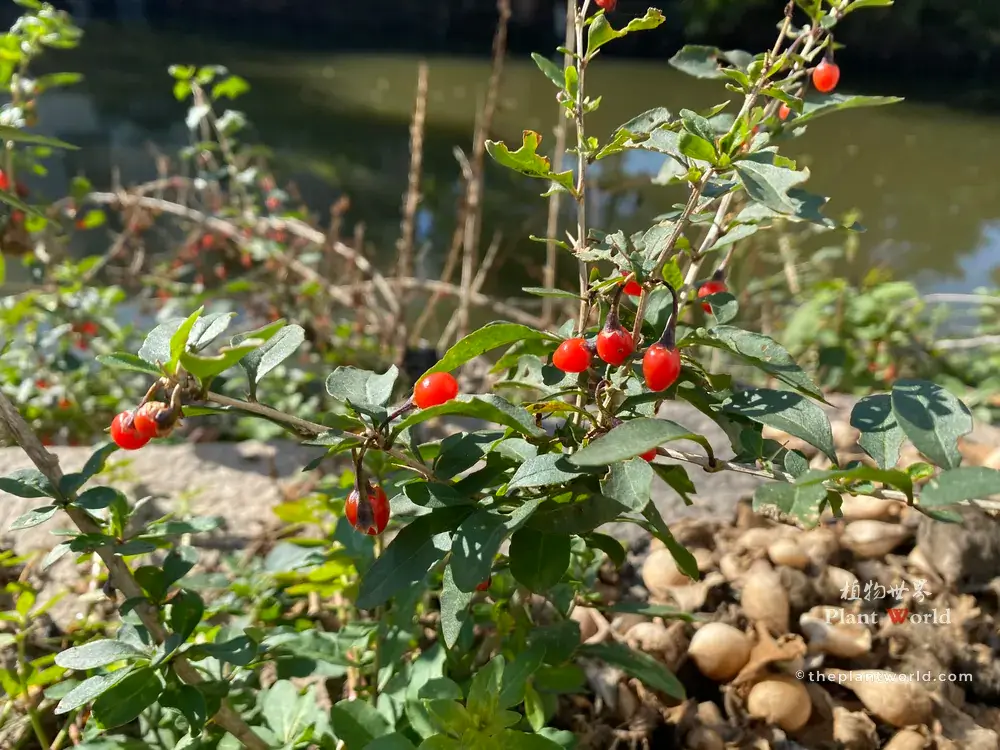
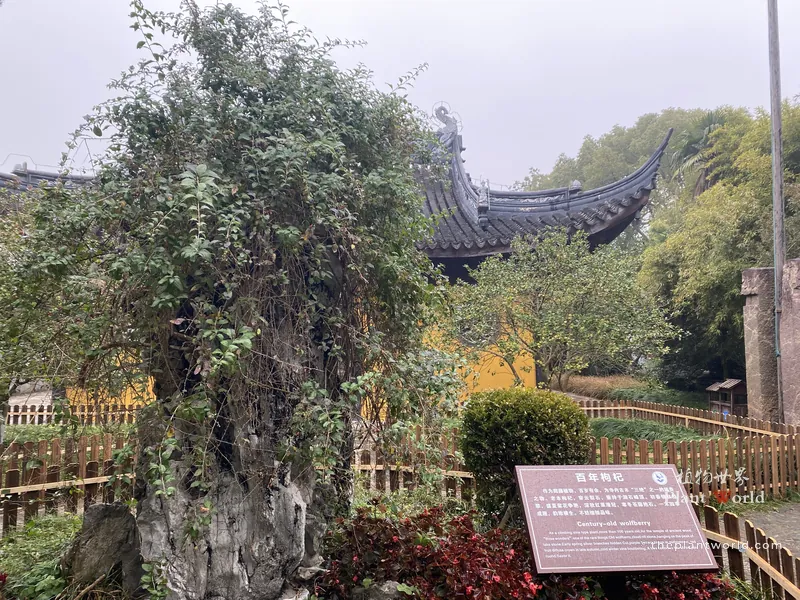
Goji‑berry shrubs produce small, dainty pale‑purple blooms, followed by clusters of oval red berries valued both for food and traditional herbal use. Branches are flexible and drooping, often armed with sharp short spines. Though widely known as a wellness ingredient steeped in daily drinks, the goji‑berry plant is also a classic ornamental shrub with centuries‑long garden history. Famous century‑old specimens survive at Baosheng Temple in Suzhou, showing how beautifully this shrub ages when grown in classical Chinese courtyards.
Name Origin: Gou‑Qi, the Spiny Willow‑Like Shrub
The Chinese name Gouqi derives from two morphological traits described in ancient texts. “Gou” refers to the sharp thorn‑like twigs; “Qi” refers to flexible slender branches similar to willow twigs. Combined, Gou‑Qi describes a shrub with thorny shoots and supple willow‑like limbs.
Li Shizhen explained this origin in Compendium of Materia Medica. He noted the plant bore spines like the gou‑thorn bush and pliable twigs resembling qi‑willow, hence the compound name Gouqi. In old regional records, it was also sometimes called wild box‑thorn.
Two major cultivated forms exist: Lycium chinense (Chinese goji, widely seen in old gardens across China) and Lycium barbarum (Ningxia goji, grown commercially for large dried berries). They share common names goji‑berry and wolfberry but differ in fruit size and garden behaviour.
Plant Profile
| Attribute | Details |
|---|---|
| Botanical name | Lycium chinense |
| Family | Solanaceae (nightshade family) |
| Genus | Lycium |
| Plant type | Deciduous woody shrub |
| Mature height | 1‑3 m in garden settings; up to 4 m in wild conditions |
| Leaves | Ovate to rhomboid‑ovate, soft‑textured, alternate or clustered on short shoots |
| Flower colour | Pale lavender‑purple |
| Petals | 5‑lobed small bell‑shaped blossoms |
| Flower size | 1‑1.5 cm across |
| Fragrance | Subtle faint scent, largely unscented |
| Bloom time | June through July |
| Fruit | Oval bright‑red berry, ripening August‑October |
| Native range | China, widespread across temperate and subtropical zones |
| Hardiness | USDA zones 5‑9 |
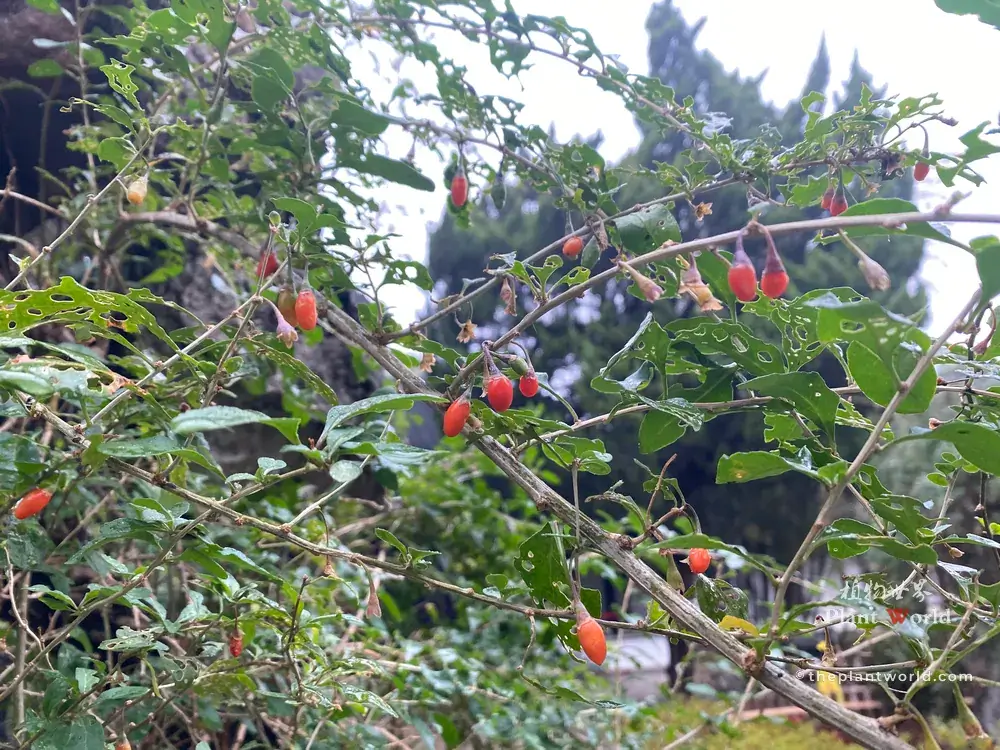
Wild Lycium chinense occurs on hillsides, roadsides and village margins across northern and central China. Many ancient temple and garden specimens are this species rather than commercial Ningxia goji. Over hundreds of years of selection, garden‑grown old‑stem specimens develop gnarled, twisting trunks valued for bonsai and rock‑garden planting.
Cultivar Groups: Two Main Cultivated Types
Two primary cultivated groups dominate planting, distinguished by origin, fruit size and garden performance.
Lycium chinense Group (Chinese Wild‑Type Goji)
Multi‑stemmed, spreading shrub with flexible drooping branches, often forming spurs and short thorns. Fruits are smaller, thin‑skinned red berries. This group tolerates high humidity better than Ningxia goji, making it suitable for Jiangnan classical gardens. It is excellent for rock‑planting, bonsai and temple courtyards. Famous century‑old specimens at Suzhou Baosheng Temple belong to this group. Representative selections are mostly local wild‑sourced garden landraces.
Lycium barbarum Group (Ningxia Commercial Goji)
Upright‑growing cultivated type bred for large, sweet berries. Fruits are bigger and thicker‑skinned for drying commercial harvest. It favours dry continental climate, less adapted to humid southern‑China summers. Mostly planted in fruit orchards; less common as ornamental garden antique specimens. Representative cultivars include large‑fruited commercial orchard selections.
History and Literature: From Shennong Ben Cao Jing to Garden Antiques
Goji‑berry appears in China’s earliest surviving herbal literature. References stretch back to pre‑Qin poetic works.
In The Book of Songs · Minor Odes · Zhan Lu, a verse records: “Zhan zhan lu si, zai bi qi ji. Xian yun jun zi, mo bu ling de.” The poem uses dew‑covered goji thorn‑bushes as a metaphor for virtuous gentlemen. This counts among the earliest surviving written records of the goji‑berry plant.
During the Han Dynasty, Shennong’s Classic of Materia Medica listed goji‑berry as top‑grade herb. Text records its medicinal effects: “It addresses internal pathogenic factors, relieves heat and thirst, eases bi‑syndrome and rheumatism. Long‑term consumption strengthens tendons and bones, keeps the body light and resilient against heat and cold.” Fruit, leaves and root‑bark (di gupi) were all collected for use.
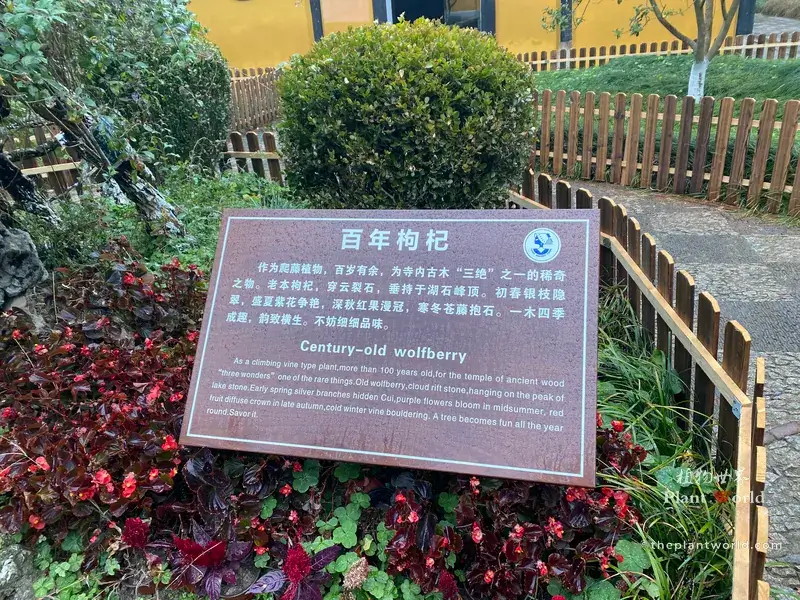
Song‑era writers noted goji growing in temple yards. Later Ming‑dynasty Compendium of Materia Medica systematically clarified naming, morphology and difference between wild and cultivated forms. Many old Buddhist temples preserved goji shrubs through centuries, among them the well‑known multi‑trunk century‑old goji‑berry plants at Baosheng Temple in Suzhou.
Cultural Symbolism: Auspicious Red Fruit, Resilience and Virtue
Though less celebrated in poetry than plum or camellia, goji‑berry carries layered cultural meaning within Chinese botanical tradition.
Symbol of Auspiciousness and Longevity
Bright‑red heavy berry clusters stand for prosperity, joy and long life. Goji‑berry is counted among China’s eight auspicious garden plants. Red fruits hanging through autumn create visual blessing symbolism for household wellbeing.
Metaphor for Noble Virtue
Derived from The Book of Songs, goji‑thorn became a classical literary symbol for gentlemen of fine moral character. Dew resting on thorny goji branches symbolised pure, unassuming virtue.
Symbol of Hardy Survival
The goji‑berry shrub tolerates poor soil, drought, saline‑alkali ground and frost. It thrives in harsh marginal locations. Old gnarled specimens living for one hundred years or more embody the theme of quiet persistence and tough vitality, as seen in Suzhou’s temple‑garden antique shrubs.
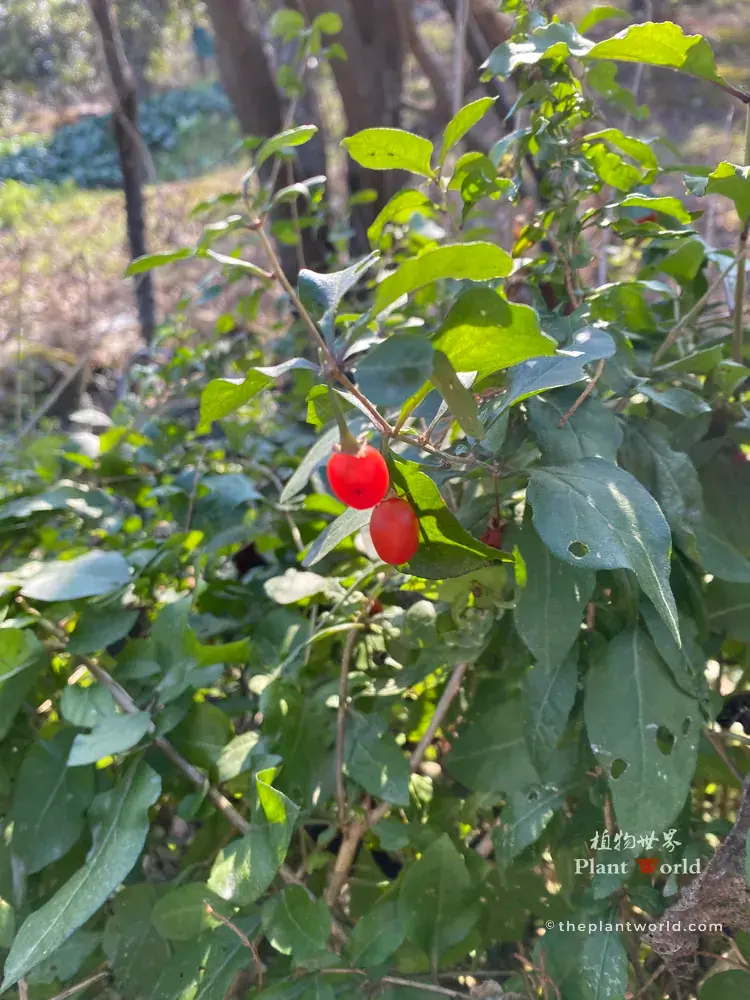
Goji‑Berry Plant vs Similar Shrubs
Gardeners sometimes confuse goji‑berry with related nightshade shrubs. Below are key distinguishing points.
| Feature | Goji‑Berry (Lycium chinense) | Chinese Matrimony‑Vine relative (Lycium barbarum) | Other spiny nightshade shrubs |
|---|---|---|---|
| Branches | Flexible, arching‑drooping, short spines | More upright, fewer spines | Stiff rigid branches |
| Flower | Small pale lavender bell‑shaped bloom | Pale purple bell flower | Larger white or violet blossoms |
| Berry | Small‑to‑medium oval glossy red fruit | Larger thick‑skinned red berry | Often toxic dark‑coloured berries |
| Garden use | Ornamental, rock‑garden, bonsai | Commercial fruit orchard | Mostly wild weed‑type |
Note: Lycium barbarum (Ningxia goji) is very closely related; the main practical difference is fruit size and climate preference rather than visual flower appearance.
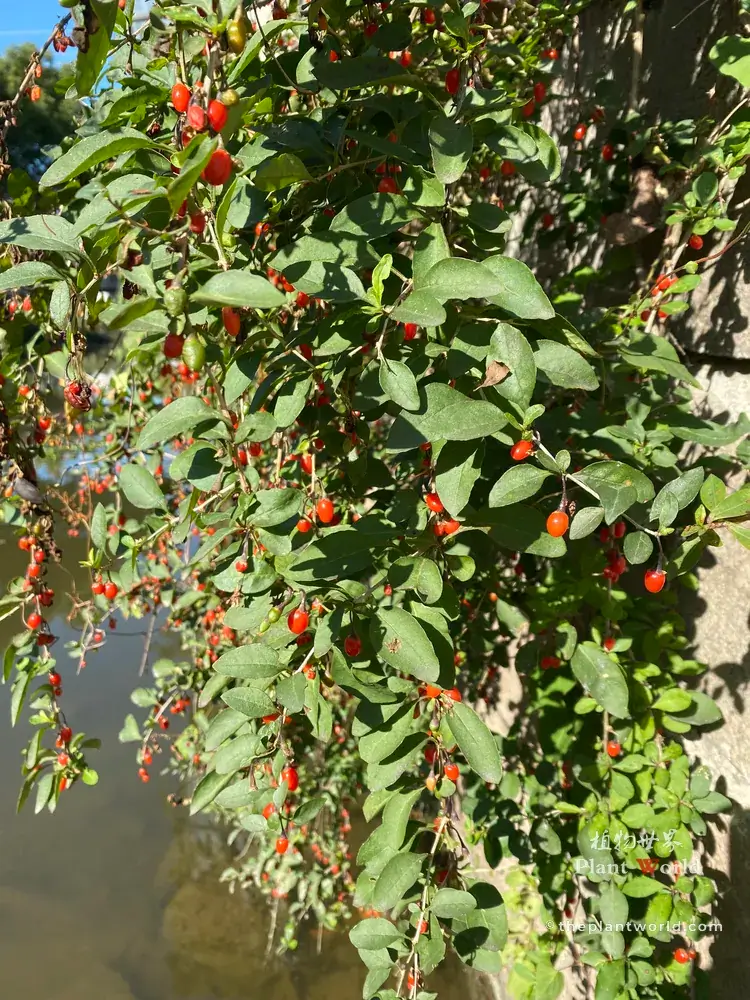
Garden Use and Care
Garden Applications
The goji‑berry plant offers multiple landscape possibilities:
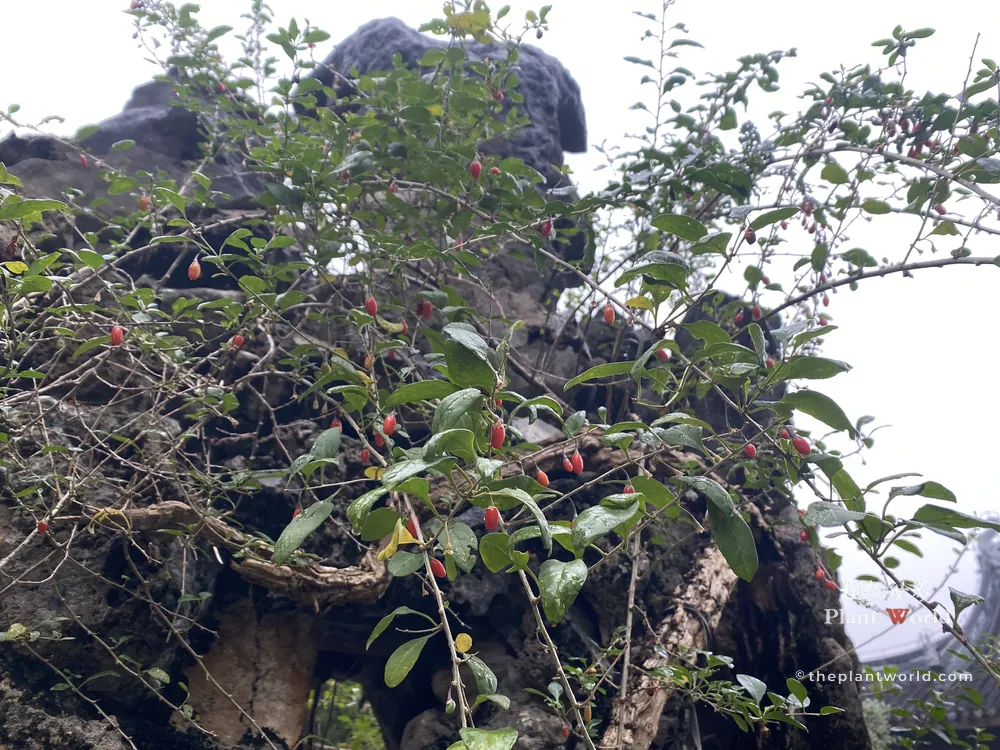
‑ Specimen antique shrub: Old gnarled specimens planted beside Taihu rocks in classical‑style courtyards, as seen in Baosheng Temple. ‑ Rock‑garden planting: Arching branches drape gracefully over stonework. ‑ Bonsai material: Old twisted root‑stock creates highly artistic bonsai forms. ‑ Edible garden: Can be grown for home‑harvest of ripe berries. ‑ Container culture: Suitable for large pots on patios.
Care Tips plus Pet‑Safety Note
‑ Light: Full sun required for heavy berry yield. Partial shade leads to sparse fruiting.
‑ Temperature: Highly cold‑hardy; tolerates frost. It also handles hot summer conditions.
‑ Soil: Adaptable; prefers well‑drained loam, tolerates sandy and mildly saline‑alkali soil. Avoid waterlogged ground which triggers root rot. Optimal pH range 6.5‑8.0.
‑ Watering: Young shrubs need regular watering. Once established it is strongly drought‑tolerant. Reduce watering in winter dormancy.
‑ Fertilizing: Apply balanced slow‑release shrub fertilizer in early spring. Avoid heavy high‑nitrogen fertilizer which produces leafy growth at cost of berries. Cease feeding in late summer.
‑ Pruning: Prune late‑winter before new spring growth emerges. Remove dead, weak and crossing branches. Arching shoots can be trained on trellises. Do not perform severe heavy pruning.
‑ Pest & disease: Watch for gall‑mite causing distorted new foliage; remove infested twigs. Good air circulation prevents most fungal leaf spots.
‑ Pet‑Safety Warning: Belonging to nightshade family, leaves, green stems and unripe green berries contain solanine alkaloids. Fully‑ripe red berries are safe for human moderate consumption. For dogs and cats, ripe red berries only cause mild upset if eaten in large quantity. Leaves, twigs and unripe fruit carry higher risk for vomiting, diarrhoea or lethargy. Prevent pets from chewing foliage. Seek veterinary support following significant ingestion.
Final Thoughts
The goji‑berry plant, with its arching thorny branches, subtle summer blooms and glowing autumn‑red berries, occupies a special niche within Chinese botanical culture. From early verses in The Book of Songs, the herbal entries in Shennong’s Classic of Materia Medica, down to the century‑old living specimens preserved at Suzhou Baosheng Temple, this hardy shrub has been valued both for practical use and garden beauty.
It is not among the most flamboyant garden blossoms, yet it delivers quiet charm: twisting aged trunks, delicate summer flowers and clusters of glowing red autumn fruit. It teaches us that plant beauty can reside in hardiness, endurance and subtle seasonal gifts, rather than only spectacular bloom displays.
When autumn comes and berries ripen bright red, a mature goji‑berry shrub brings ancient‑garden atmosphere to your landscape. If you have space in sunny well‑drained ground, consider growing this historic Chinese fruiting shrub.
References
- Plants of the World Online (POWO) – Royal Botanic Gardens, Kew: Lycium chinense species profile and distribution data.
- Flora of China – Botanical description and native-range distribution for the Lycium genus.
- ASPCA Animal Poison Control Center – Toxicity notes and nightshade family plant safety guidelines for pets.
More from The Plant World:
- Chinese Wingnut: The Romantic “Ingot Tree” and Its Cultural Charm
- Plum Blossom Meaning: Symbolism & Cultural Significance
- The Hidden Meanings Behind Red Plum Blossoms
- Chinese Wisteria: History, Symbolism, and Identification
- Peach Blossoms in China: History, Culture, and Symbolism
- Chinese Crepe Myrtle: Guide to Origins & Symbolism
- Ginkgo Leaf Meaning: 5 Secrets of This Ancient Fossil
- Chinese Loquat Tree: Guide to Benefits & History
- Rose of Sharon Tree: Guide to Meaning & Care
- Hosta Plant Benefits: 5 Surprising Uses & Planting Guide
- Strawberry Begonia Care: How to Grow Saxifraga Stolonifera
Discover more from The Plant World
Subscribe to get the latest posts sent to your email.