
The Chinese tallow tree (Triadica sebifera) is a stunning deciduous tree celebrated for its dramatic seasonal shifts, profound Chinese cultural heritage, and unique ancient practical applications. Whether you refer to it by its official common name Chinese Tallow Tree or its playful North American nickname Popcorn Tree, this native Chinese species delivers a captivating blend of botanical curiosity and timeless landscape beauty.
- 1. Taxonomy & Botanical Profile
- 2. Native Origin and Global Spread
- 3. Origin of the Name “Wujiu” (乌桕)
- 4. Leaves: Shape & Dramatic Seasonal Color Changes
- 5. Flowers: Early Summer Blooms
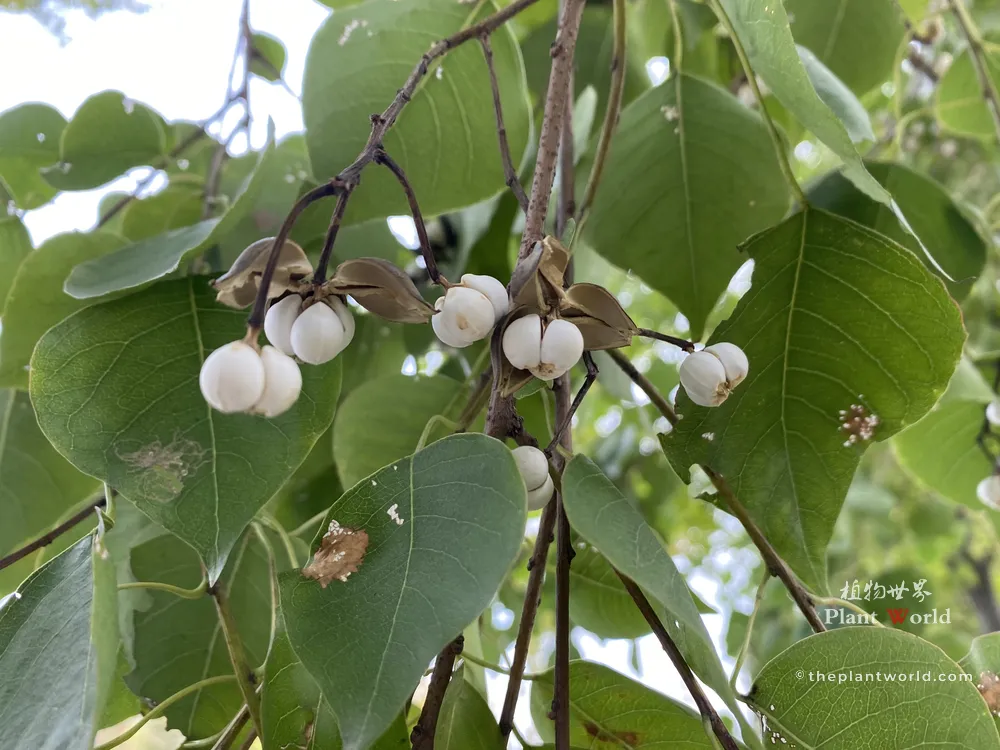
- 6. Fruit & Seeds: The Famous “Popcorn Tree” Winter Look
- 7. Traditional Historical Uses
- 8. Plant Culture & Literary Heritage
- Quick Gardening Guide
- Reference Sources
- More from The Plant World:
1. Taxonomy & Botanical Profile
- Scientific Name: Triadica sebifera (modern accepted name)
- Synonym: Sapium sebiferum (outdated but still common in older gardening texts)
- Family: Euphorbiaceae (spurge family)
- Genus: Triadica
- Common Names: Chinese Tallow Tree, Popcorn Tree, Candleberry Tree, Chicken Tree (regional Southern U.S. name)
2. Native Origin and Global Spread
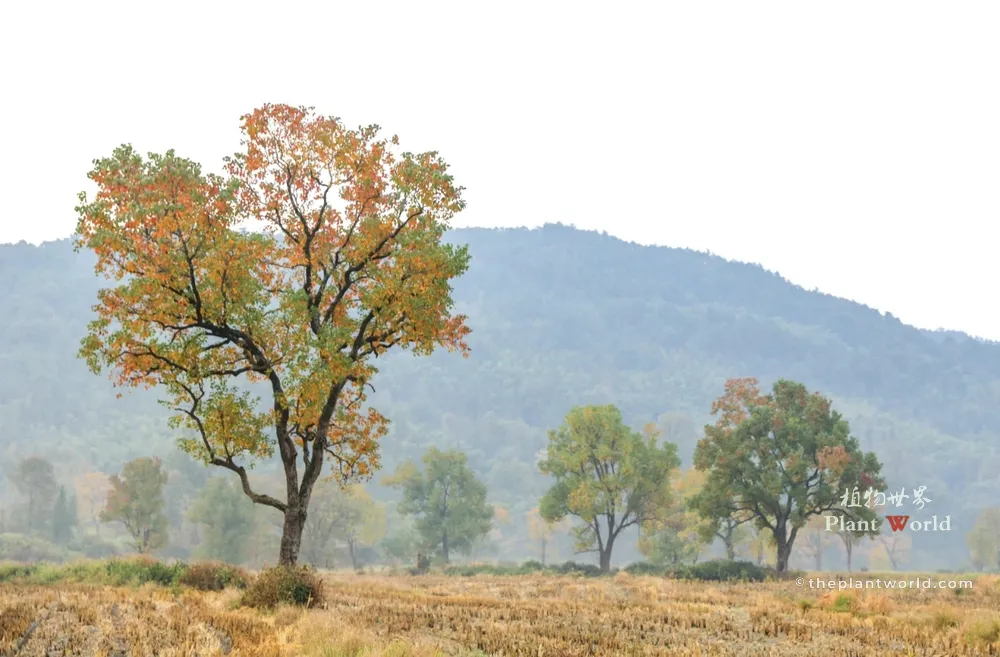
The Chinese tallow tree is endemic to China. Its natural wild range covers all regions south of the Yellow River, including the Yangtze Basin, South China, and Southwest China.
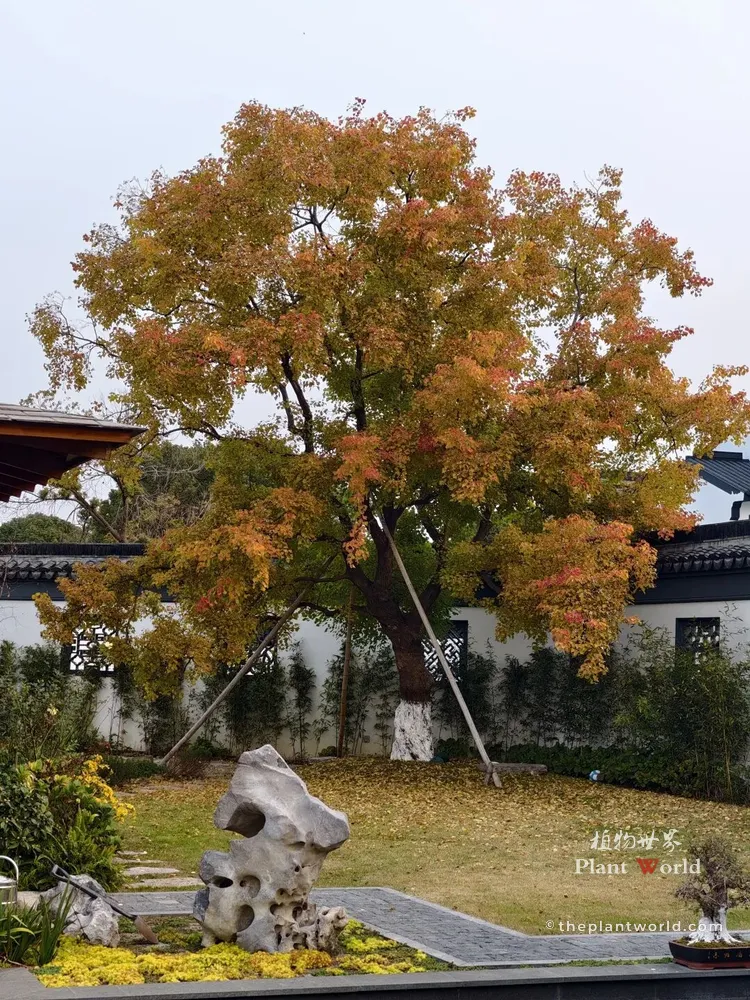
For thousands of years, local residents in Jiangsu, Zhejiang, Jiangxi, and Anhui widely cultivated the tree along streams, roadsides, farm ridges, and homesteads.
Later, global trade introduced the tree to Europe, America, Australia, and Southeast Asia. While beloved and culturally treasured in China, it has become invasive outside its native range. It spreads rapidly by seed, outcompetes native vegetation, and is restricted or banned in many U.S. states and Western Australia.
3. Origin of the Name “Wujiu” (乌桕)
The tree’s traditional Chinese name comes from natural observations recorded in Li Shizhen’s Compendium of Materia Medica:
- Wu (Crow): Wild crows favor its fat-rich white seeds as winter food.
- Jiu (Mortar): Mature tree roots decay into dark, hollow, mortar-shaped cavities after long-term damp exposure.
Combined, these two traits created its classical name “Wujiu.”
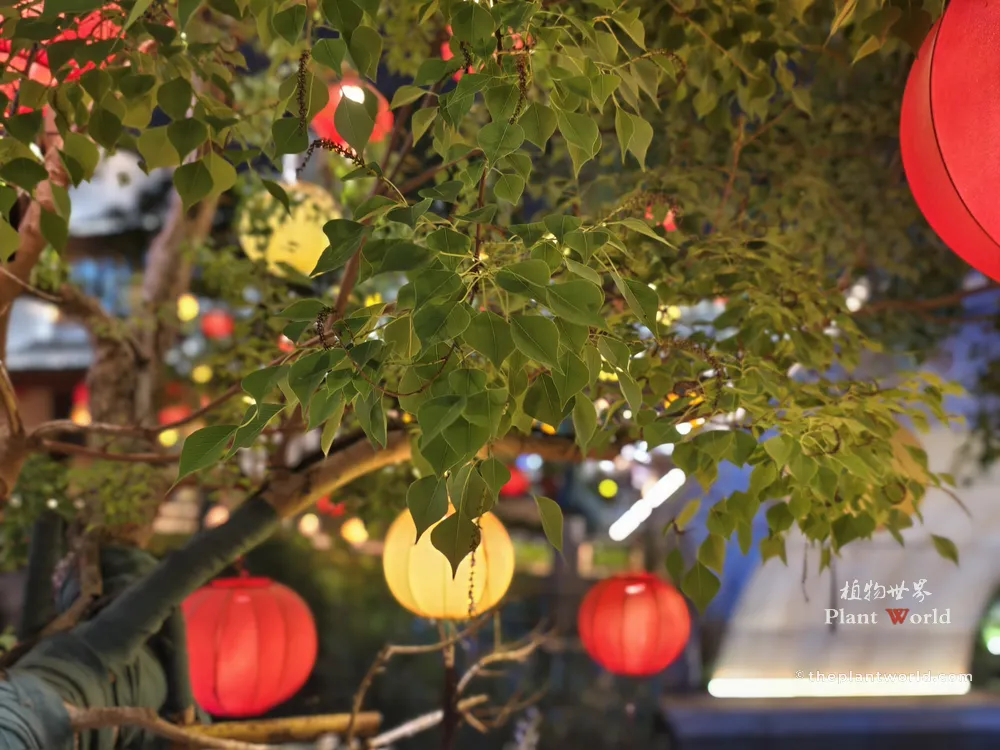
4. Leaves: Shape & Dramatic Seasonal Color Changes
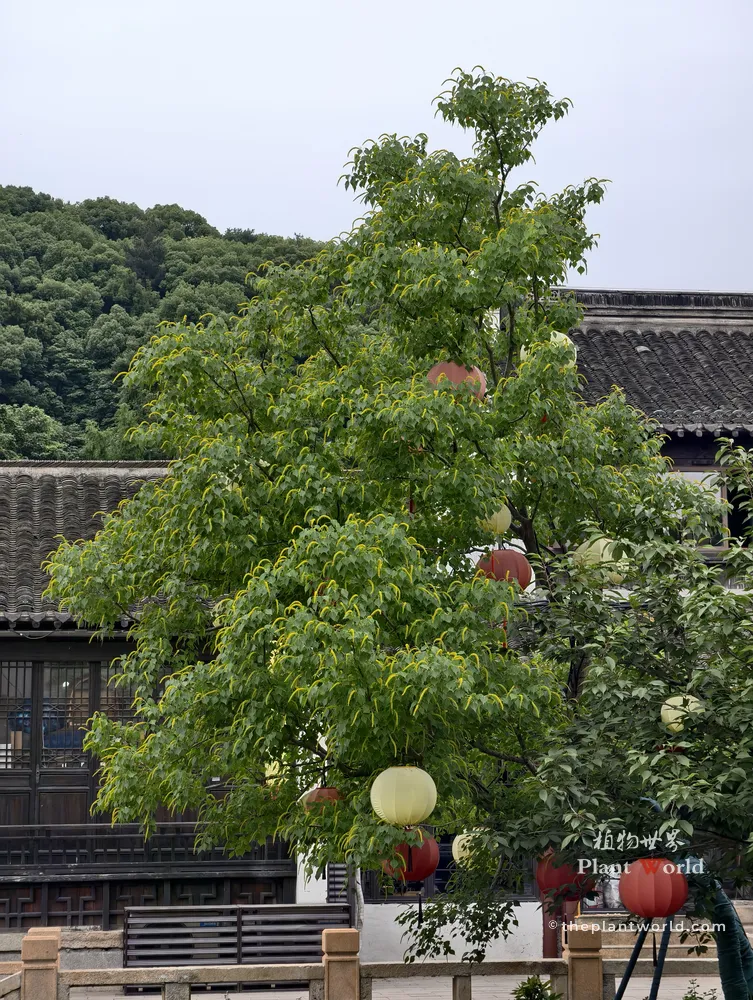
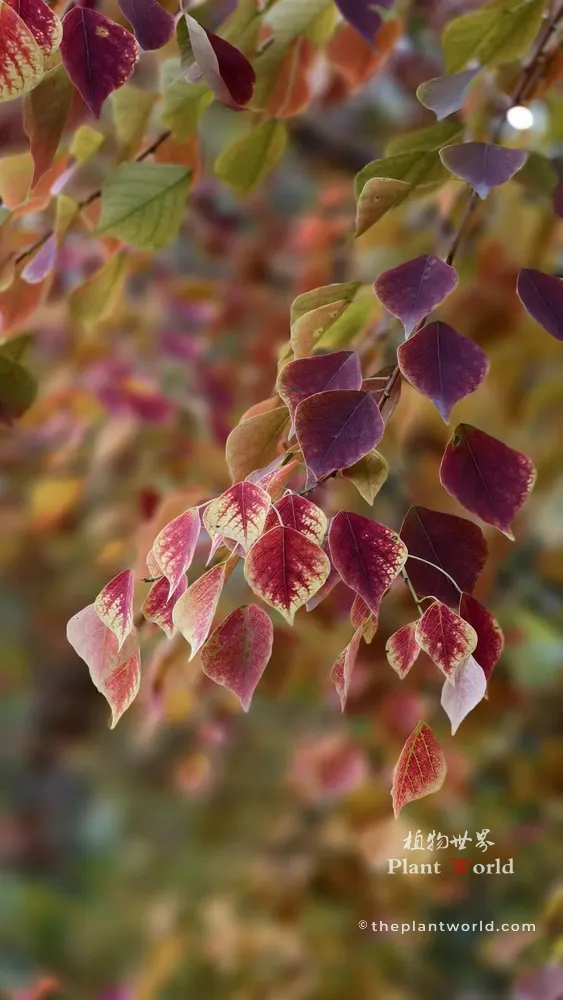
Chinese tallow tree leaves are uniquely diamond-shaped (deltoid-ovate), with pointed tips, smooth toothless edges, and thin papery texture.
Seasonal Foliage
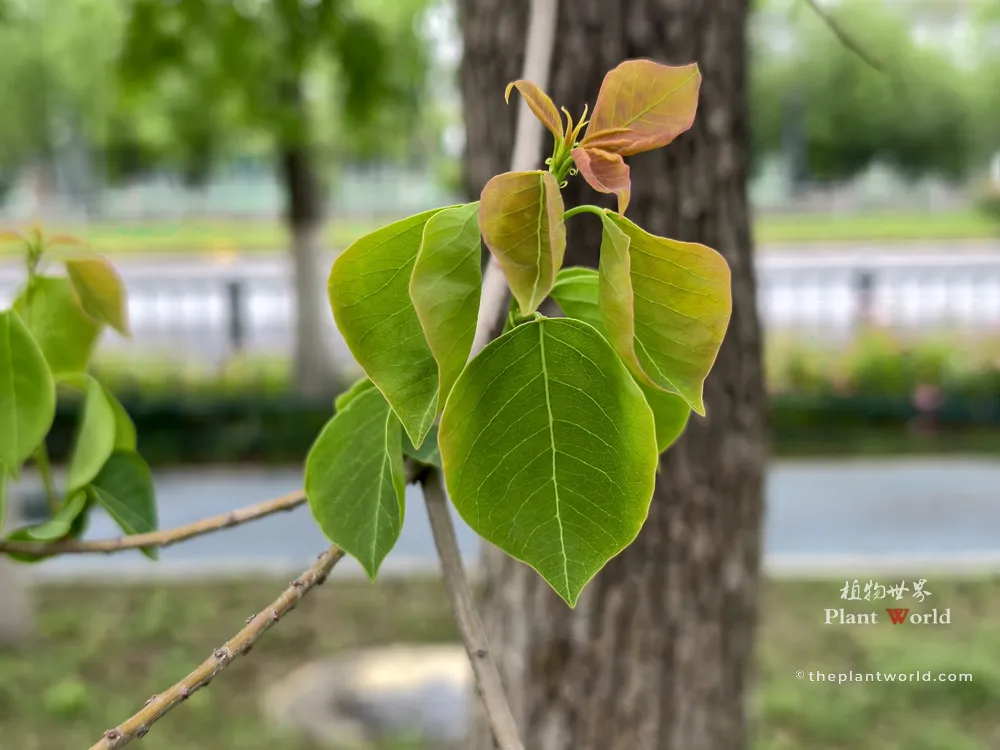

- Spring: Pale tender green new growth creates a soft, light canopy.
- Summer: Leaves deepen to clean medium green, providing dense shade.
- Autumn (peak season): Frost triggers vivid layered colors—amber, gold, scarlet, wine red, and crimson.
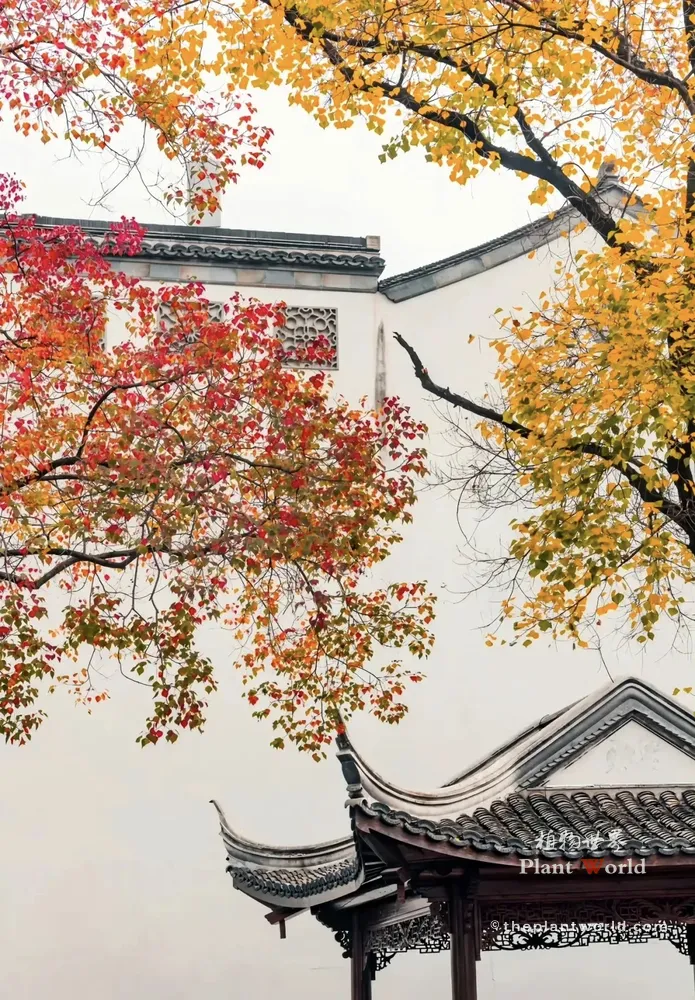
Famous Maple Tree Misconception
Ancient texts confirm tallow tree reds are richer and brighter than maple. Even the famous Tang poem Mooring by Maple Bridge at Night describes waterside red trees that cannot be maples. True maples dislike wet soil; the iconic riverside red foliage of Jiangnan is almost always Chinese tallow.

5. Flowers: Early Summer Blooms
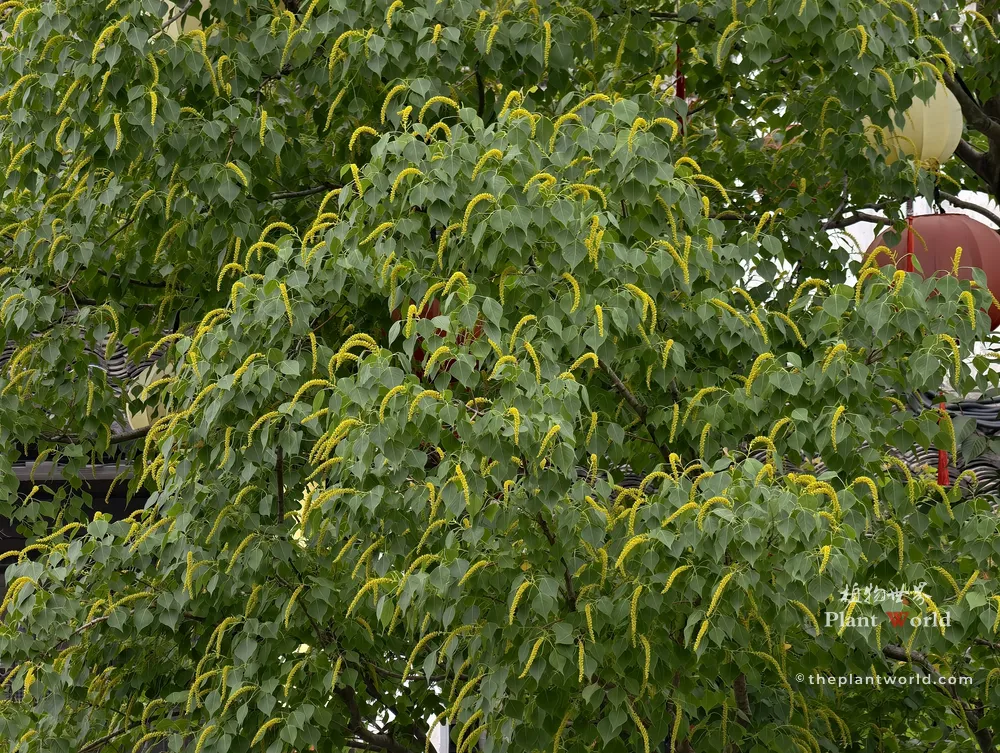
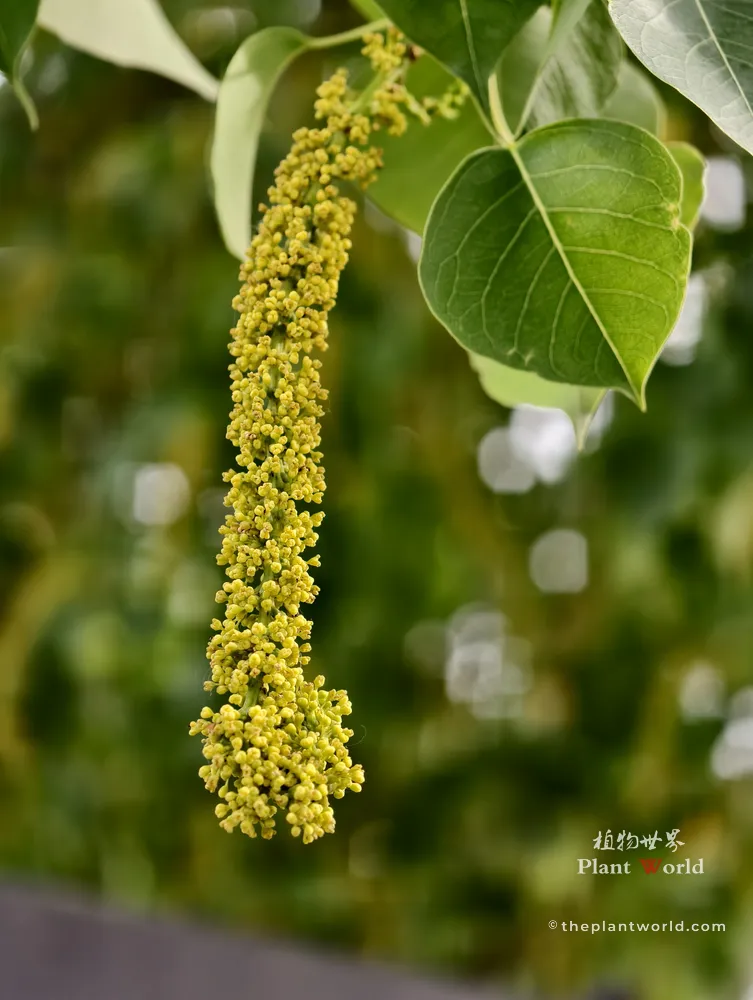
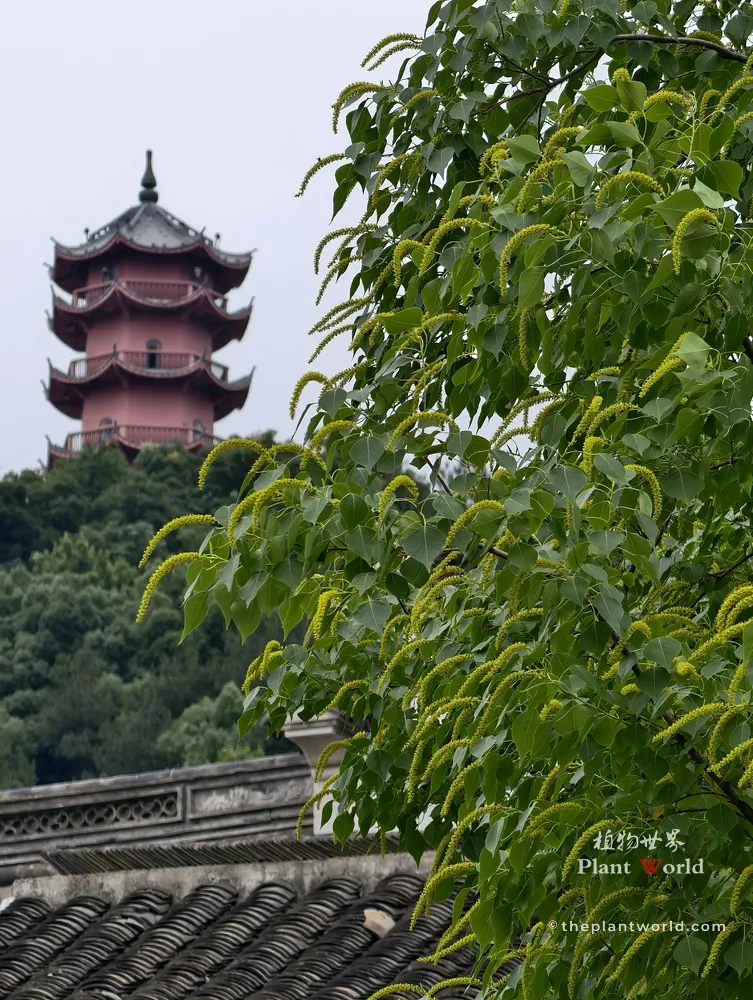
Tallow tree flowers are subtle and non-showy. In early summer, slender yellowish terminal racemes appear at branch tips.
The tree is monoecious (male and female flowers on the same spike). Tiny pale-yellow florets cluster softly beneath green leaves, creating faint tassel-like blooms with no strong fragrance. This tree is admired primarily for foliage, not flowers.
6. Fruit & Seeds: The Famous “Popcorn Tree” Winter Look
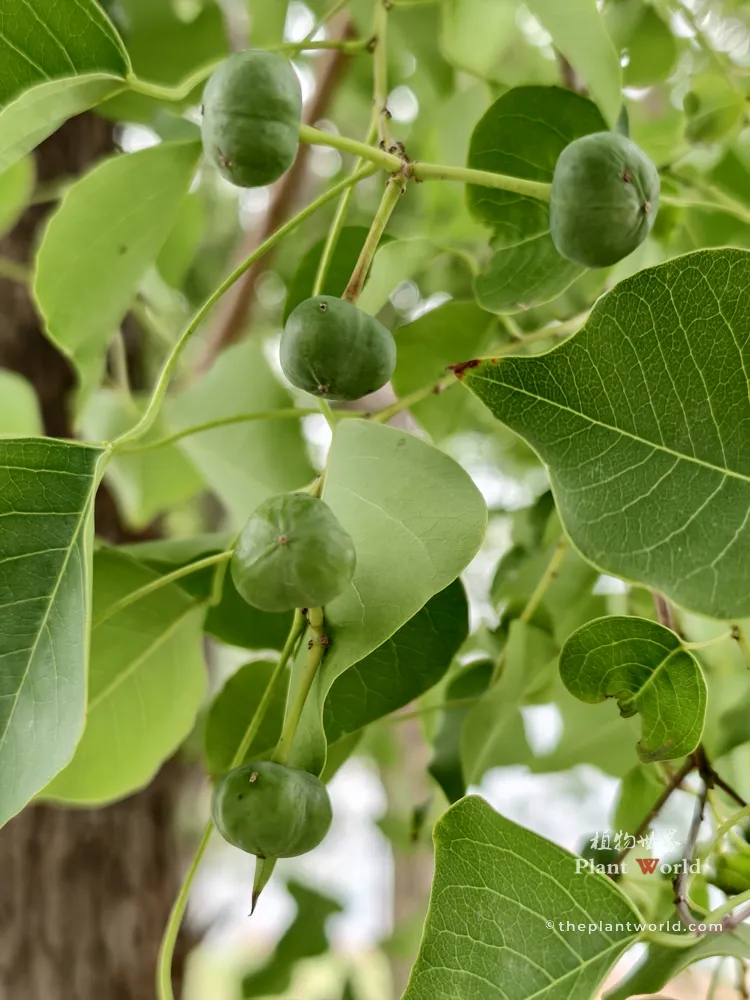
The fruit is a three-valved triangular capsule that transforms dramatically across seasons:
- Summer: Firm bright green capsules
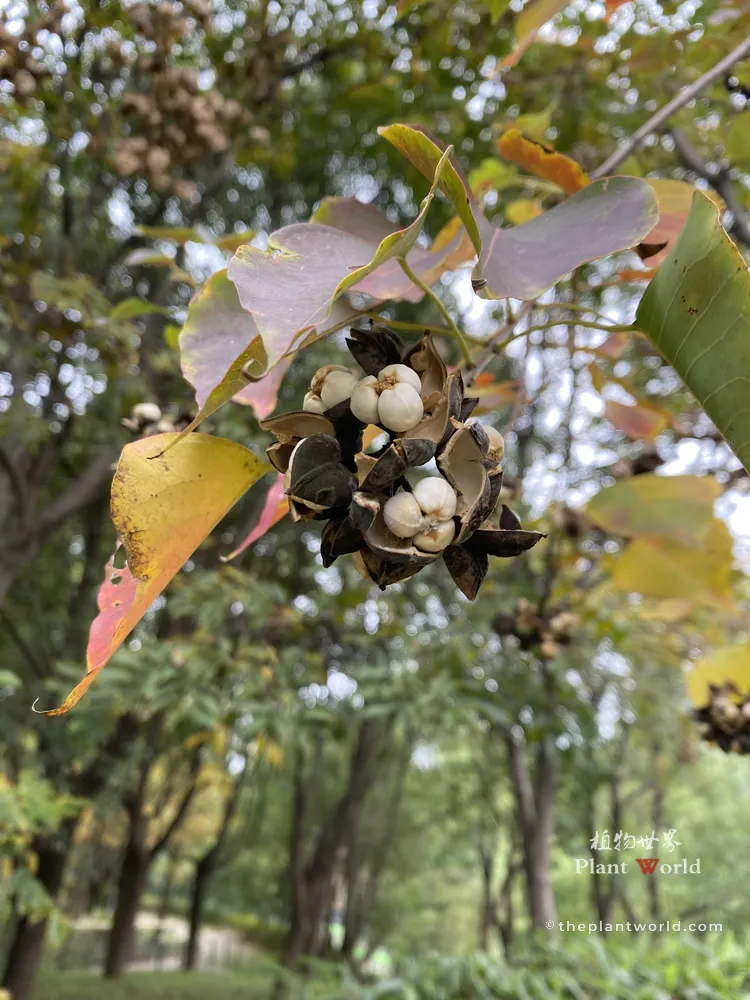
- Autumn: Husks harden and turn black
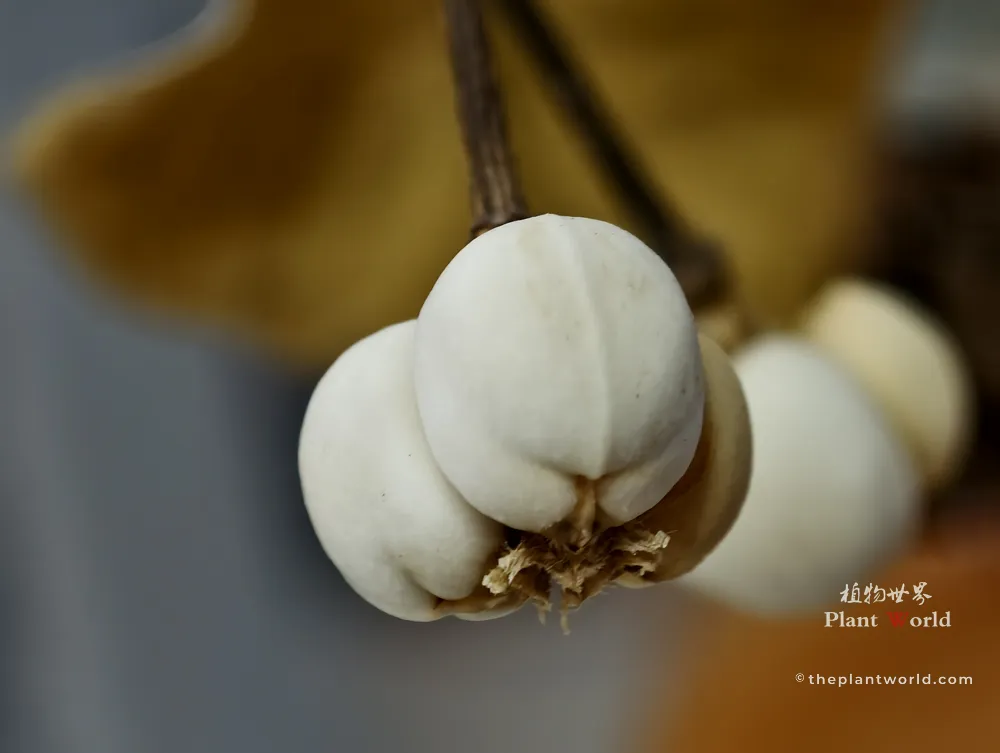
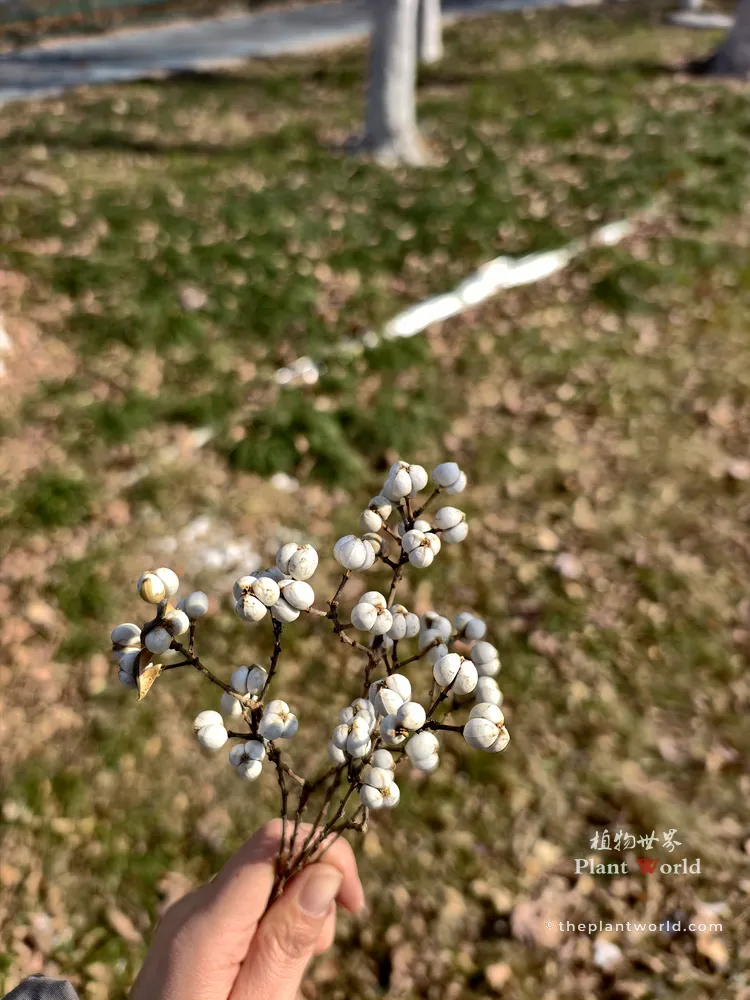
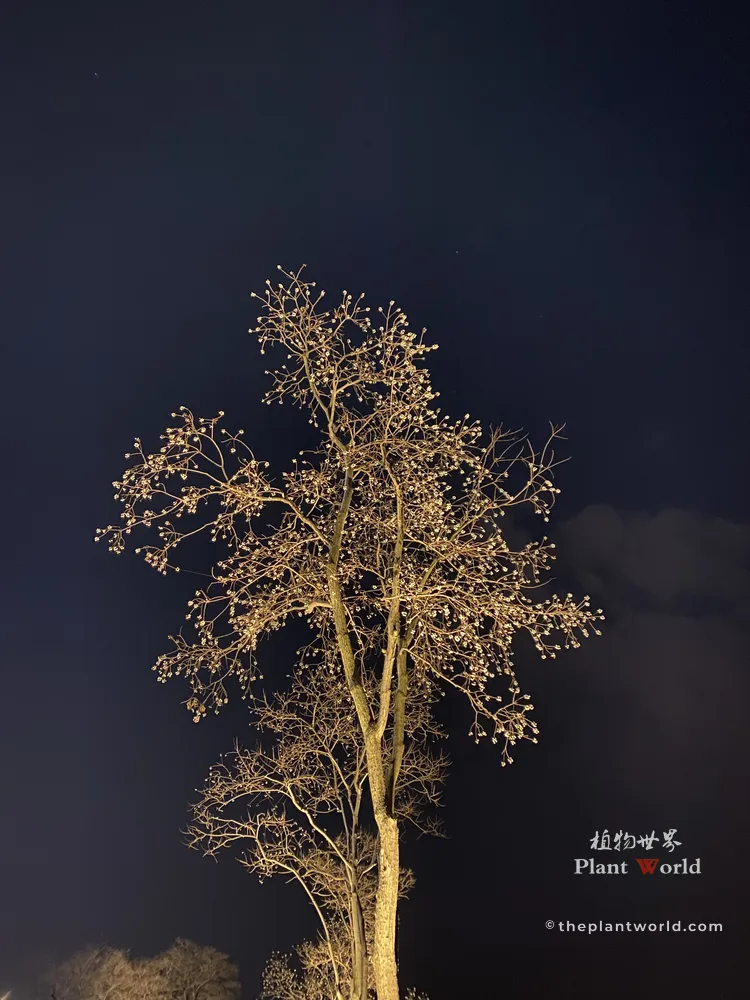
- Winter: Black husks split open and drop, exposing clusters of pure white, waxy seeds
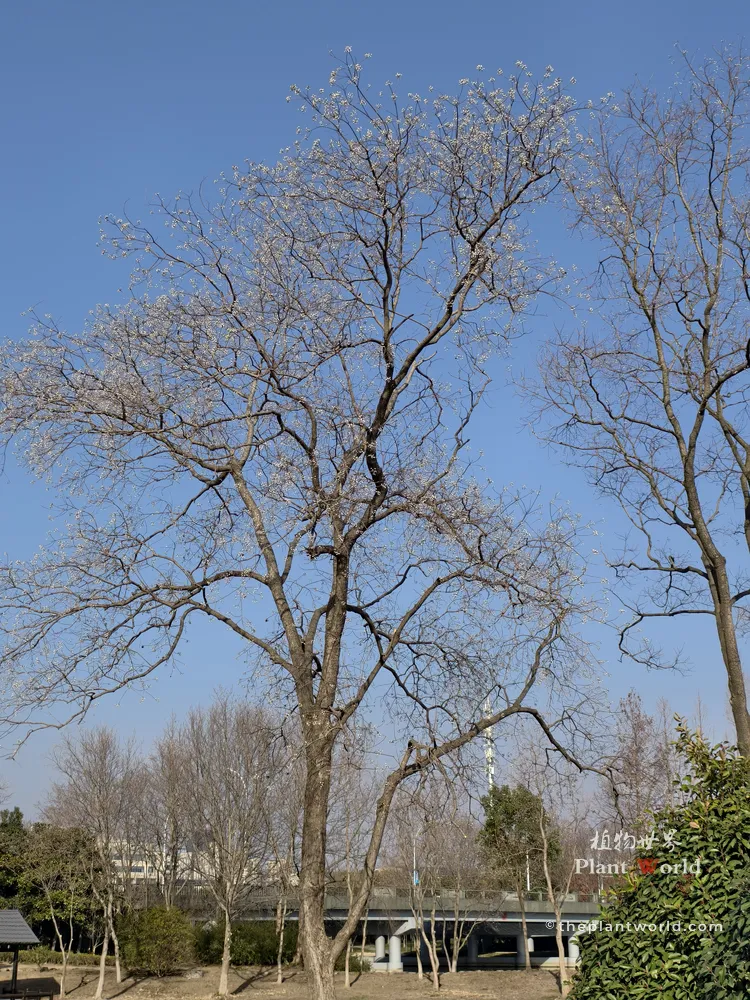
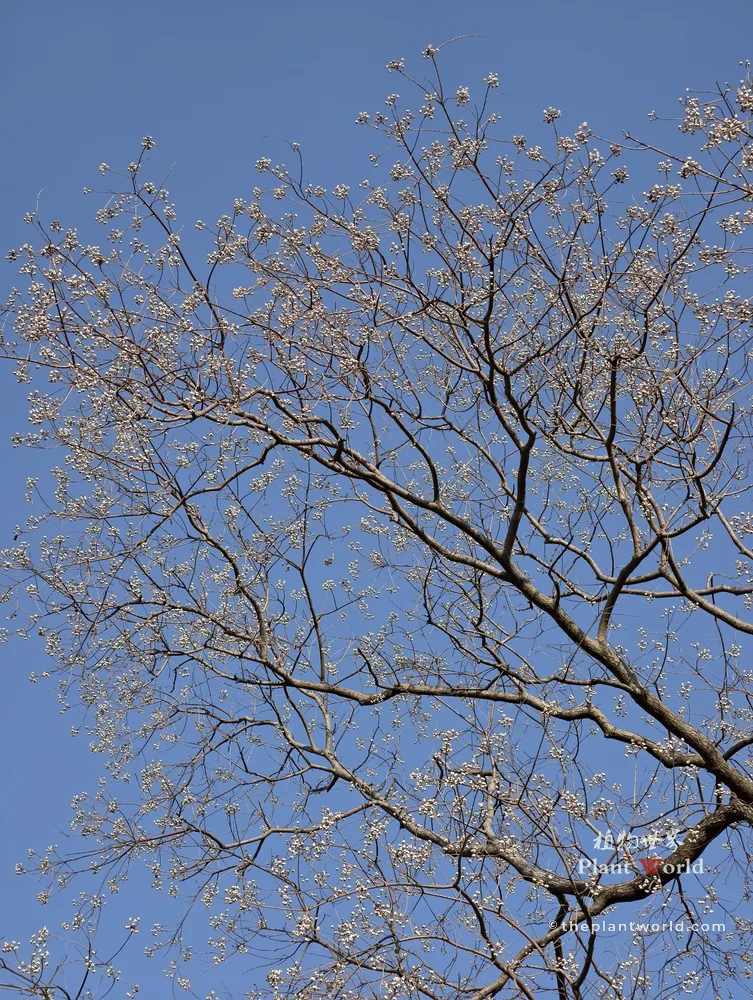
Once the leaves drop, the bare branches are laden with snow-white seed clusters, appearing just like pale blossoms from afar. This remarkable visual trick misled ancient poets, who frequently confused seeds of the Chinese tallow tree with plum blossoms.
Historical Art Record
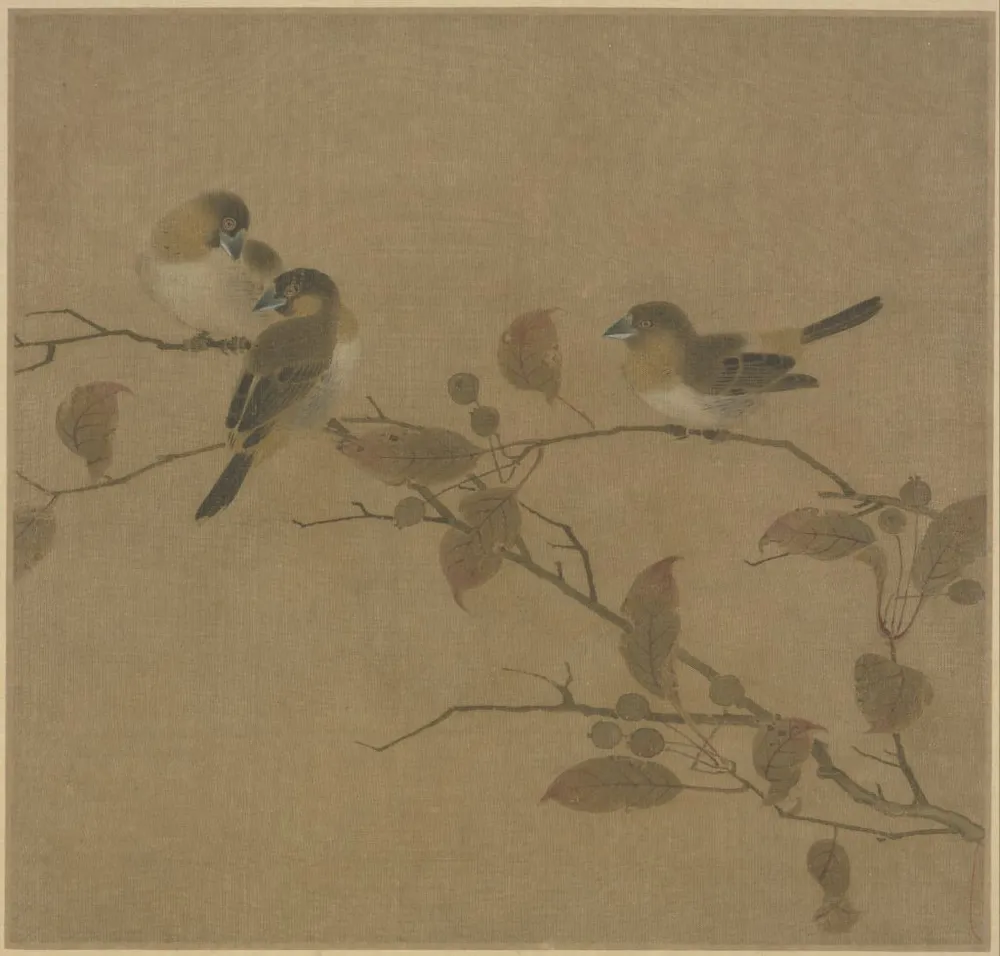
Song Dynasty court paintings, including the Palace Museum artwork Birds on Frosted Tallow Branches, feature this iconic winter scene as a classic Chinese landscape motif.
⚠️ Toxicity Warning
Chinese tallow tree seeds and fruits are poisonous to humans, dogs, and cats.
Ingestion causes severe gastrointestinal pain and vomiting. Wild birds can safely consume the seeds, but children and pets must avoid contact.
7. Traditional Historical Uses
Long before it became an ornamental tree abroad, the Chinese tallow tree was an essential economic crop in ancient rural China.
Candle Making (Primary Use)
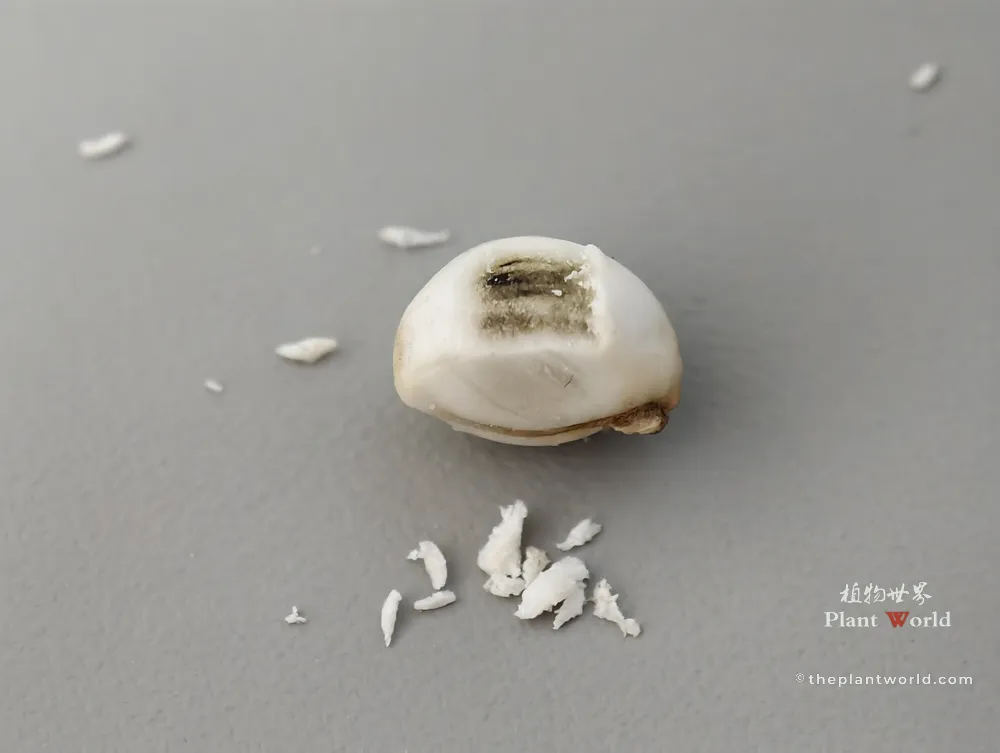
The white waxy seed coating produces vegetable tallow, while inner kernels yield stillingia oil. For thousands of years, artisans melted and molded tallow into traditional candles for daily lighting, weddings, festivals, and rituals.
Natural Black Dye
Tallow leaves produce a deep jet-black tannin solution when soaked in water. This was the primary source of natural black textile dye in ancient China’s five-color pigment system.
Other Practical Uses
- Stillingia oil used for wood varnish, boat waterproofing, and umbrella coating
- Strong water tolerance makes it ideal for riverbank erosion control
8. Plant Culture & Literary Heritage
Deeply woven into Chinese plant culture, the Chinese tallow tree stands as one of the Chinese Garden Plants and occupies an important place in Chinese literature and art.
Famous poets including Lu You, Yang Wanli, and Li Bai referenced tallow trees as the signature autumn scenery of misty Jiangnan water towns.
Classic literary works such as Yuan Mei’s Suiyuan Poetry Notes and Yu Dafu’s Winter Scenery of Jiangnan immortalized its unique dual beauty:
- Fiery red autumn foliage
- Snow-white winter seed clusters resembling plum blossoms
To Chinese aesthetics, the tallow tree symbolizes practical beauty and harmony with nature—useful in daily life yet endlessly poetic across all four seasons.
Quick Gardening Guide
- Light: Full sun produces the best autumn color
- Soil: Adaptable, tolerates wet riverside ground
- Climate: Warm temperate and subtropical regions
- Note: Avoid planting in invasive-regulated areas (SE USA, Western Australia)
Reference Sources
- RHS Plant Finder | Royal Horticultural Society
- Missouri Botanical Garden Database
- CABI Compendium | Invasive Species Datasheet
- The Palace Museum Beijing | Digital Collection Gallery
More from The Plant World:
- Chinese Wingnut: The Romantic “Ingot Tree” and Its Cultural Charm
- Plum Blossom Meaning: Symbolism & Cultural Significance
- The Hidden Meanings Behind Red Plum Blossoms
- Chinese Wisteria: History, Symbolism, and Identification
- Peach Blossoms in China: History, Culture, and Symbolism
- Chinese Crepe Myrtle: Guide to Origins & Symbolism
- Ginkgo Leaf Meaning: 5 Secrets of This Ancient Fossil
- Chinese Loquat Tree: Guide to Benefits & History
- Rose of Sharon Tree: Guide to Meaning & Care
- Hosta Plant Benefits: 5 Surprising Uses & Planting Guide
- Strawberry Begonia Care: How to Grow Saxifraga Stolonifera
- The Hollyhock Flower: Hidden Meanings & Surprising Benefits
- Chinese Tulip Tree Care: Liriodendron chinense & Folklore
Discover more from The Plant World
Subscribe to get the latest posts sent to your email.