
Introduction
“I came from the east, through drizzling rain. The gourd fruits hang full upon the eaves.”
This tender, atmospheric verse originates from The Book of Songs (Shijing), China’s oldest surviving poetry anthology written more than 2,500 years ago. The ancient vine celebrated in these classic stanzas is Trichosanthes kirilowii, known throughout global botanical circles as the Chinese Snake Gourd, and colloquially referenced by some Western gardeners as the Chinese Cucumber Vine.
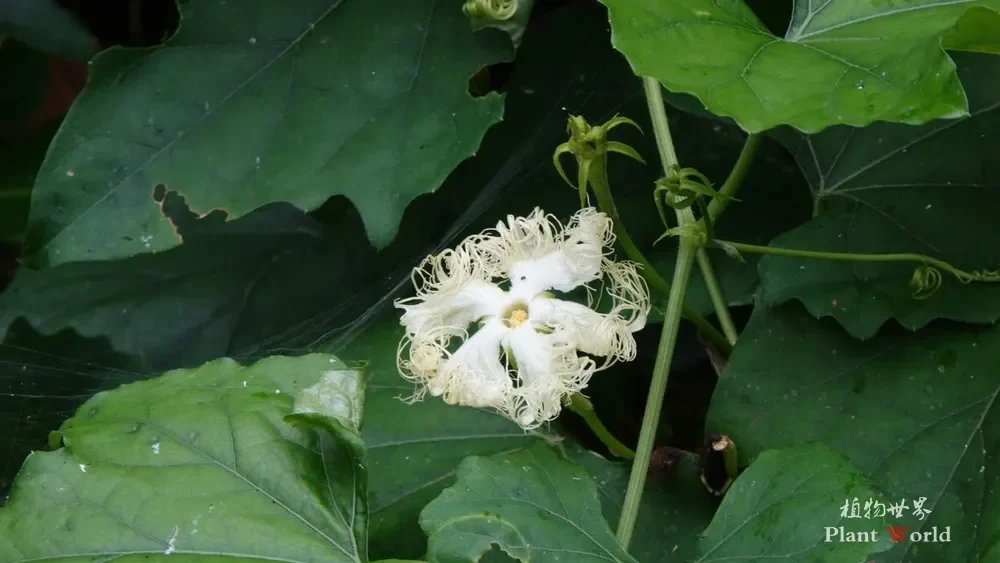
Far more than a historical curiosity, this robust, perennial climbing vine represents a captivating addition to temperate landscapes. Famous for its ethereal, white-fringed blossoms that unfurl exclusively after dusk, it brings a rare, luminescent nighttime beauty to outdoor spaces.
Deeply rooted in East Asian rural culture and traditional herbalism, this fast-growing climber functions as a powerful wildlife magnet for nocturnal pollinators. Whether you are actively designing a sensory moonlight garden, seeking lush summer privacy screening, or exploring plants steeped in thousands of years of cultural heritage, the Chinese Snake Gourd offers unmatched ornamental and ecological rewards.
Plant Traits: The Unique Night-Flowering Climber
Growth Habit & Foliage
The Chinese Snake Gourd is a vigorous, deeply rooted perennial climber — one of many distinctive Chinese climbing vines valued in traditional East Asian horticulture — capable of reaching lengths well over 10 meters in a single growing season.Beneath the soil, it develops thick, heavy, cylindrical starchy root tubers, which serve as the raw material for the prized traditional herbal ingredient known as Tian Hua Fen.
Above ground, its highly active tendrils split into 3 to 7 branches, enabling the vine to cling firmly to fences, heavy arbors, and neighboring shrubs. Its papery leaves are nearly round with a heart-shaped base, palmately divided into 3 to 7 distinct lobes.
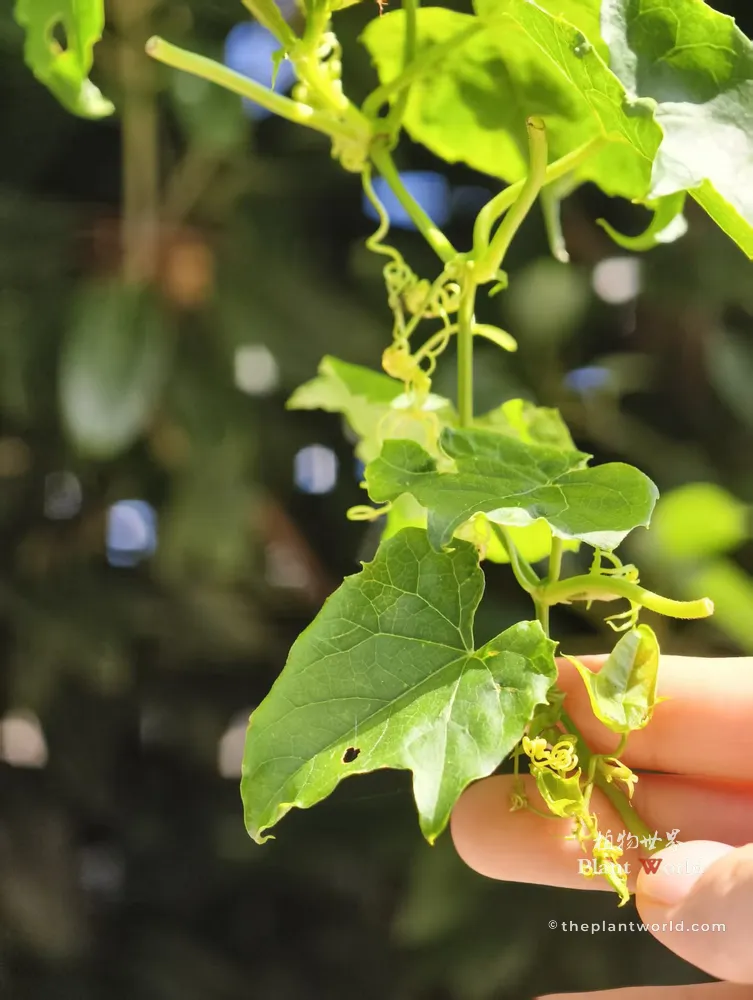
A fascinating botanical quirk of this species is its highly variable foliage; a single healthy vine can produce deeply cut lobes, shallow-angled edges, and nearly whole, unlobed heart-shaped leaves simultaneously. Coarse, sand-paper-like hairs cover the climbing stems, leaf stalks, and veins, creating a distinctly rough texture.
Rare Night-Blooming Fringed Flowers
The vine’s most breathtaking and mystical feature is its extraordinary flowering cycle. Blooming continuously from May through August, the pure white, five-petaled flowers are edged with exceptionally delicate, long, curling feathery fringes that resemble floating lace fans.
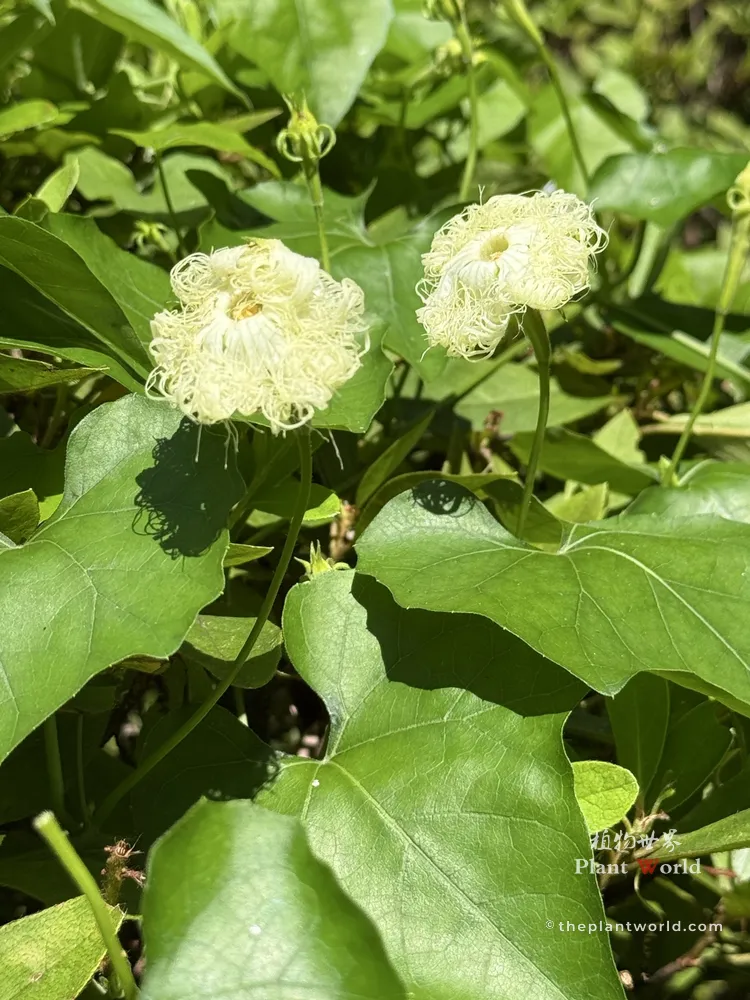
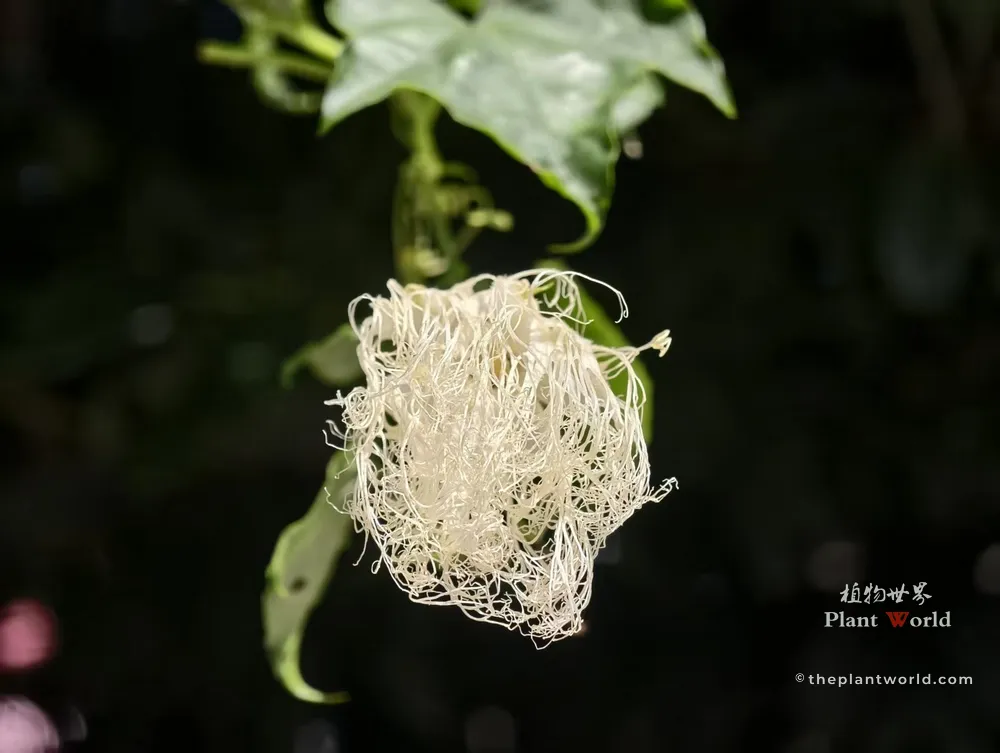
Strictly nocturnal, these blossoms open late in the evening or during heavily overcast days, then fold tightly inward once dawn arrives. Every individual bloom survives for just a single night, creating a fleeting, daily changing evening spectacle.
For gardeners seeking a daytime-blooming Chinese flowering vine with equally deep cultural roots, the elegant Chinese wisteria makes a stunning complementary counterpart.
A Wildlife Magnet for Night Pollinators
For gardeners who enjoy backyard wildlife observation, this vine is an essential ecological tool. Its subtle, sweet evening fragrance and pale, luminous petals act as a natural beacon under the moonlight, drawing elegant, long-beaked hawkmoths (Sphingidae). Planting the Chinese Snake Gourd actively supports threatened nocturnal pollinator populations, bringing vivid wildlife activity to the garden long after sunset.
Dioecious Traits: Male and Female Identification
Trichosanthes kirilowii is a dioecious species, meaning male and female reproductive organs grow on entirely separate individual vines. While both share the identical, iconic white-fringed lace form, they can be easily differentiated upon closer inspection:
- Male Flowers: Hold bright yellow, pollen-laden anthers at the center; they drop naturally from the vine after blooming and cannot set fruit.
- Female Flowers: Feature a distinct three-pronged green stigma at the center, resting directly above a tiny, smooth, immature green ovary. Only successfully pollinated female vines will develop the signature gourds.
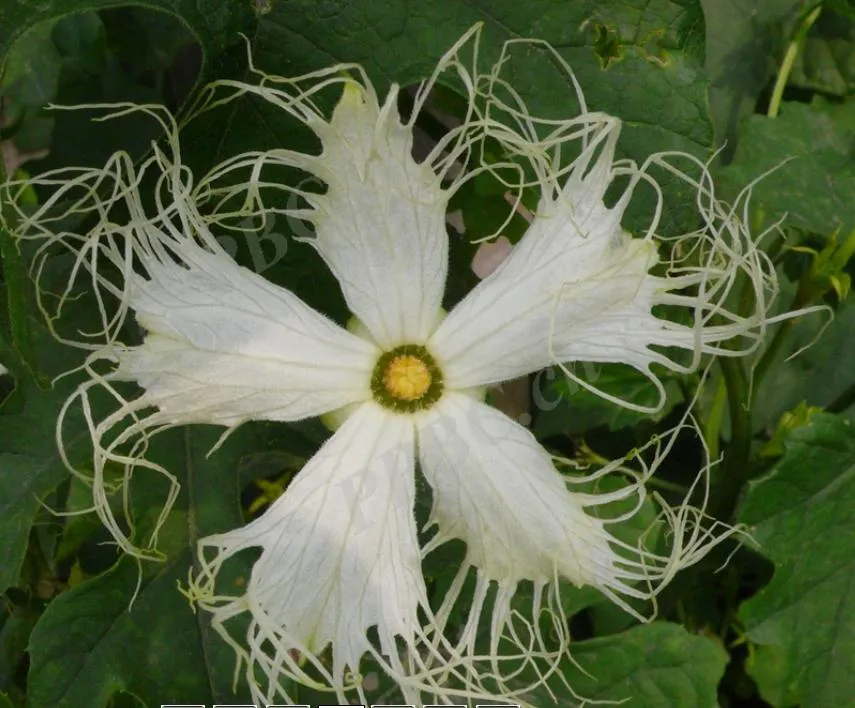
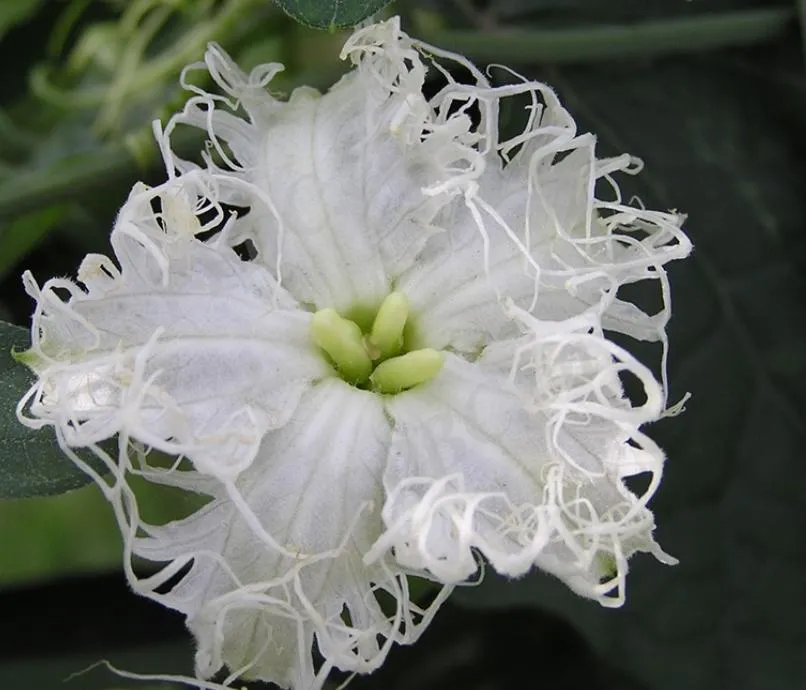
To harvest the decorative orange fruits, gardeners must ensure they plant at least one male vine in close proximity to female specimens to facilitate wind and insect pollination.
Fruits and Seeds
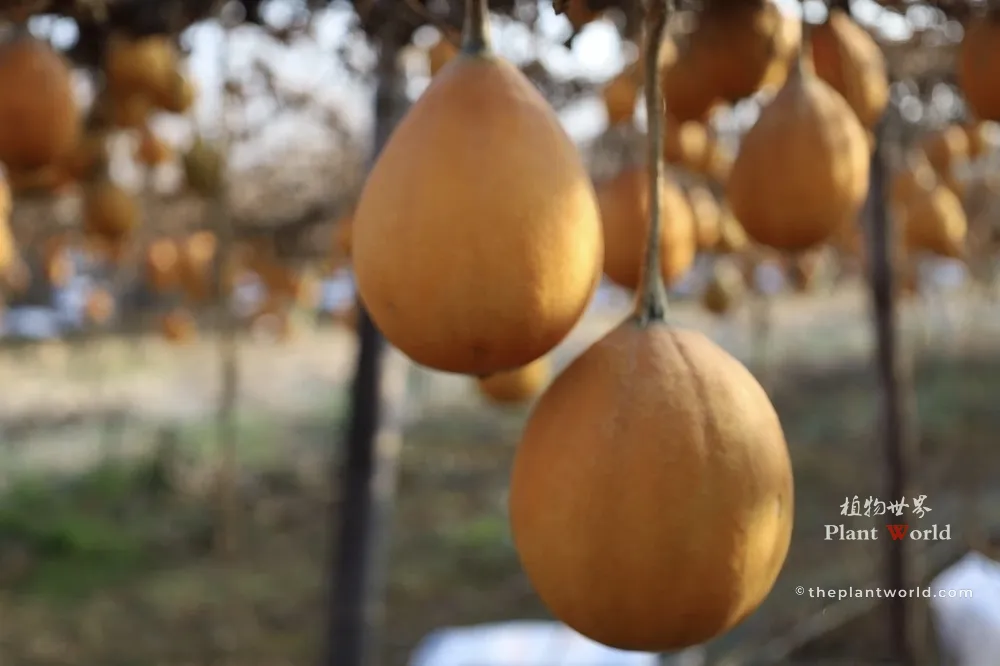
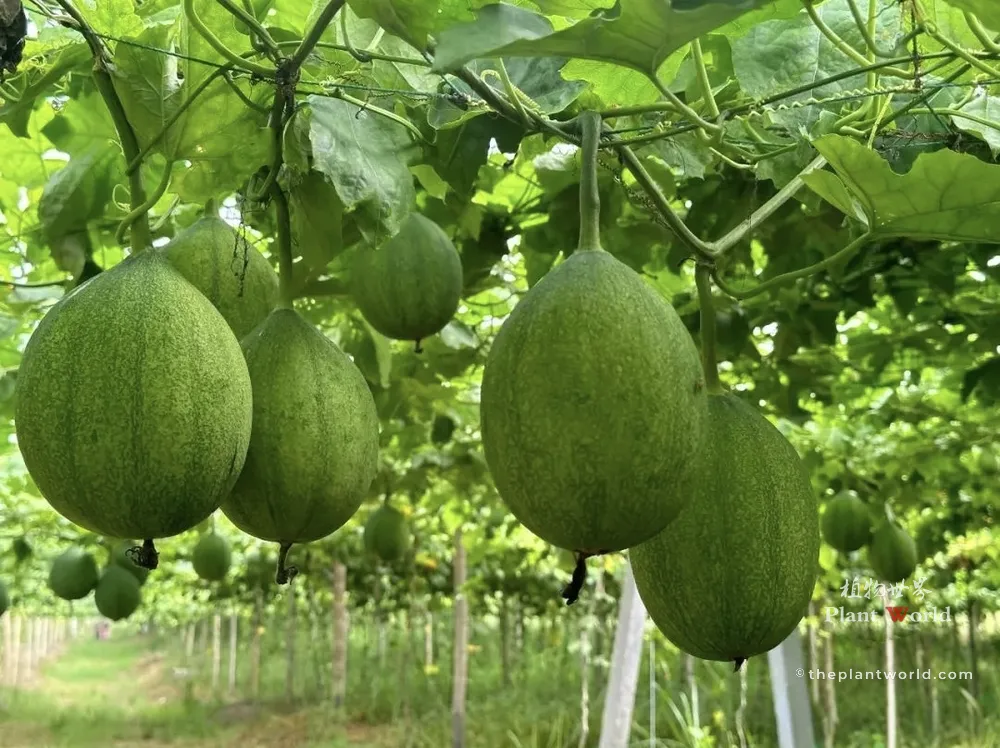
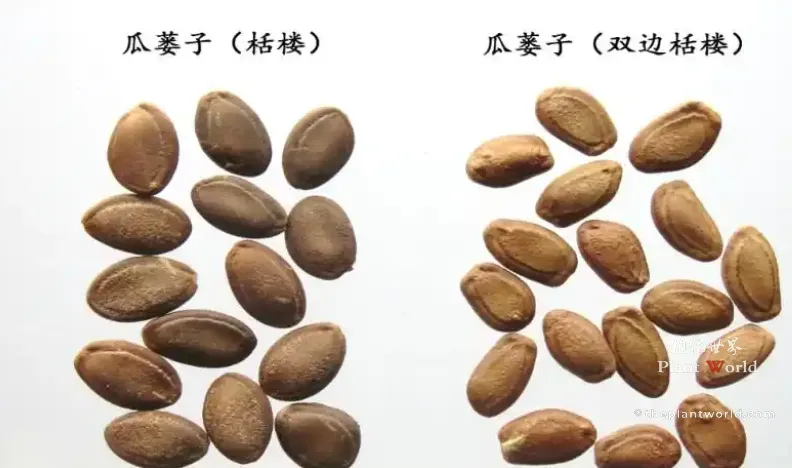
Fruits ripen beautifully between August and October, transforming into smooth, glossy, oval or perfectly round gourds of a bright orange-yellow hue, measuring 7 to 10.5 cm in length. Locally called “Medicine Melons” (Gualou), these ripe fruits contain flat, light brown oval seeds, documented formally in the Chinese Pharmacopoeia as Gualouzi.
While a well-known, large-seeded roasted snack called diaogua seeds originates from closely selected cultivated strains of its sister species (predominantly the bilateral snake gourd), seeds from wild-type Trichosanthes kirilowii are primarily reserved for professional herbal applications.
Cultivation & Care Guide for the Chinese Snake Gourd
Climate & Hardiness
- USDA Hardiness Zones: 4–9. It exhibits exceptional climate resilience. In the ultra-cold winters of Zone 4, a thick layer of organic root mulch is highly recommended for reliable outdoor survival. In warmer zones (5–9), it easily handles deep winter freezes and intense, humid summer heat without mandatory winter protection, provided the soil drainage remains excellent.
Light & Placement
- Requirements: Requires full, unobstructed direct sunlight (at least 6 hours daily) to develop its fastest vertical growth rate and achieve its signature dynamic floral output. It serves as a majestic overstory anchor, towering elegantly above structured, mid-tier accent evergreens like a classic buddhist pine border.
- Landscape Contrast: The rugged bark and evergreen density of paired structural evergreens provide a dark, permanent backdrop that maximizes the luminescent evening visual impact of the pale fringed snake‑gourd flowers, making it a distinctive Chinese Garden Plants.
Soil & Moisture Tolerance
- It prefers deep, fertile, loamy soils rich in organic matter but demonstrates excellent adaptability for various garden soil dynamics. In standard landscape borders, it thrives beautifully alongside complementary high-value oriental shade producers like a classic japanese maple.
- Water Management: Young vines require regular, deep irrigation to establish their extensive root networks. Once fully mature, the Chinese Snake Gourd gains remarkably solid drought tolerance. Stagnant water will trigger fatal root rot.
Maintenance & Pruning
- Pruning requirements are structural. Carry out light trimming exclusively in late winter or early spring while the plant remains completely dormant to remove dead or weak branches and maintain controlled growth. Manually guide young developing tendrils onto the framework during their first few weeks to form a thick shady green canopy. Young vines often require multiple growing seasons before they bear their first nocturnal blooms.
Chinese Cultural Heritage & Symbolism
Deeply woven into the rich tapestry of Chinese plant culture and stories, the Snake Gourd has been cultivated for millennia as a living symbol of resilience, quiet moral honor, and family longevity.
Planted beside rural households and stored at home as a multi-seasonal natural remedy for easing coughs and chest discomfort, it carries profound cultural value.
Historically relied upon as a source of starchy tubers for emergency food during catastrophic famines, this fast-growing climber symbolises flourishing family descendants and lasting household fortune, cementing its status as a highly auspicious courtyard plant.
Ancient Historical Documentation
(Extended Reading)
- Shennong’s Classic of Materia Medica (Han Dynasty): The earliest surviving written record of Trichosanthes kirilowii dates back 2,000 years, cataloged under the name “Earth Melon.”
- Synopsis of Prescriptions of the Golden Chamber (Eastern Han Dynasty): Legendary physician Zhang Zhongjing utilized the dried fruit of the vine to treat severe chest discomfort, breathlessness, and deep coughing.
- Compendium of Materia Medica (Ming Dynasty): The great naturalist Li Shizhen systematically sorted its botanical properties, confirming that the roots, whole fruit, peel, and seeds deliver entirely distinct energetic effects and cannot be used interchangeably.
The “One Vine, Four Medicines” System
Recognized officially within the modern Chinese Pharmacopoeia, separate plant parts carry unique therapeutic properties, forming a sophisticated botanical system known as “one plant, four distinct medicines”:
- Tian Hua Fen (Root Tubers): Clear heat, reduce localized swelling, relieve chronic thirst, and nourish internal fluids. Root starch external applications are historical reference only; professional guidance is required for internal use.
- Whole Gualou (Dried Mature Fruit): Focuses on dissolving stubborn phlegm-heat coughs and easing chest tightness. Suitable for dry constipation due to intestinal dryness.
- Gualou Peel (Fruit Rind): Specializes in clearing heat and regulating upper-body qi primarily for phlegm-heat coughs and chest fullness.
- Gualou Seeds: Moistens the lungs to ease tickling dry coughs and smoothly lubricates the intestinal tract.
Chemical Composition
Modern phytochemical analysis confirms that the seeds contain abundant lanostane-type and oleanane-type triterpenes. Sterols, volatile oils, and unique chemical markers exist throughout the vegetative structure.
Safety Precautions & Important Incompatibilities
- Pregnancy Warning: Trichosanthin containing proteins may damage placental tissue. All root-derived products are strictly forbidden for pregnant people.
- Spleen-Stomach Deficiency: Individuals with a cold constitution should use fruit and seeds cautiously.
- Herbal Incompatibility: According to traditional formulation rules, no part of Trichosanthes kirilowii can be combined with Aconitum-based medicinal herbs (such as Chuanwu or Fuzi).
Final Conclusion
The Chinese Snake Gourd strikes a dynamic balance between garden ornamental appeal, ecological value, and profound ancient cultural heritage. As a centerpiece for specialized moonlight landscapes, this robust climber provides unforgettable twilight blooms, supports native nocturnal pollinators, and creates lush summer privacy screening.
Backed by classic verses from The Book of Songs and a highly sophisticated multi-purpose legacy within traditional herbalism, it stands as an extraordinary choice for modern landscape designers seeking a dynamic, low-maintenance deciduous focal vine steeped in thousands of years of human narrative.
References
- Flora of China (English Edition): Trichosanthes kirilowii Maxim. Species Account & Cucurbitaceae Taxonomy — Maintained collaboratively by the Missouri Botanical Garden and Harvard University Herbaria.
- Royal Horticultural Society (RHS): Trichosanthes Cultivation, Hardiness Profiles, and Varietal Performance — London, UK.
- NCBI / National Institutes of Health (NIH): Chemical Profiles, Isolation Techniques, and Pharmacological Safety Research on Trichosanthin Proteins.
- Plant Plus of China (PPBC): Authoritative Scientific Photographic Archive for Native East Asian Cucurbitaceae.
- Compendium of Materia Medica (Ming Dynasty): Compilations and Classification of Traditional Oriental Herbs by Li Shizhen.
Disclaimer
All herbal, medicinal, and ethnobotanical usages documented here are shared strictly for historical, cultural, and educational reference. This article serves botanical reference purposes only. Do not consume raw wild plant parts, ingest extracts internally, or apply homemade external tonics without professional guidance from a certified medical practitioner or qualified TCM specialist.
More from The Plant World:
- Chinese Wingnut: The Romantic “Ingot Tree” and Its Cultural Charm
- Plum Blossom Meaning: Symbolism & Cultural Significance
- The Hidden Meanings Behind Red Plum Blossoms
- Chinese Wisteria: History, Symbolism, and Identification
- Peach Blossoms in China: History, Culture, and Symbolism
- Chinese Crepe Myrtle: Guide to Origins & Symbolism
- Ginkgo Leaf Meaning: 5 Secrets of This Ancient Fossil
- Chinese Loquat Tree: Guide to Benefits & History
- Rose of Sharon Tree: Guide to Meaning & Care
- Hosta Plant Benefits: 5 Surprising Uses & Planting Guide
- Strawberry Begonia Care: How to Grow Saxifraga Stolonifera
Discover more from The Plant World
Subscribe to get the latest posts sent to your email.