
Introduction
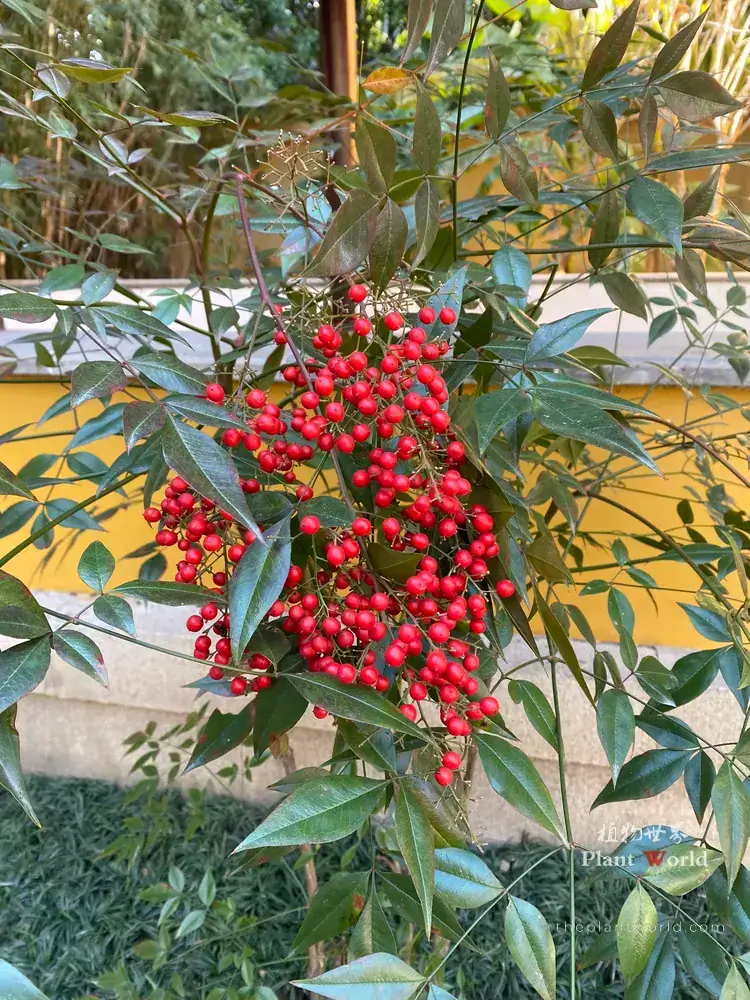
When winter wraps gardens in stillness and most plants fade into dormancy, one shrub rises to full beauty. With upright cane‑like stems, airy layered foliage, and clusters of jewel‑bright red berries, it carries the quiet grace of a scholarly gentleman. Its leaves shift through soft red, mauve and deep purple once touched by frost, bringing vivid warmth to bleak winter landscapes. This is Nandina domestica, commonly known as nandina or heavenly bamboo, an evergreen shrub in the Berberidaceae (barberry) family and a treasured member within Chinese Garden Plants.
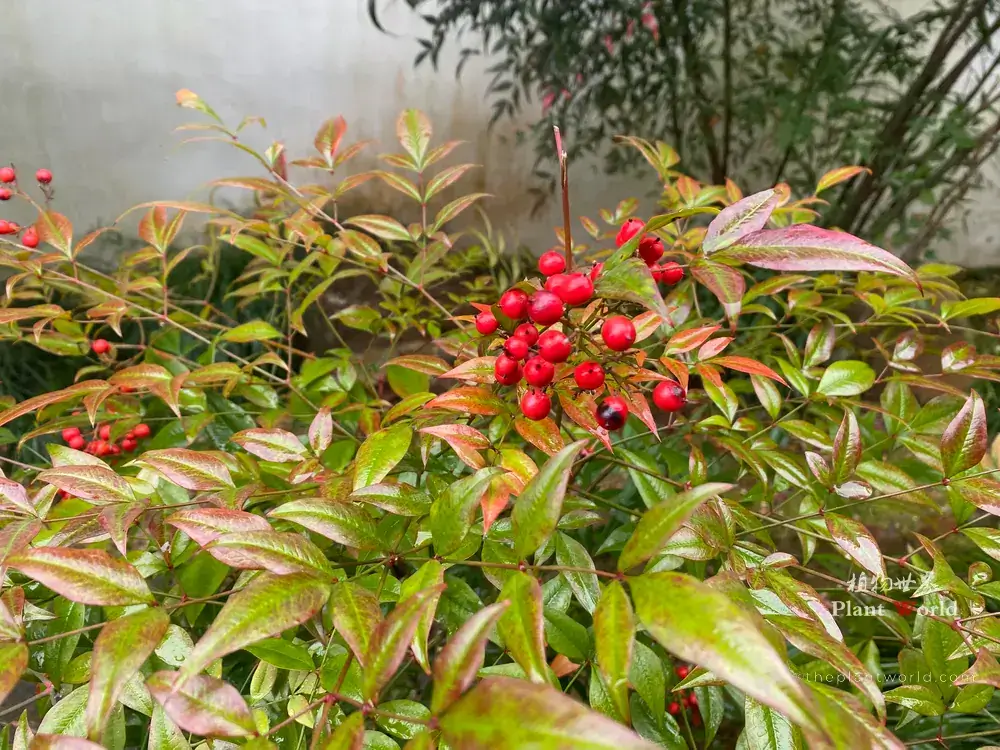
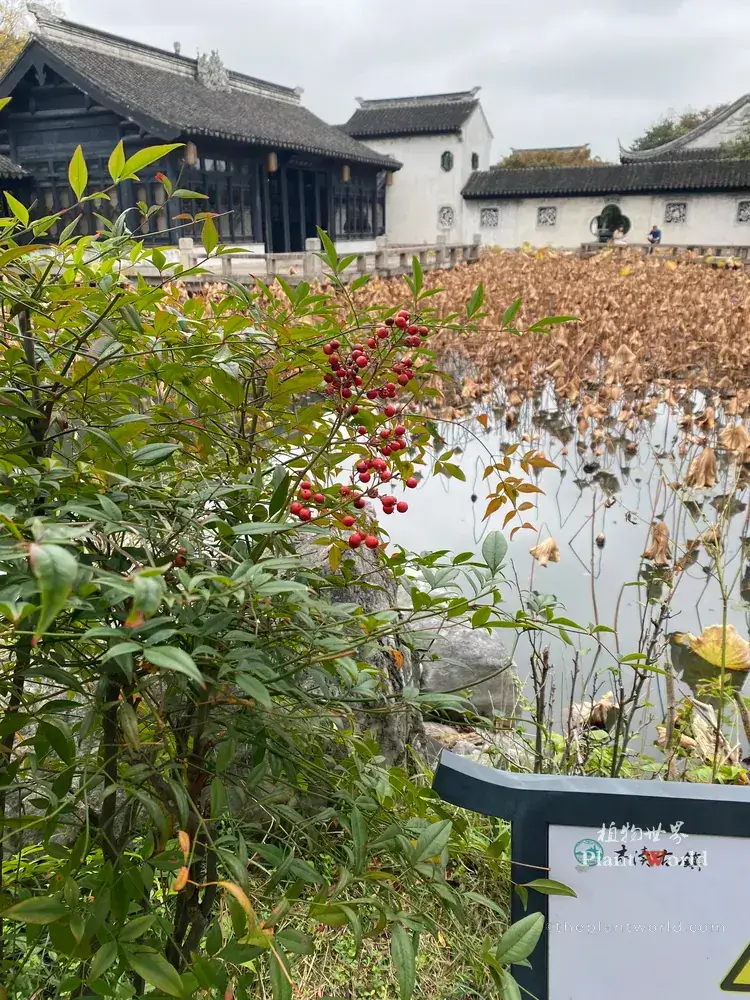
Nandina is widely planted in traditional Chinese temple gardens. At Zijing Nunnery on Suzhou’s Dongshan, many mature specimens thrive. On misty, rainy days, rainfall washes dust from its leaves and fruit; glossy green foliage contrasts sharply against glowing scarlet berries, lending an other‑worldly, serene atmosphere. Though named “heavenly bamboo”, it bears no botanical relation to true bamboo. Different forms show great variation: some carry slender leaflets, others broader foliage; leaf tones range from fresh green to deep emerald and rich purplish‑red. Planted beside rockeries, terraced flower beds or quiet courtyard corners, nandina always creates a tranquil classical mood.
- Introduction
- Name Origin: Not Bamboo, But Bamboo‑Like Grace
- Plant Profile
- Cultivar Groups: Three Main Cultivated Types
- History and Literature: Paintings, Poetry and Sui‑Chao Offerings
- Cultural Symbolism: Auspicious Winter Grace
- Nandina domestica vs Similar Shrubs
- Garden Use and Care
- Final Thoughts
- More from The Plant World:
Name Origin: Not Bamboo, But Bamboo‑Like Grace
Its Chinese name Nantianzhu literally translates as “southern‑sky bamboo”. The title comes from its smooth, jointed upright stems which visually resemble bamboo canes, even though it belongs to the barberry family, not grass‑family bamboos. Ancient texts also recorded alternative local names including Lantianzhu.
Western horticulture adopted the genus name Nandina, borrowed from its Japanese common name nanten. Garden‑trade aliases are sacred bamboo and heavenly bamboo. It is critical to note: despite these popular nicknames, nandina has no genetic connection to real bamboo species.
Plant Profile
| Attribute | Details |
|---|---|
| Botanical name | Nandina domestica |
| Family | Berberidaceae (barberry family) |
| Genus | Nandina |
| Plant type | Evergreen clumping shrub |
| Mature height | 1.5‑3 m in garden settings; dwarf cultivars 0.6‑1.2 m |
| Leaves | Bi‑to‑tripinnate compound leaves; leaflets lance‑shaped, leathery; shift green‑red‑purple in cool weather |
| Flower colour | Milky‑white with bright yellow central stamens |
| Petals | 6 star‑shaped petals per small blossom |
| Flower size | 6‑8 mm across |
| Inflorescence | Large upright terminal panicle |
| Fragrance | Very faint subtle scent |
| Bloom time | Late spring to early summer (May‑June) |
| Fruit | Glossy spherical red berry, ripening autumn‑winter; persists through frost |
| Native range | China, Japan, East Asia |
| Hardiness | USDA zones 6‑9 |
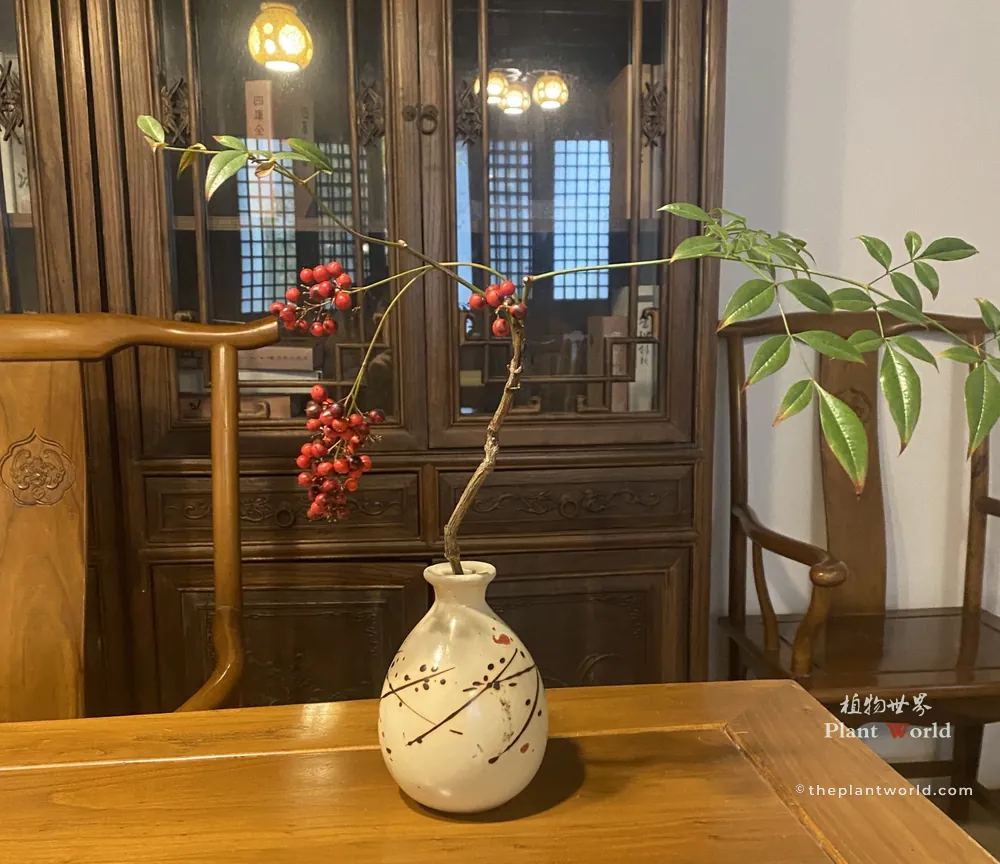
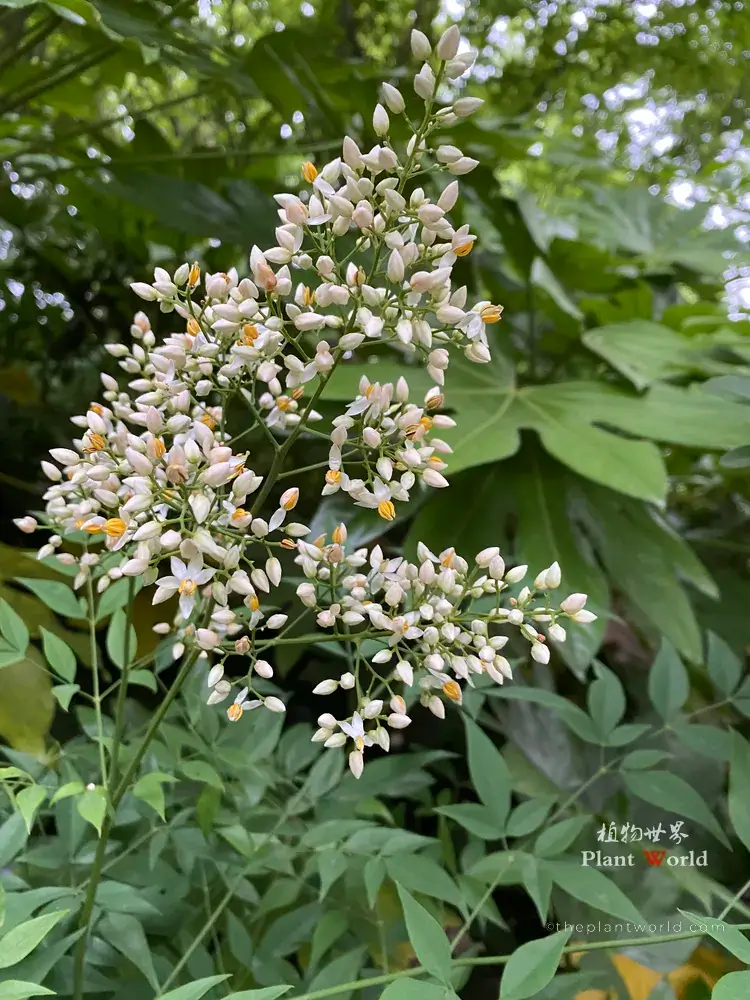
Small creamy flower‑buds glisten like pearls before opening. Once unfurled, star‑shaped white blooms with golden stamens appear in abundant panicles. The flowers are easy to overlook among dense foliage, yet hold delicate charm, especially glistening after rain. After flowering, round green berries develop, gradually ripening to striking glossy red from autumn onward.
Cultivar Groups: Three Main Cultivated Types
Species‑Type Nandina (Traditional Garden Nandina)
Tall upright clumping form, the classic plant seen in old Chinese temples and Suzhou‑style gardens. Produces large panicles of white summer flowers followed by heavy clusters of long‑lasting bright‑red winter berries. Foliage shifts from green to deep reddish‑purple in cold weather. Excellent for courtyard planting, rock‑garden accents and cut branches for floral arrangements. The nandina shrubs growing at Zijing Nunnery belong to this group.
Dwarf Foliage‑Focused Cultivars
Compact, low‑growing selections bred primarily for spectacular winter leaf colour. Many produce few or almost no berries. Representative cultivars include ‘Firepower’, ‘Gulf Stream’, and ‘Nana Purpurea’. Suited for low borders, container planting and mass ground‑cover.
Special‑Fruit & Variegated Cultivars
Small‑grouped varieties defined by unusual fruit or leaf traits. ‘Alba’ bears creamy‑white berries instead of red; ‘Filamentosa’ carries extremely fine, thread‑like narrow leaflets. These are less common in traditional Chinese landscapes and mostly found within modern western‑style gardens.
History and Literature: Paintings, Poetry and Sui‑Chao Offerings
Nandina has been cherished in Chinese horticulture for centuries. Ming‑dynasty horticultural text Qunfang Pu describes it vividly: “It bears clusters of coral‑red berries on branches; each cluster holds dozens of fruits, bright and lovely. It withstands frost and snow, berries remain attached for months… It may be grown in bonsai for quiet study‑room appreciation.”
In the Qing Dynasty, female poet Jiang Ying wrote the ci poem Song of Southern‑Sky Bamboo (Nangezi):
“Its noble rank ranks with plum, its good name paired with bamboo. One might mistake it for red‑bean growing in quiet courts. I adore its bead‑like heavy clusters, so graceful and fine. It fears no crushing frost, dreads no icy winter clouds. Its crimson berries persist while leaves stay fresh and green. Place it in porcelain vases alongside the three friends of winter.”
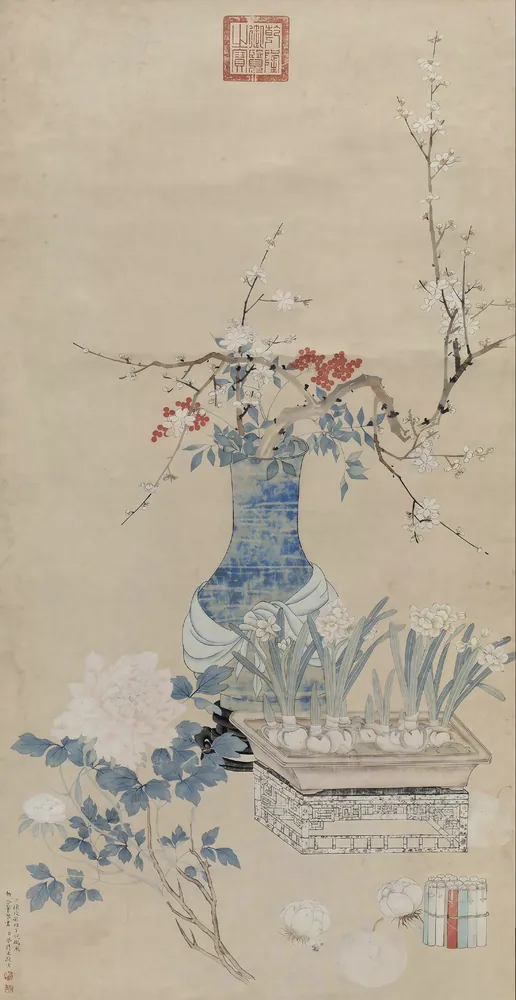
Nandina became an essential element of Sui‑Chao Qinggong, the traditional New‑Year table offerings. At Lunar New Year, branches loaded with red berries were arranged in vases alongside plum blossoms and pine sprigs to bring auspicious joy to households. It frequently appears in ancient Chinese “Sui‑Chao” festival paintings. Later artists including Wu Changshuo and Qi Baishi also painted nandina, celebrating its auspicious symbolism and noble hardy character.
Cultural Symbolism: Auspicious Winter Grace
Symbol of Festive Good Fortune
Bright persistent red berries represent joy, prosperity and good luck. Used for centuries within Lunar New Year floral displays, nandina brings festive cheer to the cold quiet winter months. It stands among auspicious garden shrubs in Chinese botanical tradition.
Noble Gentlemanly Temperament
Upright jointed stems, refined foliage and quiet understated beauty earned nandina comparisons to plum blossom and bamboo. In classical writing it embodies the scholarly gentleman’s virtue: graceful yet resilient, quiet but unyielding against frost.
Resilience Through Frost and Cold
Nandina holds its leaves and fruit firm through hard winter frost and icy winds. It represents endurance, persistence and quiet strength when surrounding nature lies dormant.
Floral‑art Heritage
Cut branches serve as classic material for Chinese flower‑arranging, placed within study rooms and festive household displays. It is frequently combined with pine and wintersweet to evoke the spirit of “three friends of winter”.
Nandina domestica vs Similar Shrubs
| Feature | Nandina domestica | True Bamboo | Red‑berried cotoneaster |
|---|---|---|---|
| Family | Berberidaceae | Poaceae | Rosaceae |
| Stems | Joint‑ed upright woody canes, non‑running rhizomes | Running rhizomes, hollow grass‑type canes | Thin spreading woody branches, no cane‑like stems |
| Leaves | Bi‑tri‑pinnate compound leaves | Simple grass‑blade leaves | Simple small oval single leaves |
| Flowers | White star‑shaped panicles late‑spring | Insignificant grass‑flowers | Small pink‑white single spring blossoms |
| Fruit | Bright‑red spherical berry (toxic) | Grain‑like seed | Small red pomes (safe for birds) |
Note: Never confuse nandina with real bamboo. Despite the “bamboo‑like” common name, they belong to entirely separate plant families.
Garden Use and Care
Garden Applications
‑ Courtyard specimen shrub: Classic placement beside rockeries, stone walls and temple buildings, as seen at Suzhou Zijing Nunnery. ‑ Rock‑garden planting: Upright form contrasts beautifully with Taihu rock and stonework. ‑ Cut‑stem material: Winter berry‑laden branches for Sui‑Chao New‑year floral offerings and indoor vase arrangements. ‑ Bonsai subject: Older clumps make attractive traditional bonsai. ‑ Container culture: Both species‑type and dwarf varieties grow well within large outdoor pots. ‑ Border planting: Dwarf cultivars work well for mixed shrub borders.
Care Tips plus Critical Pet‑Safety Warning
- Light: Thrives in full sun to partial shade. Full sun delivers the best winter leaf colour and heaviest berry set. Too much deep shade reduces flowering and fruiting.
- Temperature: Hardy, tolerating frost; USDA zones 6-9. In colder northern regions provide winter shelter.
- Soil: Prefers loose, well-drained slightly-acidic soil (pH 5.5-6.5). Avoid waterlogged heavy clay soil which causes root rot.
- Watering: Keep soil evenly moist while young. Once well-established it shows good drought resistance. Reduce watering in winter.
- Fertilizing: Apply balanced slow-release shrub fertilizer in early spring. Avoid over-fertilizing, which encourages leafy growth at the cost of berries. Stop feeding in late summer.
- Pruning: Practice renewal pruning in late winter; remove some of the oldest tallest canes down near ground level. Avoid heavy shearing, as flowers and berries grow on mature wood. Light shaping only.
- Pest & disease: Generally robust. Watch for scale insects and aphids. Maintain good air circulation to prevent leaf-spot fungus.
- Pet-Safety Warning: All parts of Nandina domestica are toxic. Leaves, stems and bright-red berries contain cyanogenic glycosides. Ingestion may cause vomiting, weakness, breathing difficulty in dogs, cats and other domestic animals. Human ingestion also carries risk. Keep children and pets away from chewing or consuming any part of this shrub. Seek urgent veterinary or medical assistance after significant ingestion.
Final Thoughts
Nandina domestica, the so‑called heavenly bamboo, deceives observers with bamboo‑looking stems, yet reveals its own unique charm. From delicate pearl‑like summer flower‑buds and star‑shaped white panicles, to frost‑touched shifting foliage and clusters of long‑lasting scarlet winter berries, it offers beauty across every season.
Recorded in Ming‑era horticultural books, celebrated in Qing‑dynasty poetry, immortalised in festival paintings, it has been cherished within Chinese temple and private gardens for hundreds of years. Zijing Nunnery in Suzhou gives us one living example of how splendid mature nandina can look within a classical setting.
It does not shout with huge dazzling blooms. Its appeal lies in quiet refinement: upright dignified form, subtle summer blossoms, and fiery berries glowing throughout the cold months. When winter arrives and most garden shrubs lie bare, consider placing nandina within your landscape, and enjoy its unique blend of resilience, festive colour and ancient‑garden elegance.
References
- Plants of the World Online (POWO) – Royal Botanic Gardens, Kew: Nandina domestica species profile and distribution data.
- NC State University Extension – Horticultural profile, landscape use, and toxicity notes for Nandina domestica.
- Flora of China – Botanical description and native-range distribution for the Nandina genus.
More from The Plant World:
- Chinese Wingnut: The Romantic “Ingot Tree” and Its Cultural Charm
- Plum Blossom Meaning: Symbolism & Cultural Significance
- The Hidden Meanings Behind Red Plum Blossoms
- Chinese Wisteria: History, Symbolism, and Identification
- Peach Blossoms in China: History, Culture, and Symbolism
- Chinese Crepe Myrtle: Guide to Origins & Symbolism
- Ginkgo Leaf Meaning: 5 Secrets of This Ancient Fossil
- Chinese Loquat Tree: Guide to Benefits & History
- Rose of Sharon Tree: Guide to Meaning & Care
- Hosta Plant Benefits: 5 Surprising Uses & Planting Guide
- Strawberry Begonia Care: How to Grow Saxifraga Stolonifera
Discover more from The Plant World
Subscribe to get the latest posts sent to your email.