
Introduction
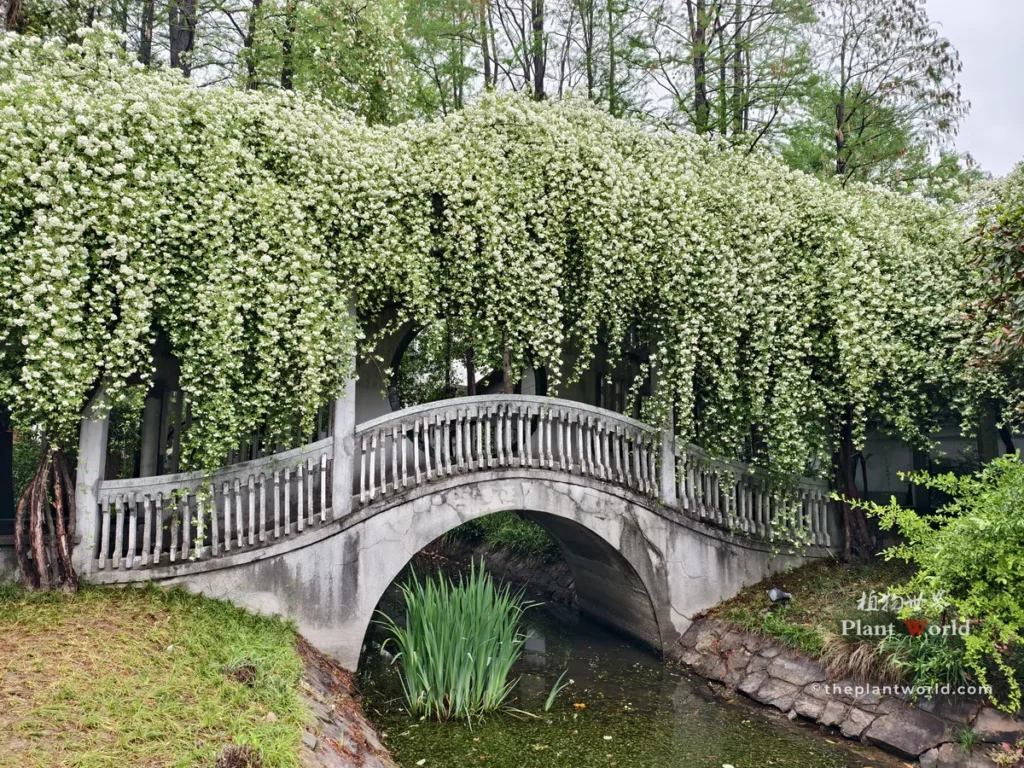
April marks the peak blooming season for the magnificent Lady Banks’ Rose. Known botanically as Rosa banksiae, this vigorous climber transforms spring landscapes as thousands of miniature blossoms cluster thickly along winding, arching vines, cascading downward like flowing waterfalls of scented snow. This spectacular seasonal display has made it one of the most celebrated vertical ornamental plants in traditional Chinese garden history.
⚠️ Critical Naming Reminder: Do not confuse the Lady Banks’ Rose (Rosa banksiae) with Banksia, which is an entirely unrelated genus of woody evergreen shrubs and trees native to Australia.
Beyond its breathtaking scale, this native Chinese treasure carries a profound historical legacy. For over a thousand years, it has defined the romantic aesthetic of the classic Jiangnan courtyard featured within Chinese Garden Plants, serving as a botanical bridge between the closing of spring and the awakening of summer.
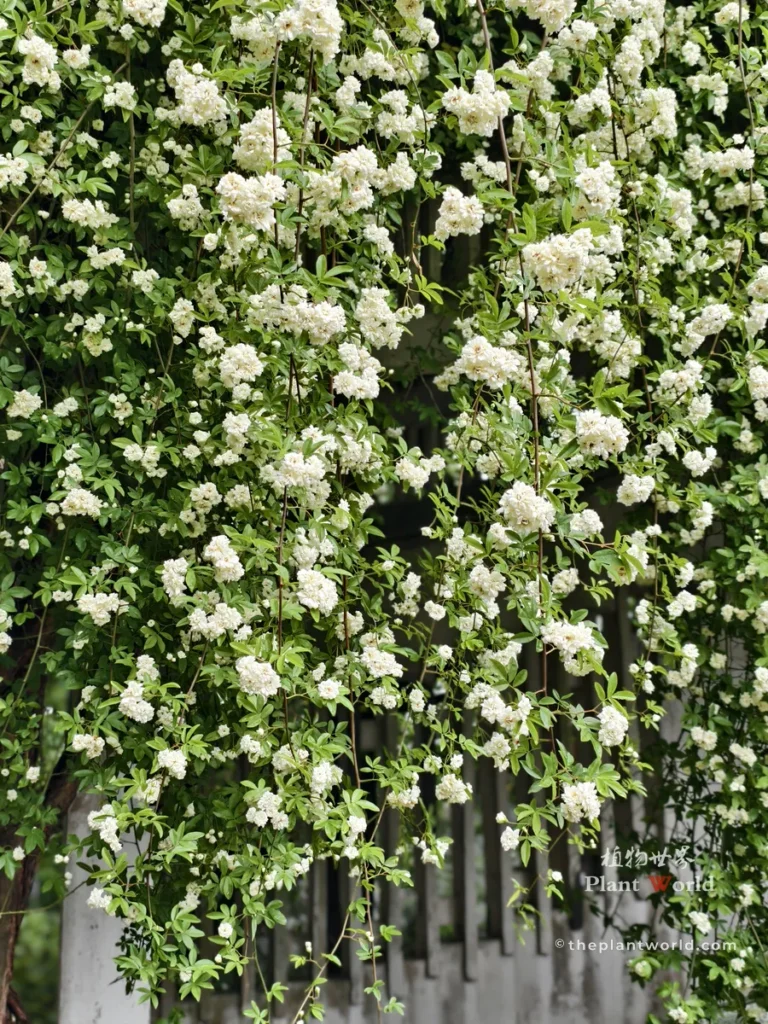
Plant Profile: What Is Rosa banksiae?
- Scientific Name: Rosa banksiae Aiton
- Common Names: Lady Banks’ Rose, Banksiae Rose, Tombstone Rose (named after the world‑record‑holding specimen in Tombstone, Arizona)
- Family: Rosaceae (Rose Family)
Native to the subtropical mountain valleys of central and western China, Rosa banksiae is a massive, fast-growing climbing woody vine capable of reaching heights of 6 metres or more when properly supported.Unlike standard garden roses, one of its greatest horticultural assets is that its mature, sweeping canes are mostly thorn‑free, making it exceptionally safe and pleasant to train over highly trafficked garden structures. Younger shoots may occasionally bear small prickles.
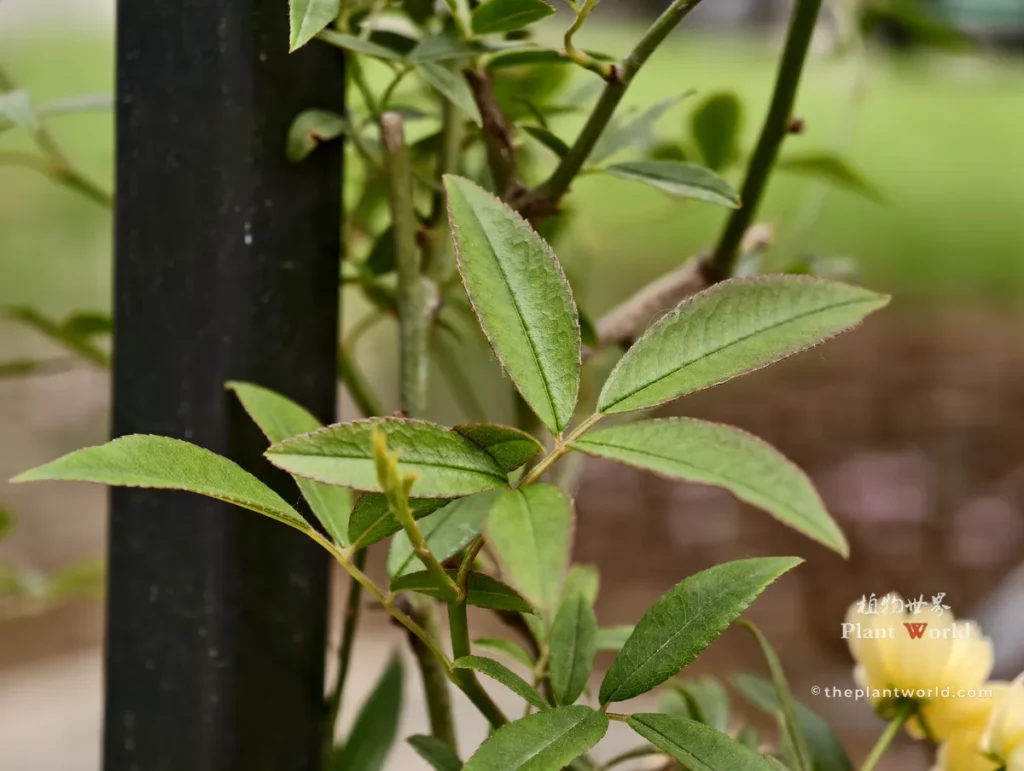
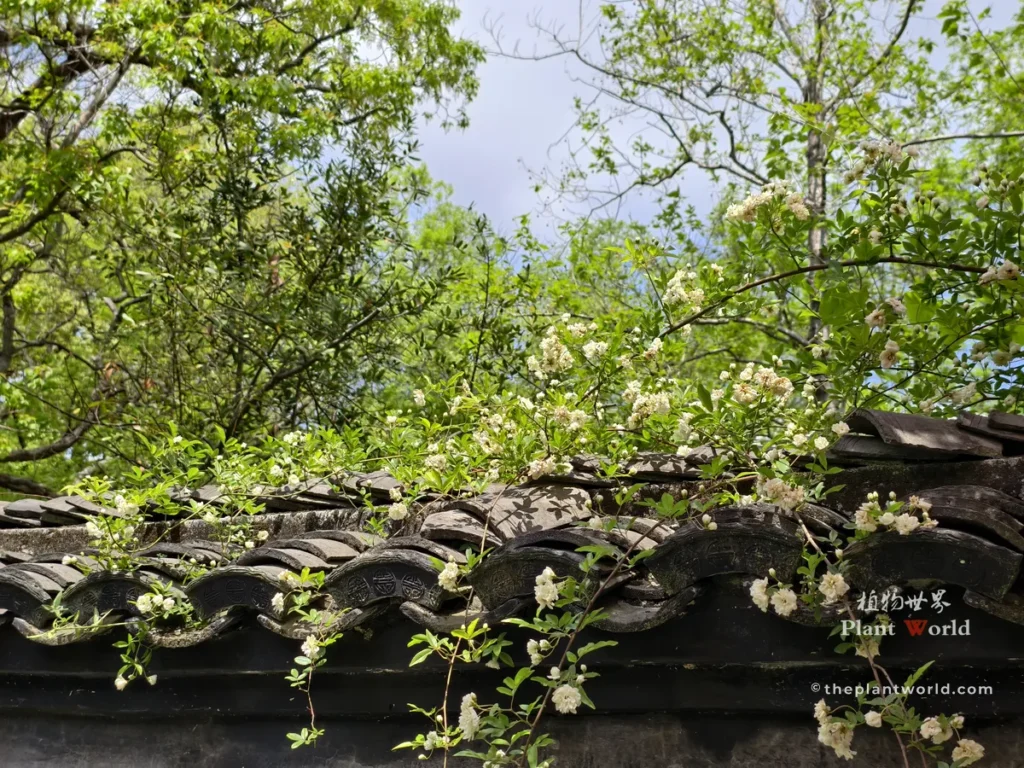
The lance-shaped evergreen to semi-evergreen leaves are slender with neat, finely serrated edges, forming a rich green backdrop for the spring blooms. The countless miniature flowers grow in tight, dense umbel-like clusters. Because the slender vines cannot stand upright on their own, they require sturdy trellises, brick walls, or heavy wooden pergolas to unlock their full potential.
Cultivated Color Forms
Two primary historical variations are widely grown in both eastern and western gardens:
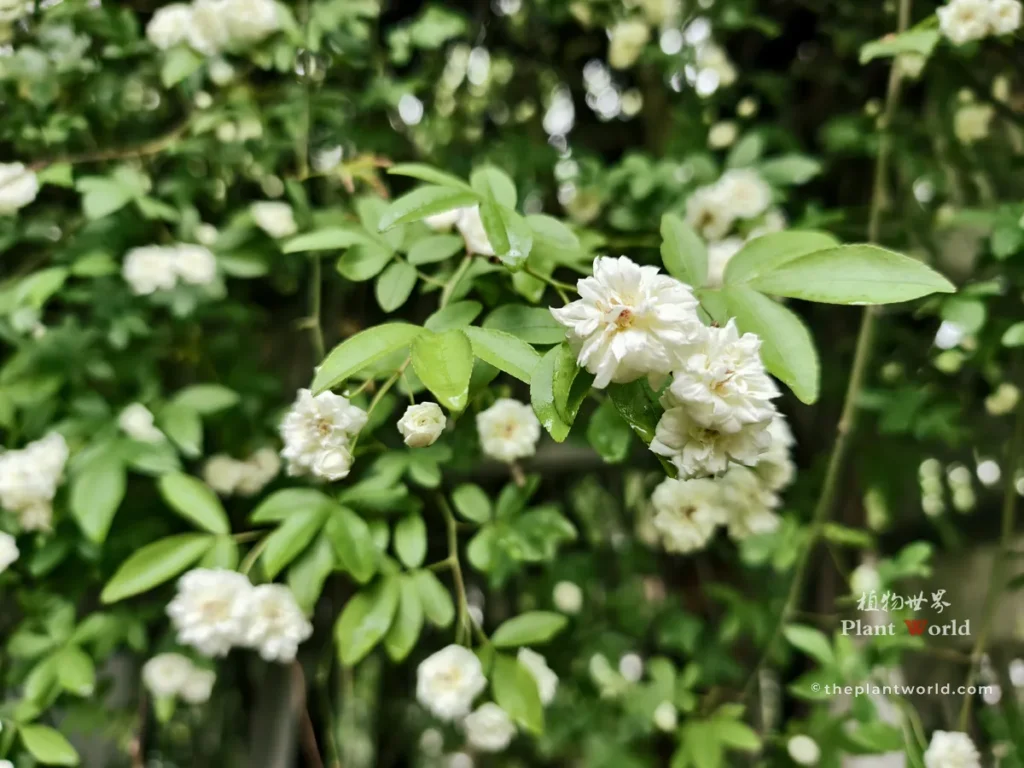
- Rosa banksiae var. banksiae (White Lady Banks’ Rose): Features pure, double-layered white blossoms with a distinct, delicate violet-like fragrance.
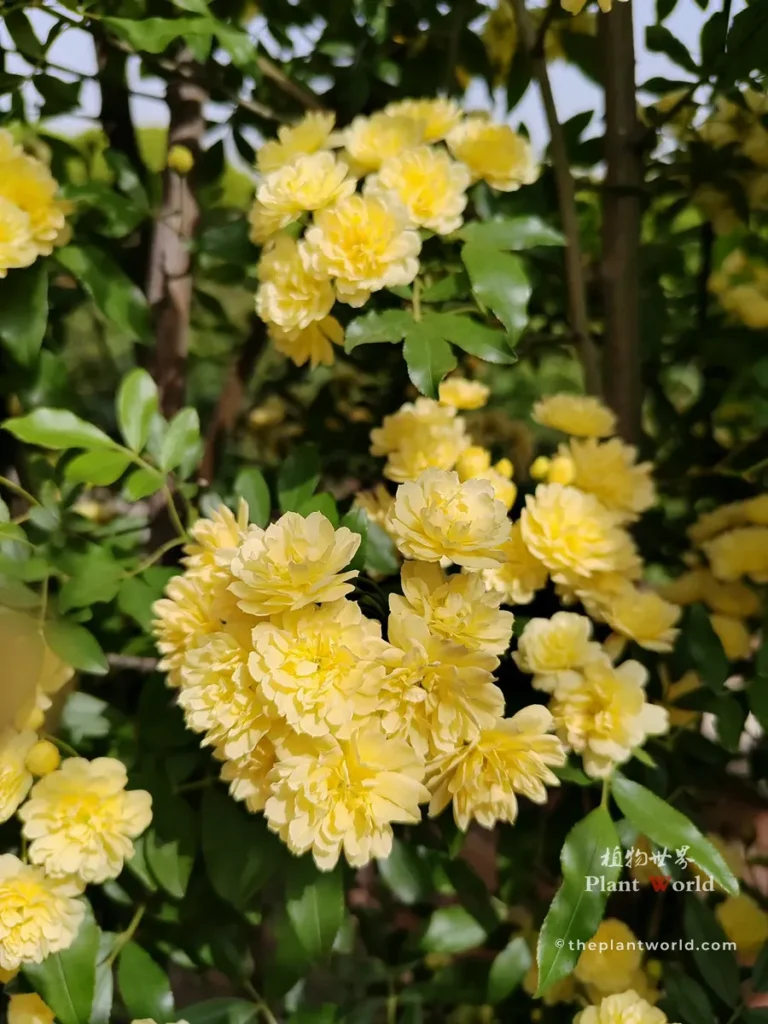
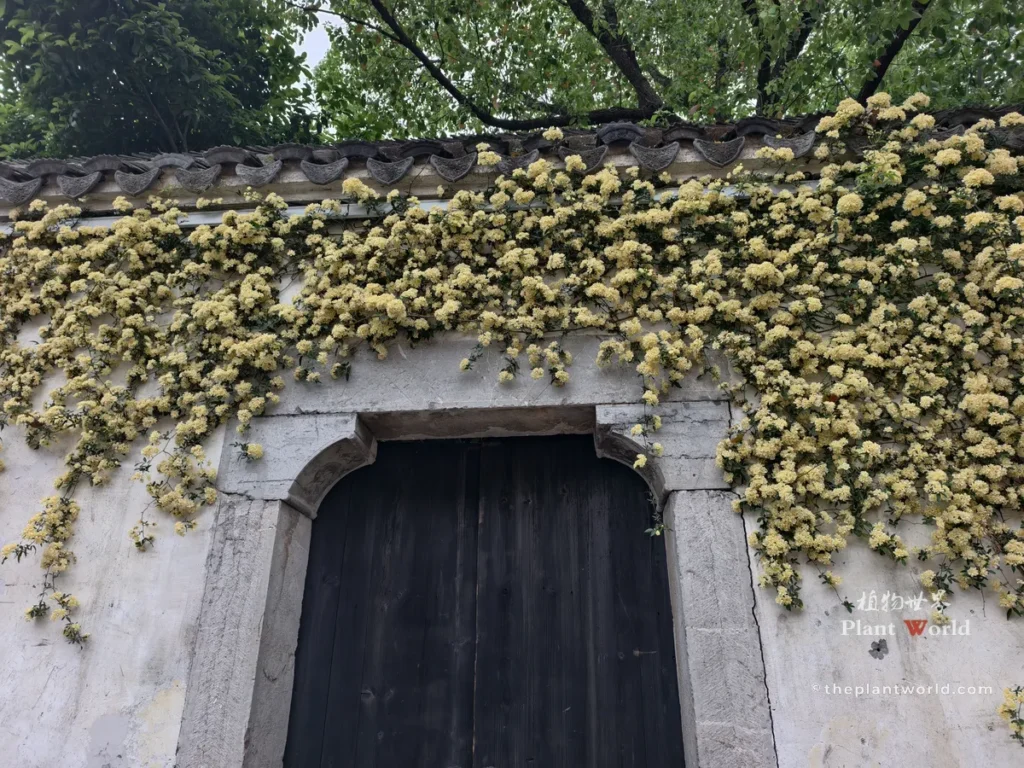
- Rosa banksiae var. lutea (Yellow Lady Banks’ Rose): Offers warm, soft buttery-yellow blooms. While it is the most popular form due to its sheer flower volume, many yellow cultivars carry little to no scent.
The Ming Dynasty horticulturist Wang Xiangjin described the visual power of this vine vividly in his encyclopedic work Records of Numerous Flowers (Qunfang Pu): “Its scent is clear, pure, and far-reaching. When grown on high rustic frames, thousands of hanging branches appear like a shifting drift of fragrant snow.”
Cultivation & Care Guide for Lady Banks’ Rose
Hardiness & Climate
- USDA Hardiness Zones: 7–11. It thrives in warm temperate, Mediterranean, and subtropical climates. It easily survives light winter frosts; however, applying a thick layer of organic mulch over the root zone is highly recommended for winter protection in Zone 7.
Light & Placement
- Requirements: Requires full, direct sun (at least 6 hours daily) to fuel its massive spring flower production.
- Garden Design: It works beautifully when trained beside south‑facing windows, along boundary walls, over garden arches, or framing a Buddhist Pine courtyard display to introduce a soft, cascading texture contrast against architectural evergreens.
Soil & Water
- It easily tolerates a wide variety of well-drained soil types, including clay and sandy loam. Keep the soil evenly moist while the young vine is establishing its extensive root system; it becomes remarkably drought-resistant once mature. Avoid permanently waterlogged ground, which easily triggers root rot.
Pruning – The Single Most Critical Secret
✂️ Prune heavily immediately AFTER spring flowering completes.
Rosa banksiae blooms exclusively on old wood (growth produced during the previous season). If you fall into the common trap of pruning your climbing rose in late summer, autumn, or winter, you will inadvertently remove all of next year’s pre-formed flower buds. This mistake is the number one reason why many growers report that their mature vine fails to bloom.
Symbolism & Chinese Literary Heritage
In traditional Chinese culture, the Lady Banks’ Rose stands as a powerful symbol of enduring beauty, gentle persistence, and quiet elegance.
Unlike stiff, neatly clipped ornamental trees, this climbing rose trails naturally and wildly over architectural boundaries. It flourishes beautifully without rigid human shaping, causing ancient Daoist and Confucian scholars to associate it with an unrestrained, peaceful spirit. It symbolizes abundant happiness and unstoppable vitality.
For hundreds of years, the vine has inspired countless poems and ci verses from the Song, Yuan, and Qing dynasties. One of the most celebrated works is Nian Nu Jiao · Lady Banks’ Rose, composed by the famous Qing Dynasty poet Gu Taiqing:
“Slender vines and fine leaves sway in the soft wind,
Spreading a mist of sweet scent beneath the garden trellis.
Spring fades once the heavy peonies finish blooming,
Yet this resilient vine holds the last light of spring.Tiny, crowded blossoms carry the clear morning dew,
Like celestial maidens in pale feather gowns drifting through the air.
Fragrance drifts through green windows and red doorways at dawn,
As butterflies wander freely among the thick, hanging blooms…”
Interestingly, historical views on its aesthetic charm were not entirely uniform. Certain Ming and Qing dynasty minimalist landscape designers commented that its incredibly dense, explosive bloom cycle looked “overly wild” and lacked restraint. Such lively historical debates show just how deeply the plant was embedded in the daily cultural life of the elite.
Edible & Ethnobotanical Clarifications
Culinary Craft
The sweet, mild floral aroma of the white variant makes the blossoms highly suitable for traditional home crafts. Historically, partially opened blooms were carefully harvested in the early morning to naturally scent green tea leaves. In regional folk traditions, the petals are preserved with raw honey to create a fragrant flower paste, used to bake seasonal rose pastries that mark the gentle transition from spring to summer.
Important Botanical Clarification
⚠️ The Medicinal Confusion: The famous traditional herb named Muxiang (木香 / Aucklandia root), heavily used in traditional Chinese medicine to clear internal stagnation, is harvested from a herbaceous perennial plant within the Aster family (Asteraceae). It is completely unrelated to this climbing rose, despite sharing the same colloquial Chinese name (Muxiang). The flowers and roots of Rosa banksiae cannot be used as a substitute in traditional herbal formulations.
Final Conclusion
Rosa banksiae, the Lady Banks’ Rose, is far more than an ordinary climbing rose. Valued simultaneously as a lightning-fast vertical ornamental, a virtually thornless solution for arches and pergolas, and a living repository of ancient poetic heritage, it remains an unparalleled choice for modern gardeners seeking low-maintenance vines capable of delivering jaw-dropping seasonal beauty and profound historical storytelling.
References
- Flora of China (English Edition): Rosa banksiae Species Account & Rosaceae Taxonomy — Supported by the Missouri Botanical Garden and Harvard University Herbaria.
- Plants of the World Online (POWO): Rosa banksiae Aiton Native Distribution and Varieties — Hosted by the Royal Botanic Gardens, Kew.
- Royal Horticultural Society (RHS): Rosa banksiae ‘Lutea’ (Yellow Banksiae Rose) Cultivation Notes — Premier European authority on temperate garden flora.
- North Carolina State University Extension: Climbing Rose Profiles: Rosa banksiae Growing Guidance — Authoritative North American academic database.
- Qunfang Pu (Records of Numerous Flowers) by Wang Xiangjin (Ming Dynasty) — Classical Historical Reference.
More from The Plant World:
- Chinese Wingnut: The Romantic “Ingot Tree” and Its Cultural Charm
- Plum Blossom Meaning: Symbolism & Cultural Significance
- The Hidden Meanings Behind Red Plum Blossoms
- Chinese Wisteria: History, Symbolism, and Identification
- Peach Blossoms in China: History, Culture, and Symbolism
- Chinese Crepe Myrtle: Guide to Origins & Symbolism
- Ginkgo Leaf Meaning: 5 Secrets of This Ancient Fossil
- Chinese Loquat Tree: Guide to Benefits & History
- Rose of Sharon Tree: Guide to Meaning & Care
- Hosta Plant Benefits: 5 Surprising Uses & Planting Guide
- Strawberry Begonia Care: How to Grow Saxifraga Stolonifera
Discover more from The Plant World
Subscribe to get the latest posts sent to your email.