
Introduction
Dianthus chinensis, commonly known as China pink, Luoyang flower, or embroidered pink, is a perennial herb in the carnation family (Caryophyllaceae). As one of the most versatile Chinese Herbaceous Plants, it features jointed stems resembling bamboo, a habit of growing in rocky crevices, and profuse, vivid flowers in a wide range of colors, having been cultivated in China for well over a thousand years.
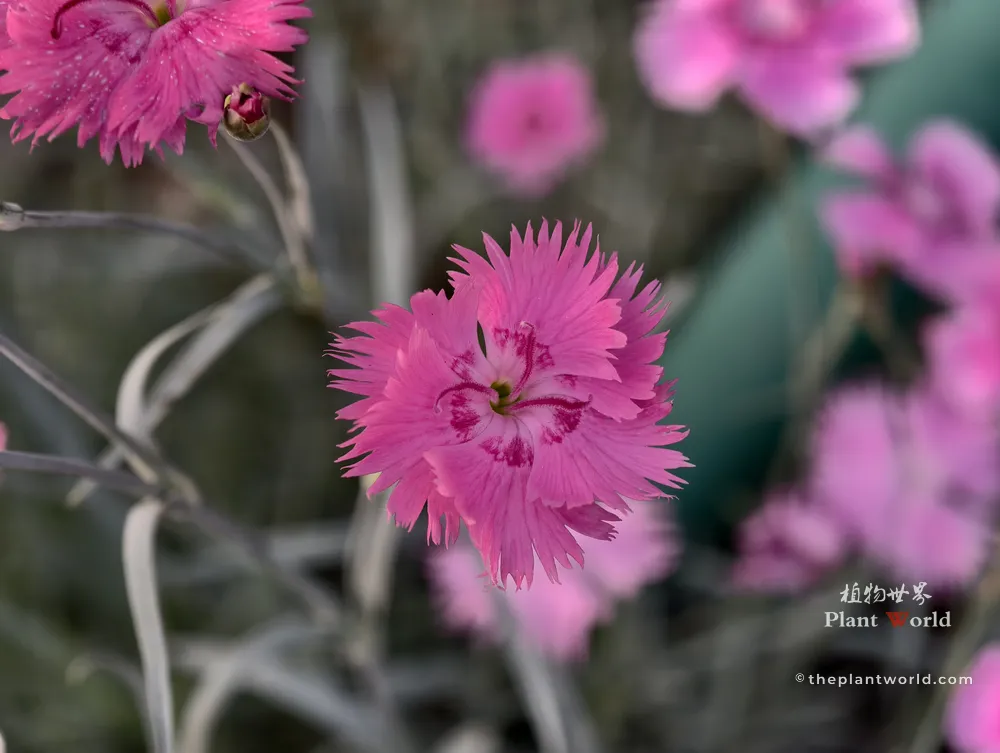
To most people, the China pink is little more than an unassuming little flower at the edge of a flower bed or in a crack between rocks. In reality, however, it combines medicinal, edible, ornamental, ecological, and cultural value in one plant — a true “all-rounder” that is as practical as it is beautiful.
This article explores the benefits and uses of Dianthus chinensis through the lens of Chinese culture and traditional application.
1. Medicinal Value: A Key Source of the Traditional Chinese Herb “Qumai”
The most important practical use of the China pink is medicinal. In Traditional Chinese Medicine (TCM), the dried aerial parts of Dianthus chinensis — together with those of its close relative Dianthus superbus — are used as the herb known as Qumai , a commonly prescribed diuretic and strangury-relieving medicine.
Properties, Meridians, and Functions
- Nature and flavor: Bitter, cold.
- Meridian entry: Heart, small intestine, and bladder meridians.
- Core functions: Promotes urination and relieves strangury, breaks blood stasis and unblocks menstruation, disperses stasis and reduces swelling.
The Essentials of the Materia Medica (Bencao Beiyao) describes Qumai as: “It drains heart fire, benefits the small intestine, and expels pathogenic heat from the bladder — it is an essential herb for treating strangury.”
Clinical Applications
In TCM clinical practice, Qumai is primarily used for:
- Strangury syndromes: Heat strangury, blood strangury, stone strangury, urinary obstruction, and painful dribbling urination — corresponding to modern conditions such as urinary tract infections, cystitis, nephritis, and urinary stones.
- Menstrual obstruction due to blood stasis: Irregular menstruation, amenorrhea, and dysmenorrhea, leveraging its blood-invigorating and menstruation-unblocking properties.
- Sores, abscesses, and eczema: Applied externally for carbuncles, swollen sores, and itchy eczema.
- Other uses: Red, swollen, and painful eyes; fish bone stuck in the throat; bamboo or wood splinters embedded in the flesh — all recorded in ancient formulary texts.
The Compendium of Materia Medica (Bencao Gangmu) records: “In recent ancient formulas, there is a China Pink Flower Decoction for treating difficult labor.” This indicates that China pink flowers were also used historically to assist childbirth.
Modern Pharmacological Research
Modern pharmacological analysis shows that China pink flowers contain volatile compounds such as eugenol, phenethyl alcohol, and benzyl salicylate, as well as saponins and flavonoids. According to pharmacological studies indexed in SpringerLink, active extracts from Dianthus species demonstrate significant anti-inflammatory and free-radical scavenging properties. Studies have confirmed:
- Diuretic effect: Promotes urine excretion and increases urine volume.
- Antibacterial effect: Shows some inhibitory activity against Staphylococcus aureus and E. coli.
- Anti-inflammatory effect: Flavonoid compounds exhibit anti-inflammatory activity.
- Antioxidant effect: A 2023 study by Yunnan University of 22 cultivated Dianthus species found that the flowers have relatively high nutritional value and strong antioxidant capacity.
Contraindications
⚠️ Important note: Qumai is cold in nature and can invigorate blood and unblock menstruation. It is strictly contraindicated in pregnancy. Those with spleen-stomach deficiency-cold or kidney qi deficiency should use it with caution. Medicinal use must be under the guidance of a qualified TCM practitioner — do not self-medicate.
2. Edible Value: Flower Tea, Porridge, and Culinary Garnish
The petals of the China pink are edible, with a mild, slightly sweet flavor and a subtle herbal fragrance. While it is not a mainstream edible flower, it has unique culinary applications in Chinese folk culture and modern wellness cuisine.
China Pink Flower Tea
Flower tea is the most common way to consume China pink. Dried flowers or leaves are steeped in boiling water, often with rock sugar added for sweetness. Folk tradition holds that China pink tea:
- Clears heat and promotes urination: Suitable for drinking in summer when urine is dark yellow and one feels irritable.
- Soothes the nerves and relieves fatigue: Caffeine-free and mild in nature, suitable for daily drinking.
- Provides nutrition: Contains polysaccharides, natural saponins, vitamins A and C, and flavonoids.
“Laoshan China Pink Tea” from the Laoshan region of Shandong Province is a local specialty, made from wild China pink (Dianthus superbus) growing in the mountain crevices of Laoshan, roasted and processed — it has a long history of local consumption.
Flower Porridge and Flower Cakes
China pink petals can be used in porridge: cook white rice porridge, and when it is nearly done, add washed China pink petals and simmer briefly — the result is delicately pink and elegantly fragrant. The petals can also be added to batter to make flower pancakes, a common folk method of incorporating edible flowers into food.
Culinary Garnish
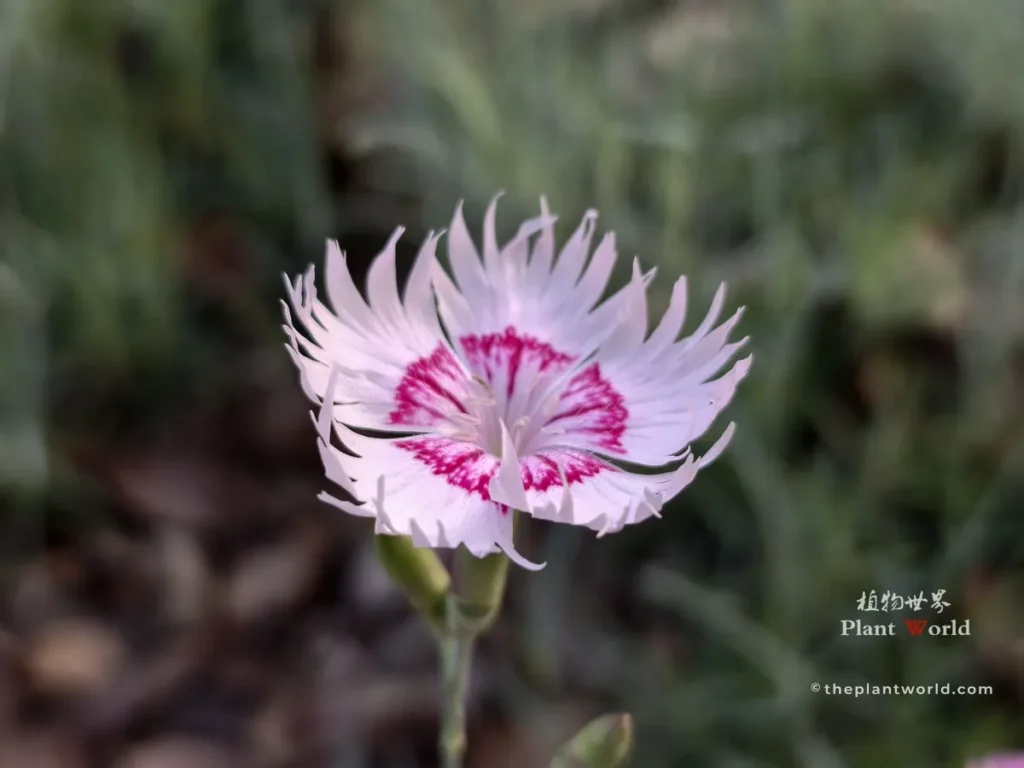
With its rich range of colors (white, pink, red, purple, etc.) and delicately serrated, fringed petal edges, the China pink is well suited as a garnish for dishes, cakes, and salads, adding natural color and elegant visual appeal. In both Western and creative Chinese cuisine, edible China pink flowers are a common choice among edible flowers.
⚠️ Food safety note: Only the petals of the China pink are edible; the leaves and calyx are mildly toxic or bitter and should not be eaten. Before consumption, always confirm the source is safe (free of pesticides), wash thoroughly, and remove the calyx. Pregnant women and those with a cold-deficient constitution should avoid eating large quantities.
3. Ornamental Value: From Palace Patterns to Garden Seas of Flowers
The ornamental value of the China pink has been appreciated since ancient times, making it a staple among traditional Chinese Garden Plants.
Ancient Ornamental Use and Textile Patterns
As early as the Tang Dynasty, the China pink had entered the aesthetic world of the imperial court. Li Bai (701–762) wrote in his Eight Poems of Pleasure in the Palace (Part 1): “Mountain flowers pinned in her jeweled hair, / China pink embroidered on her silk robe.” The China pink flower pattern was embroidered onto court silk garments, becoming a popular textile motif of the era — a clear sign of its popularity and aesthetic appeal.
During the Song Dynasty, double-flowered China pink varieties were especially prized in the city of Luoyang, earning the alias “Luoyang flower” (Luoyang hua), sharing the city’s fame with its peonies. The Cihai dictionary (biology volume) explicitly records “Luoyang flower” as an alias for the China pink.
Modern Garden Applications
In modern landscaping, the China pink is extraordinarily versatile:
- Flower beds, borders, and raised beds: With its low mounding habit, profuse and vivid flowers, and long bloom season (flowering continuously from spring through autumn), it is an ideal material for flower beds and borders.
- Rock gardens and lawn edges: Tolerant of poor soil and preferring good drainage, it is perfectly suited for rock garden design and lawn edging.
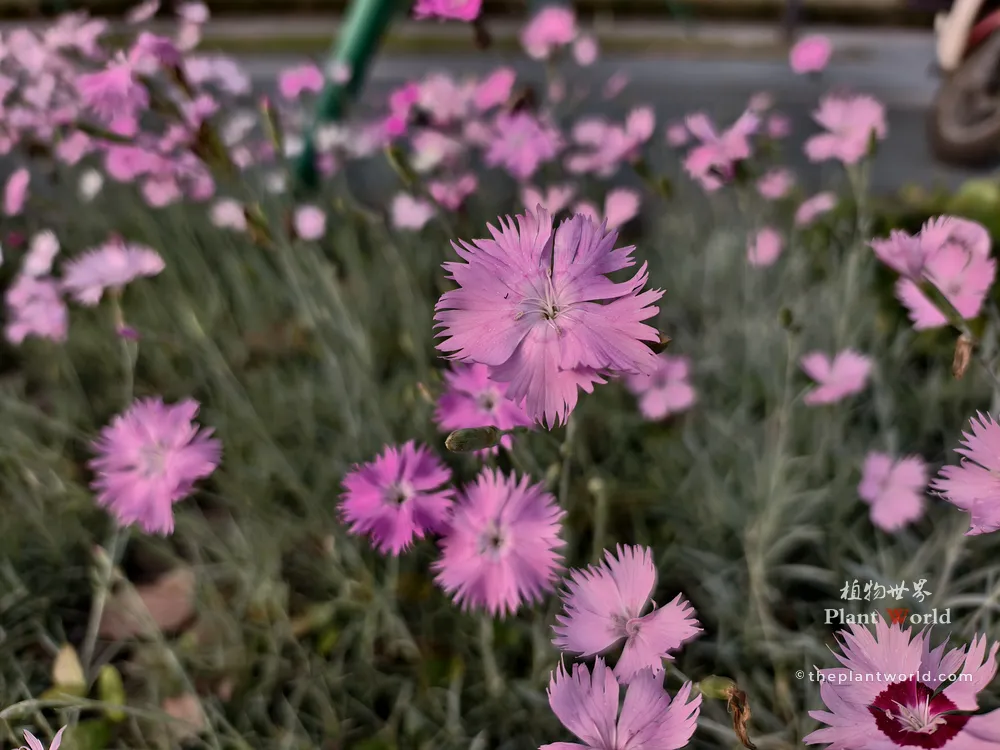
- Ground cover: When planted in large drifts, it forms colorful, flower-dappled lawns with excellent visual impact.
- Potted plants and cut flowers: It can be potted to adorn courtyards and balconies, or used as cut flowers in vases.
- Edging plants: Its tidy habit makes it suitable as a border edging plant.
The China pink comes in a rich palette of colors — white, pink, red, rose, crimson, purple, lavender, yellow, blue, and more — colorful and endlessly varied. It is low-maintenance, tolerant of poor soil, and easy to grow — truly a “low-effort flower.”
4. Ecological Value: Air Purification and Pollinator Support
The ecological value of the China pink has received increasing attention in recent years. It is not only a beautiful ornamental flower but also an “ecological guardian” that improves the environment.
Air Purification
Research shows that the China pink has the ability to absorb sulfur dioxide and chlorine, providing some purification of harmful airborne gases. For this reason, it can be planted in industrial areas, along roadsides, and in other regions with heavy air pollution to purify the air and restore the ecological environment.
In addition, the subtle fragrance emitted by the China pink can significantly inhibit the growth and reproduction of Staphylococcus aureus, Streptococcus pneumoniae, and Mycobacterium tuberculosis, providing a degree of air-borne antibacterial effect.
Pollinator Support
The China pink is an excellent nectar source plant. During peak bloom, a single plant produces 0.8–1.2 mg of nectar per day, making it an important supplementary pollinator plant from early spring to early summer in North and East China, with positive significance for maintaining pollinator diversity in agricultural ecosystems.
The China pink has been included in the Ministry of Agriculture and Rural Affairs Technical Guidelines for Farmland Ecological Corridor Construction (2023) as a recommended species, playing a role in farmland ecological corridor construction.
Low-Maintenance Urban Greening
In recent years, the China pink has been rapidly adopted in green roofs, vertical green walls, and low-maintenance urban public spaces. Its drought tolerance, poor-soil tolerance, long flowering period, low stature, and low maintenance requirements make it highly suitable for urban gray-space greening where water resources are limited and maintenance costs are high — an excellent material for building “sponge cities” and low-maintenance landscapes.
5. Cultural Value: From the “Stone Bamboo Mother” Legend to the Literati’s Spiritual Symbol
In Chinese culture, the China pink is not merely a medicine or a flower — it carries profound cultural meaning.
The “Stone Bamboo Mother” Legend and the Symbol of Filial Piety
The folk legend of the “Stone Bamboo Mother” (Shizhu Ma) tells the story of a boy named Shi Zhu (whose name shares the same Chinese characters as the flower) who searched for medicine for his ill mother, wept into the mountain rocks, moved the mountain god, and saw flowers spring from where his tears fell. This legend made the China pink a symbol of filial piety and gratitude, and also earned it the cultural identity of a “mother flower” (although the more traditional Chinese mother flower is the daylily, the China pink’s folk legend gives it its own unique maternal connotation).
Spiritual Solace in Literati Poetry
From Li Bai’s line “China pink embroidered on her silk robe,” to Wang Anshi’s (1021–1086) China Pink Flower — “Spring returns to the hidden valley and it begins to clump, / Spreading a shallow red across the ground…” — the China pink, in the eyes of ancient literati, serves both as a decorative motif for royal garments and a spiritual emblem: it blooms with quiet dignity even when overlooked. Much like the enduring literary admiration for plum blossoms in classical Chinese poetry, the monk-poet Qi Ji (863–937) celebrated its understated resilience: “China pink flowers bloom, lighting the courtyard stones, / Red moss naturally inherits the color of the departed palace.”
Wang Anshi uses the China pink as a metaphor for himself, expressing the mindset of holding fast to one’s true self even when one’s talent goes unrecognized. Qi Ji uses the image of “orangutan blood splashed on low clumps” to describe the intense red of the China pink, endowing this small flower with striking visual power and spiritual tension.
6. Precautions and Contraindications
While enjoying the many benefits of the China pink, the following precautions should not be overlooked:
- Medicinal contraindications: Qumai (medicinal China pink) is cold in nature and can invigorate blood and unblock menstruation. It is absolutely contraindicated in pregnancy. Those with spleen-stomach deficiency-cold, kidney qi deficiency, or heavy menstrual flow should use it with caution. Must be used under the guidance of a qualified TCM practitioner.
- Food safety: Only the petals are edible; leaves and calyx should not be eaten. Before consumption, confirm the source is pesticide-free, wash thoroughly, and remove the calyx. Pregnant women and those with a cold-deficient constitution should avoid eating large quantities.
- Pet safety: The China pink contains saponins. As discussed in Hosta Plant Benefits, hostas and many other shade garden plants can cause mild discomfort if eaten. If pets ingest large quantities of Dianthus foliage, they may develop mild gastrointestinal upset (vomiting, diarrhea) per the ASPCA Animal Poison Control Center, though it is not highly toxic overall. Households with cats and dogs should prevent pets from chewing large amounts.
- Allergy warning: A small number of people may be allergic to China pink pollen or sap. If skin itching, redness, or swelling occurs after contact, wash promptly and seek medical attention.
Conclusion
Dianthus chinensis, this little flower with bamboo-like jointed stems that grows among rocks, may seem ordinary, yet it combines medicinal, edible, ornamental, ecological, and cultural value in one plant. It is the Qumai in the TCM practitioner’s hand that promotes urination and relieves strangury; it is the China pink flower tea in the teacup that clears heat and soothes the nerves; it is the multicolored sea of flowers in the garden bed that blooms from spring to autumn; it is the ecological guardian in industrial areas that absorbs harmful gases; and it is the court pattern embroidered on silk robes in Li Bai’s poetry, and the spiritual symbol of dignified self-blooming in Wang Anshi’s hidden valley.
“Spring returns to the hidden valley and it begins to clump, / Spreading a shallow red across the ground. / No carriages or horses come — who will see and admire it? / Yet pitifully, it too knows how to pass the spring breeze.” As Wang Anshi wrote, even growing in an overlooked hidden valley, the China pink still calmly blooms its own shallow red — this is both the character of the China pink and the essence of its value: unassuming and unostentatious, yet quietly contributing its strength in every dimension — medicinal, edible, ornamental, ecological, and cultural.
This is the benefits and uses of Dianthus chinensis — a small flower, a great story.
More from The Plant World:
- Chinese Wingnut: The Romantic “Ingot Tree” and Its Cultural Charm
- Plum Blossom Meaning: Symbolism & Cultural Significance
- The Hidden Meanings Behind Red Plum Blossoms
- Chinese Wisteria: History, Symbolism, and Identification
- Peach Blossoms in China: History, Culture, and Symbolism
- Chinese Crepe Myrtle: Guide to Origins & Symbolism
- Ginkgo Leaf Meaning: 5 Secrets of This Ancient Fossil
- Chinese Loquat Tree: Guide to Benefits & History
- Rose of Sharon Tree: Guide to Meaning & Care
- Hosta Plant Benefits: 5 Surprising Uses & Planting Guide
- Strawberry Begonia Care: How to Grow Saxifraga Stolonifera
Discover more from The Plant World
Subscribe to get the latest posts sent to your email.