
Introduction
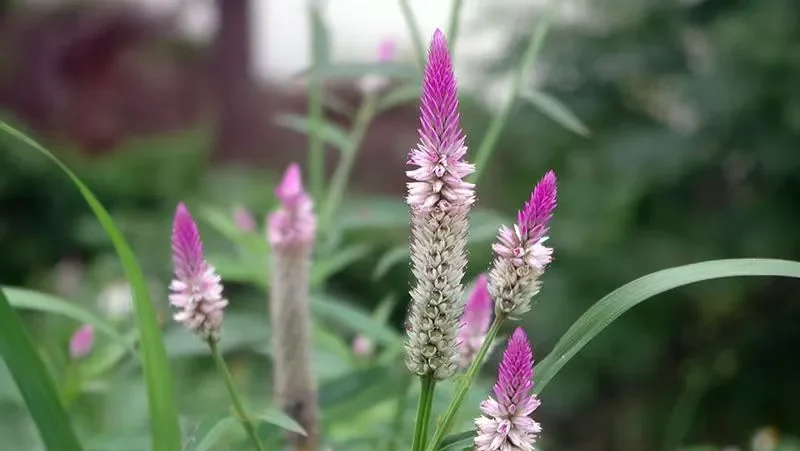
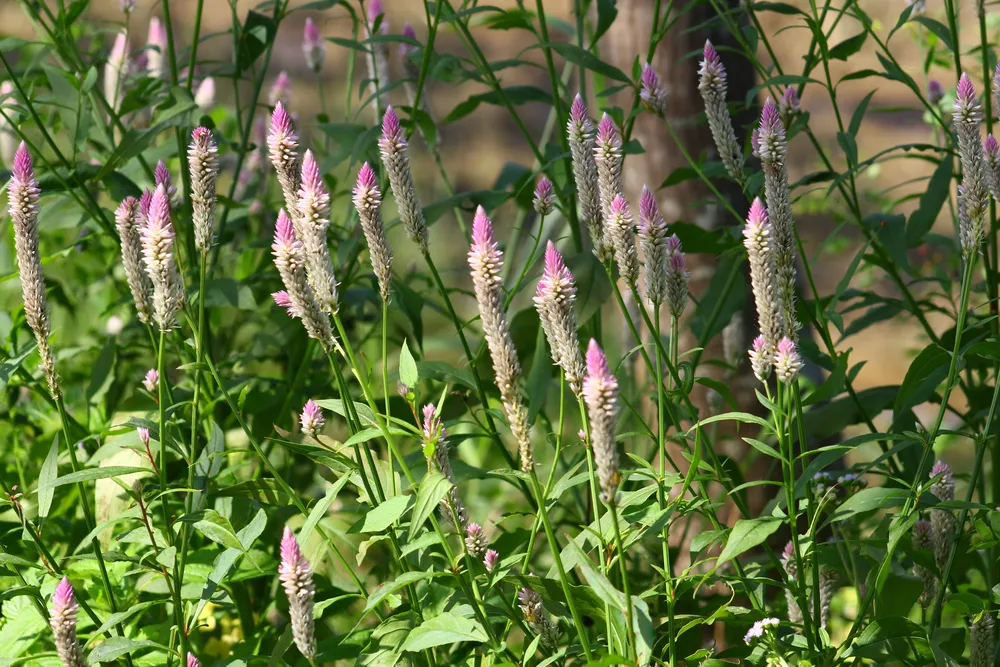
Walk along rural field ridges in eastern China during early autumn, and you will easily spot a distinctive wild herb. It grows in resilient clumps, with upright, green branching stems. Each stem bears one sharp, spire-shaped flower spike, standing straight toward the sky.
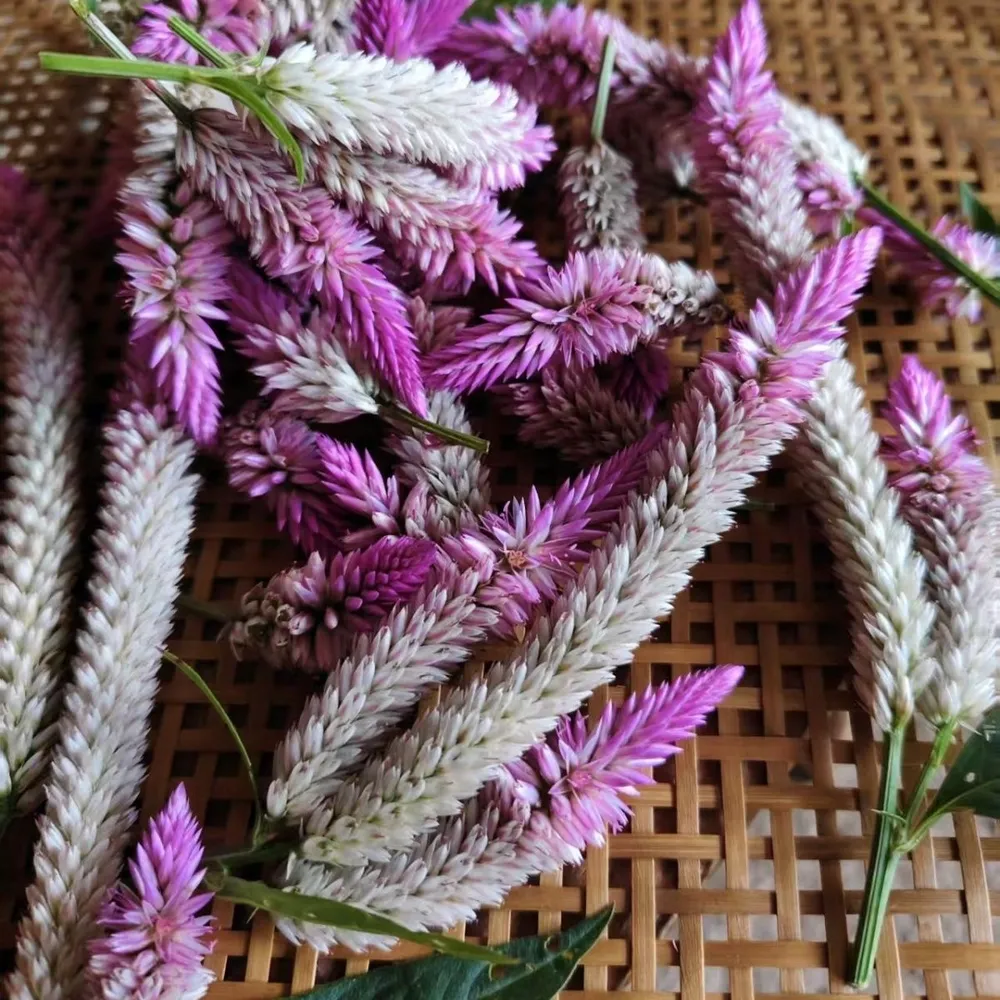
The tip of the bloom carries a soft purple hue, fading down into a band of silvery white fuzz, then shifting to pale greenish-white lower down. Every upright inflorescence looks like a slender writing brush raised, ready to paint across the blue autumn sky. This elegant plant is Celosia argentea, widely known in Western horticulture as the Silver Cockscomb or Wheat Celosia.
For centuries, this plant has bridged the gap between rustic wilderness and refined culture. Today, it is rapidly escaping the roadsides of Asia to become a prized addition to modern cutting gardens worldwide.
Plant Profile: What Is Celosia argentea?
- Scientific Name: Celosia argentea L.
- Common Names: Silver Cockscomb, Wheat Celosia, Quail Grass, Wild Cockscomb
- Family: Amaranthaceae (Amaranth Family)
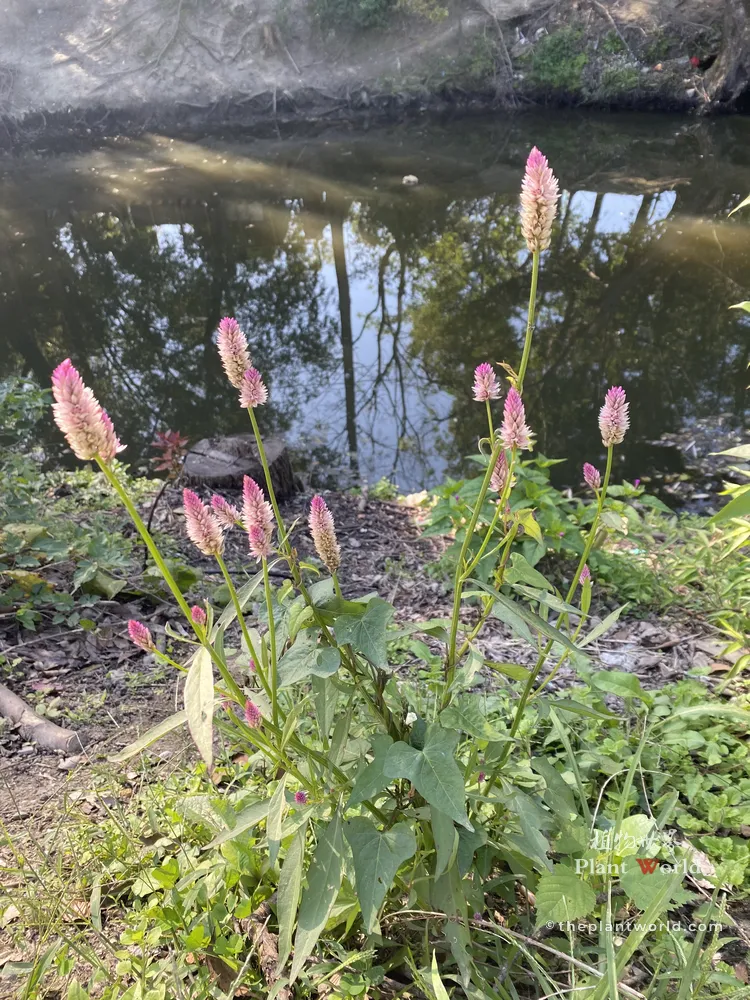
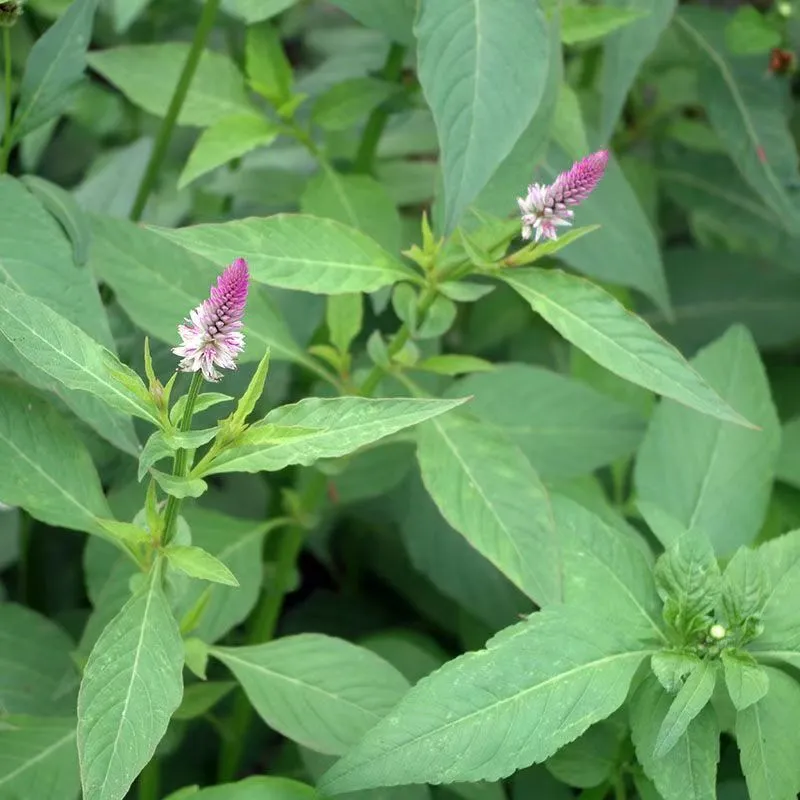
Celosia argentea is a vigorous warm-season annual herb originating from tropical Africa. It spread widely across Asia thousands of years ago, becoming thoroughly naturalized throughout the diverse ecosystems of China. The plant can reach up to 1 meter in height, supported by smooth, ribbed green or reddish stems clad in slender, lance-shaped leaves.
The compact, tapering flower spikes are its most recognizable trait. New blooms open with intense pinkish-purple tips, gradually fading to a metallic silvery white as they mature from the base upward. The blooms hold their structural shape and color exceptionally well once dehydrated. Much like the architectural texture offered by dried poinsettia in winter floral art, the Silver Cockscomb serves as a premier choice for everlasting autumn cut flower arrangements.
Highly resilient, this sun-loving plant easily adapts to poor, depleted soils. When abandoned farmland is left undisturbed, naturalized colonies often create sweeping seas of pale pink and silver blooms swaying in the autumn breezes, offering a wild spectacle comparable to the dramatic seasonal backdrops created by the hollyhock flower in traditional cottage gardens.
Important Botanical Note
The familiar, heavily ruffled garden cockscomb is a cultivated botanical variety (or cultivated group) classified as Celosia argentea var. cristata (commonly called the Brain Flower). Compared to the intense, velvety folds of the garden variety, the wild Silver Cockscomb carries a quieter, leaner grace. Ancient Chinese scholars gave it numerous vivid nicknames, including Sky-pointing Brush, Wild Rooster Comb, Fox Tail, and Ox-Tail Flower.
Cultivation & Care Guide for Silver Cockscomb
Hardiness
- USDA Hardiness Zones: 9–12. However, it is effortlessly grown as a fast-growing warm-season annual in Zones 2–8. It thrives in hot, humid summer weather and cannot tolerate frost.
Light & Position
- Requirements: Requires full, direct sun (at least 6–8 hours daily) for robust flowering and intense coloration.
- Landscaping Ideas: Ideal for wildflower meadows, cottage cutting gardens, oriental landscape borders, and large container displays. It is an essential choice for anyone building a dedicated dried flower garden.
Soil & Water
- Extremely adaptable to most well-drained soil types, including sandy or gravelly loam. Provide moderate watering while the young plant is establishing; it becomes highly drought-resistant once mature. Avoid permanently waterlogged ground, which easily triggers stem and root rot.
Maintenance & Propagation
- Sow seeds directly outdoors after all danger of spring frost has passed. For dried flower applications, harvest the upright spikes once they reach full color but before the bottom seeds begin to ripen and drop. Under optimal conditions, the plant will readily self-seed for the following year.
Cultural History & Chinese Literary Connections
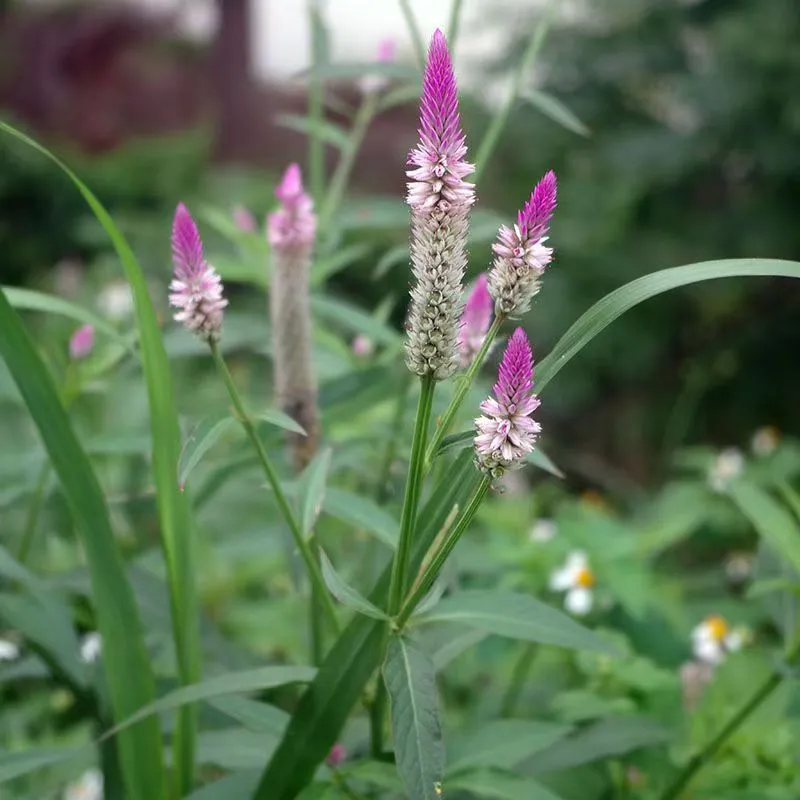
Celosia argentea has been integrated into East Asian cultural history for more than two thousand years. Its ancient Chinese name, Qingxiang (青葙), first appears in foundational classical texts, including the Shennong Ben Cao Jing (Shennong’s Materia Medica) and Li Shizhen’s Compendium of Materia Medica.
In ancient Chinese writing, the character Qing (青) represents fresh, living green foliage, while Xiang (葙) historically referred to fragrant, noble herbs, granting the plant a naturally poetic reputation among the literati.
One famous literary legend surrounds the Silver Cockscomb. Some historians and scholars theorize that the infamous “Houting Flower” (Houting Hua) mentioned in the classic poem Jade Tree, Houting Blossom—composed by Emperor Chen Houzhu of the Southern Dynasties—refers directly to the wild blooms of Celosia argentea. Because the poem became historically tied to the lavish lifestyle and subsequent fall of his kingdom, the Silver Cockscomb later gained a sombre, romantic nickname in poetry: “The Flower of a Fallen Dynasty.”
While this specific botanical interpretation remains a subject of lively academic debate, the wild Silver Cockscomb has stood the test of time as a symbol of unyielding resilience—standing upright, slender, and calm, swaying gently in the autumn wind without ever seeking vulgar attention.
Edible & Traditional Herbal Legacy
Culinary Value
The young, tender shoots and leaves of Celosia argentea are regularly harvested as a nutritious leafy vegetable across southern China, Southeast Asia, and parts of tropical Africa. Usually prepared by stir-frying or blanching and serving chilled with savory dressings, the greens offer a subtle, pleasant, and mildly earthy flavor profile.
Traditional Folk Lore
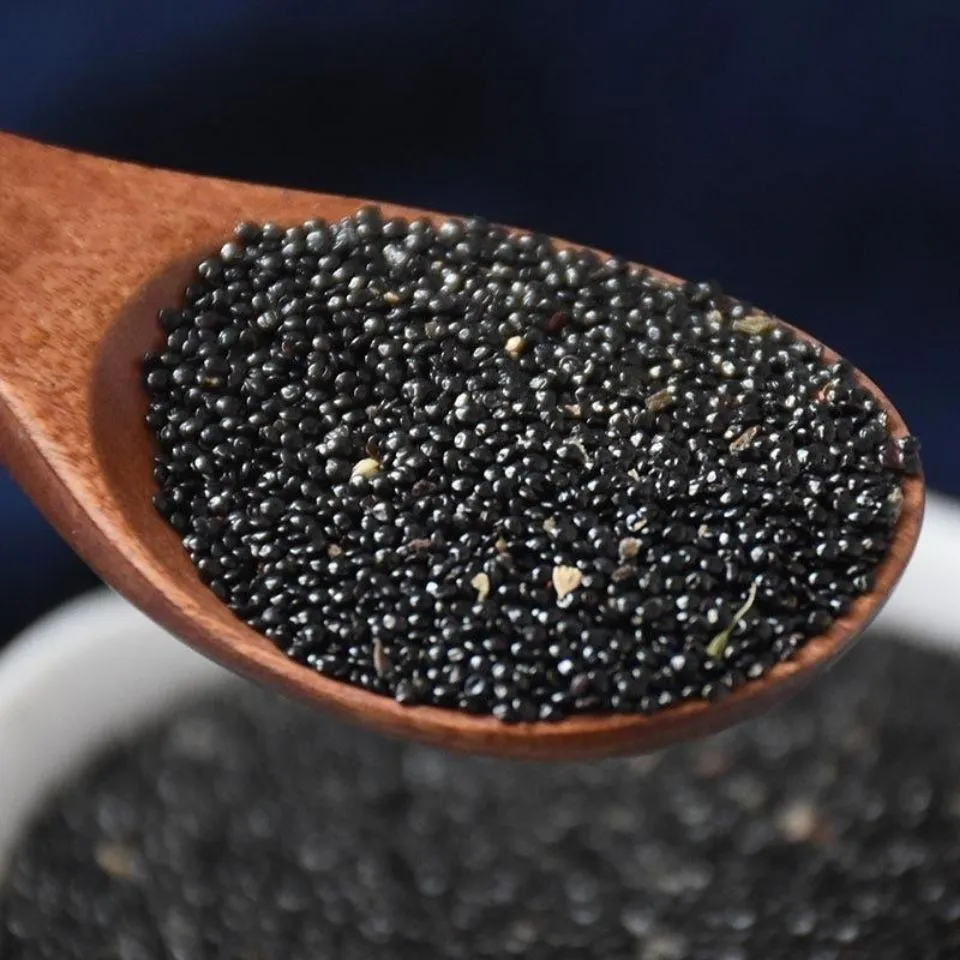
The tiny, ripe, glossy black seeds are known in traditional Chinese ethnobotanical culture as Qingxiangzi (青葙子), often colloquially nicknamed Grass Cassia. For centuries, traditional practitioners utilized these seeds in seasonal preparations aimed at clearing internal liver heat and promoting visual wellness.
This traditional application aligns closely with how East Asian rural communities historically valued chrysanthemum tea benefits for soothing the eyes and cooling the body during seasonal transitions.
⚠️ Important Botanical Disclaimer: All herbal properties and traditional recipes included in this article serve strictly as cultural, historical, and botanical reference points. This content does not constitute medical advice. The active compounds within Celosia seeds can interact with ocular health; individuals should never harvest wild seeds for self-medication. Always consult a qualified healthcare professional before attempting any internal use.
Beyond dietary and traditional lore, the hard, polished black seeds are frequently collected by regional artisans to string together delicate, highly durable handmade beaded bracelets and folk crafts.
Final Conclusion
Celosia argentea, the Silver Cockscomb, is far more than a simple roadside weed. Valued simultaneously as a heat-tolerant landscape ornamental, an everlasting dried flower champion, a nutritious edible green, and a fixture of ancient herbal folklore, it carries deep layers of Chinese literary and folk heritage.
If you seek an uncomplicated, low-maintenance annual with striking, brush-shaped blooms that excel in floral design, paired with a fascinating cultural backstory, the Silver Cockscomb deserves a prominent place in your garden borders this coming season.
References
- Flora of China (English Edition): Celosia argentea Species Account & Amaranthaceae Taxonomy — Managed collaboratively by the Missouri Botanical Garden and Harvard University Herbaria.
- Plants of the World Online (POWO): Celosia argentea L. Native Range, Variants, and Synonyms — Hosted by the Royal Botanic Gardens, Kew.
- NC State University Extension: Celosia argentea (Plumed Cockscomb) Cultivation & Selection Notes — Premier North American academic gardening database.
- Royal Horticultural Society (RHS): Genius Celosia: Growing and Propagation Guidance — The leading authority on European temperate horticulture.
- Shennong Ben Cao Jing (Shennong’s Materia Medica) & Compendium of Materia Medica (Li Shizhen) — Classical Historical References.
More from The Plant World:
- Chinese Wingnut: The Romantic “Ingot Tree” and Its Cultural Charm
- Plum Blossom Meaning: Symbolism & Cultural Significance
- The Hidden Meanings Behind Red Plum Blossoms
- Chinese Wisteria: History, Symbolism, and Identification
- Peach Blossoms in China: History, Culture, and Symbolism
- Chinese Crepe Myrtle: Guide to Origins & Symbolism
- Ginkgo Leaf Meaning: 5 Secrets of This Ancient Fossil
- Chinese Loquat Tree: Guide to Benefits & History
- Rose of Sharon Tree: Guide to Meaning & Care
- Hosta Plant Benefits: 5 Surprising Uses & Planting Guide
- Strawberry Begonia Care: How to Grow Saxifraga Stolonifera
Discover more from The Plant World
Subscribe to get the latest posts sent to your email.