
Introduction
My first encounter with Podocarpus macrophyllus, widely known as the Buddhist Pine or Luohan Song, began with its extraordinary, spiritually symbolic fruit.
Evergreen all year round, the Buddhist Pine is a familiar, prestigious sight outside villas, traditional courtyards, and restaurant entrances across subtropical China. Its sculptural form carries a quiet, dignified grace, paired with powerful, rugged vigour. Wealthy merchants and refined literati alike have cherished this tree for hundreds of years.
What makes it truly unforgettable is its distinctive seed structure. The round, hard sphere is the seed itself, while the fleshy, cylindrical base is called the receptacle. The receptacle shifts colour gradually through the seasons: from fresh green to pale yellow, then vivid crimson, and finally deep purplish-black. When connected together, the seed and colourful stalk closely resemble a monk draped in robes, seated in quiet meditation. This striking visual gave rise to its common Chinese name: Luohan Song, the Arhat Pine (a monk who has achieved spiritual enlightenment).
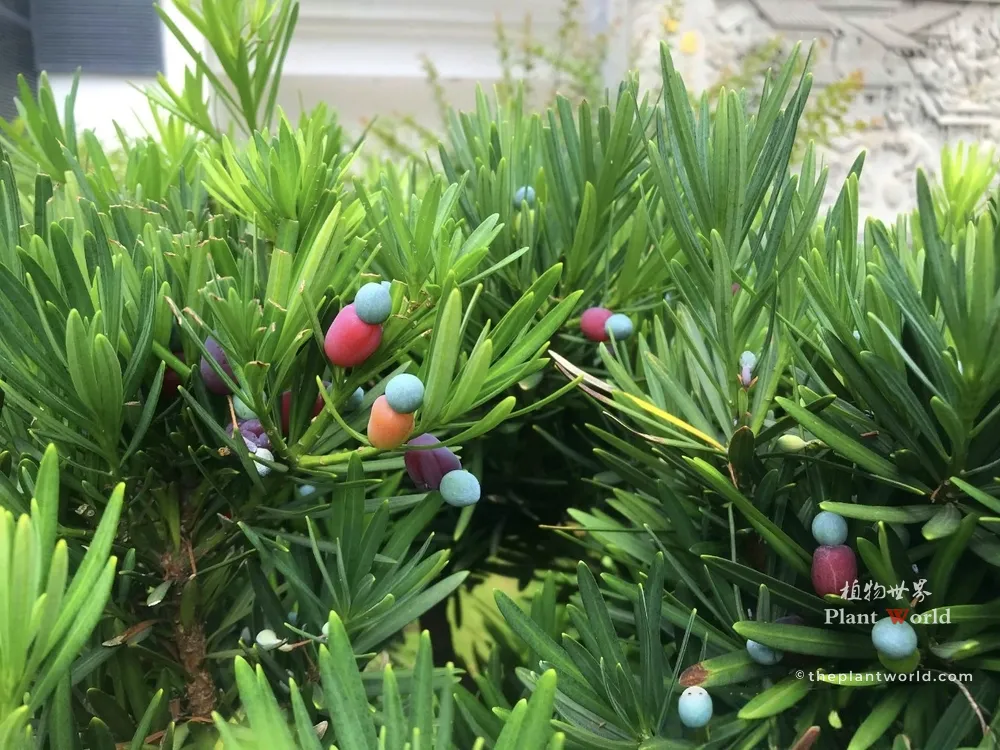
Plant Profile: Podocarpus macrophyllus
- Scientific Name: Podocarpus macrophyllus (Thunb.) D.Don
- Common Names: Buddhist Pine, Yew Plum Pine, Arhat Pine
- Family: Podocarpaceae
An evergreen conifer capable of reaching 20 metres in height in the wild, the Buddhist Pine can live for hundreds, even thousands of years. It is a dioecious species: male trees only produce pollen-bearing flowers and never bear fruit, while only female specimens develop the famous arhat-shaped seeds after successful pollination.
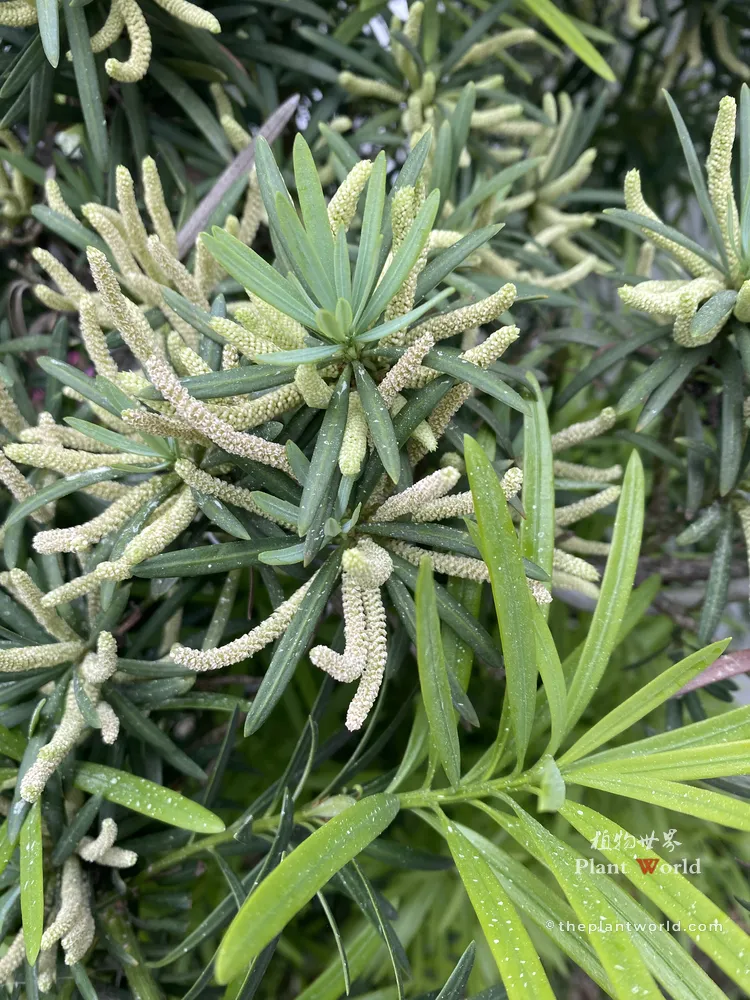
Male blooms grow as slender, clustered spike-shaped flower stalks. Female trees form single flower buds within leaf axils, which mature into the eye-catching seed-receptacle combination each autumn.
⚠️ Important Clarification for Western Gardeners: This tree is often misleadingly nicknamed “Japanese Yew” or “Chinese Yew” in overseas nurseries. Do not confuse it with the true yew (Taxus), which contains taxine alkaloids and is highly toxic to humans and pets; ingestion can lead to life-threatening cardiac failure. While far less lethal than true yew (Taxus), the Buddhist Pine (Podocarpus macrophyllus) is still not pet-safe. According to ASPCA data, ingestion of foliage, seeds or seed receptacles may trigger vomiting and diarrhoea in dogs and cats. Small amounts of the ripe fleshy receptacle can be consumed by humans, yet the hard round seed is toxic and must never be eaten. For safety, casual foraging is discouraged.
The Buddhist Pine belongs to an entirely separate plant family. Wild populations grow across subtropical southern China and southern Japan, and it has been cultivated in Chinese landscapes for well over 1,000 years.
Cultivation & Care Guide for Buddhist Pine
Hardiness
- USDA Hardiness Zones: 8–11.
- It tolerates light winter frost well. Protect the root zone with a thick layer of organic mulch (such as wood chips or straw) during brief cold snaps in Zone 8. In colder northern climates, grow it in large containers and overwinter it indoors, in a sunroom, or under a heated greenhouse.
Light & Placement(Outdoor)
- Requirements: Thrives in full sun to partial shade. It adapts excellently to urban conditions and tolerates moderate air pollution.
- Landscaping Inspiration:
- Cloud-Pruned Specimens: Create dramatic, structural focal points for oriental gardens, zen meditation spaces, and main entrance displays.
- Evergreen Hedging: Trimmed into dense, neat privacy screens. The popular cultivar Podocarpus macrophyllus ‘Maki’ is widely used for this purpose due to its upright, compact growth habit.
- Bonsai Cultivation: Cultivated as a prized, long-lived specimen within the global bonsai community. For a stunning contrast in a courtyard setting, designers often pair its dense structure with the arching, vibrant golden blossoms of Winter Jasmine nearby.
Soil & Water(Outdoor)
- Prefers fertile, loamy, sharply draining soil with a slightly acidic to neutral pH. Water consistently through the warm spring and summer growing seasons; avoid permanent waterlogging, which easily triggers root rot. Reduce watering significantly during the cooler winter months.
Pruning & Maintenance(Outdoor)
Extremely tolerant of heavy shaping and shearing. Trim during late spring or early summer to maintain cloud-layer styling for landscape trees and macro-bonsai. Remove old inner foliage annually to keep the canopy open, allowing sunlight and air circulation to keep the tree healthy.
Houseplant Care (Indoor)
Podocarpus macrophyllus makes an excellent indoor evergreen houseplant. Container-grown indoor specimens require more precise care than landscape-planted trees, especially regarding light, airflow, and watering, to prevent yellowing foliage, legginess, and root problems.
Light & Placement: Place indoor Buddhist Pines in bright indirect light, such as east-facing or south-facing windowsills, living rooms, studies, or entryways. Provide 3–4 hours of gentle daily light. Avoid harsh midday direct sun, which scorches leaf tips. Low light causes sparse, leggy growth and dull foliage. For dim indoor spaces, use grow lights for 12–14 hours daily to maintain compact form. Keep plants away from direct air conditioning and heating vents to prevent leaf browning and drop.
Temperature: Ideal indoor growing temperature ranges from 15–28°C. Maintain temperatures above 5°C in winter for safe overwintering. Reduce watering and stop fertilizing during cold dormant months to avoid root damage.
Soil & Potting: Indoor potted Buddhist Pines need loose, highly porous, well-draining slightly acidic soil. Dense garden soil and waterlogged substrates cause root rot. A recommended mix consists of leaf mold, pine bark, and perlite for maximum drainage. Use breathable clay or Zisha pots; avoid fully glazed non-porous ceramic pots. Repot young plants every 2 years and mature bonsai specimens every 3–4 years, ideally in early spring, while trimming rotten and crowded roots.
Watering: Water thoroughly only when the top soil layer dries out. Never keep the soil constantly moist or waterlogged, as root rot is the top killer of indoor Buddhist Pine houseplants. Water regularly in spring and summer during active growth; greatly reduce watering frequency in cool winter dormancy. Avoid frequent shallow watering in low-ventilation indoor environments.
Fertilizing: Indoor container-grown trees grow slowly and cannot tolerate strong fertilizer. Apply mild slow-release fertilizer or organic diluted fertilizer monthly during the growing season to keep foliage glossy green. Stop all fertilization in winter, during repotting recovery, or when the plant is weak. Apply diluted iron sulfate every 2–3 months to maintain slight soil acidity and prevent yellow leaves from alkaline soil stress.
Pruning & Routine Care: Perform light pruning year-round to remove leggy shoots, weak branches, and yellow leaves, maintaining a neat compact shape. Thin inner dense foliage each spring to improve airflow and light penetration, reducing pest and disease risk. Avoid frequent relocation, as Buddhist Pine adapts slowly and may drop leaves from environmental stress.
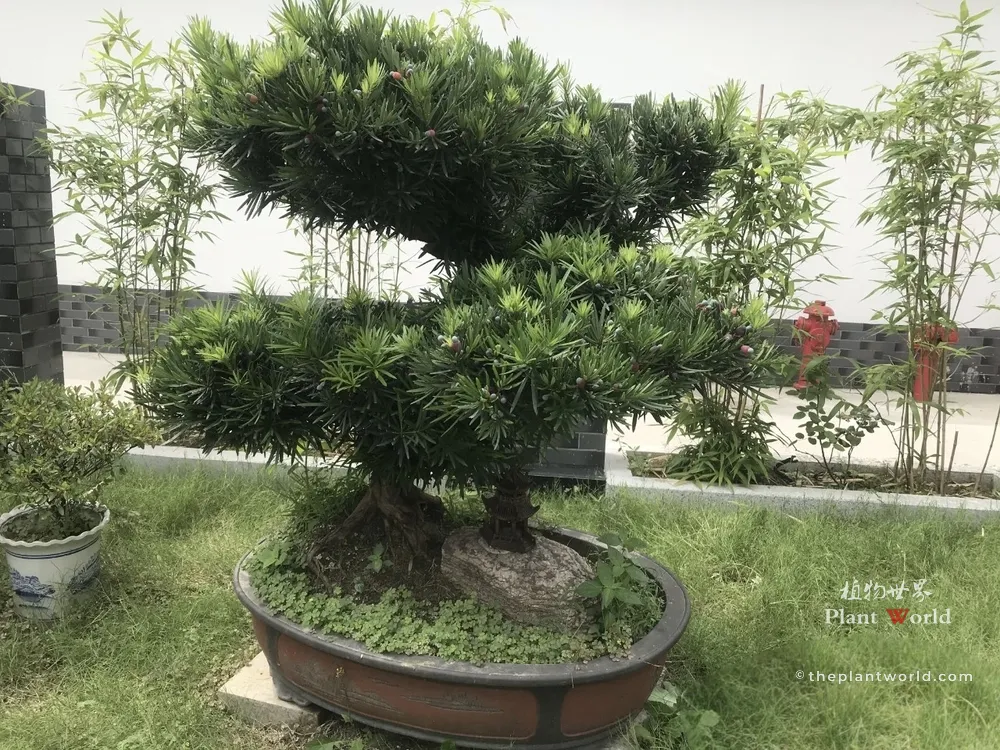
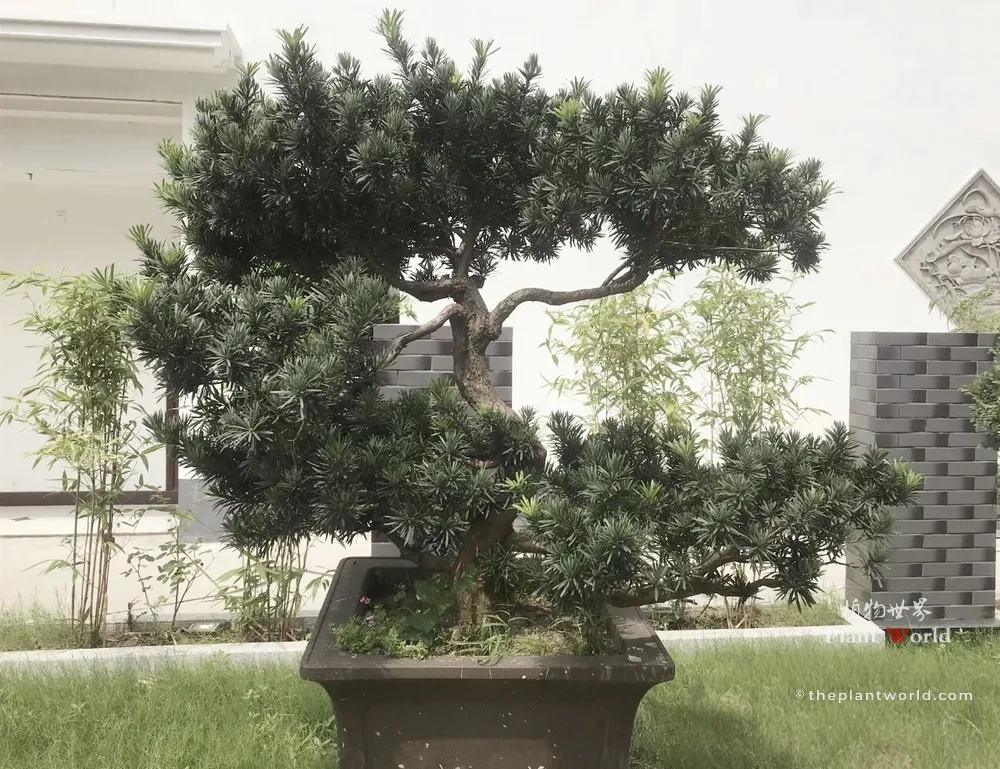
Design Ideas for Classical Zen Gardens
To create an authentic East Asian garden aesthetic using the Buddhist Pine, consider these traditional pairings:
- The Guarding Pair: Plant a pair of symmetrical, cloud-pruned trees on either side of a main gate or entranceway to symbolize protection and welcoming energy.
- Stone and Pine: Contrast the dark green, fine needles of the pine against large, weathered rocks or light-colored gravel. The rugged bark pairs beautifully with the hard textures of natural stone.
- Textural Layering: Place the pine as a mid-story focal point, using lower-growing ground covers around the base to emphasize its twisted, mature trunk.
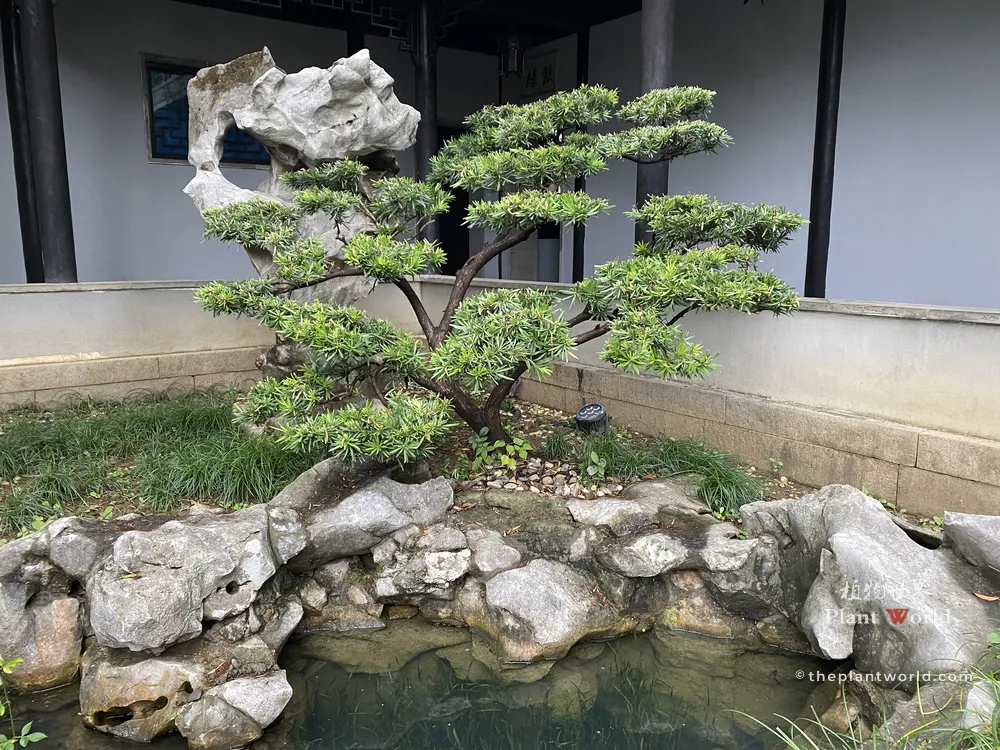
Buddhist Pine in Chinese Culture & Temple Heritage
The Buddhist Pine holds deep spiritual meaning within Chinese tradition. In Buddhism, the arhat (luohan) symbolises blessing, protection, good fortune, and the power to ward off negative energy. For centuries, the Buddhist Pine and the Ginkgo tree have been the two most widely planted species within temple courtyards across China. The fan-shaped Ginkgo biloba leaves provide a golden autumn canopy that pairs magnificently with the permanent, deep emerald hue of the pine.
I once visited Tongguanyin Temple in Suzhou. Two mature Buddhist Pines stand symmetrically before the main hall: the lush male tree on the left, and the fruit-heavy female tree on the right. It feels remarkable that, just like humans, trees also divide into male and female forms.
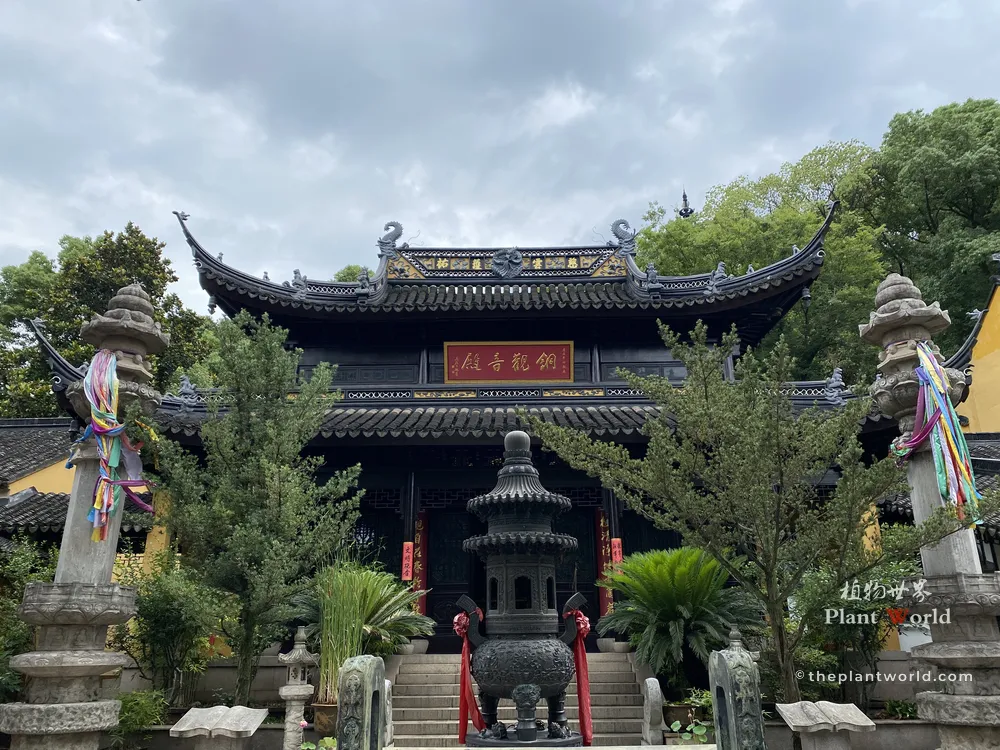
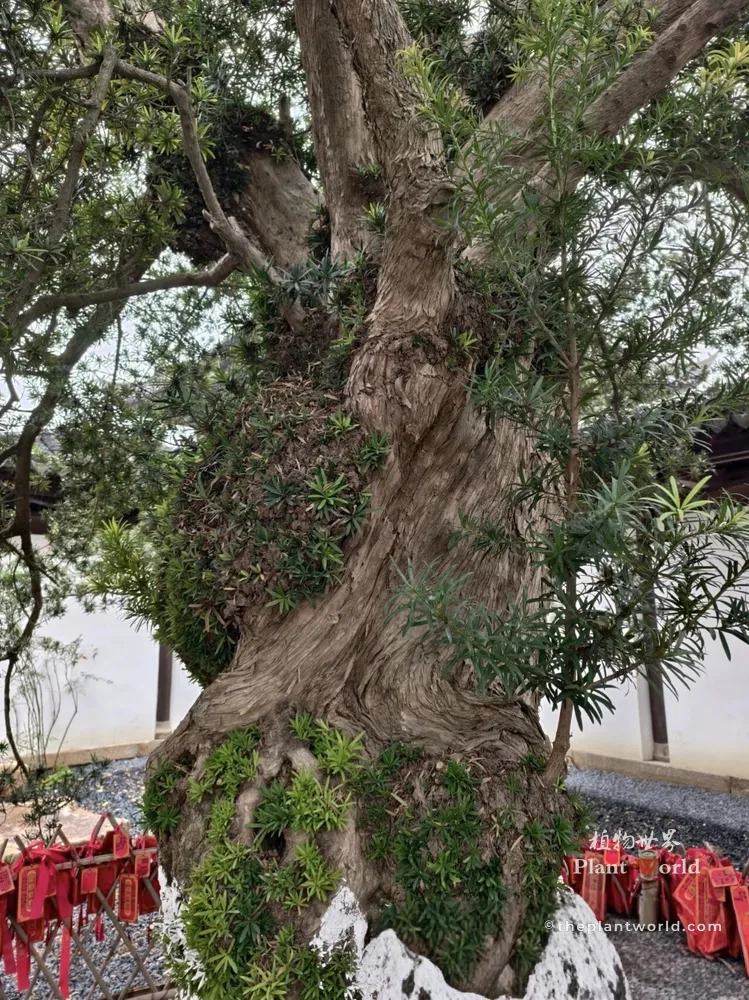
Many historic Chinese temples still preserve ancient specimens. One famous example grows in Jinxi Ancient Town near Suzhou. Legend states this Buddhist Pine was planted during the Song Dynasty, more than 800 years ago. Its intertwining branches form a thick, leafy canopy. Swollen, gnarled burls cover its trunk, like wrinkles formed by centuries of time. Despite enduring countless storms, it remains vibrantly green, showcasing the resilient spirit of ancient timber.
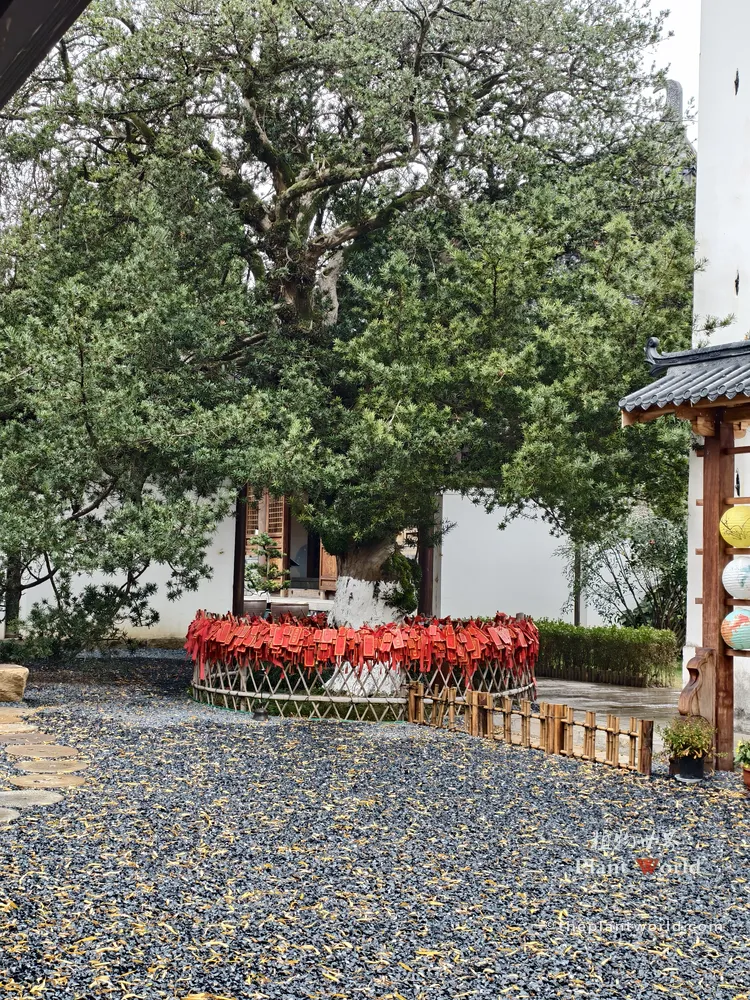
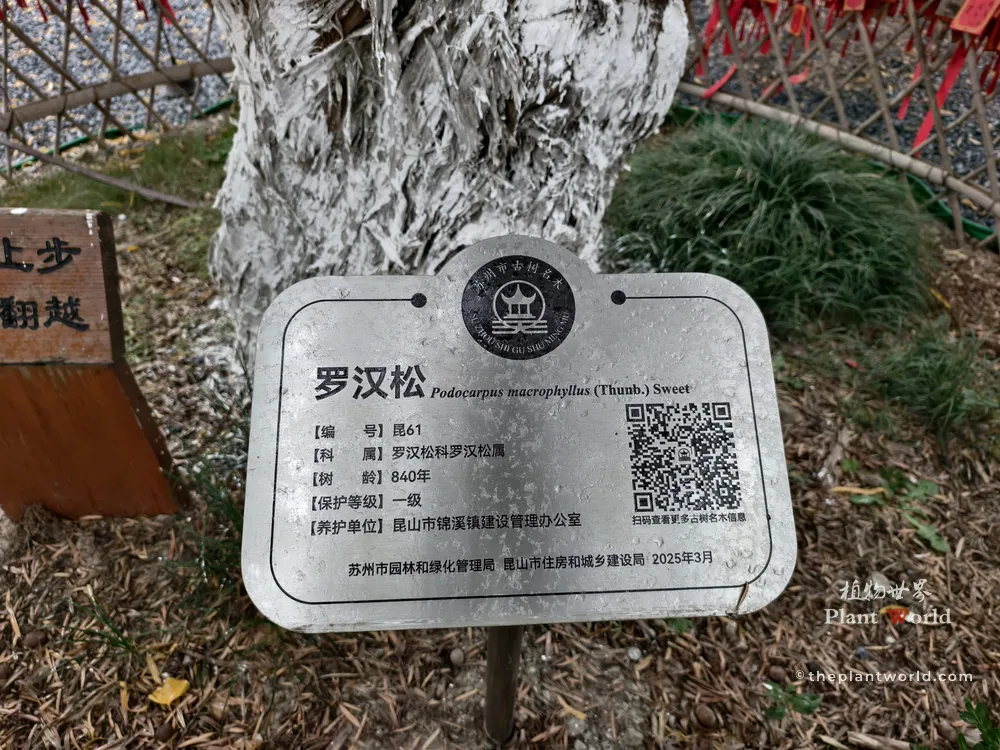
Chinese folk tradition carries enduring sayings about this tree:
“A household with an Arhat Pine will never know poverty for generations.”
“A thousand-year Arhat Pine brings enduring happiness to the family.”
Much like the popular Chinese money plant represents wealth and prosperity indoors, the outdoor Buddhist Pine has become a timeless symbol of longevity, wealth preservation, stability, and auspicious fortune. Planted in residential yards and temple grounds alike, it is respected as a guardian tree that brings peace to the household.
Poetry of the Arhat Pine
I wrote a short poem inspired by this beloved tree:
By nature, it belongs to sacred temple halls,
Yet it travels out to dwell among mortal crowds.
Through wind and rain within the mortal world,
It retains its evergreen essence all year round.It brings lasting green beauty to human lives,
And bears fruit as offerings before Buddha.
No loud words are needed as we gaze upon one another,
All quiet feeling rests within the Buddhist Pine outside the window.
Final Conclusion
Podocarpus macrophyllus, the Buddhist Pine, offers far more than standard evergreen foliage for temperate gardens. With its distinctive meditation-monk seed formation, superb suitability for cloud pruning and bonsai, thousand-year temple heritage, and rich symbolic folklore, it is one of the most culturally meaningful oriental evergreens you can grow.
Whether planted in a large courtyard, shaped into an elegant bonsai, or used to build neat hedging, the Buddhist Pine carries the quiet wisdom and auspicious symbolism cherished by Chinese people for millennia.
References
- Flora of China (English Edition): Podocarpus macrophyllus Botanical Profile & Varieties — Maintained by the Missouri Botanical Garden and Harvard University Herbaria.
- Plants of the World Online (POWO): Podocarpus macrophyllus (Thunb.) D.Don Distribution — Facilitated by the Royal Botanic Gardens, Kew.
- Royal Horticultural Society (RHS): Podocarpus macrophyllus Care Notes — The leading authority on European and British temperate gardening.
- Plant Plus of China (PPBC): Scientific Photographic Specimen Archive for Podocarpaceae — The authoritative national scientific repository for native Chinese flora.
- The Mirror of Flowers (Jing Hua Lu, Chen Haozi) & Song Dynasty Temple Records — Historical and Cultural Literary References.
More from The Plant World:
- Chinese Wingnut: The Romantic “Ingot Tree” and Its Cultural Charm
- Plum Blossom Meaning: Symbolism & Cultural Significance
- The Hidden Meanings Behind Red Plum Blossoms
- Chinese Wisteria: History, Symbolism, and Identification
- Peach Blossoms in China: History, Culture, and Symbolism
- Chinese Crepe Myrtle: Guide to Origins & Symbolism
- Ginkgo Leaf Meaning: 5 Secrets of This Ancient Fossil
- Chinese Loquat Tree: Guide to Benefits & History
- Rose of Sharon Tree: Guide to Meaning & Care
- Hosta Plant Benefits: 5 Surprising Uses & Planting Guide
- Strawberry Begonia Care: How to Grow Saxifraga Stolonifera
Discover more from The Plant World
Subscribe to get the latest posts sent to your email.