
Introduction
The parasol tree stands as one of the most culturally revered and artistically celebrated trees in Chinese history. What does the authentic, legendary parasol tree of the orient actually look like?
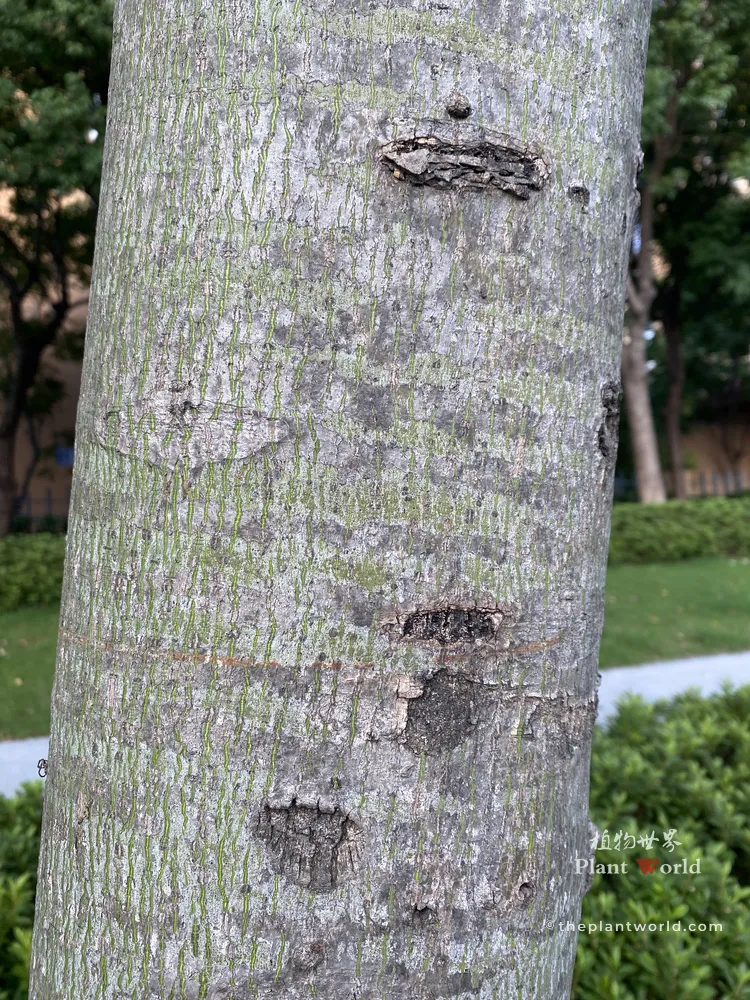
Known botanically as Firmiana simplex, the true Chinese Parasol Tree is a majestic deciduous species native to the heart of China. Its trunk grows strikingly straight and upright, covered in remarkably smooth bark. During its youth, this bark boasts a vivid, brilliant emerald green hue, turning into a subtle grayish-green only as it matures over decades.
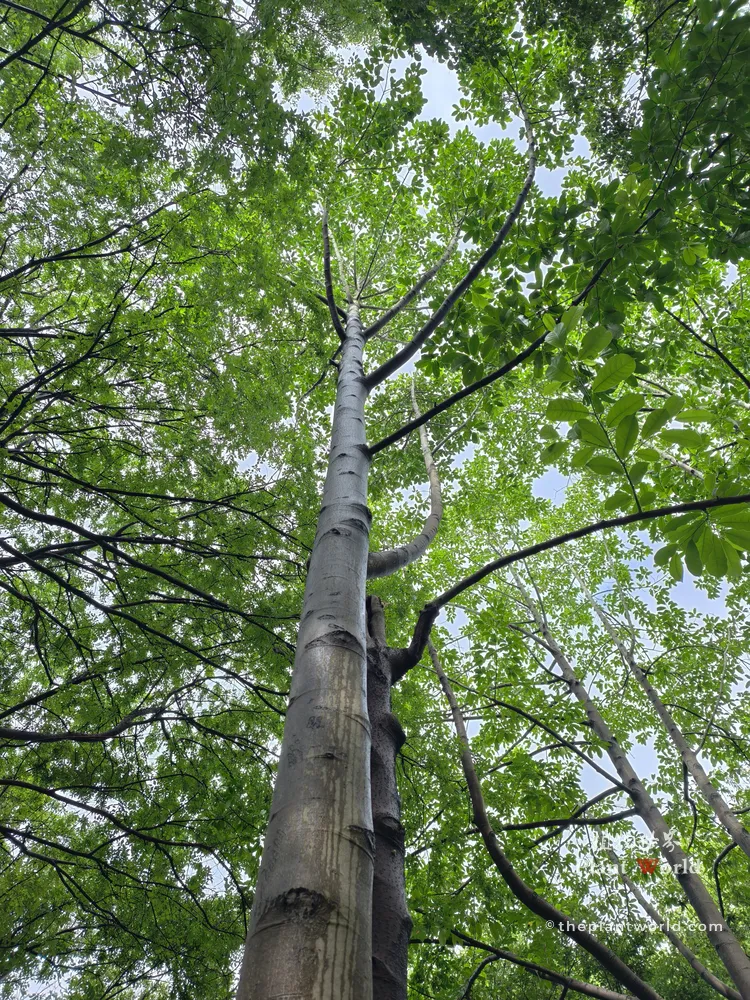
This distinct visual feature earned it the timeless nickname “Green Parasol Tree,” celebrated in centuries of Tang Dynasty literature as the Qing Wutong (青梧桐). Because ancient families loved planting it beside central courtyards and stone wells for its refreshing shade, it also bears the nostalgic moniker “Well Parasol Tree.”
An ancient horticultural record captures its unmatched grace: “A straight trunk entirely without knots, a fine and tight grain, emerald smooth bark, and massive leaves lobed beautifully like blooming flowers. It is elegant, pure, and endlessly pleasing to the eye.”
Plant Profile: What Is Firmiana simplex?
- Scientific Name: Firmiana simplex (L.) W.Wight
- Common Names: Chinese Parasol Tree, Phoenix Tree, Green Parasol Tree, Wutong Tree
- Family: Malvaceae (Mallow Family, formerly classified under Sterculiaceae)
⚠️ Critical Distinction Warning for Western Readers
Do not confuse the authentic Chinese Parasol Tree (Firmiana simplex) with the ubiquitous London Plane Tree (Platanus × acerifolia). It is often incorrectly named the “French parasol tree” within Chinese gardening communities.
The two are entirely unrelated species from different botanical families. While their massive leaves look superficially similar from a distance, their bark, blossoms, seed capsules, and cultural history are completely different.
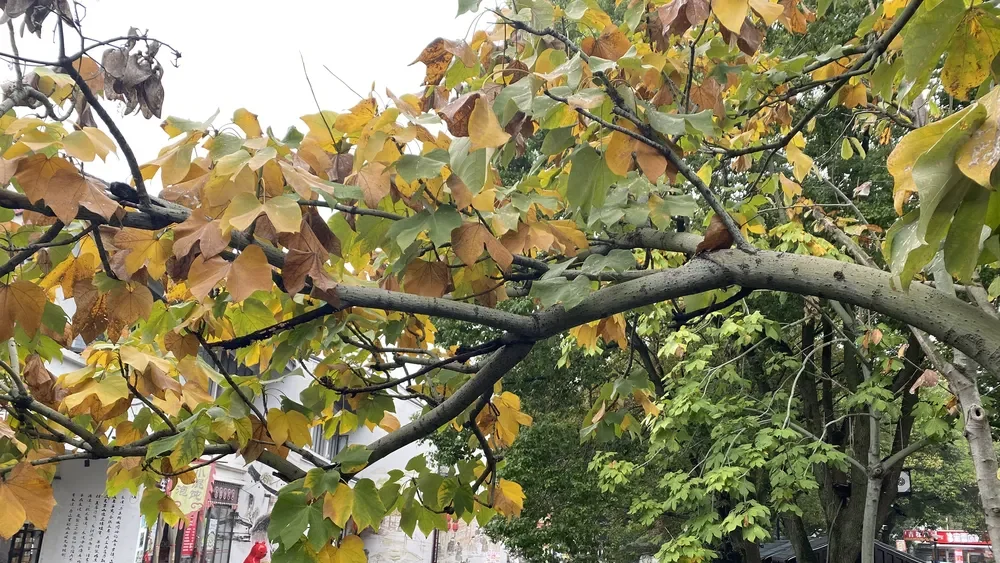
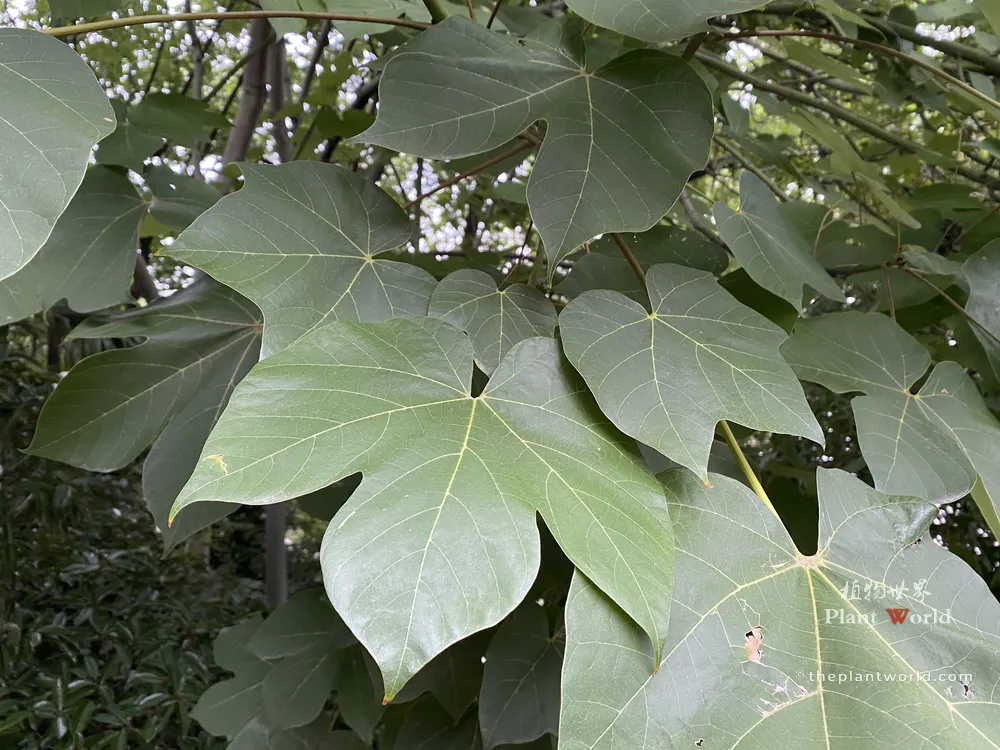
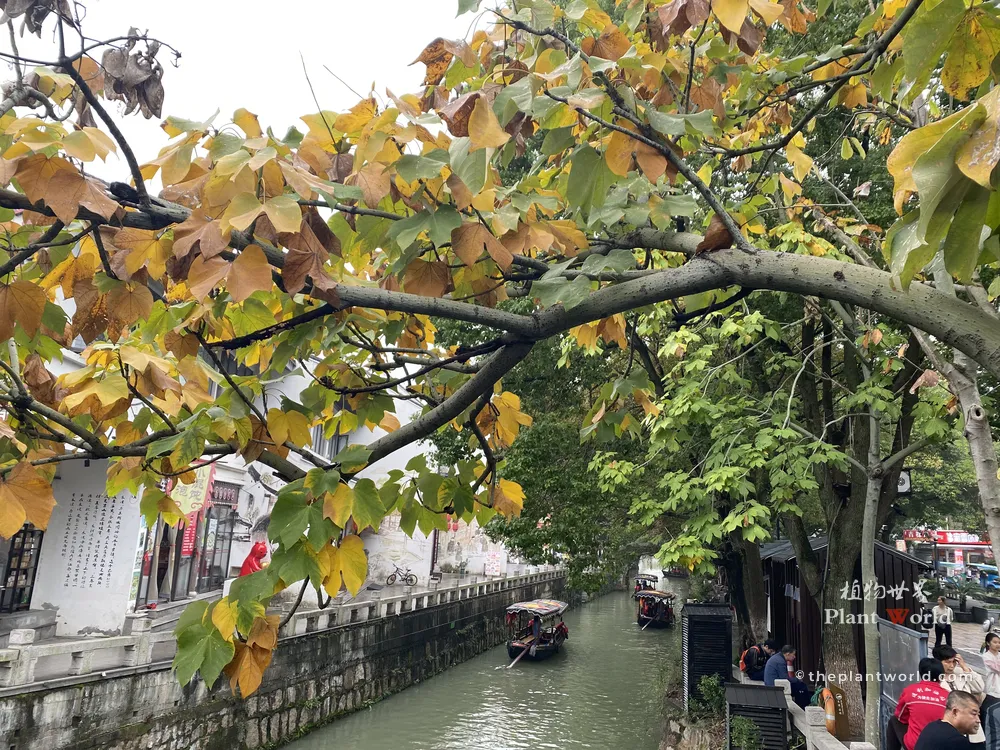
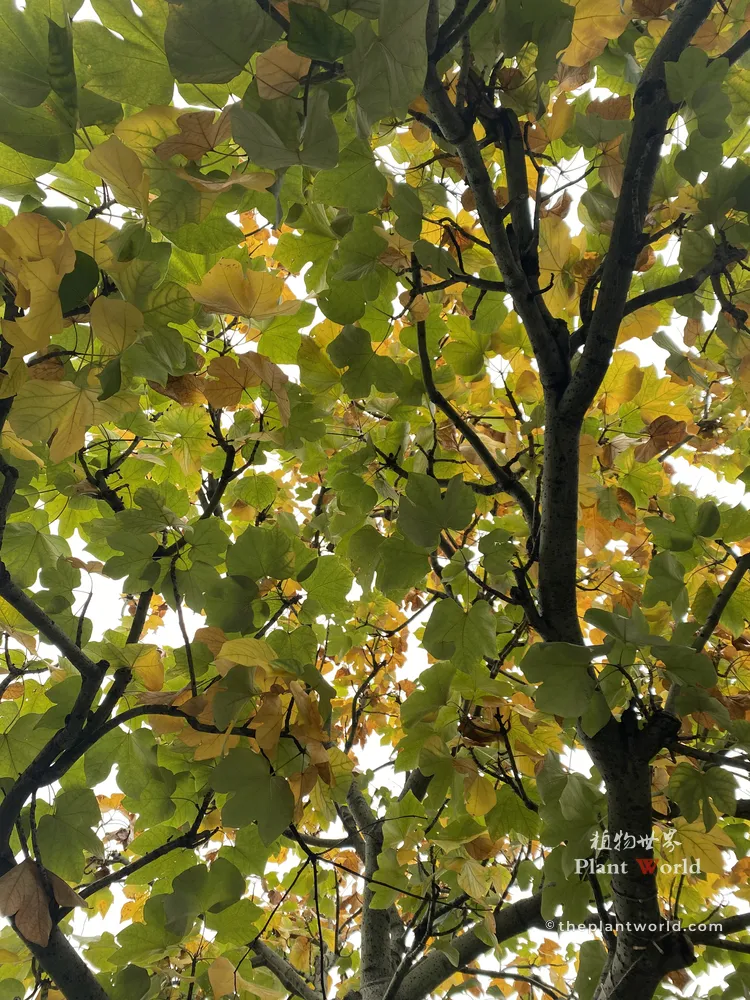
The genuine Chinese Parasol Tree features immense, palm-shaped leaves ranging from 15 to 30 cm in width, sporting three to five elegant lobes. These leaves hang from exceptionally long, flexible stalks, causing them to sway gracefully in the slightest breeze and fall promptly at the very first touch of autumn chill.
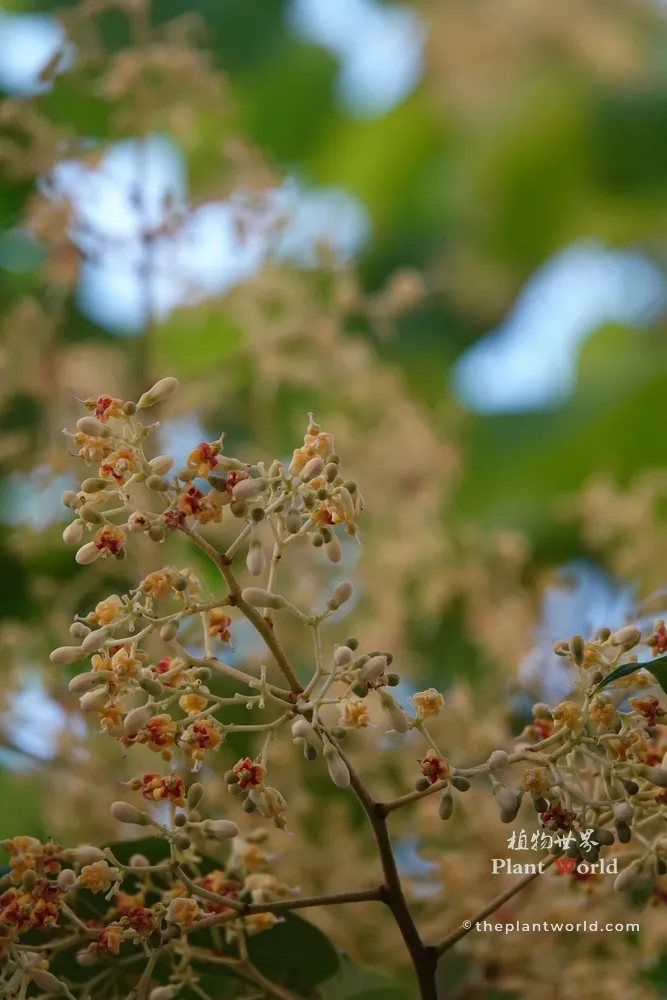
In June and July, when summer gardenias release their rich scent, the Chinese Parasol Tree unfurls massive, terminal drooping panicles covered in hundreds of tiny, pale yellowish-green blossoms that float like delicate lace amid the canopy.
The Mystery of the “Jade Boat” Seeds
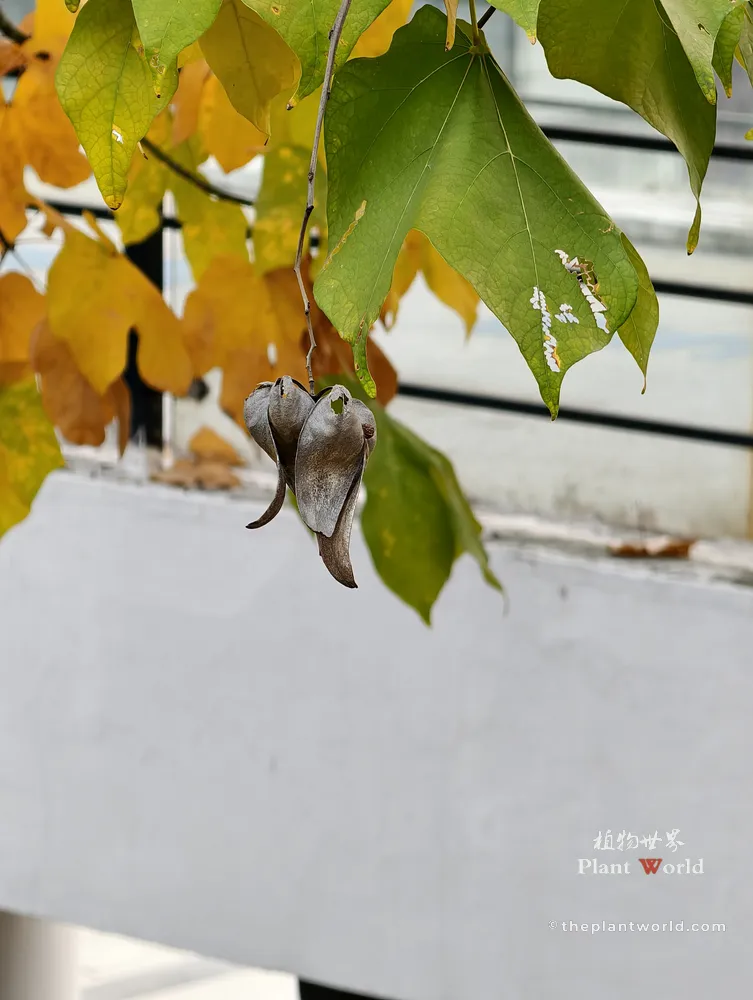
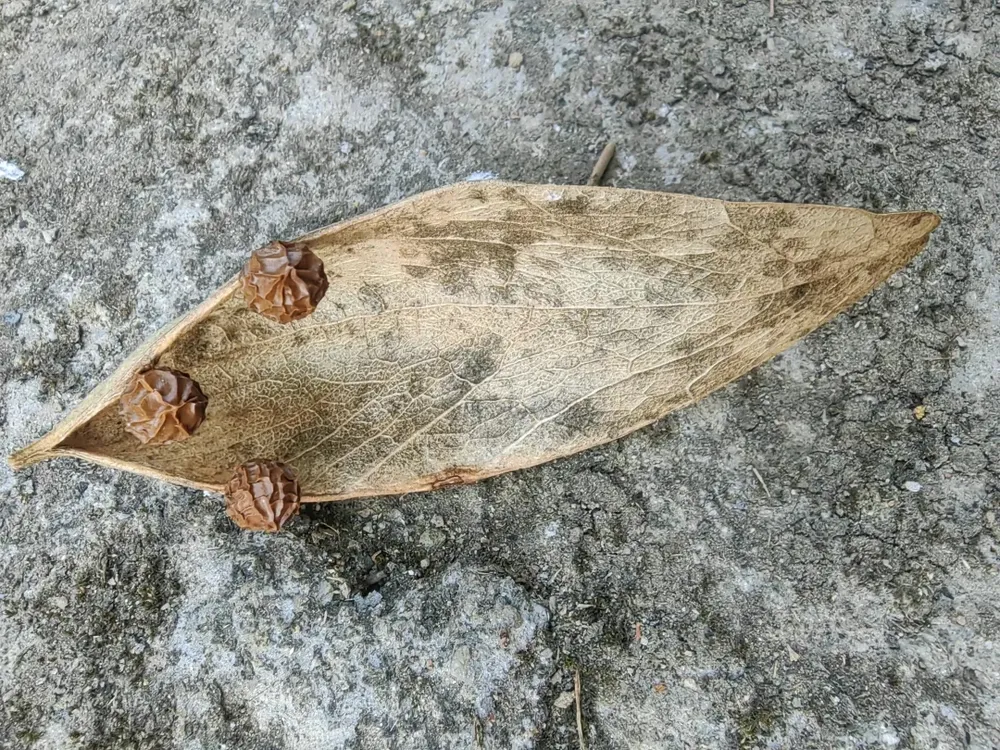
After the summer blossoms fade, the tree develops extraordinary fruit structures called follicles. Long before they fully mature, these green pods split open prematurely into thin, papery, leaf-like shapes that look exactly like miniature, floating small boats.
Two to four wrinkled, pea-sized round seeds attach themselves precariously along the edges of these papery hulls. An ancient Chinese poetic line describes this exquisite botanical sight perfectly: “Pearl seeds adorn the edges of jade boats; roasted parasol seeds make a scholar’s fine treat.”
Cultivation & Care Guide for the Chinese Parasol Tree
Climate & Hardiness
- USDA Hardiness Zones: 7–10. It easily tolerates light seasonal winter frosts. However, applying a thick layer of organic root mulch to protect young saplings during their first few winters is highly recommended in Zone 7. It thrives best in warm temperate, Mediterranean, and subtropical climates.
Light & Placement
- Requirements: Requires full, direct sunlight (at least 6 hours daily) to encourage vigorous vertical growth and full, dense canopy development.
- Garden Architecture: It works beautifully as a solitary focal specimen tree for expansive lawns, traditional oriental courtyards, and positions beside large water features. Its structural, column-like trunk creates a dramatic vertical accent that pairs beautifully with lower-tier structured evergreens like a buddhist pine care border design, introducing an authentic classical atmosphere to the landscape.
Soil & Water
- Prefers deep, highly fertile, well-drained loamy soils that are neutral to slightly acidic. You must absolutely avoid heavy, waterlogged low ground, as stagnant water will trigger fatal root rot. Provide regular, deep watering to young saplings through dry summer spells; mature trees possess excellent drought tolerance and adapt well to urban microclimates.
Maintenance & Propagation
- Carry out light structural pruning exclusively in late winter during dormancy to remove damaged or crossed branches. Avoid heavy canopy topping, which ruins its naturally elegant, clean silhouette.
- Note: The round seeds require a period of cold stratification for reliable spring germination. The tree grows at a moderate to fast rate, developing its iconic umbrella-like canopy over several decades.
Chinese Cultural Heritage & Timeless Legends
The Sovereign of Birds: The Phoenix and the Wutong
The Chinese Parasol Tree has been cherished as an auspicious, noble tree for thousands of years. Its earliest written record appears in The Book of Songs (Shijing), dating back to the Western Zhou Dynasty:
“The legendary phoenix cries upon the high mound,
As the pure parasol tree grows beneath the morning sun.”
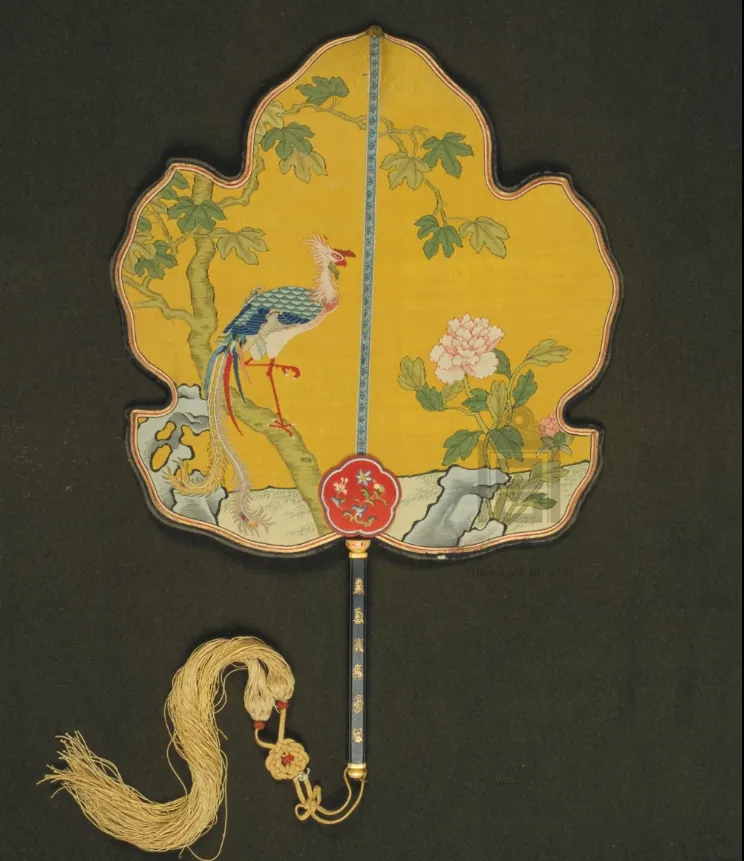
This ancient verse established the most enduring legend in East Asian folklore: The divine phoenix rests exclusively upon the parasol tree. Because the phoenix symbolizes supreme nobility, peace, and good fortune, the Wutong tree became a living emblem of moral purity, virtue, and promising encounters.
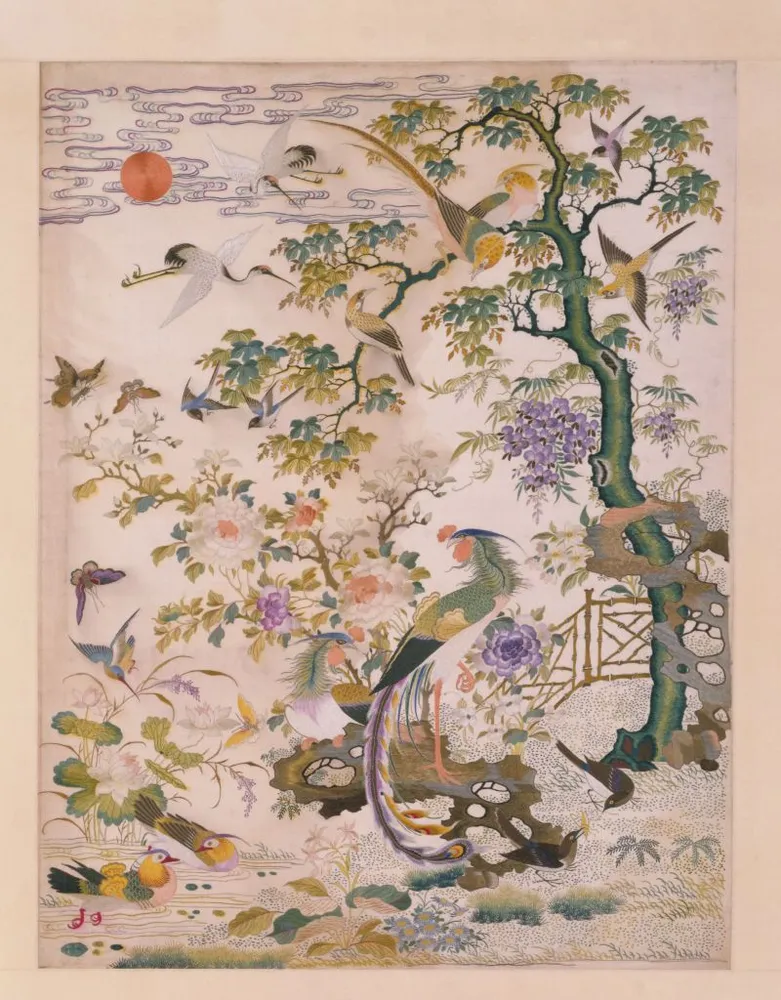
The famous cultural proverb, “Plant an emerald parasol tree in your courtyard, and it will naturally attract the golden phoenix,” grew directly from this belief. Both grand imperial palaces and ordinary rural homesteads planted this tree hoping to welcome worthy guests and auspicious opportunities.
Numerous ancient historical texts repeat this mystical connection. The Han Dynasty scholar Han Ying wrote that when the mythical Yellow Emperor ascended the throne, divine phoenixes flew from the heavens to rest exclusively on the parasol trees in the imperial eastern garden. The Jin Dynasty poet Guo Pu also noted: “The parasol tree is a noble and righteous tree, chosen solely as the phoenix’s resting place.”
The Tree That Foretells Autumn
Beyond its mythical status, the tree is traditionally revered as the “Tree That Foretells Autumn.” The Ming Dynasty horticulturist Wang Xiangjin recorded that the Wutong is uniquely sensitive to the solar terms; at the exact arrival of the Start of Autumn (Liqiu), a single leaf will detach and drift down first, giving birth to the iconic Chinese idiom: “One falling leaf brings news of autumn to the world” (一叶知秋).

This highly sensitive phenological trait made the tree a classic muse for Tang and Song Dynasty poets looking to capture the transient shift of seasons, creating a perfect seasonal bridge right before the vibrant crimson capsules of the golden rain tree take over the autumn landscape.
Autumn parasol leaves easily stirred a gentle, beautiful melancholy in classical Chinese literature. The tragic Southern Tang ruler Li Yu famously wrote of his isolation:
“Alone I climb the silent west tower; the crescent moon hangs like a cold hook.
Lonely parasol trees lock the clear autumn deep within the desolate courtyard.”
The celebrated female poet Li Qingzhao extended this atmospheric mood by weaving the sound of rain hitting the massive leaves into her verses:
“The broad parasol leaves meet the fine twilight drizzle,
Drip and trickle, drop by drop, until the dark dusk settles.”
The Symbol of an Upright Gentleman
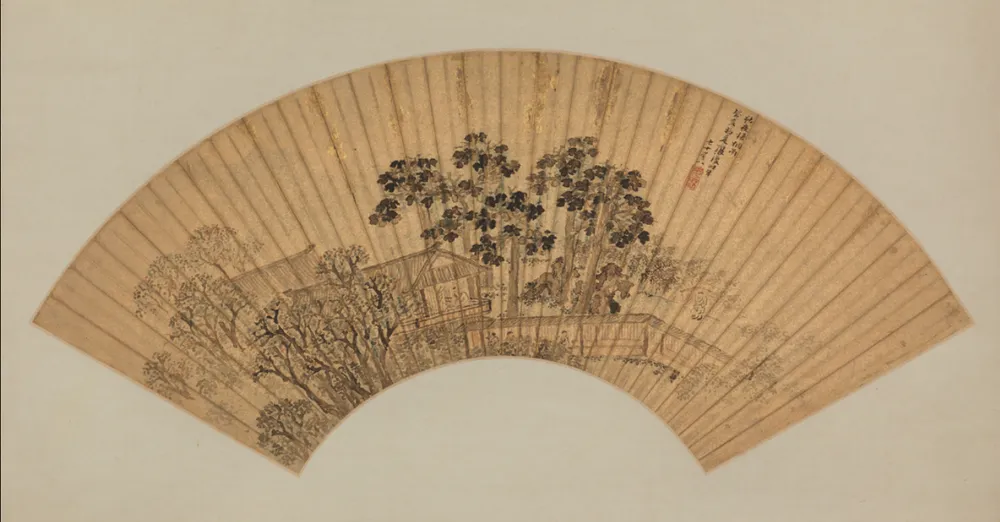
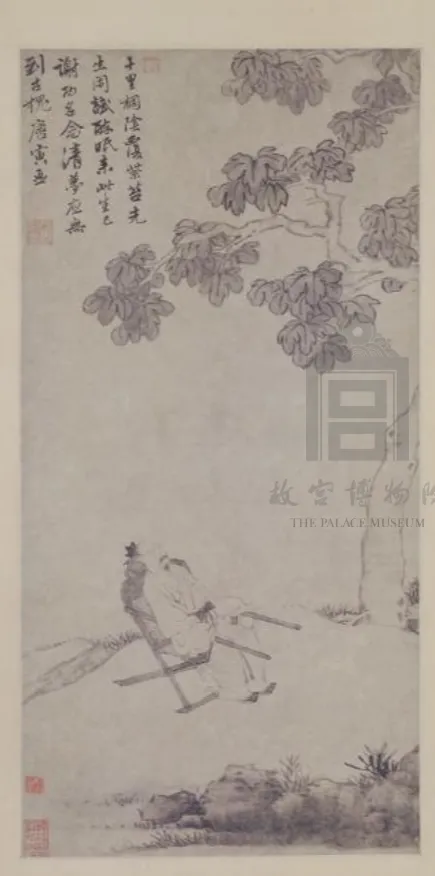
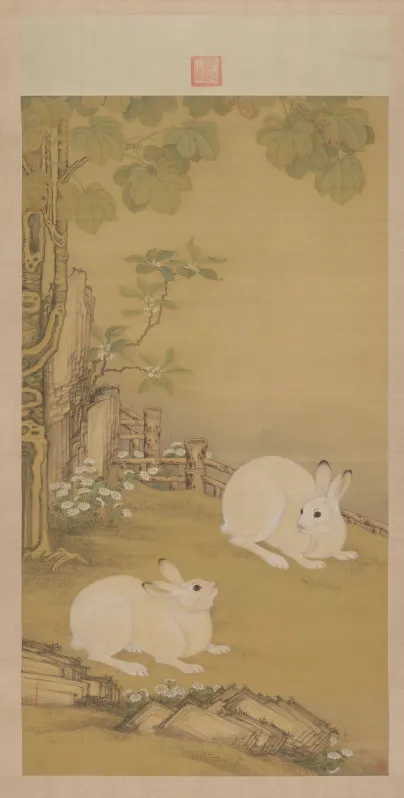
With its straight green trunk, smooth bark, and sprawling canopy, the Wutong tree ultimately came to symbolize an uncorrupted, noble gentleman. Literati painters loved depicting the tree in classical scrolls—such as Tang Yin’s Dream Beneath Parasol Shade and Shen Zhou’s Joy Beneath Parasol Trees—to represent a scholar’s refusal to blend into vulgar, corrupt crowds.
One beloved historical anecdote tells of the legendary Yuan Dynasty artist Ni Zan, who was famed for his extreme, obsessive love of cleanliness. When a servant claimed to find a speck of dirt near the tree’s base, Ni Zan ordered his attendants to carry buckets of fresh water and thoroughly wash the emerald trunk from top to bottom. The tale of “Ni Zan Washing the Parasol Tree” became an immortal symbol of a scholar’s dedication to keeping their spirit pure and untarnished by the world.
Practical Traditional Uses
- Luthiery Timber: The wood of Firmiana simplex is remarkably lightweight, stable, and acoustic. For over two millennia, it has been the premier choice for crafting the soundboards of traditional Chinese stringed instruments, including the Guqin and Guzheng, prized for producing clear, resonant tones.
- Artisanal & Culinary: The unique “jade boat” seeds have historically been gathered and roasted as a nutty winter delicacy or pressed to extract high-quality cooking oils. The tough, inner white bark provides excellent, long-lasting natural fibers historically processed to manufacture premium handmade paper and heavy-duty agricultural ropes.
Final Conclusion
Firmiana simplex, the authentic Chinese parasol tree, offers far more to modern‑day landscapes than an ordinary urban shade tree. With its smooth emerald bark, legendary status as the phoenix‑favoured tree, and rich literary heritage steeped in autumn phenology and scholar‑gentleman ethos, it stands as a gem among Chinese Garden Plants that combines profound intellectual connotations with striking visual beauty.
By introducing the authentic Chinese Parasol Tree back into spacious gardens, we do not just plant an elegant, translucent green canopy—we welcome a thousand-year-old living narrative of poetry, myth, and artistic devotion.
References
- The Book of Songs (Shijing) & Baihu Tong Delun (White Tiger Hall Discourses): Pre-Qin and Han Dynasty Literary and Philosophical Ritual Records.
- Flora of China (English Edition): Firmiana simplex Species Profile & Malvaceae Taxonomy — Maintained collaboratively by the Missouri Botanical Garden and Harvard University Herbaria.
- Plants of the World Online (POWO): Firmiana simplex (L.) W.Wight Authority, Distribution, and Synonyms — Hosted by the Royal Botanic Gardens, Kew.
- Er Ya & Qunfang Pu (The Assembly of Numerous Fragrances): Classical Chinese Botanical and Phenological Encyclopedias.
- Royal Horticultural Society (RHS): Firmiana simplex (Chinese Parasol Tree) Cultivation, Growth Habit, and European Hardiness Records.
Disclaimer
Traditional culinary, industrial, and ethnobotanical uses documented here are shared strictly as historical and cultural folk records. This article serves botanical reference purposes only. Do not ingest wild plant parts or utilize raw materials without professional horticultural or herbal guidance.
More from The Plant World:
- Chinese Wingnut: The Romantic “Ingot Tree” and Its Cultural Charm
- Plum Blossom Meaning: Symbolism & Cultural Significance
- The Hidden Meanings Behind Red Plum Blossoms
- Chinese Wisteria: History, Symbolism, and Identification
- Peach Blossoms in China: History, Culture, and Symbolism
- Chinese Crepe Myrtle: Guide to Origins & Symbolism
- Ginkgo Leaf Meaning: 5 Secrets of This Ancient Fossil
- Chinese Loquat Tree: Guide to Benefits & History
- Rose of Sharon Tree: Guide to Meaning & Care
- Hosta Plant Benefits: 5 Surprising Uses & Planting Guide
- Strawberry Begonia Care: How to Grow Saxifraga Stolonifera
Discover more from The Plant World
Subscribe to get the latest posts sent to your email.