
Introduction
When high summer arrives, one blossom demands to be noticed: the pomegranate flower.
Blooming in midsummer with fiery vermilion petals, it is a botanical powerhouse that has captured human imagination for millennia. In the West, it is linked to Greek mythology and fertility. But in East Asia, a single sprig of pomegranate blossom carries an even deeper layer of romantic meaning within Chinese Flower Symbolism, representing passionate love, a happy marriage, and good fortune.
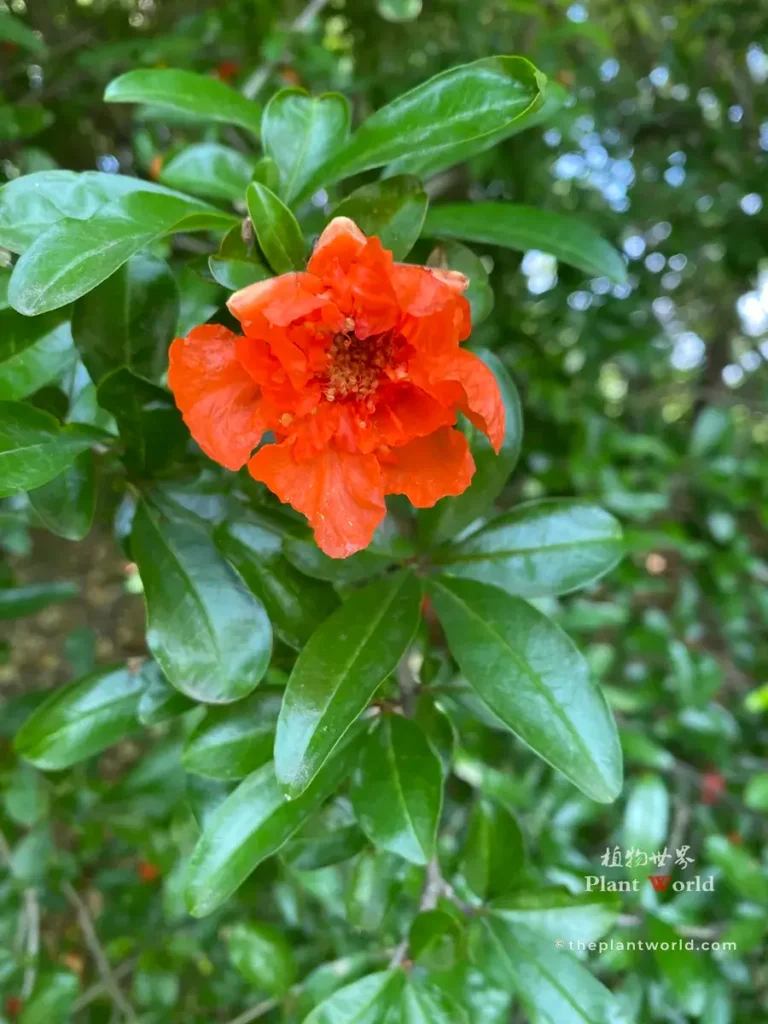
A charming example appears in the popular Chinese historical drama A Dream of Splendor (《梦华录》). In a pivotal scene, the male lead presents his beloved with a twin-flowered pomegranate sprig as an impromptu betrothal token, asking: “The official gifts are not yet ready — will you accept this flower as a token first?”
Why a pomegranate blossom, and not a rose or some other flower? This was no random choice. It was deeply rooted in a thousand-year-old tradition where twin pomegranate blooms symbolize two hearts bound together forever. To understand pomegranate flower meaning in China, you have to start with that twin blossom.
- Introduction
- Plant Profile: The "An-Shi Pomegranate"
- Pomegranate Flower Meaning: A Token of Love and Marriage
- Fertility, Prosperity, and Fiery Luck
- The Pomegranate Skirt: From Flower Juice to Feminine Allure
- The Colors of the Pomegranate Blossom
- Pomegranate Blossoms in Classical Poetry
- The Dragon Boat Flower: Duanwu Exorcism and Art
- Uses of the Pomegranate Blossom
- Final Thoughts
- References
- More from The Plant World:
Plant Profile: The “An-Shi Pomegranate”
- Scientific Name: Punica granatum L.
- Common Name: Pomegranate (literally “Carthaginian apple” in Latin)
- Chinese Name: 石榴 (shíliú); also 安石榴 (ānshíliú), 丹若, 海石榴, 金庞
- Family: Lythraceae (Loosestrife Family) → Genus Punica
- Native Range: The Balkans to Iran and surrounding regions
- Introduction to China: Brought back by Zhang Qian during his Western Regions mission in the Western Han Dynasty. First planted in the Imperial Shanglin Garden under Emperor Wu of Han, with over 2,000 years of cultivation in China.
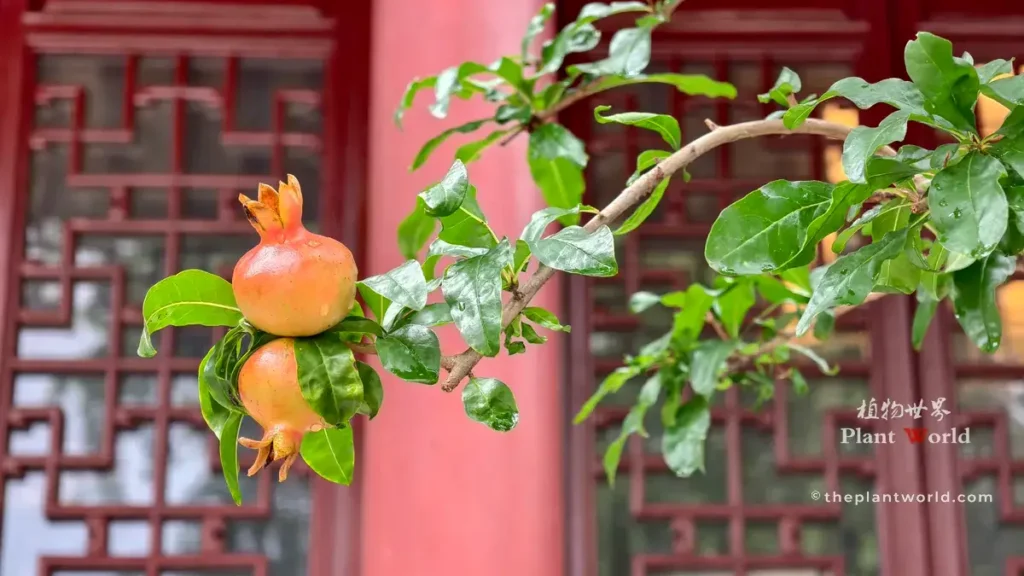
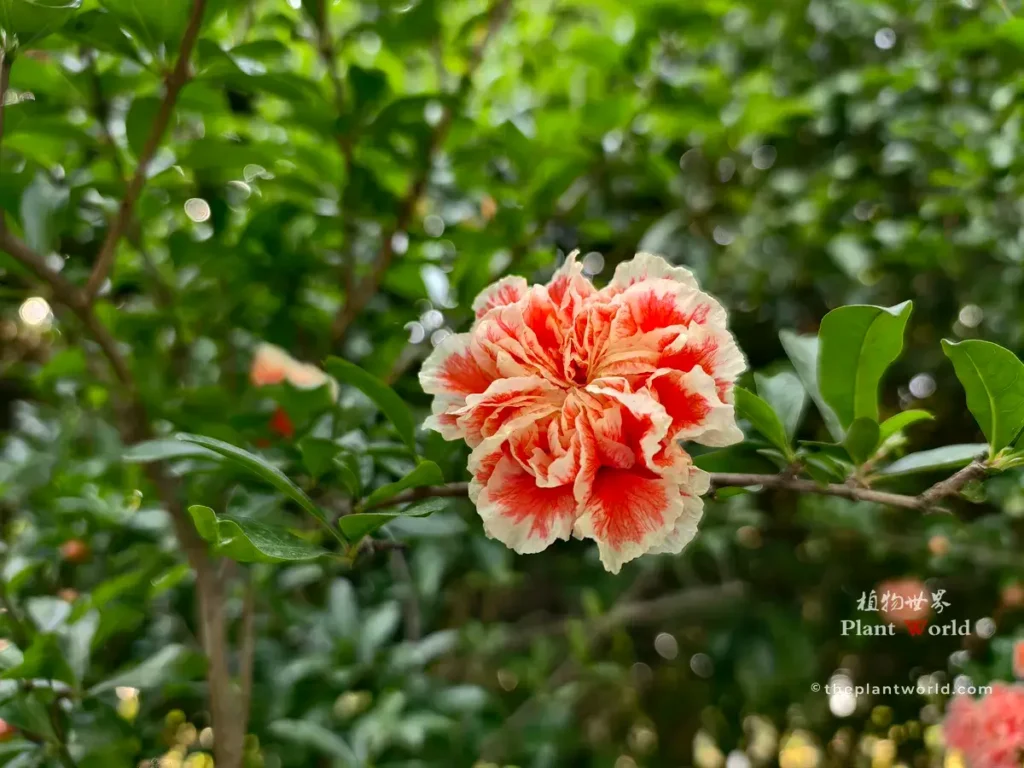
The pomegranate is a deciduous shrub or small tree. Its leaves are leathery, oblong to obovate, and glossy green. The flowers are bisexual, single or double depending on cultivar, with colors ranging from the classic vermilion to white and soft pink. It flowers mainly in the fifth lunar month — which is why that month is also called the “Pomegranate Month” (榴月). The fruit is a round berry with a thick rind, containing hundreds of seeds with translucent, juicy arils.
The genus name Punica means “Carthaginian,” and granatum means “many-seeded.” The Chinese name ānshíliú (安石榴), according to the Western Jin Records of the Extraordinary (《博物志》) by Zhang Hua, derives from the lands of Anxi (Parthia) and Shi (Tashkent) where Zhang Qian acquired it.
Pomegranate Flower Meaning: A Token of Love and Marriage
In traditional Chinese culture, pomegranate flower meaning begins with passionate love and a happy marriage. The pomegranate blossom is fiery and full, evoking feminine beauty and the ardent pursuit of love.
Twin Blossoms: Two Hearts, One Love
Some pomegranate varieties produce twin blossoms — two flowers growing from the same stem, opening side by side like a pair of red bells. Traditionally, twin pomegranate blossoms symbolize two hearts beating as one, representing a love that has weathered the storms of nature and borne its fruit. When Gu Qianfan offers twin pomegranate blossoms in A Dream of Splendor, he is invoking exactly this meaning — “bound together forever.”
Love Tokens in Ancient Traditions
In ancient China, the pomegranate blossom was a powerful symbol between lovers:
- Pomegranate purses: A betrothed young woman would embroider a pomegranate-design purse for her beloved as a token of love.
- Twin pomegranates in the bridal chamber: At weddings, twin pomegranates were placed in the newlyweds’ room to symbolize eternal union.
- Pomegranate-and-lotus shoe soles: At the wedding ceremony, the bride and groom stood on hand-sewn “pomegranate and lotus” shoe soles — a pun on liúliàn (留恋, “to linger and love”).
Fertility, Prosperity, and Fiery Luck
If love is the romantic side of the pomegranate blossom, then fertility and abundance is its most warm and worldly face.
A Thousand Chambers, a Thousand Seeds
Inside a pomegranate are hundreds of glistening seeds — “a thousand chambers in one skin, a thousand seeds as one.” This made it the ultimate Chinese symbol of many sons, many blessings, and a flourishing family line. In ancient weddings, pomegranates were included in the bride’s dowry to wish the couple “many children, many grandchildren.”
A Fiery Red of Good Fortune
The intense vermilion of pomegranate flowers stands as the supreme auspicious color in Chinese culture. When in full bloom, the blossoms burn bright like fire, symbolizing a prosperous and flourishing life. Whether in imperial gardens or ordinary courtyards, the pomegranate ranks among the beloved auspicious specimens within Chinese Garden Plants: blazing flowers in summer, abundant fruits in autumn, both blooms and round fruits tinted red, beautiful in form and rich in symbolic meaning.
The Southern Dynasties poet Jiang Yan wrote in his Ode to the Pomegranate (《石榴颂》): “A beautiful tree, a gorgeous tree — who looks upon it, who waits for it?” Eight characters that capture both the tree’s beauty and the longing it inspires.
The Pomegranate Skirt: From Flower Juice to Feminine Allure
No discussion of pomegranate flower meaning is complete without a word that has echoed through a thousand years of Chinese culture — the pomegranate skirt (石榴裙, shíliúqún).
Red Skirts Dyed with Pomegranate Juice
Young noblewomen in ancient China loved wearing pomegranate-red skirts. The red dye for these skirts was said to be extracted from pomegranate blossoms. Hence the name “pomegranate skirt.” Over time, the term became a metonym for young women themselves.
Yang Guifei and “Falling at Her Feet”
The idiom “to fall at someone’s pomegranate skirt” (拜倒在石榴裙下, “to be conquered by a woman’s beauty”) is traditionally linked to Yang Guifei, the beloved consort of Emperor Xuanzong of Tang.
Legend says Yang Guifei adored pomegranate blossoms and favored pomegranate-red skirts. When court officials refused to bow to her, the emperor ordered all officials to kneel before her on pain of punishment. The officials had no choice but to prostrate themselves whenever they saw her in her pomegranate skirt — giving rise to the famous phrase.
The Colors of the Pomegranate Blossom
The pomegranate blossom is not only red. Its varieties offer a rich color palette:
Vermilion: The Essence of Fire
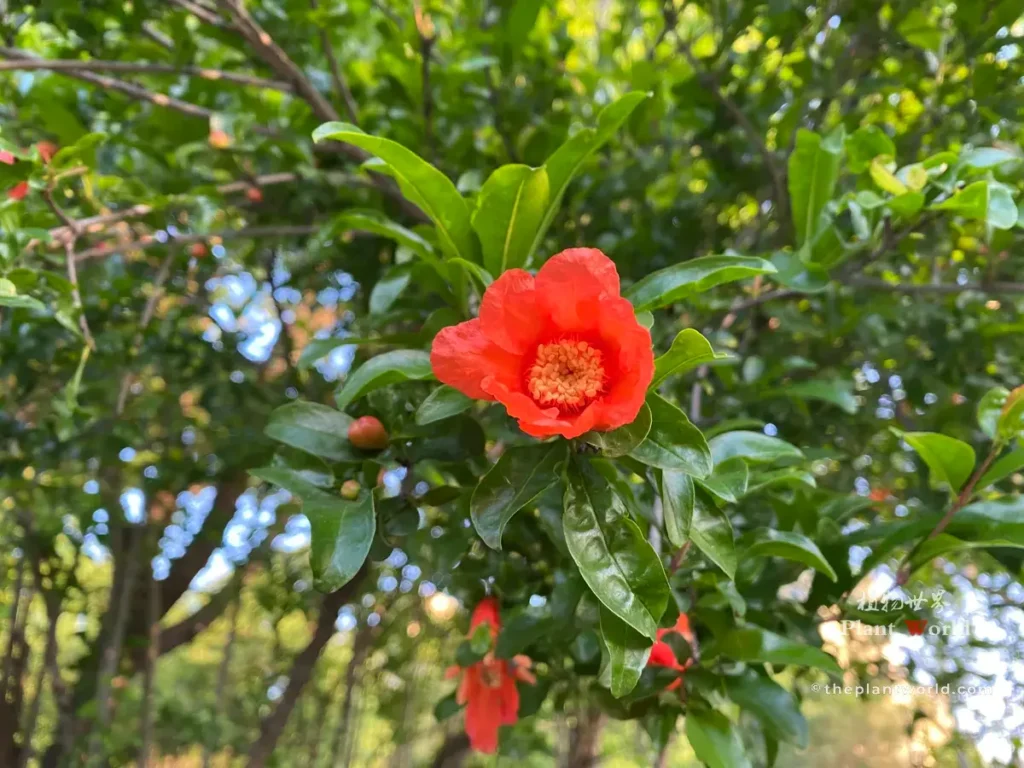
The classic pomegranate color is vermilion (朱红, zhūhóng) — a hue between orange and red, with exceptionally high saturation and brightness. The writer Mu Xin once quipped: “Vermilion is younger than scarlet — vermilion holds back, refusing to go fully red.”
In his essay On Color (《色论》), Mu Xin wrote: “Scarlet against deep green — suddenly it becomes joyful. The red has thrown caution to the wind, and so has the green.”
White and Lotus-Pink: Gentle Variations
Beyond the vivid vermilion, there are:
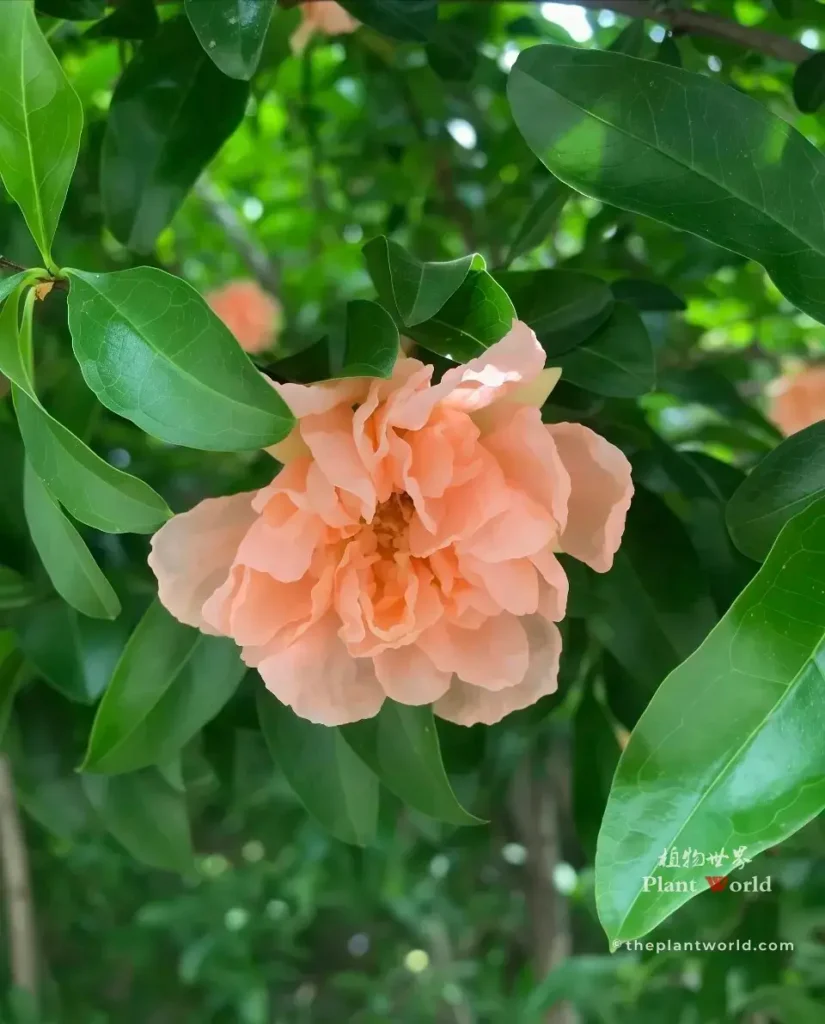
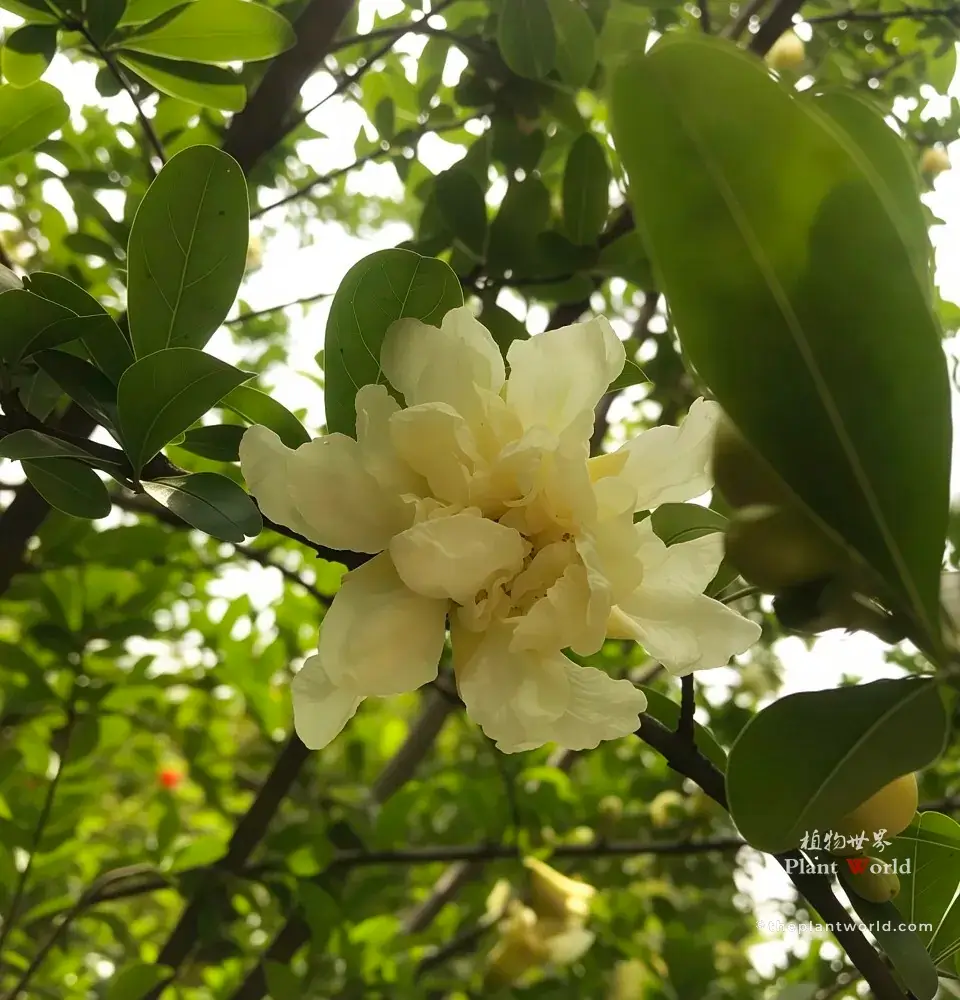
- White pomegranate blossoms: With a faint yellow undertone, gentle and serene. In Chinese medicine, white pomegranate flowers are considered the finest for medicinal use.
- Lotus-pink pomegranate blossoms: Softer and more restrained than vermilion, like a faint blush on a young girl’s cheek.
Pomegranate Blossoms in Classical Poetry
The pomegranate blossom is a recurring summer image in classical Chinese poetry.
Han Yu’s Pomegranate Blossom (《榴花》) captures the profusion of a fifth-month bloom:
Fifth-month pomegranate blossoms brighten the eyes,
Among the branches, young fruit begins to form.
Alas, no carriages come to this place,
Crimson petals scatter across the moss.
In Su Shunqin’s Summer Mood (《夏意》), the pomegranate is a flash of color in a deep summer courtyard:
Deep in the side courtyard, the summer mat is cool,
Pomegranate blossoms blaze through the curtain.
Tree shade covers the ground at midday,
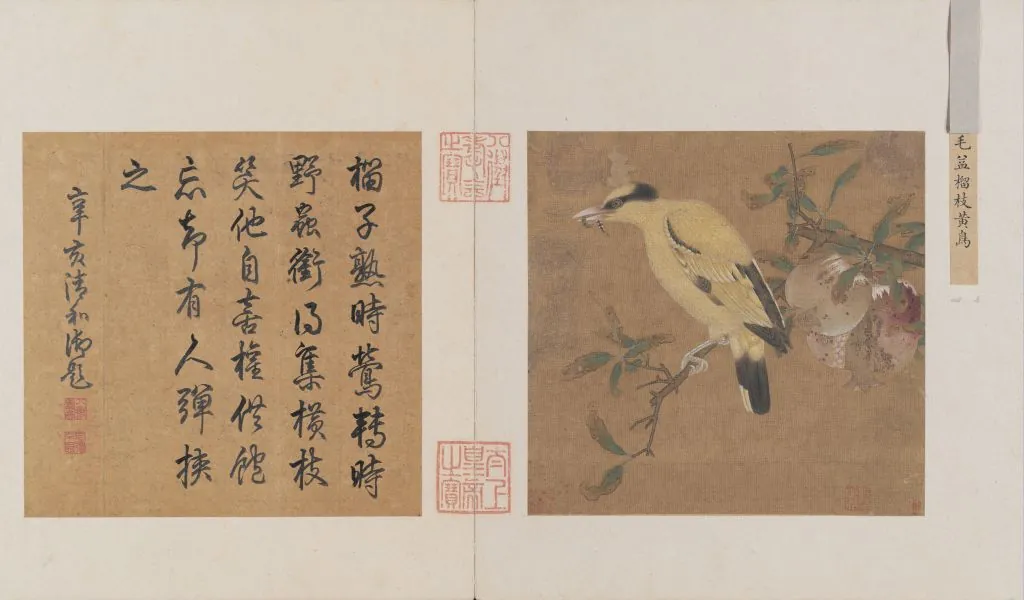
I wake from dreams to the song of an oriole.
The Dragon Boat Flower: Duanwu Exorcism and Art
The pomegranate blossom is also the signature flower of the Dragon Boat Festival (Duanwu).
The Five Auspicious Plants
The fifth lunar month was considered the “poison month” in ancient China. The pomegranate blossom was one of the Five Auspicious Plants of Duanwu (天中五瑞) — alongside calamus, mugwort, garlic, and hollyhock — hung on doorways and worn in the hair as protective charms against disease.
Classical Paintings of the “Duanwu Scene”
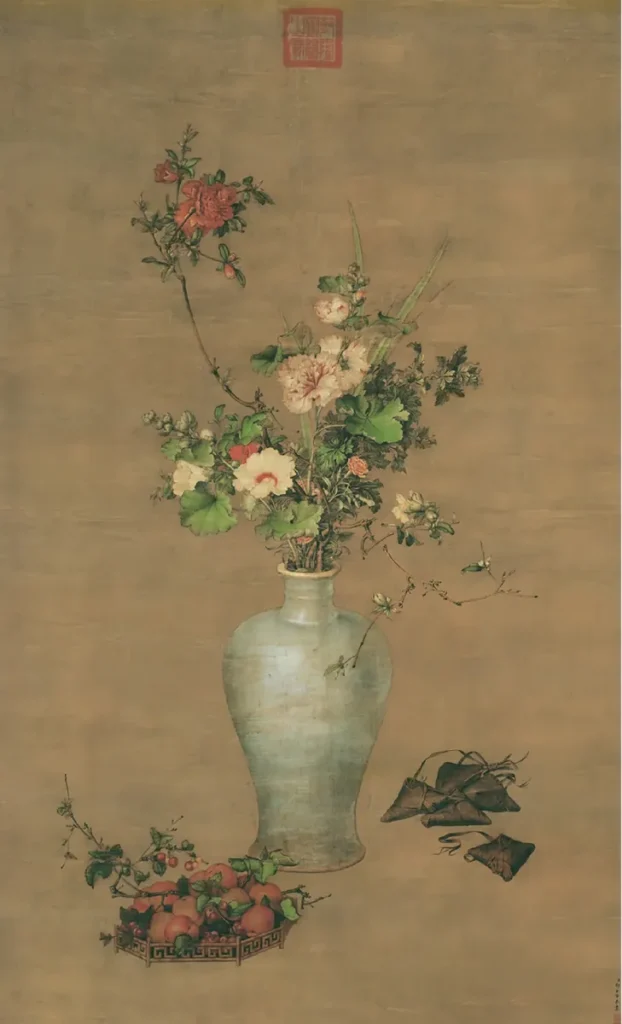
Pomegranates and hollyhocks (Alcea rosea, 蜀葵) appear together constantly in classical painting:
- Ming Dynasty, Lu Zhi, Fine Scenes of Duanwu (《端阳佳景图》): A Taihu scholar’s rock anchors the composition with hollyhocks and a blazing pomegranate branch.
- Qing Dynasty, Giuseppe Castiglione, Duanwu Auspicies (《午瑞图》): A porcelain vase holding calamus leaves, red pomegranate blossoms, and white hollyhocks, with plums and zongzi scattered beside it.
Uses of the Pomegranate Blossom
Beyond its deep cultural meaning, the pomegranate blossom is a plant of remarkable practical utility:
| Application | Description & Usage |
|---|---|
| Ornamental | Classic ornamental tree in gardens, courtyards, and trained as bonsai. Double-flowered varieties are especially prized. |
| Edible | Petals are edible with a clean, refreshing taste, used in stir-fries, soups, and cold dishes. Fruit is rich in Vitamin C. |
| Medicinal | Recorded in Li Shizhen’s Compendium of Materia Medica. Used historically to cool blood, stop bleeding, and clear heat. |
| Natural Dye | Historically used as a natural red dye for silk and clothing, creating the famous “pomegranate skirt.” |
> Ethnobotanical disclaimer: The medicinal information above is for historical and cultural reference only and does not constitute medical advice. Consult a qualified healthcare professional before use.
Final Thoughts
The pomegranate blossom is a flower that perfectly unites passion and practicality. It is the twin blossom offered as a token of love, the auspicious fruit wishing many children, the pomegranate skirt that conquered court officials, and the protective charm against summer heat.
Pomegranate flower meaning in China was never a single thing. It is love, marriage, fertility, prosperity, feminine allure, and the vitality of midsummer. Ever since Zhang Qian brought those first seeds back two thousand years ago, it has rooted itself deeply in Chinese life and culture.
References
Lu Zhi (Fine Scenes of Duanwu) & Giuseppe Castiglione (Duanwu Auspicies). Fine Art Collection, Palace Museum.Introduction
Plants of the World Online (POWO). Punica granatum L. Royal Botanic Gardens, Kew.
Zhang Hua. (Western Jin Dynasty). Records of the Extraordinary (《博物志》).
Gu Lu. (Qing Dynasty). Record of the Clean and Joyful (《清嘉录》).
Li Shizhen. (Ming Dynasty, 1578). Compendium of Materia Medica (《本草纲目》).
Jiang Yan, Ode to the Pomegranate; Han Yu, Pomegranate Blossom; Su Shunqin, Summer Mood. Classical Chinese Poetry.
More from The Plant World:
- Chinese Wingnut: The Romantic “Ingot Tree” and Its Cultural Charm
- Plum Blossom Meaning: Symbolism & Cultural Significance
- The Hidden Meanings Behind Red Plum Blossoms
- Chinese Wisteria: History, Symbolism, and Identification
- Peach Blossoms in China: History, Culture, and Symbolism
- Chinese Crepe Myrtle: Guide to Origins & Symbolism
- Ginkgo Leaf Meaning: 5 Secrets of This Ancient Fossil
- Chinese Loquat Tree: Guide to Benefits & History
- Rose of Sharon Tree: Guide to Meaning & Care
- Hosta Plant Benefits: 5 Surprising Uses & Planting Guide
- Strawberry Begonia Care: How to Grow Saxifraga Stolonifera
Discover more from The Plant World
Subscribe to get the latest posts sent to your email.