
Introduction
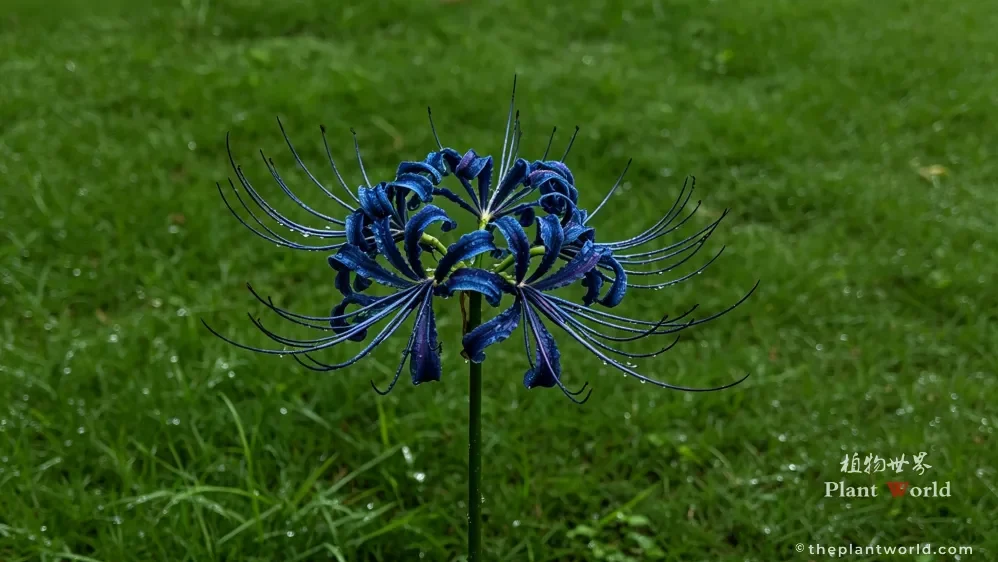
Type “blue spider lily” into a search bar, and you’ll be greeted by page after page of otherworldly cobalt-blue flowers — spider-like petals unfurling in a shade as deep as the night sky. They are so striking that countless people ask the same question: Does a blue spider lily really exist? Can I grow one?
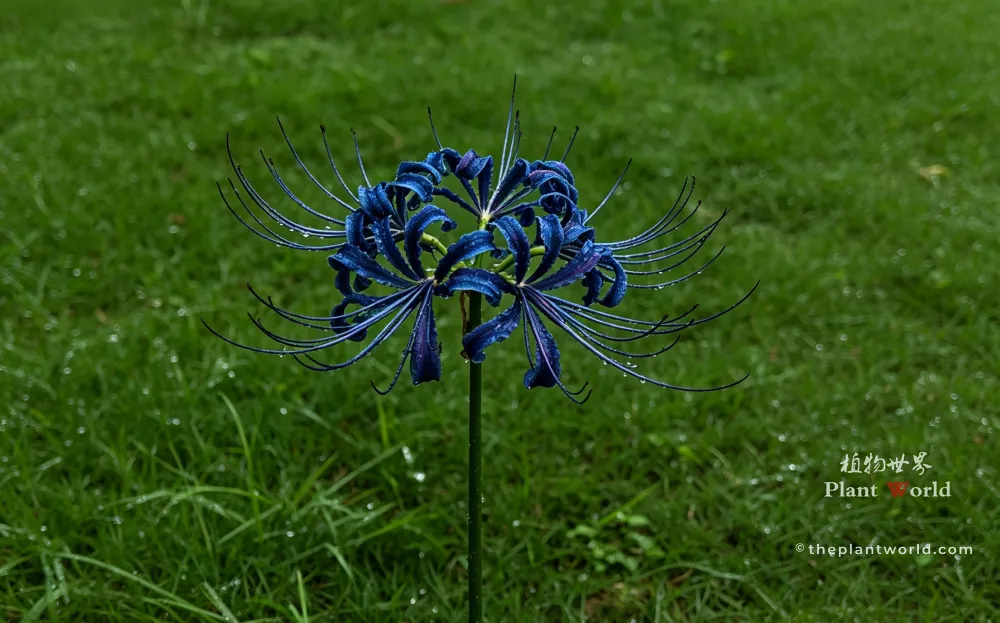
The answer is more complicated than you might think. No true blue Lycoris exists in nature — yet “blue spider lily” is one of the most searched flower terms online. Half of its popularity comes from a fictional flower in the anime Demon Slayer, and the other half from a real, pink-and-blue bicolor species sold under the name “Electric Blue Spider Lily.”
This guide covers everything: what a blue spider lily actually is, whether it exists, the closest real variety you can grow, the Demon Slayer connection, and the full blue spider lily meaning.
- Introduction
- Does a Blue Spider Lily Really Exist?
- The Closest Real Thing: Lycoris sprengeri (Electric Blue Spider Lily)
- The Blue Spider Lily in Demon Slayer
- Blue Spider Lily Meaning: What Does It Symbolize?
- Other Spider Lily Colors at a Glance
- How to Avoid Buying a Fake Blue Spider Lily
- Final Thoughts
- References
- More from The Plant World:
Does a Blue Spider Lily Really Exist?
The short answer: no — there is no naturally true-blue spider lily.
Botanists have never documented any Lycoris species with solid blue petals. Across the entire genus, known flower colors include:
- Red — Lycoris radiata (the classic red spider lily)
- Yellow / golden — Lycoris aurea (golden spider lily)
- White — Lycoris albiflora, Lycoris longituba
- Pink / rose — Lycoris rosea
- Lavender / blue-purple — Lycoris sprengeri, Lycoris incarnata
- Orange — forms of Lycoris chinensis
None of them is a true, solid blue.
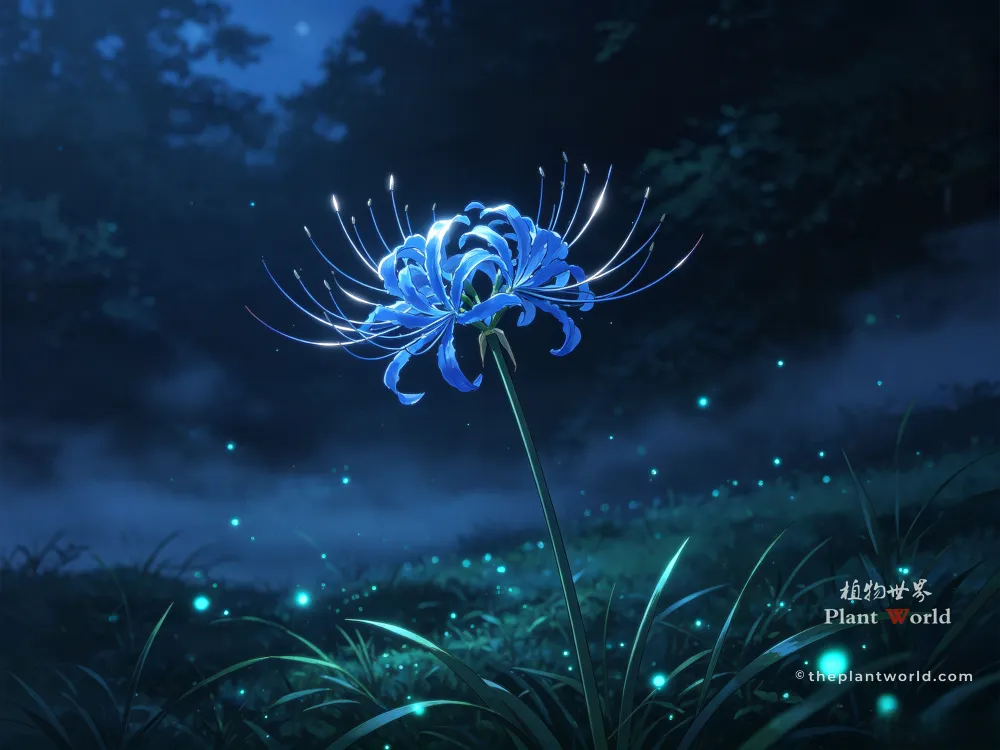
Nearly every vivid cobalt or electric-blue spider lily photo online falls into one of these categories:
- Photoshopped images — red spider lilies color-shifted to blue
- Digital art / AI-generated images — entirely fictional
- Fake listings — online sellers using stolen or altered photos to sell “blue spider lily seeds” that either grow into red flowers or never sprout at all
If you see “blue spider lily bulbs” for a few dollars online, they are almost certainly a scam.
The Closest Real Thing: Lycoris sprengeri (Electric Blue Spider Lily)
While no true blue spider lily exists, one real species comes closer than any other — 换锦花 (Lycoris sprengeri), widely sold in Western horticulture as the Electric Blue Spider Lily.
What It Looks Like
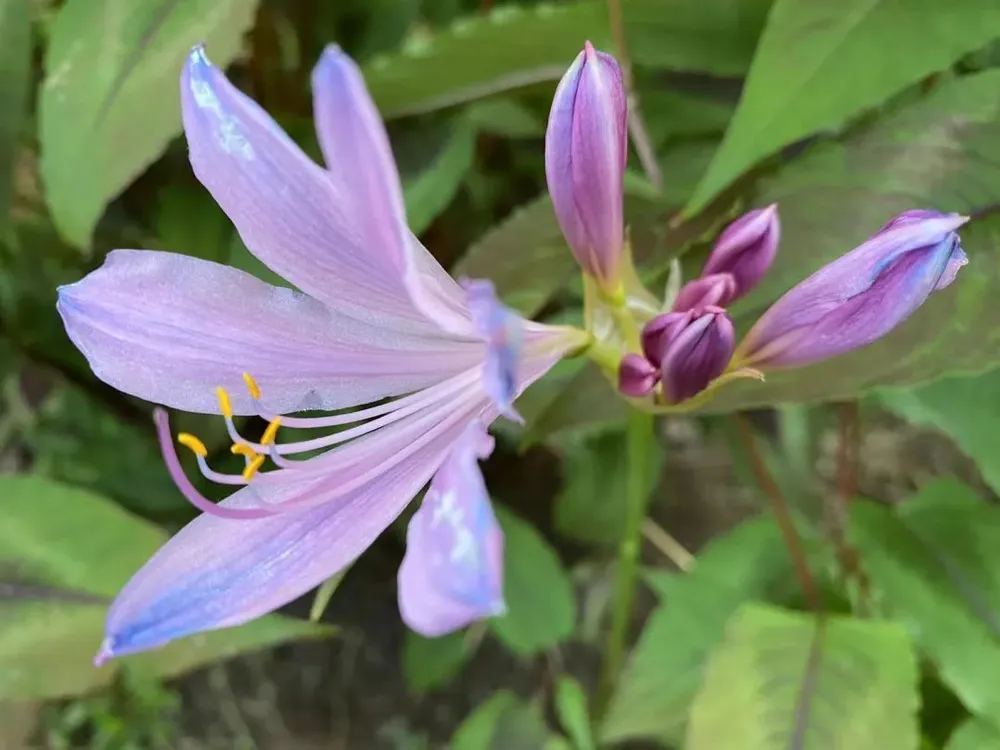
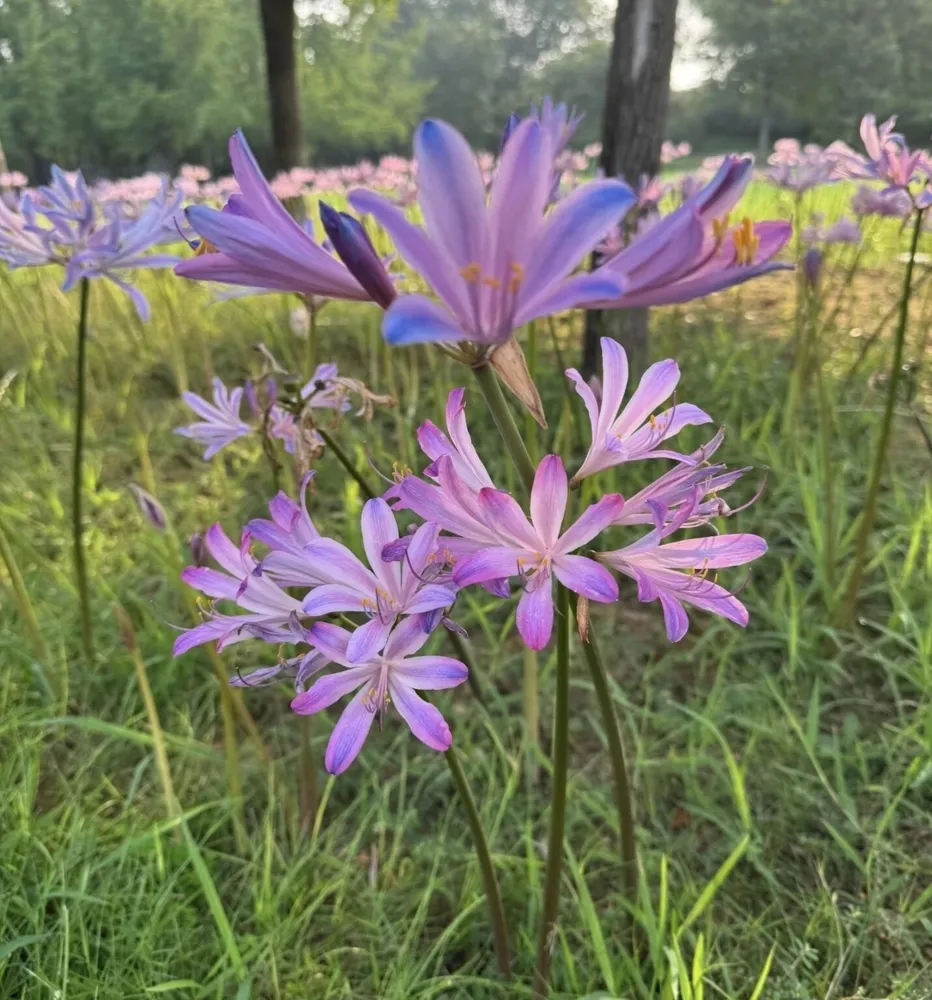
Lycoris sprengeri has petals in a soft, hazy pink, with pale blue to lavender-blue tips and edges. In the right light, the blue tones become more pronounced, creating a dreamy, watercolor effect — as though someone brushed blue ink onto pink petals.
- Flower form: Flatter and more open than the red spider lily, with less recurved petals — graceful and gentle rather than spidery and wild.
- Color: Pink base with blue-lavender tips; highly variable, with some blooms more pink and others more blue.
- Bloom time: August–September, same as the red spider lily.
- Height: About 45 cm (18 in), slightly shorter than L. radiata.
- Hardiness: USDA Zones 5–8 — more cold-hardy than the red spider lily.
Why “Electric Blue”?
The name “Electric Blue” is largely a marketing invention. Lycoris sprengeri is not solid blue — it is a pink flower with blue tips. That said, it is the only Lycoris species with any significant blue tones, making it the closest real-world answer to a “blue spider lily.”
Its Cultural Meaning
The Chinese name huànjǐn (换锦) literally means “changing brocade” — casting off old colors and putting on new splendor. It is a metaphor for growing gentle and bright through the years, and for waiting patiently for each unexpected reunion.
Its flower language includes:
- Longing through separation
- Reunion after long absence
- Cherishing the present moment
- Renewal and transformation
If you want to grow a “blue spider lily,” Lycoris sprengeri is the only real, honest choice.
The Blue Spider Lily in Demon Slayer
The biggest reason “blue spider lily” gets so many searches is the global hit anime Demon Slayer: Kimetsu no Yaiba.
Its Role in the Story
In Demon Slayer, the aoi higanbana (青い彼岸花,blue spider lily) is the central plot device:
- The villain Muzan Kibutsuji, when still human, was dying of an incurable illness. A doctor treated him using an extremely rare flower — the blue spider lily — as the key ingredient.
- Before the treatment was complete, Muzan killed the doctor. He then discovered he had become a demon — immortal and immensely powerful, but unable to walk in sunlight.
- Muzan realized the blue spider lily might hold the key to overcoming his weakness to sunlight, so he spent a thousand years searching the world for it.
- The series establishes that the blue spider lily blooms only briefly during the day — making it nearly impossible for a nocturnal demon to find. This is why Muzan’s thousand-year quest fails.
Fiction vs. Reality
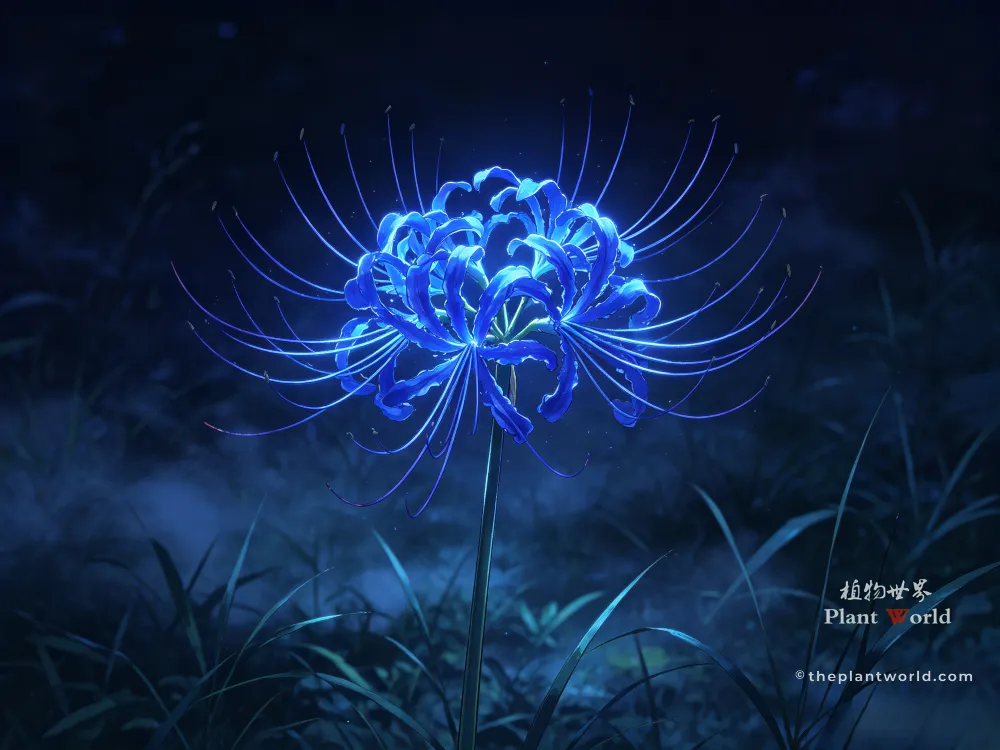
- The blue spider lily in Demon Slayer is entirely fictional. It does not exist in nature.
- It is based on the real red spider lily (Lycoris radiata). The author, Koyoharu Gotouge, reimagined it as blue for dramatic effect and mystery.
- Choosing blue over any other color was likely intentional: in Japanese culture, blue is associated with mystery, rarity, and the transcendental — and it creates a symbolic contrast with the red spider lily of death.
The global explosion of Demon Slayer sent millions of viewers searching for “blue spider lily,” hoping to find the mysterious flower — unaware that it exists only in the world of the story.
Blue Spider Lily Meaning: What Does It Symbolize?
Even though a true blue spider lily doesn’t exist, “blue spider lily” has become a cultural symbol in its own right. Drawing from pop culture, color psychology, and the inherent qualities of the Lycoris genus, the blue spider lily meaning includes:
1. Mystery and the Unattainable
Blue is already one of the rarest flower colors in nature — fewer than 10% of flowering plants produce true blue blooms. The fact that a blue spider lily doesn’t exist at all makes it the ultimate symbol of mystery, rarity, and that which cannot be possessed. In Demon Slayer, Muzan’s thousand-year, fruitless search only deepens this meaning.
2. Transformation and Transcendence
In color psychology, blue represents spirituality, wisdom, and transcendence. The blue spider lily bridges red (life, passion, death) and blue (calm, spirit, eternity), symbolizing transformation from the earthly to the transcendent. In Demon Slayer, it is literally the key to a demon’s ultimate transformation.
3. A Dream Just Out of Reach
A flower that blooms only in daylight, sought by a creature that can only move at night — this setup makes the blue spider lily a metaphor for things we spend a lifetime pursuing but may never attain. It is the unattainable ideal, the perfect thing that exists just beyond our grasp.
4. Calm and Truth
In Western floriography, blue flowers traditionally symbolize calm, truth, trust, and stability. Read through this lens, the blue spider lily can represent finding inner peace and truth amid death and impermanence.
5. The Line Between Fiction and Reality
Perhaps the most unique meaning of the blue spider lily is that it is a parable of fiction and reality itself. Countless people chase a flower that doesn’t exist, just as we chase perfections that live only in imagination. It reminds us that sometimes the most beautiful things are precisely the ones that aren’t real.
These layered meanings make it one of the most fascinating symbols in modern flower symbolism and global pop culture.
Other Spider Lily Colors at a Glance
For comparison, here are the real spider lily colors and their meanings:
| Color | Species | Key Meanings |
|---|---|---|
| Red | L. radiata | Death & rebirth, separation, sad memories, desperate love |
| Yellow / Gold | L. aurea | Surprise, joy, unexpected reunion, happy laughter |
| White | L. albiflora | Purity, new beginnings, remembrance, simple living |
| Pink / Blue | L. sprengeri | Longing, reunion, cherishing the present, renewal |
| Purple | L. longituba variants | Spiritual depth, nobility, mystery, transformation |
| Orange | L. chinensis | Passion, vitality, reunion, success |
| Blue | Does not exist | Mystery, the unattainable, transformation, dreams out of reach |
How to Avoid Buying a Fake Blue Spider Lily
If you’ve fallen for the blue spider lily’s allure, keep these tips in mind:
- No true blue Lycoris bulbs exist. Any listing for “blue spider lily bulbs/seeds” is fake.
- The closest real option is Lycoris sprengeri. Search for “Electric Blue Spider Lily” or “换锦花” from reputable bulb dealers.
- Real L. sprengeri is pink with blue tips. If the product photo shows a solid, vivid blue flower, it has been altered.
- Buy from trusted nurseries, not unknown marketplace sellers offering bargain prices.
- All Lycoris are toxic — the bulb most of all. Never eat any part of the plant, regardless of color.
Final Thoughts
The blue spider lily is a strange cultural phenomenon: a flower that doesn’t exist, yet has acquired real meaning, real seekers, and even real scams.
In Demon Slayer, it is the ultimate dream sought for a thousand years. Online, it is the subject of countless altered photos. In nurseries, it lives on as the marketing name for a pink-and-blue bicolor flower. Its meaning — mystery, transformation, the unattainable — grows precisely out of its nonexistence.
If you truly love this flower’s spirit, consider growing Lycoris sprengeri. It may not be a pure, vivid blue, but its dreamy pink-and-blue petals, its graceful form, and the quiet promise of “changing brocade” — of renewal and reunion — may be more worth cherishing than a fictional perfect bloom.
After all, the most moving flower is never the perfect one that exists only in imagination. It is the real one growing in your garden.
References
Plants of the World Online (POWO). Lycoris sprengeri Comes ex Baker. Royal Botanic Gardens, Kew.
Missouri Botanical Garden. Plant Profile: Surprise Lilies (Lycoris sprengeri). Discover and Share.
Pacific Bulb Society. Lycoris Species Wiki.
Demon Slayer Wiki. Blue Spider Lily (Aoi Higanbana). Fandom.
More from The Plant World:
- Chinese Wingnut: The Romantic “Ingot Tree” and Its Cultural Charm
- Plum Blossom Meaning: Symbolism & Cultural Significance
- The Hidden Meanings Behind Red Plum Blossoms
- Chinese Wisteria: History, Symbolism, and Identification
- Peach Blossoms in China: History, Culture, and Symbolism
- Chinese Crepe Myrtle: Guide to Origins & Symbolism
- Ginkgo Leaf Meaning: 5 Secrets of This Ancient Fossil
- Chinese Loquat Tree: Guide to Benefits & History
- Rose of Sharon Tree: Guide to Meaning & Care
- Hosta Plant Benefits: 5 Surprising Uses & Planting Guide
- Strawberry Begonia Care: How to Grow Saxifraga Stolonifera
Discover more from The Plant World
Subscribe to get the latest posts sent to your email.