
Introduction
Along the edges of Chinese ponds, marshes, and irrigation ditches, there often stands a tall, stately herb — its slender leaves rising like green swords toward the sky, each stem crowned with a brown, sausage-shaped spike that sways gently in the wind. This is the cattail, known in China as xiāngpú (香蒲), botanically Typha orientalis.
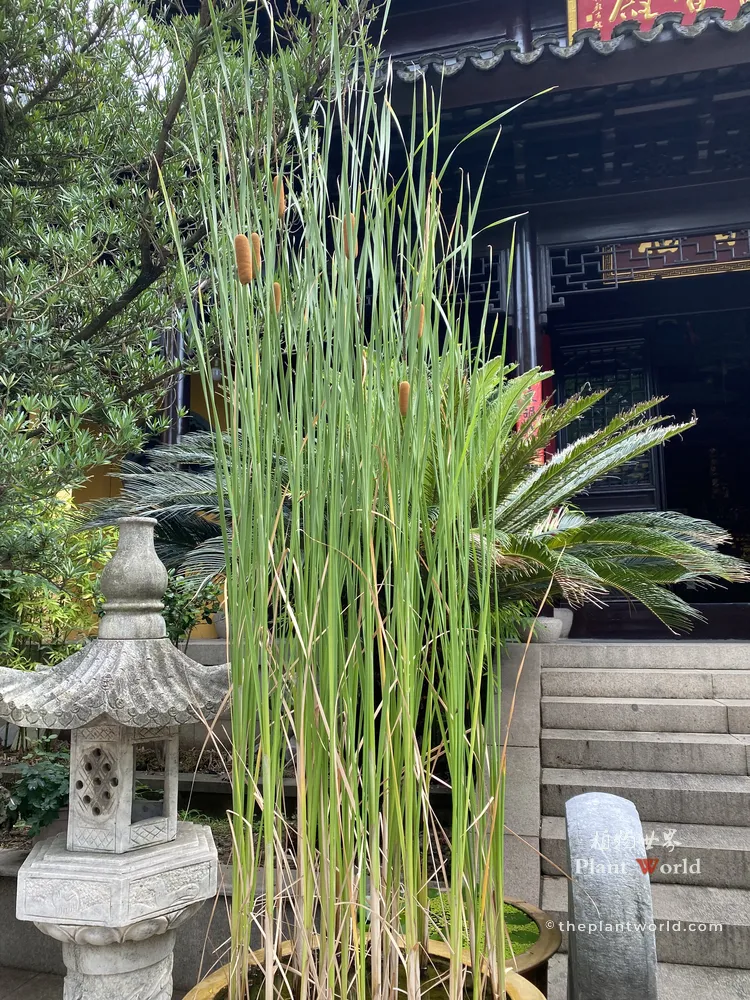
The cattail is one of China’s oldest economic plants. In the Book of Songs (《诗经》), the poem “Han Yi” (《大雅・韩奕》) records:
What vegetables were served?
Bamboo shoots and cattail.
Over three thousand years ago, the tender shoots of the cattail — called púcài (蒲菜) — were already a delicacy at noble banquets. And in the Han Dynasty folk ballad The Peacock Flies Southeast (《孔雀东南飞》), a timeless vow was spoken:
Be you a massive rock,
And I a cattail and reed.
The cattail and reed are tough as silk,
The rock never shifts.
These lines made the cattail a symbol of resilience and fidelity. Its pollen is the traditional Chinese medicine púhuáng (蒲黄); its leaves are woven into mats, fans, and meditation cushions; its fluffy seed down stuffs pillows; its tender shoots are praised as “the finest shoot under heaven.” From the dining table to the apothecary, from the scholar’s studio to the monk’s meditation hall, the cattail has permeated nearly every corner of Chinese life. It is one of the most versatile and culturally rich of all Chinese aquatic plants.
- Introduction
- Plant Profile: What Is the Cattail?
- Monoecious Spikes & Wind-Borne Reproduction
- ⚠️ Toxicity and Pet Safety
- Cultivation & Care Guide
- Poetry & Cultural Symbolism
- Historical Uses & Folk Cuisine
- Health Benefits & Ecological Value
- Garden & Waterscape Value
- Final Conclusion
- References
- More from The Plant World:
Plant Profile: What Is the Cattail?
Scientific Name:Typha orientalis C. Presl (Oriental Cattail); related species include Typha angustifolia L. (Lesser Bulrush) and Typha latifolia L. (Broadleaf Cattail)
Common Names: Cattail, Bulrush, Reedmace, Oriental Cattail
Chinese Name: 香蒲 (xiāngpú); also 东方香蒲,水烛,蒲草,毛蜡烛,水蜡烛
Family: Typhaceae (Cattail Family)
Genus:Typha
Native Range: Northeastern, northern, northwestern, eastern, and southwestern China; also the Philippines, Japan, Russia, and Oceania
Growth Habit: Perennial aquatic or palustrine emergent herb
The cattail is a classic emergent aquatic plant. Its rhizomes are milky white, stout, and creeping through the mud, rooting at the nodes. The aerial stems are erect, cylindrical, tapering upward, reaching 1.3–2 m in height (some species up to 3 m). The leaves are linear, flat, 40–70 cm long and 0.4–0.9 cm wide, deep green, tough in texture, with sheathing bases that clasp the stem. The lower surface is slightly concave; the underside is gently convex.
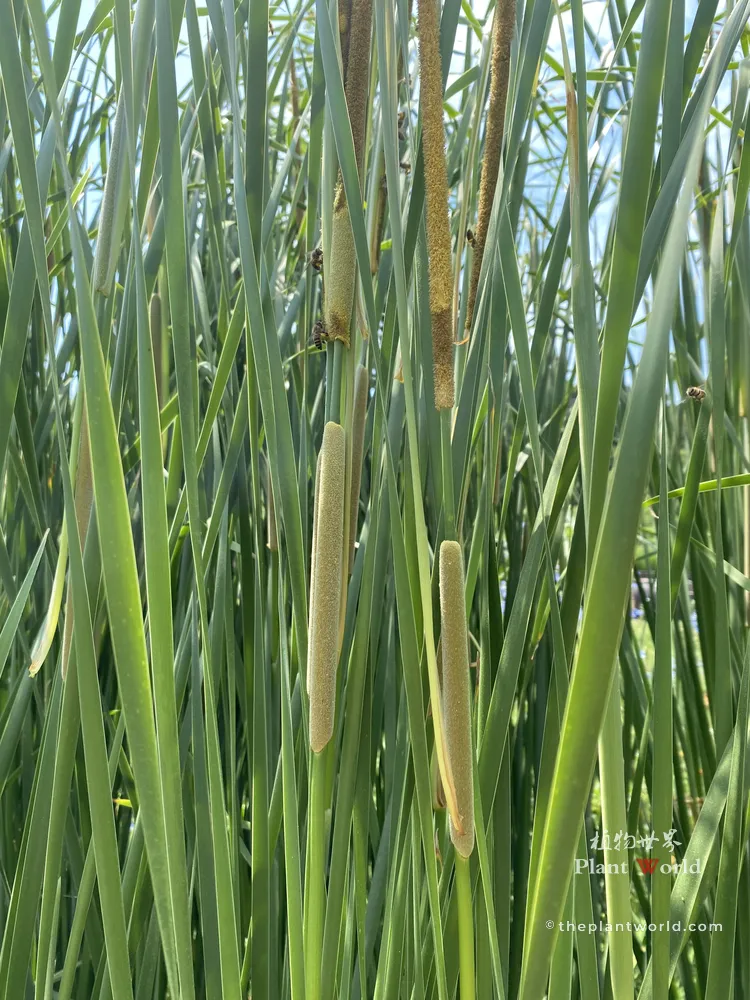
The cattail’s most striking feature is its inflorescence. The flowers are unisexual, with both male and female flowers on the same plant, densely packed into cylindrical spikes:
- Male inflorescence occupies the upper portion, is slimmer, 10–30 cm long, and turns golden yellow at maturity, releasing vast quantities of pollen (the medicine puhuang). It withers and falls away after flowering.
- Female inflorescence occupies the lower portion, is stouter, 8–30 cm long and up to 2.5 cm in diameter. Initially green, it matures to a rich brown, resembling a sausage or candle — which explains the common names “cattail,” “bulrush,” and “water candle.”
- In T. orientalis, the male and female spikes are usually contiguous; in T. angustifolia (lesser bulrush), they are separated by a gap.
The fruit is a small nutlet, elliptical to oblong, with brown speckles on the pericarp. The seeds are brown, slightly curved, and attached to long white hairs (cattail down) that allow wind dispersal — drifting like snowflakes when the mature spike breaks open. Flowering and fruiting occur from May to August.
⚠️ Important Distinction: Cattail Is Not Sweet Flag
In Chinese, “香蒲” (cattail) and “菖蒲” (sweet flag, Acorus calamus) are often confused, and in some regions cattail is colloquially called “菖蒲.” Botanically, however, they are entirely different plants:
| Feature | Cattail (Typha orientalis) | Sweet Flag (Acorus calamus) |
|---|---|---|
| Family & Genus | Typhaceae, Typha | Acoraceae, Acorus |
| Leaves | Narrowly linear, 0.4–0.9 cm wide, ribbon-like, no midrib | Sword-shaped, 1–3 cm wide, prominent midrib, iris-like |
| Inflorescence | Sausage/candle-shaped spike, male above female, terminal | Slender cylindrical spadix with a leaf-like spathe, lateral |
| Fragrance | No particular aroma | Entire plant has a strong, aromatic fragrance |
| Rhizome | Milky white, soft, long internodes | Yellowish-brown, dense internodes, brittle |
| Cultural Role | Edible shoots (pucai), medicine (puhuang), weaving | Dragon Boat Festival talisman, scholar’s studio plant |
The “菖蒲” hung above doorways during the Dragon Boat Festival is Acorus calamus (sword-shaped leaves, fragrant), not the cattail. This article is about the cattail (Typha).
Monoecious Spikes & Wind-Borne Reproduction
The cattail’s reproductive strategy is a model of efficiency among aquatic plants.
Male Above, Female Below
The cattail is monoecious — male and female flowers grow on the same stem, arranged in separate spikes: male above, female below. This vertical arrangement has a clear functional logic. The male flowers mature first, releasing pollen and then withering away, so they do not obstruct pollination of the female flowers below. By the time the female flowers are receptive, the male spike has completed its mission, and the plant’s energy is fully directed toward seed development. This “male above, female below, sequential maturation” layout minimizes self-pollination interference and maximizes reproductive efficiency.
Pollen Clouds & Wind Pollination
The cattail is a classic anemophilous (wind-pollinated) plant. Each summer, the male spikes release an astonishing quantity of golden-yellow pollen — this is the Chinese medicine puhuang. The pollen grains are extremely light and can drift for tens of kilometers on the wind, landing on the elongated, hair-like stigmas of the female spikes below. The female stigmas are finely divided, offering a large surface area that efficiently captures airborne pollen. The pollen output of a single cattail stand is so abundant that on calm, sunny days, a pale yellow “pollen mist” can be seen drifting through the air above dense cattail beds.
Cattail Down: Seeds That Fly
In autumn, the mature female spikes dry and split open, releasing countless tiny seeds attached to white, hair-like filaments — cattail down. These hairs not only enable long-distance wind dispersal but also allow the seeds to float on water, drifting with the current to new wetlands where they can take root. The cattail’s rhizomes are also formidable at vegetative reproduction: a single rhizome segment with a bud can quickly expand into a dense stand. This makes the cattail a dominant species in wetlands — and means that in managed water gardens, its spread must be periodically controlled.
⚠️ Toxicity and Pet Safety
Is the cattail toxic? No. The cattail is a non-toxic plant. Its tender shoots (pucai), rhizomes, and pollen (puhuang) have a long history of edible and medicinal use. A few caveats are worth noting:
- Water quality risk: As an aquatic plant, the cattail absorbs and bioaccumulates heavy metals and pollutants from the water. Never eat wild cattails collected from polluted waters — choose only those from clean water bodies or cultivated sources.
- Puhuang contraindications: As a traditional Chinese medicine with blood-invigorating properties, puhuang should be used with caution during pregnancy. Those with bleeding tendencies or taking anticoagulant medications should consult a physician before use.
- Pets: Cattails are non-toxic to cats, dogs, and other pets. Small amounts of foliage or contact with cattail down are generally harmless. However, as with any aquatic plant, water quality and parasites are concerns; wild plants should not be fed to pets in quantity.
- Allergies: Cattails produce large amounts of pollen. Pollen-allergic individuals may experience sneezing and runny nose near cattail stands and should take precautions.
Overall, the cattail is a very safe, multi-purpose plant. The main risks come from water quality and pollen allergies, not from inherent toxicity.
Cultivation & Care Guide
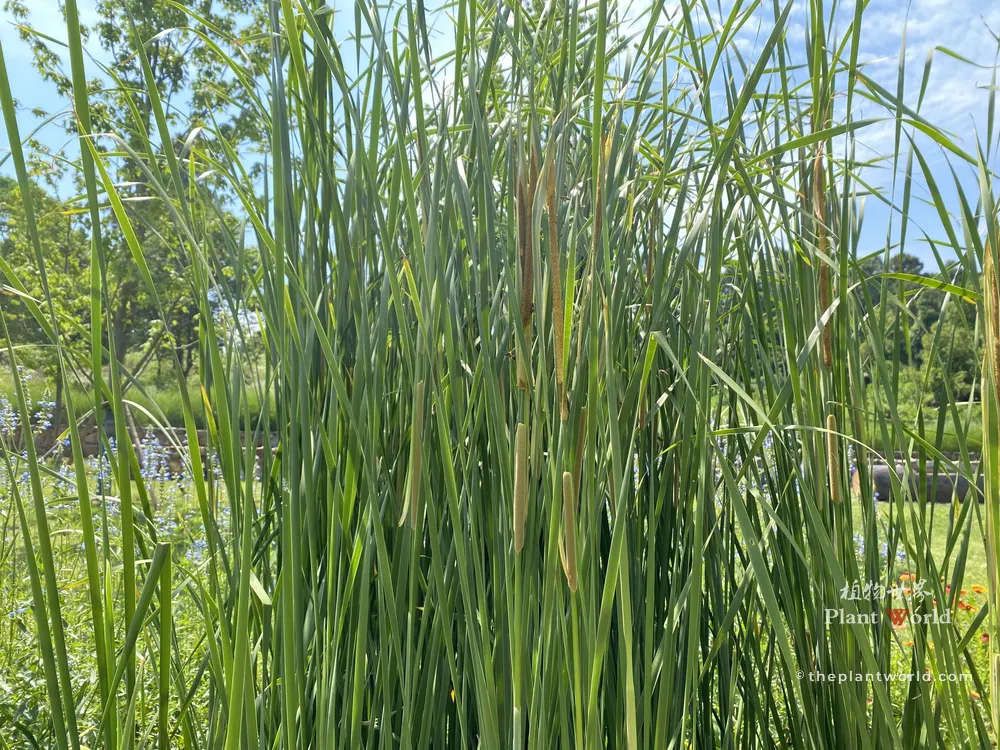
The cattail is an extremely low-maintenance plant for water gardens, suitable for ponds, bog gardens, water tubs, and ecological restoration.
Water Depth & Environment
- Water depth: Optimal depth is 10–30 cm — a classic emergent plant. It tolerates short periods of deeper water (over 50 cm) but grows poorly if permanently submerged. It also thrives in consistently wet boggy soil.
- Water quality: Undemanding; grows well in neutral to slightly alkaline water. Highly tolerant of nutrient-rich (eutrophic) water.
- Temperature: Extremely cold-hardy; overwinters outdoors throughout China. The above-ground parts die back in winter, and the plant survives as underground rhizomes, resprouting in spring.
Light
- Cattails thrive in full sun, producing vigorous growth and abundant spikes in strong light. They tolerate partial shade, but excessive shade leads to weak, spindly growth and reduced flowering.
Planting Methods
- Pond / wetland planting: Bury rhizomes with buds directly in shallow mud, about 5–10 cm deep; they will establish on their own. Alternatively, plant in aquatic baskets first for easier spread control.
- Water tub / container: Use a large, drainage-hole-free pot filled with pond mud or garden soil. Bury the rhizome and maintain water at 10–20 cm above the soil surface. Divide every spring.
- Ecological floating islands: Suitable for floating island plantings, combining landscape value with water purification.
Propagation
- Division (most common): Before spring sprouting, dig up rhizomes, cut into sections with 2–3 buds each, and replant — very easy to establish.
- Seed: Collect mature cattail down (with seeds) in autumn; sow on wet mud surface the following spring, keeping shallow water. Germination takes about 1–2 weeks. Seedlings grow slowly initially.
- Natural rhizome spread: In suitable conditions, cattail rhizomes spread rapidly on their own, requiring no additional propagation.
Maintenance Tips
- Cattails grow extremely fast and require regular removal of excess rhizomes and overcrowded plants to prevent them from dominating the water surface or crowding out other aquatic plants.
- Each winter, cut back dead above-ground growth to keep the water garden tidy and encourage vigorous spring sprouting.
- For container growing, add a small amount of slow-release fertilizer monthly; pond-grown plants generally need no extra feeding.
- ⚠️ Important: Cattail rhizomes and seeds have strong dispersal ability. Never discard them into natural water bodies, as they may become dominant and disrupt existing ecological balance in introduced regions.
Poetry & Cultural Symbolism
The cattail is an extraordinarily rich symbol in Chinese culture, appearing in everything from the Book of Songs to Han Dynasty ballads, from political institutions to scholarly aesthetics.
The Book of Songs: Cattail as Noble Fare
In the Book of Songs, “Han Yi” describes the grand farewell banquet for the noble Han Hou, hosted by Xian Fu during the reign of King Xuan of Zhou: “What vegetables were served? Bamboo shoots and cattail.” At this high-state occasion, only two vegetables were served — bamboo shoots and cattail shoots — confirming that in the Western Zhou period, cattail shoots were already a prized vegetable ranked alongside bamboo shoots.
Another poem, “Ze Bei” (《陈风・泽陂》), writes: “By the pond’s bank, there grow cattail and lotus.” Pairing cattail with lotus as the signature plants of the pond underscores how common and significant the cattail was in ancient life.
The Peacock Flies Southeast: Tough as Silk
In the Han Dynasty narrative ballad The Peacock Flies Southeast, Liu Lanzhi, before being sent away by her husband’s family, makes this vow to Jiao Zhongqing:
Be you a massive rock,
And I a cattail and reed.
The cattail and reed are tough as silk,
The rock never shifts.
She uses the flexibility and toughness of cattail and reed as a metaphor for her unwavering fidelity — though soft to the touch, they are as difficult to break as silk thread; though heavy and immovable, the rock never shifts. This metaphor became one of the most moving love pledges in Chinese literature and forever endowed the cattail with cultural connotations of resilience, fidelity, and strength within softness.
Cattail Whip & Cattail Wheels: Benevolence and Respect for Scholars
The cattail features in two famous political-cultural allusions:
- The Cattail Whip (蒲鞭之政): Liu Kuan, a governor of Nanyang in the Eastern Han Dynasty, was known for his benevolent governance. When subordinates erred, he did not flog them with harsh birch rods but used a whip made of cattail leaves — a symbolic rebuke that inflicted no physical harm. Later generations used “cattail whip” as a metaphor for lenient, virtuous governance.
- Cattail-Wrapped Wheels (安车蒲轮): When ancient emperors summoned respected scholars, they wrapped the wheels of the carriage with cattail to ensure a smooth, jolt-free ride. When Emperor Wu of Han summoned the Confucian scholar Mei Cheng, he sent an “comfortable carriage with cattail-wrapped wheels.” “Cattail wheels” thus became a synonym for the highest respect for learned talent.
Cattail Cushions: Zen and Scholarly Quietism
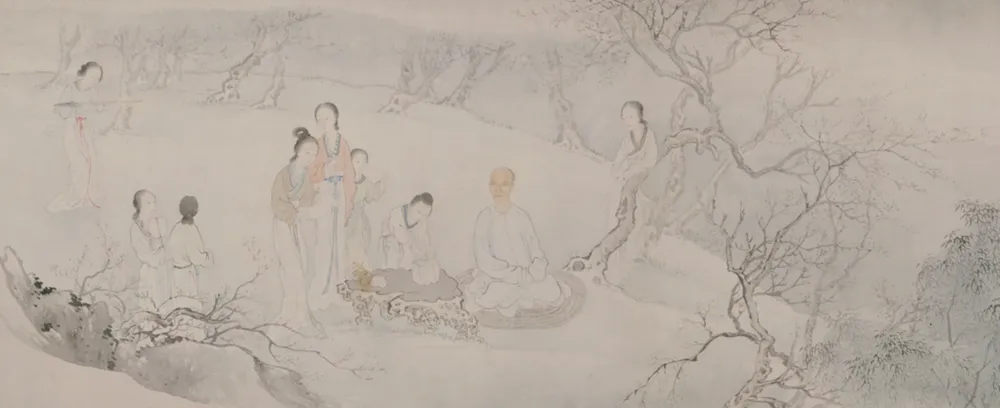
The cattail’s flexible, durable leaves have been an important weaving material since antiquity. The round cushion woven from cattail leaves — the pútuán (蒲团,cattail cushion) — is essential for Buddhist meditation, Daoist practice, and scholarly reading. “Sitting on a cattail cushion” became a byword for meditation and contemplation. The Tang poet Bai Juyi wrote, “Sitting, I lean on a cattail cushion of brown cloth; walking, I lean on a bamboo staff.” Song Dynasty scholars, too, surrounded themselves with cattail cushions, bamboo chairs, and old books to create an atmosphere of refined simplicity in their studies.
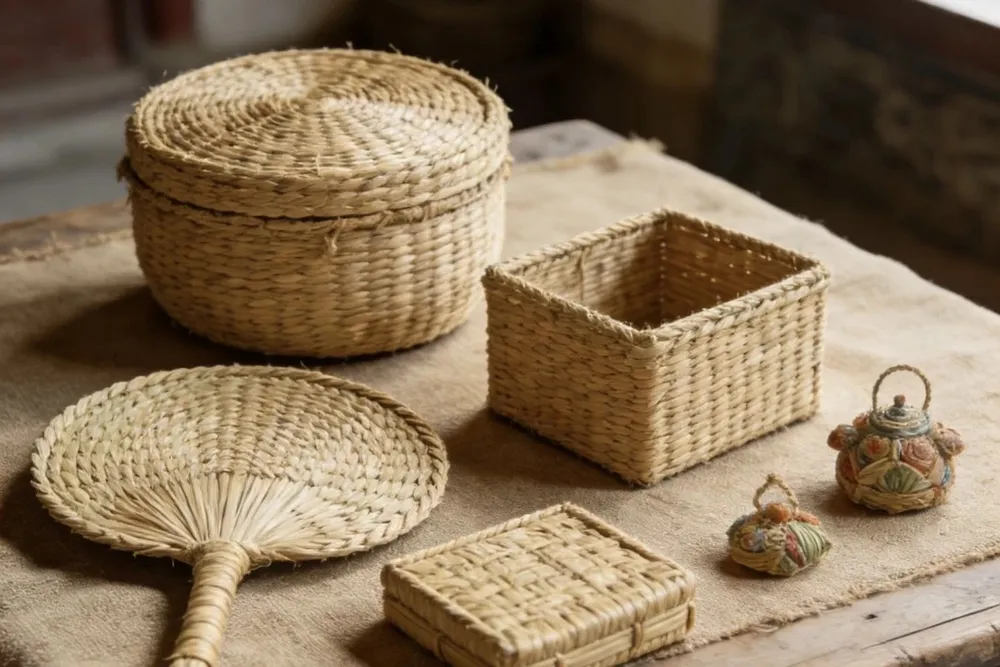
Beyond cushions, cattail leaves were woven into mats, fans, sandals, and rope — one of the most important weaving materials in traditional Chinese folk life. The cattail fan, in particular, became the iconic summer cooling implement, and “gently waving a cattail fan” remains a classic image of traditional Chinese summer life.
Historical Uses & Folk Cuisine
The cattail is one of the most thoroughly utilized wild plants in Chinese history — from root to flower, from leaf to down, every part serves a purpose.
Food: Pucai and “The Finest Shoot Under Heaven”
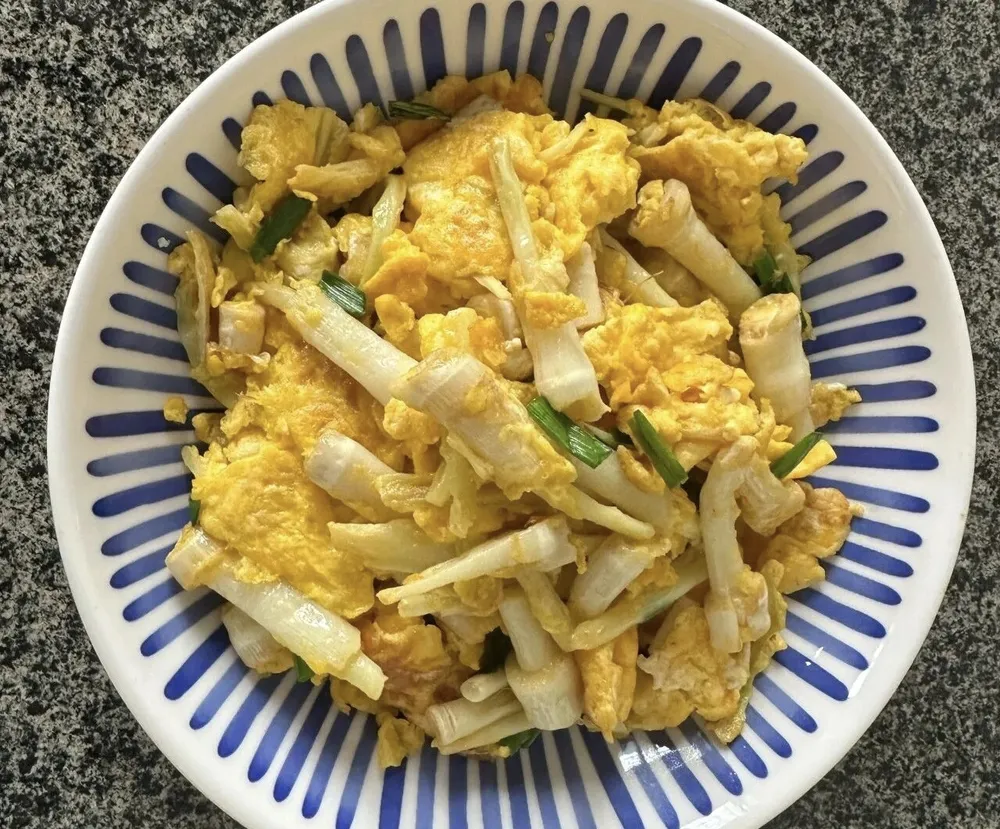
The most celebrated edible part of the cattail is its tender shoot base — the white pseudostem formed by tightly sheathing leaf bases — called púcài (蒲菜), also known as pusun (蒲笋), puya (蒲芽), pubai (蒲白), or pu’ergen (蒲儿根).
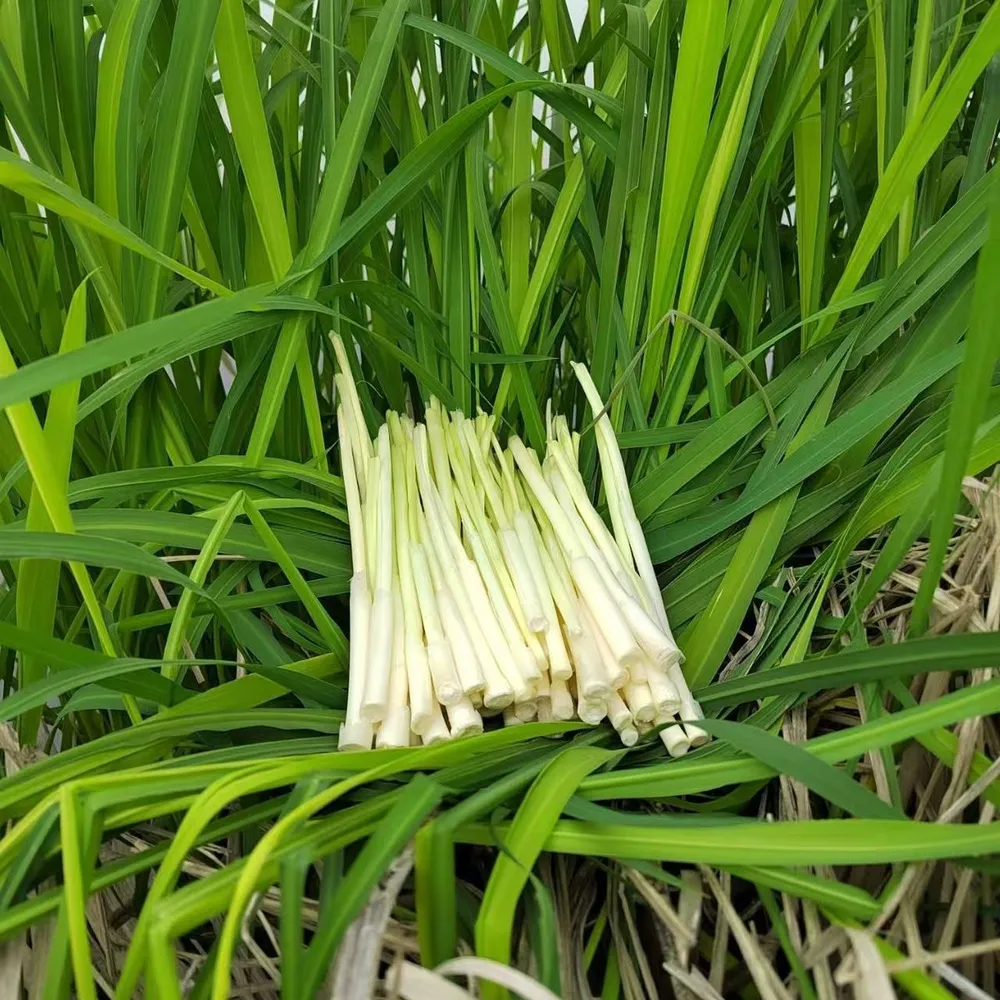
- Pucai (cattail shoots): White as jade, tender and fragrant, with a crisp, bamboo-shoot-like texture, pucai is praised as “the finest shoot under heaven” and also called “Huai shoot” (淮笋). The Huaiyang classic “Kaiyang Pucai” (dried shrimp with cattail shoots) and the Jinan classic “Naitang Pucai” (cattail shoots in creamy soup) are both celebrated dishes featuring pucai as the star ingredient. The Song Dynasty pharmacologist Su Song wrote in his Illustrated Materia Medica (《本草图经》): “In spring, when the young leaves first emerge and have not yet reached the water, they are red-and-white; take the white, fleshy shoot that enters the ground, as thick as a spoon handle — eaten raw, it is sweet and crisp.”
- Puruo / Ivory Vegetable (象牙菜): The tender tips of the cattail’s creeping rhizomes, uniform and slender, white as ivory, with a sweet, crisp taste. In Yunnan and elsewhere, these are commercially cultivated as a specialty vegetable called “ivory vegetable.”
- Rhizomes: Rich in starch, eaten raw or cooked; an important famine food in times of scarcity.
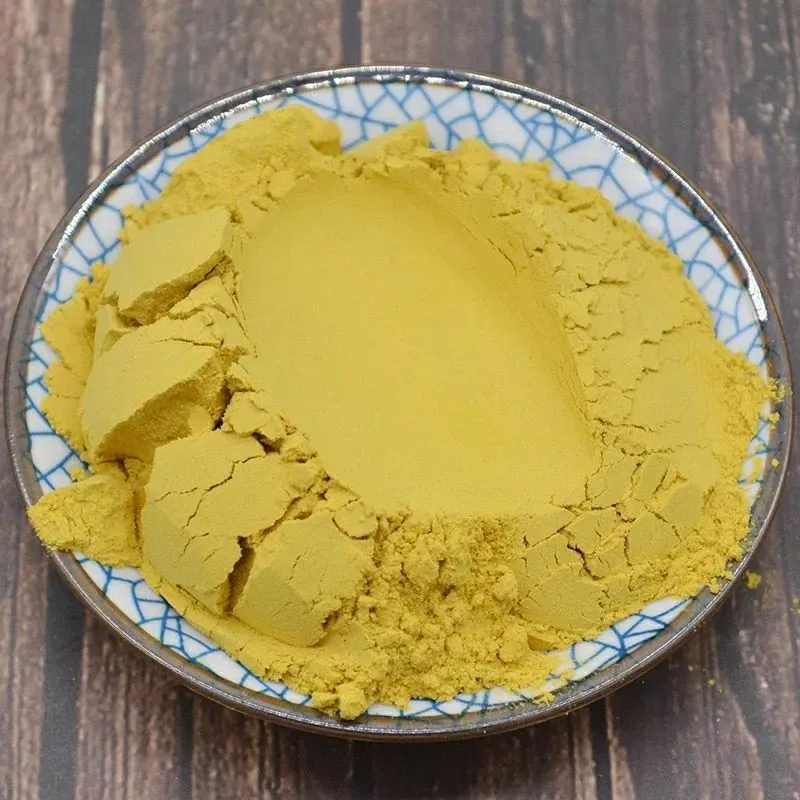
- Pollen (puhuang): Used as a natural food coloring and nutritional supplement.
The culinary history of pucai stretches back to the Book of Songs era, and it remains a seasonal delicacy in Huaiyang and Shandong cuisine today.
Medicine: Puhuang — A Millennium-Old Hemostatic and Blood-Moving Remedy
The dried pollen of the cattail, officially known in pharmacognosy as Pollen Typhae (or Cattail Pollen, locally called púhuáng, 蒲黄), is recorded in the Shennong Ben Cao Jing (《神农本草经》), where it was classified as a superior-grade herb.
- Nature and flavor: Sweet, neutral.
- Meridian tropism: Liver and pericardium meridians.
- Functions: Stops bleeding, invigorates blood circulation, relieves strangury (painful urination).
- Indications: Hematemesis, epistaxis, hemoptysis, uterine bleeding, traumatic bleeding, amenorrhea and dysmenorrhea, abdominal stabbing pain, traumatic swelling and pain, blood strangury.
- Usage: Decoction, 5–10 g (wrapped in gauze); external use — appropriate amount, ground and sprinkled or applied as a paste. For hemostasis, it is usually stir-fried; for blood-invigoration, it is used raw.
The most famous formula containing puhuang is Shixiao San (失笑散,”Powder that Brings a Smile”), an equal blend of puhuang and wulingzhi (flying squirrel feces), used for blood stasis causing abdominal pain, postpartum lochioschesis, and menstrual irregularity — a classic formula for invigorating blood and resolving stasis.
⚠️ Ethnobotanical disclaimer: This information is for historical and cultural reference only and does not constitute medical advice. Puhuang is a traditional Chinese medicine and should be used with caution during pregnancy. Always consult a qualified healthcare professional before use.
Weaving & Daily Uses
- Cattail leaf weaving: The flexible, water-resistant, and durable leaves are an excellent material for weaving mats, fans, cushions, sandals, straw hats, and rope. Before the advent of plastics, cattail-leaf products were among the most common household items in rural China.
- Cattail down stuffing: The white hair-like filaments from mature female spikes are soft and insulating, used to stuff pillows, cushions, and mattresses — similar to cotton. In ancient times, cattail down was also used to stuff winter clothing for soldiers.
- Other uses: Cattail stems serve as papermaking material; the pollen provides a natural yellow dye.
Health Benefits & Ecological Value
Modern Pharmacology of Puhuang
Modern pharmacological research on puhuang has identified flavonoids (isorhamnetin, quercetin, kaempferol), polysaccharides, sterols, and fatty acids as its key active constituents, with the following pharmacological effects:
- Cardiovascular protection: Puhuang lowers blood lipids, resists atherosclerosis, protects the myocardium, and improves microcirculation. Clinical studies show it can reduce serum cholesterol and triglycerides, with beneficial effects in hyperlipidemia.
- Dual hemostatic and blood-invigorating action: Raw puhuang is primarily used for invigorating blood and resolving stasis; stir-fried puhuang is mainly used for stopping bleeding. This dual-directional regulation is relatively unique among Chinese herbs. Its hemostatic mechanism relates to promoting platelet aggregation; its blood-invigorating action relates to improving hemorheology.
- Anti-inflammatory and antioxidant: The flavonoid constituents scavenge free radicals and inhibit inflammatory cytokines.
- Immunomodulation: Puhuang polysaccharides exhibit mild immune-enhancing effects.
- Uterine stimulation: Puhuang excites both isolated and in vivo uterine smooth muscle — the pharmacological basis for its contraindication in pregnancy.
It should be noted that most pharmacological studies of puhuang come from animal and in vitro experiments; clinical use should always be guided by a qualified practitioner of Chinese medicine.
Ecological Restoration: The Wetland’s “Cleaner”
The cattail is a vital plant for wetland restoration and wastewater treatment:
- Nitrogen and phosphorus removal: Cattails strongly absorb total nitrogen and total phosphorus from water and are among the most commonly used plants in constructed wetlands and ecological floating islands.
- Heavy metal absorption: Cattail rhizomes and roots accumulate cadmium, lead, zinc, and other heavy metals, making them useful for phytoremediation of metal-polluted water.
- Organic matter degradation: Cattail roots provide surface area for microbial attachment, promoting the breakdown of organic pollutants.
- Habitat function: Dense cattail stands provide shelter, foraging, and breeding habitat for waterbirds, amphibians, fish, and aquatic insects — essential for wetland biodiversity.
- Bank stabilization: The extensive rhizome network stabilizes shorelines and reduces erosion.
For these ecological functions, cattails are widely used in constructed wetlands, urban river restoration, lake ecological remediation, and agricultural non-point source pollution control.
⚠️ Health disclaimer: The health information above is based on published research and traditional use, and is provided for educational purposes only. It does not constitute medical advice. Cattail pollen (puhuang) is a traditional Chinese medicine, not an ordinary food. Consult a qualified healthcare professional before use.
Garden & Waterscape Value
The cattail is a highly ornamental water-garden plant with wild charm, valued for its foliage, flowers, and seed heads.
Ornamental Features
- Foliage: Tall, upright, linear leaves growing in clumps with strong vertical lines — like clusters of green swords. An excellent vertical accent in water gardens.
- Inflorescence: In summer, the golden male spikes release pollen; in autumn, the rich brown female spikes stand like sausages on tall stems — uniquely ornamental. Dried spikes make excellent cut and dried flowers, lasting indefinitely.
- Wild charm: The cattail carries the untamed beauty of marshes and waterways. Planted at pond edges or in bog gardens, it evokes the classical poetry of “cattail and reed tough as silk” — especially fitting when paired with Taihu stones, reeds, and Chinese lotus.
Waterscape Applications
- Ponds / lakes: Ideal for drifts along pond margins and shallow zones, serving as background or mid-ground planting, creating layered heights alongside water lilies and lotus. Control density to avoid excessive spread.
- Bog gardens / rain gardens: An ideal plant for bog and rain gardens — moisture-tolerant, pollution-tolerant, and vigorous.
- Water tubs / containers: A clump of cattail in a large water tub, paired with miniature water lilies and pennywort, creates a charming miniature waterscape with wild character.
- Cut and dried flowers: The female spikes (cattail tails) are excellent dried-flower material — air-dry naturally and store long-term for arrangements and décor.
- Ecological waterscapes: In constructed wetlands, floating islands, and river restoration, the cattail is a top choice combining landscape and ecological function.
The flower language of the cattail might be interpreted as “resilience and humility” — it grows in muddy, shallow water yet stands upright and clean; its leaves seem soft yet are tough as silk and hard to break; it does not compete with showy flowers, yet its every part — shoots, pollen, leaves, down — has nourished human life for three thousand years.
Final Conclusion
The cattail is a plant for which every part is truly useful. Its tender shoots are “the finest shoot under heaven,” from the noble banquets of the Book of Songs to today’s Huaiyang cuisine; its pollen is the medicine puhuang, from the Shennong Ben Cao Jing to modern pharmacology laboratories; its leaves are woven into mats, fans, and cushions, from the rural kang to the monk’s meditation hall; its rhizomes fed people in famine and today purify wastewater in wetland restoration.
From “bamboo shoots and cattail” at ancient feasts, to “cattail and reed tough as silk” as a love vow, from the “cattail whip” of benevolent governance to the “cattail wheels” of respect for scholars — the cattail is far more than an aquatic plant. It is a Chinese cultural symbol of resilience, purity, humility, and usefulness.
Next time you see tall herbs bearing “sausages” by a pond, pause for a moment. That is the cattail — the pucai from the Book of Songs, the puhuang in the apothecary, the cattail fan in grandmother’s hand, and the meditation cushion beneath the monk. One plant, carrying three thousand years of human life. It remains one of the most practical and culturally resonant members of the Chinese garden plants tradition, and a timeless chapter in Chinese plant culture.
References
- Flora of China (Vol. 23): Typha orientalis Species Account. Missouri Botanical Garden & Harvard University Herbaria.
- Plants of the World Online (POWO): Typha orientalis C.Presl. Royal Botanic Gardens, Kew.
- Book of Songs (Shi Jing, 《诗经》) — “Han Yi” & “Ze Bei”: Earliest literary records of pucai shoots.
- Shennong’s Herbal Classic (Shennong Ben Cao Jing, 《神农本草经》) — Medicinal record of Puhuang (Pollen Typhae).
- Journal of Ethnopharmacology: Research on the hemostatic and pharmacological effects of Pollen Typhae.
- ASPCA: Non-toxic plant database for domestic pet safety.
More from The Plant World:
- Chinese Wingnut: The Romantic “Ingot Tree” and Its Cultural Charm
- Plum Blossom Meaning: Symbolism & Cultural Significance
- The Hidden Meanings Behind Red Plum Blossoms
- Chinese Wisteria: History, Symbolism, and Identification
- Peach Blossoms in China: History, Culture, and Symbolism
- Chinese Crepe Myrtle: Guide to Origins & Symbolism
- Ginkgo Leaf Meaning: 5 Secrets of This Ancient Fossil
- Chinese Loquat Tree: Guide to Benefits & History
- Rose of Sharon Tree: Guide to Meaning & Care
- Hosta Plant Benefits: 5 Surprising Uses & Planting Guide
- Strawberry Begonia Care: How to Grow Saxifraga Stolonifera
Discover more from The Plant World
Subscribe to get the latest posts sent to your email.