
Introduction
If you have ever walked past a rock garden in early summer and noticed a carpet of small, vivid flowers with serrated petals — almost like tiny pink, red, or white butterflies with frilled edges — you have likely met the China pink. Known botanically as Dianthus chinensis, this humble perennial has been cultivated in China for well over a thousand years, and its name in Chinese — Shizhu (石竹), literally “stone bamboo” — hints at a rich cultural symbolism that goes far beyond its pretty face.
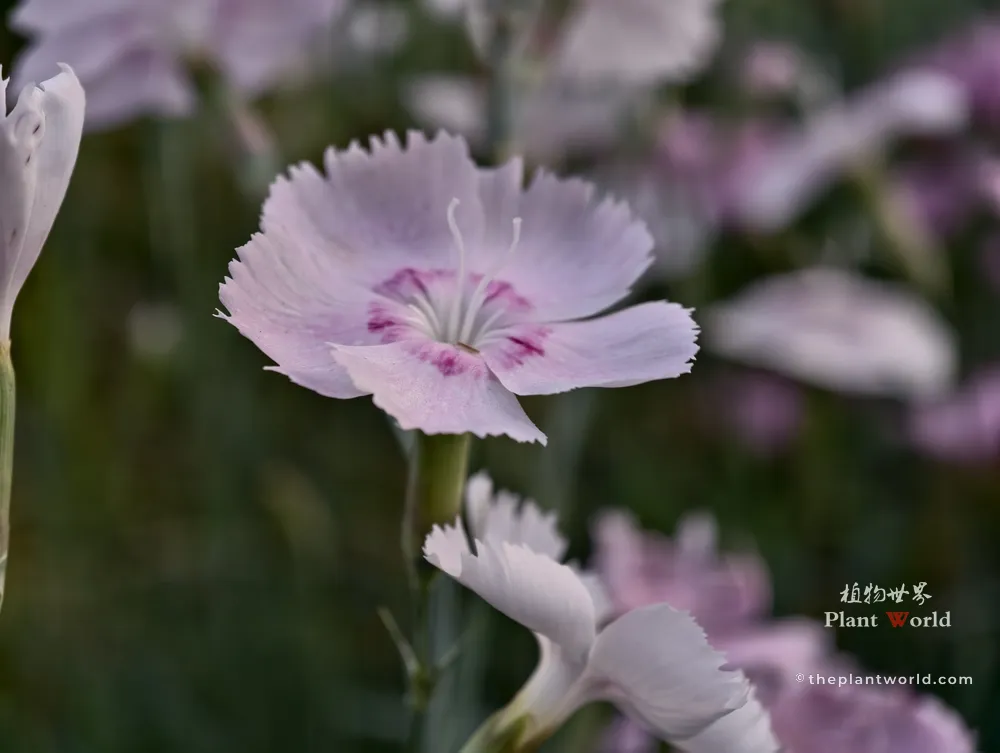
While most Western gardeners know it as a low-growing border annual, the China pink carries layers of meaning in rich Chinese flower symbolism: it is a flower of pure love, motherly devotion, resilience, and feminine beauty. This guide explores the full meaning and symbolism of Dianthus chinensis, its role in Chinese poetry and legend, how it differs from the carnation, and what you need to know about growing it.
What Is China Pink? (Dianthus chinensis Basics)
The China pink is one of the most beloved Chinese herbaceous plants in the Caryophyllaceae (pink/carnation family), genus Dianthus — the same genus that gives us the carnation (Dianthus caryophyllus) and Sweet William (Dianthus barbatus). Native to China, it grows low and mounding, with slender, jointed stems that resemble bamboo — hence its Chinese name Shizhu (石竹), “stone bamboo,” because it often grows in rocky crevices and has bamboo-like nodes.
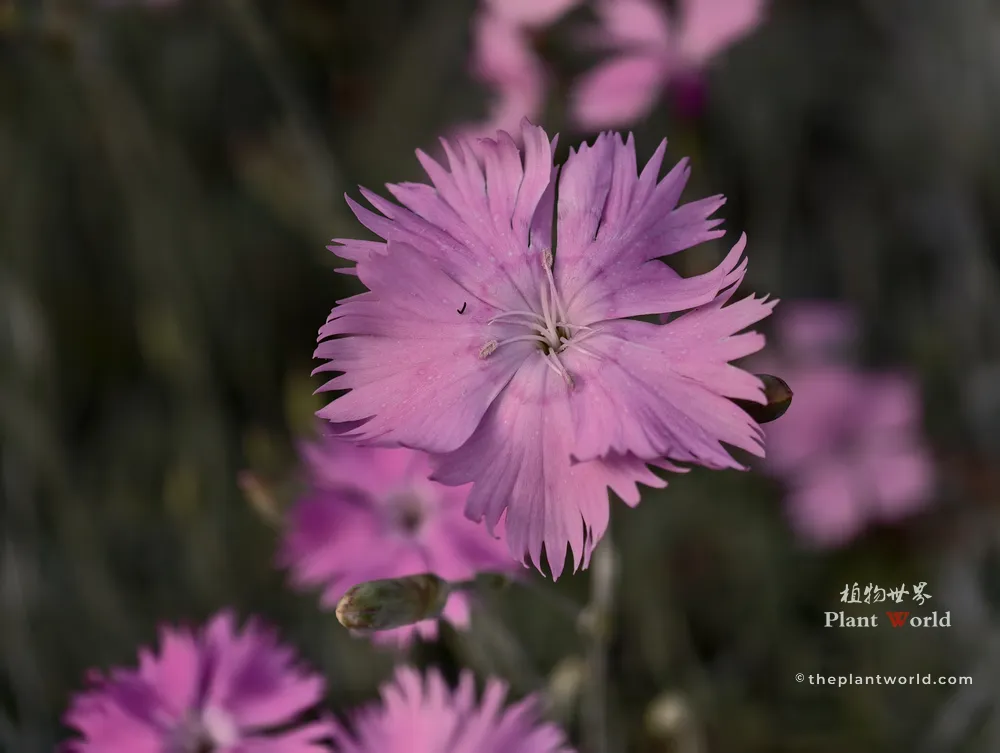
Its flowers are small but profuse, with five petals that have distinctive serrated, fringed edges — like a tiny skirt trimmed with lace. Colors include red, pink, white, and bicolor patterns. It blooms from late spring through summer, and in mild climates can flower again in autumn.
In China it is also called Luoyang hua (洛阳花, “Luoyang flower”), after the city famous for peonies, because the double-flowered varieties were highly prized there during the Song Dynasty.
Note: The China pink (D. chinensis) is not the same as the florist’s carnation (D. caryophyllus). They are close relatives in the same genus, but the carnation is a larger, double-flowered, often clove-scented species developed in the Mediterranean and Europe, while the China pink is a smaller, single-to-double-flowered species native to East Asia.
China Pink Flower Meaning: Core Symbolism
1. Pure Love and True Affection
The most fundamental meaning of the China pink is pure love and genuine affection. Its bright, clean colors and delicate, fringed petals have long been associated with the innocence of first love and the sincerity of true feeling. In traditional Chinese floriography, the China pink symbolizes a love that is unpretentious and heartfelt — not flashy, but deep and true.
Different colors carry slightly different nuances:
- Red China pink: passionate love, warmth, and devotion
- Pink China pink: first love, youthful affection, tenderness
- White China pink: purity, innocence, and unspoken affection
- Multicolor China pink: feminine beauty, charm, and complexity
2. Motherly Love and Filial Piety
Perhaps the most touching layer of the China pink’s symbolism is its association with motherly love and filial piety — a meaning rooted in a beloved Chinese folk legend.
The story goes that a young boy named Shizhu (石竹,the same characters as the flower) lost his father at an early age and was raised by his mother. When his mother fell seriously ill, Shizhu searched everywhere for medicine but found none. Day after day he wept, his tears falling into the cracks of the mountain rocks. His devotion moved the mountain god, and where his tears fell, clusters of delicate flowers sprang up. The flowers were not only beautiful — their roots and stems were a healing medicine that cured his mother. In gratitude, people named the flower Shizhu after the boy, and it became a symbol of a child’s love for his mother and a mother’s quiet, selfless devotion.
Because of this legend, the China pink is sometimes called a “mother flower” in the Chinese cultural context — a symbol of maternal tenderness and the gratitude of a child. It is worth noting that the more traditional Chinese “mother flower” is the daylily (Xuancao, 萱草, Hemerocallis), but the China pink’s folk legend gives it its own tender association with motherly love.
3. Resilience and Strength of Character
The China pink’s name — “stone bamboo” — tells you a great deal about its symbolic character. It grows in rocky crevices and poor soil, its stems are jointed like bamboo (a Chinese symbol of integrity and resilience), and it blooms profusely even in conditions where other flowers struggle.
For this reason, the China pink symbolizes resilience, unyielding spirit, and the strength to thrive in adversity. It is a reminder that beauty and grace can emerge from the harshest conditions — that a person can remain upright and flowering even when rooted in stone.
The Tang Dynasty poet Sikong Shu (司空曙) captured this in his poem Stone Bamboo Flowers at Yunyang Temple:
“Who pities that its fragrance lasts the longest, / From spring dew to autumn wind.”
The China pink blooms from spring through autumn — longer than many garden flowers — and its persistence in the face of changing seasons is a metaphor for steadfastness of character.
4. Feminine Beauty, Talent, and Boldness
In the traditional Chinese language of flowers, the China pink also represents feminine beauty, talent, and boldness. Its bright, showy flowers stand out vividly against green foliage, like a talented woman who shines in a crowd — not by being loud, but by being genuinely remarkable.
The flower’s serrated, “notched” petals also give it a slightly unconventional, spirited appearance, which is why it is associated with boldness and individuality — a woman who is not afraid to be herself, who has both charm and character.
China Pink in Chinese Culture and Poetry
The “Luoyang Flower”
During the Song Dynasty (960–1279), the China pink became especially prized in the city of Luoyang — the same city famous for its peonies. Double-flowered varieties of China pink were considered luxury garden plants, and the flower earned the alias Luoyang hua (洛阳花,”Luoyang flower”), a name still recorded in Chinese dictionaries today. This association with one of China’s most culturally significant cities elevated the China pink from a wild rock flower to a garden flower of distinction.
In the Poetry of Li Bai, Wang Anshi, and Others
The China pink appears in the work of several major Chinese poets:
- Li Bai (701–762), the great Tang Dynasty poet, wrote in his Eight Poems of Pleasure in the Palace: “Mountain flowers pinned in her jeweled hair, / Stone bamboo embroidered on her silk robe.” This tells us that as early as the Tang Dynasty, the China pink’s flower pattern was used as a decorative motif on palace clothing — a sign of its popularity and aesthetic appeal.
- Wang Anshi (1021–1086), the Song Dynasty statesman and reformer, wrote a poem titled Stone Bamboo Flower: “Spring returns to the hidden valley and it begins to clump, / Spreading a shallow red across the ground. / No carriages or horses come — who will see and admire it? / Yet pitifully, it too knows how to pass the spring breeze.” Much like the poetic metaphors surrounding peach blossoms in classic literature, Wang Anshi uses the China pink — growing unnoticed in a remote valley — as a metaphor for unrecognized talent. The flower blooms regardless of whether anyone sees it, just as a person of integrity stays true to themselves even when overlooked.
- Qi Ji (863–937), a Tang Dynasty Buddhist monk whom the Qing Dynasty scholar Ji Xiaolan called “the greatest poet-monk of the Tang,” wrote a vivid poem Stone Bamboo Flower: “Stone bamboo flowers bloom, lighting the courtyard stones, / Red moss naturally inherits the color of the departed palace. / One branch, two branches, first laugh in the wind, / Like orangutan blood splashed on low clumps.” The image of “orangutan blood splashed on low clumps” is a striking metaphor for the China pink’s intense red color — and the monk-poet’s verses give this small flower an almost meditative depth.
China Pink vs. Carnation: What’s the Difference?
This is one of the most common questions Western gardeners ask, and the answer matters for understanding the flower’s symbolism.
| Feature | China Pink (Dianthus chinensis) | Carnation (Dianthus caryophyllus) |
|---|---|---|
| Origin | China, East Asia | Mediterranean, Europe |
| Plant size | Low, mounding, 15–30 cm | Taller, 40–80 cm |
| Flower size | Small, 3–5 cm | Larger, often double, 5–8 cm |
| Petal edge | Serrated/fringed | Serrated/fringed |
| Fragrance | Usually mild or none | Often clove-scented |
| Cultural symbolism | Pure love, motherly love, resilience, feminine beauty (Chinese tradition) | Mother’s Day flower, love, fascination, distinction (Western tradition) |
| Use | Garden border, rock garden, ground cover | Cut flower, floristry, corsages |
In short: they are close cousins in the same genus, but the China pink is a smaller, hardier, East Asian garden flower with its own Chinese cultural symbolism, while the carnation is a larger, often fragrant, European-developed cut flower with its own Western symbolic tradition (especially as the Mother’s Day flower).
Is China Pink Toxic? (Pet Safety)
The China pink (Dianthus chinensis) is generally considered to have low toxicity. The Dianthus genus is not listed as a major toxic plant by authority databases like the ASPCA Animal Poison Control, and the flowers are sometimes used in traditional Chinese medicine (the whole plant has diuretic and anti-inflammatory properties).
However, a few cautions apply:
- The saponins in Dianthus plants can cause mild gastrointestinal upset (vomiting, diarrhea) if pets eat large quantities.
- In traditional Chinese medicine, the China pink is used cautiously — it is not recommended for pregnant women without professional guidance.
- As with any garden plant, it is wise to prevent pets and small children from eating large amounts of the foliage or flowers.
For most households, the China pink is a safe garden plant, but it is not intended for consumption.
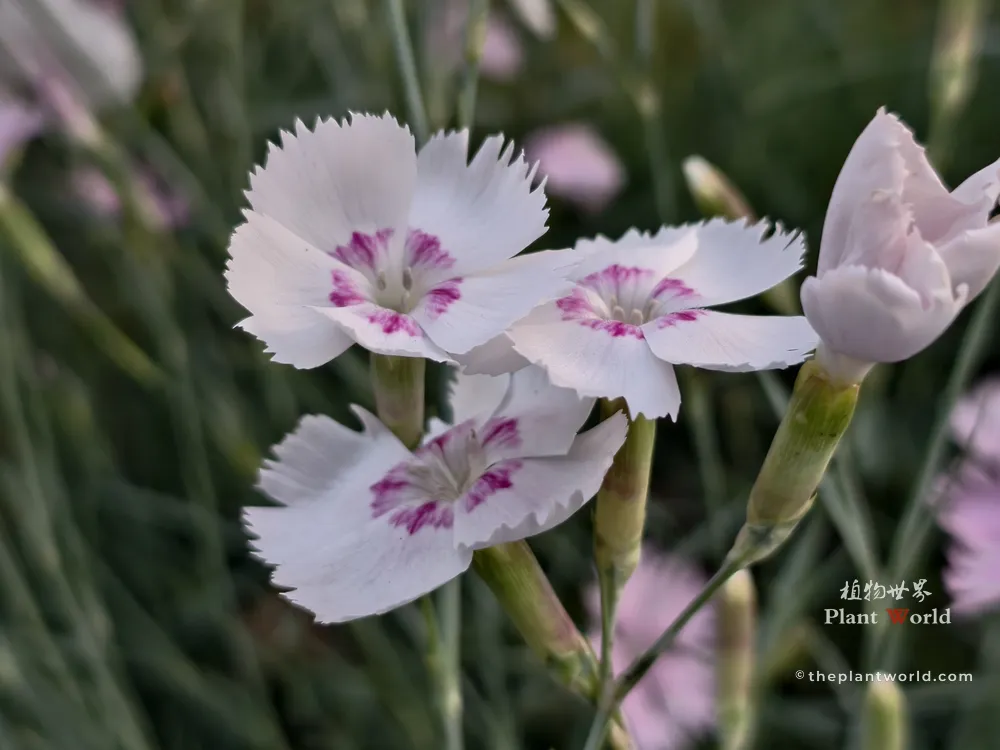
Growing China Pink: Quick Care Tips
The China pink is one of the easiest garden flowers to grow — fitting, given its place in Chinese plant culture as a symbol of resilience.
- Light: Full sun to partial shade. Flowers best in full sun.
- Soil: Well-drained, average to fertile soil. Tolerates poor, rocky soil — this is a flower that genuinely grows in stone crevices in the wild.
- Water: Moderate; drought-tolerant once established. Avoid overwatering and soggy soil.
- Bloom time: Late spring through summer; may rebloom in autumn in mild climates.
- Propagation: By seed (sow in spring or autumn), by cuttings, or by division in spring.
- Hardiness: Perennial in USDA zones 6–9; often grown as an annual in colder climates or as a biennial.
- Deadheading: Remove spent flowers to encourage continuous blooming.
Final Thoughts
The China pink (Dianthus chinensis) is far more than a low-growing border flower with pretty fringed petals. In Chinese culture, it is a flower of pure love, motherly devotion, resilience in adversity, and feminine beauty and talent. Its name — “stone bamboo” — tells the story of a plant that grows in rock crevices, has bamboo-like integrity, and blooms brightly regardless of whether anyone is watching.
From Li Bai’s palace robes embroidered with its pattern, to Wang Anshi’s metaphor of unrecognized talent, to the folk legend of the boy whose tears became a healing flower for his mother — the China pink carries a quiet but profound cultural weight. It reminds us that beauty can grow in the hardest places, that love can be quiet but deep, and that even the smallest flower can hold the largest meanings.
Whether you grow it in a rock garden, a border, or a container, the China pink brings not just color and charm to your garden — it brings a thousand years of Chinese cultural symbolism, rooted in stone and reaching for the sun.
More from The Plant World:
- Chinese Wingnut: The Romantic “Ingot Tree” and Its Cultural Charm
- Plum Blossom Meaning: Symbolism & Cultural Significance
- The Hidden Meanings Behind Red Plum Blossoms
- Chinese Wisteria: History, Symbolism, and Identification
- Peach Blossoms in China: History, Culture, and Symbolism
- Chinese Crepe Myrtle: Guide to Origins & Symbolism
- Ginkgo Leaf Meaning: 5 Secrets of This Ancient Fossil
- Chinese Loquat Tree: Guide to Benefits & History
- Rose of Sharon Tree: Guide to Meaning & Care
- Hosta Plant Benefits: 5 Surprising Uses & Planting Guide
- Strawberry Begonia Care: How to Grow Saxifraga Stolonifera
Discover more from The Plant World
Subscribe to get the latest posts sent to your email.