
Introduction
If you have ever wandered through Jiangnan’s winter landscapes, you may have noticed a striking tree standing out among bare branches. Without a single leaf, it is draped with clusters of small, round, golden-yellow fruits that hang like tiny golden bells swaying in the cold wind. This elegant and distinctive tree is Melia azedarach, widely known in Western horticulture as the Chinaberry Tree or Persian Lilac.
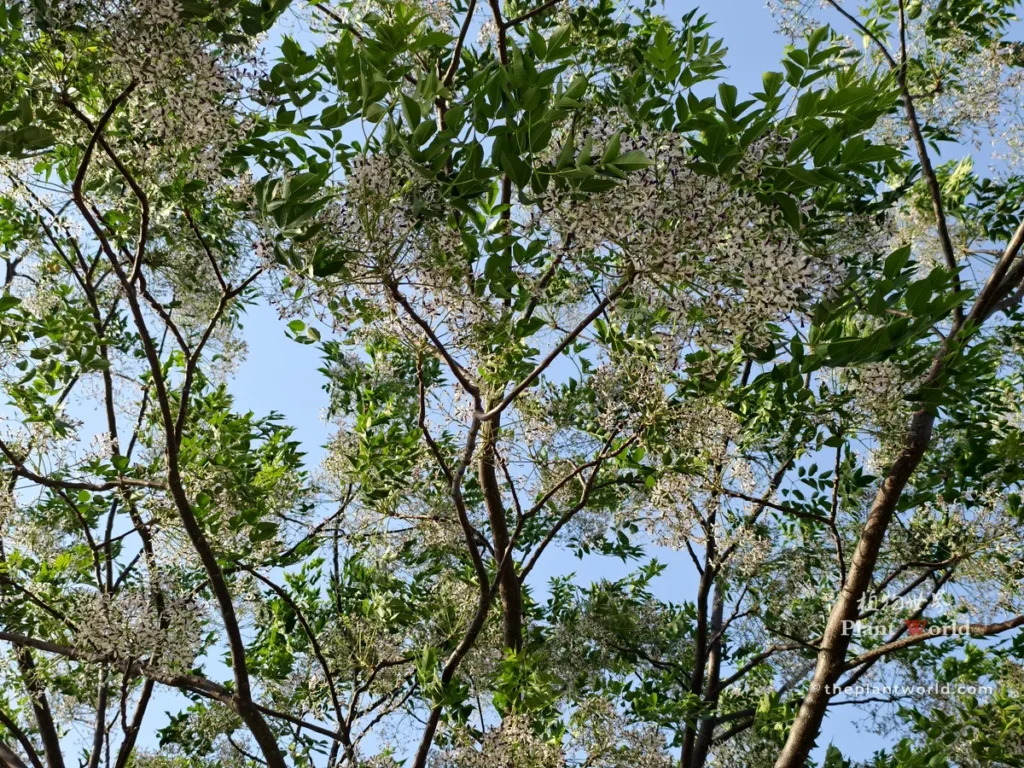
A native tree of China, the Chinaberry Tree offers unique botanical beauty across all four seasons: delicate purple blossoms in spring, lush feathery foliage in summer, and iconic golden berry clusters that persist on bare branches through autumn and winter. Deeply rooted in Chinese history, folklore, poetry, and traditional daily life, it is far more than an ordinary landscape tree—it carries thousands of years of oriental seasonal aesthetics and cultural memories.
- Introduction
- Plant Profile: What Is Melia azedarach?
- The Unique Origin of Its Chinese Name
- Cultural Symbolism: Sacred Trees in Ancient Chinese Legends
- Chinaberry Flower: The Final Bloom of Spring
- Dragon Boat Festival: The Tree That Honors Qu Yuan
- The Legend of “Lian Ting” & the Cao Family Legacy
- Practical & Ecological Uses of Melia azedarach
- Growing & Care Guide for Melia Azedarach
- Final Conclusion
- References
- More from The Plant World:
Plant Profile: What Is Melia azedarach?
- Scientific Name: Melia azedarach L.
- Common Names: Chinaberry Tree, Persian Lilac, Pride of India, Bead-tree
- Family: Meliaceae (Mahogany Family)
Melia azedarach is a fast-growing, medium-sized deciduous tree. Native to southern and eastern China, it grows widely across all regions south of the Yellow River and naturally extends to subtropical and tropical areas of Southeast Asia.
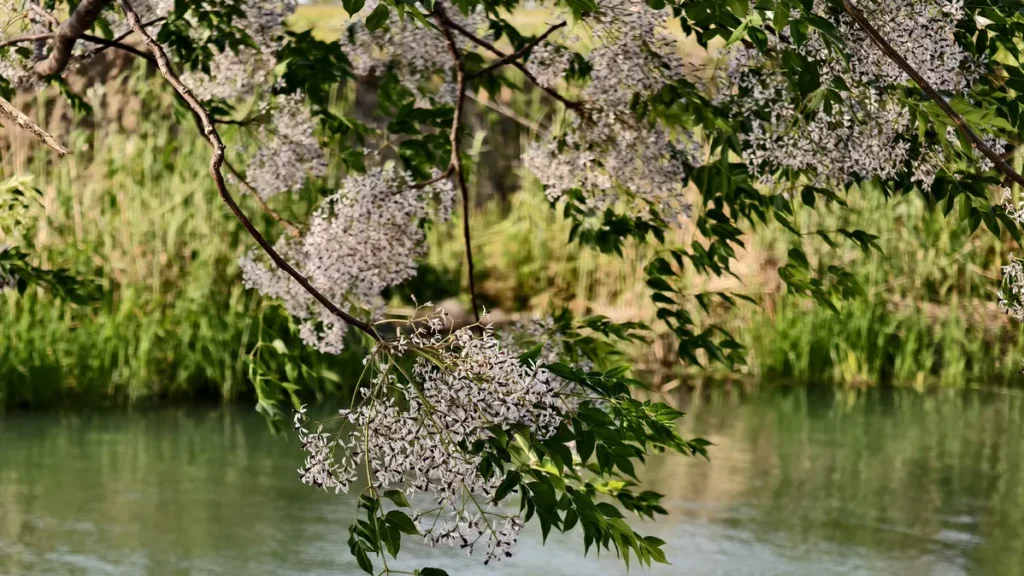
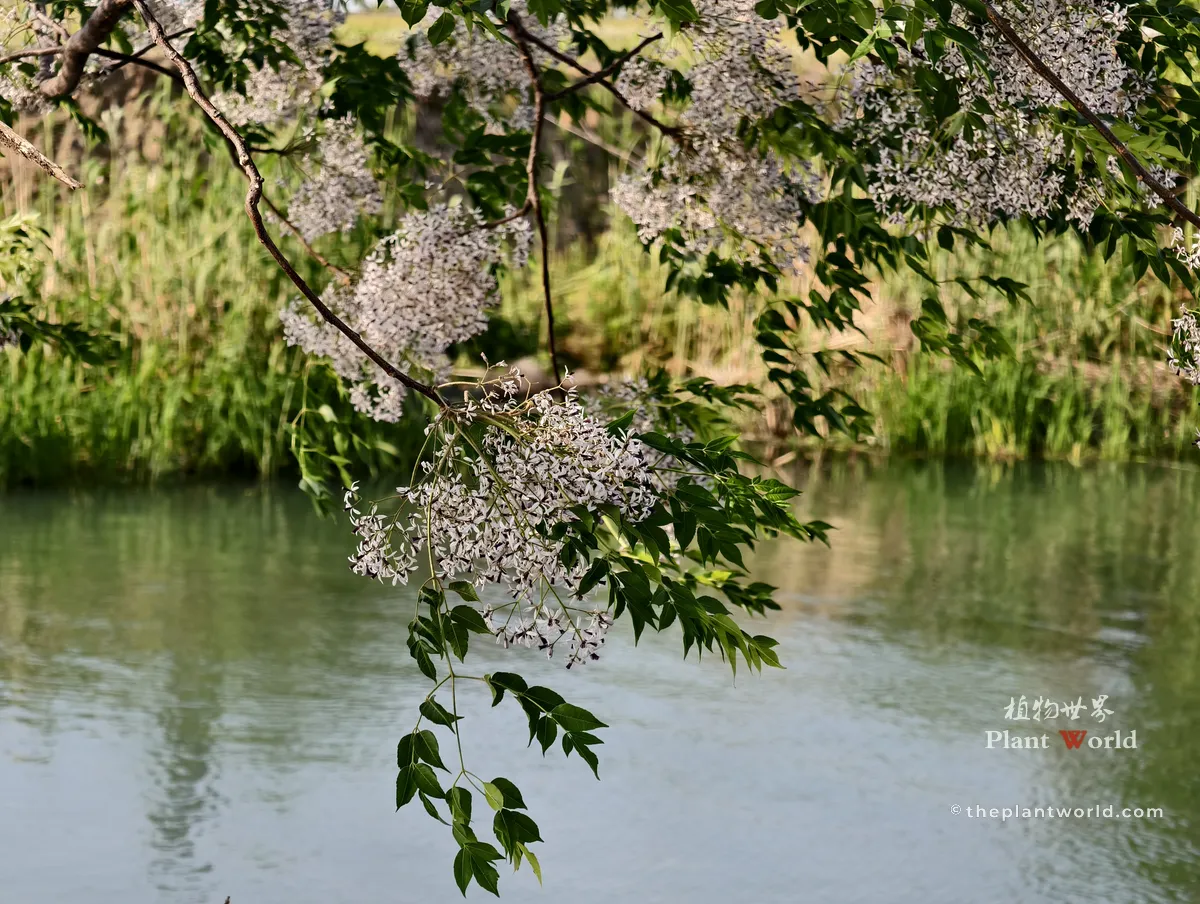
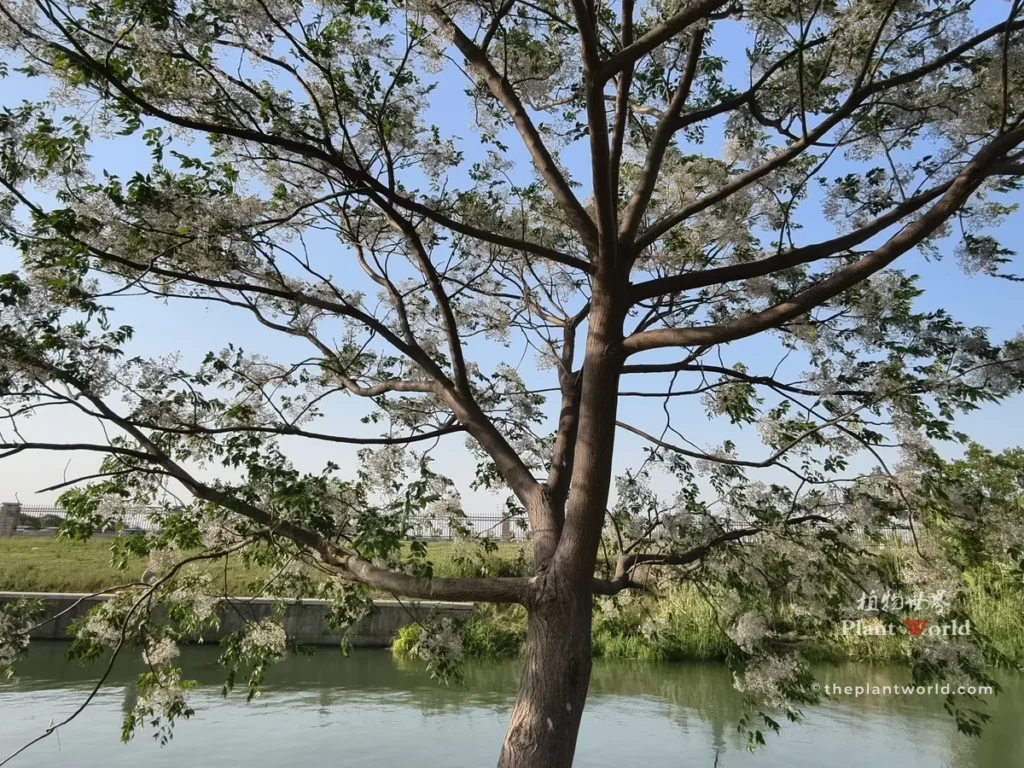
The tree features graceful 2–3 pinnately compound leaves, 20 to 40 cm long, with neat, slender serrated leaflets that create a light, airy canopy. In mid-to-late spring, the tree blooms with abundant drooping panicles of tiny lavender flowers. These five-petaled, pale purple blossoms carry a subtle, pleasant fragrance, known in Chinese aesthetics as “chinaberry purple”—a soft, dreamy hue exclusive to this seasonal tree.
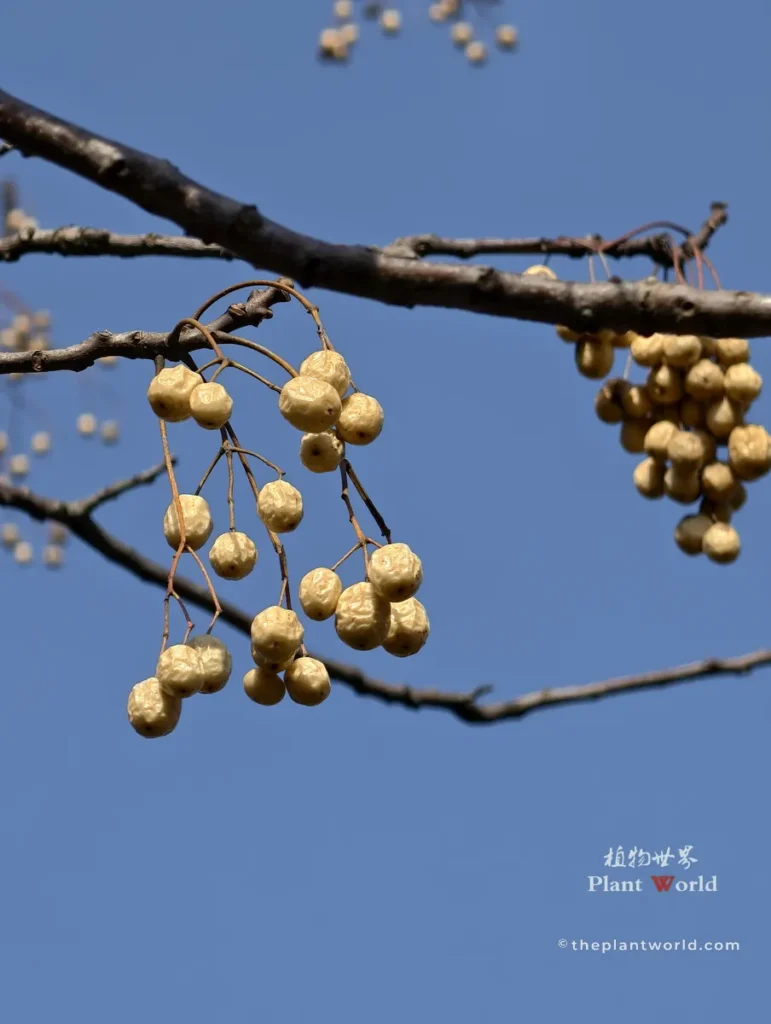
After flowering, it produces round green fruits that ripen into glossy golden-yellow berries in late autumn. Remarkably, these berries cling firmly to bare branches throughout winter, forming the tree’s most recognizable seasonal feature. For this reason, the fruits are affectionately nicknamed “golden bells” in China.

The Unique Origin of Its Chinese Name
Unlike most tree names derived from physical appearance, the traditional Chinese name for the Chinaberry Tree originates from an ancient craft technique recorded in Chinese classics.
In ancient times, people burned chinaberry branches and leaves into ash. Mixed with water, the alkaline ash was used to soak raw silk, making the fabric whiter, softer, and smoother. This refining process was called liàn (湅) in ancient Chinese. Thus, the tree was named Liàn (楝), also commonly translated as the “Refining Tree.”
This craft practice is documented in Zhouli (The Rites of Zhou), Artisan Records, as well as the ancient botanical commentary Erya Yi, confirming that the tree’s name honors its ancient industrial value of refining luxury silk fabrics.
Cultural Symbolism: Sacred Trees in Ancient Chinese Legends
The Chinaberry Tree holds an extraordinary status in ancient Chinese mythology and folklore, dating back more than 2,000 years.
In the Eastern Han folk classic Fengsu Tongyi (Customs and General Meanings), the legendary divine beast Xiezhi—a creature symbolizing absolute justice and integrity—was said to feed exclusively on chinaberry leaves.
For ancient people, if sacred birds and righteous beasts favored this tree, it was no ordinary plant. The Chinaberry Tree therefore symbolizes purity, moral integrity, and a noble spirit in traditional Chinese culture.
Chinaberry Flower: The Final Bloom of Spring
In traditional Chinese phenology, there are the Twenty-Four Flower Wind Terms (Ershisi Fan Hua-Xin-Feng) that mark the precise progression of seasons through botanical blooms. While the early spring cycle begins beautifully with the deeply revered plum blossom meaning, the chinaberry flower serves as the grand finale that closes out the entire spring season.
Known as the “late spring guest,” chinaberry blooms arrive in May, right before the arrival of the early summer grain seasons. Its tiny purple petals fall like soft purple snow, creating a poetic scene described by ancient poets as “purple blossoms drifting, faint fragrance spreading.”
The blooming of chinaberry flowers always signals the fading of spring, inspiring countless nostalgic verses from Chinese literati across the Tang, Song, and Yuan dynasties regarding the fleeting nature of time and the beauty of seasonal transition.
Dragon Boat Festival: The Tree That Honors Qu Yuan
The Chinaberry Tree is deeply intertwined with China’s traditional Dragon Boat Festival (Duanwu Festival), with a well-documented ancient origin story.
After the patriotic poet Qu Yuan drowned in the Miluo River, local people offered rice sacrifices in bamboo tubes to honor his spirit. According to the Continued Qixie Records and Jingchu Suishi Ji, locals later received a divine message stating that river dragons were stealing the sacrificial rice. To prevent this, people began sealing the bamboo tubes with bitter chinaberry leaves and tying them with colored silk threads—materials that eastern dragons feared.
This ancient custom evolved into the traditional practice of making zongzi (glutinous rice dumplings). People also wore chinaberry leaves in their hair and wrapped colored threads around their wrists during Duanwu to pray for safety and longevity.
The Legend of “Lian Ting” & the Cao Family Legacy
One of the most touching cultural stories of the Chinaberry Tree connects directly to the heritage behind the great classical masterpiece A Dream of Red Mansions (Hong Lou Meng).
During the Qing Dynasty, Cao Xi, great‑grandfather of the great‑novelist Cao Xueqin, planted a majestic chinaberry tree in his official residence courtyard upon taking his post in Jiangning. As the tree thrived and grew lush shade, he built a beautiful pavilion beneath it named Lian Ting (Chinaberry Pavilion).
His son Cao Yin (Cao Xueqin’s grandfather) cherished this precious family legacy tied to the tree. He adopted “Lian Ting” as his official literary pseudonym and published numerous famous works under this name, making the Chinaberry Tree a cherished symbol of family heritage, literary excellence, and elegant scholarly spirit.
Practical & Ecological Uses of Melia azedarach
Beyond its ornamental and cultural value, the Chinaberry Tree is a highly practical, multi-purpose tree in East Asian folk tradition.
- Timber Value: Fast-growing with tough, smooth, beautifully grained wood, it is heavily used for construction, furniture, interior decoration, and traditional musical instrument crafting. Folk wisdom states it grows into rafter-quality wood in three years, pillar-quality wood in six years, and sturdy structural beams in nine years.
- Natural Organic Pesticide: Its roots, bark, leaves, and fruits contain melia toxin, a natural insecticidal ingredient widely used in traditional sustainable agriculture. While the hollyhock flower holds long‑standing folk‑herbal applications for soothing human skin irritations and insect stings, chinaberry stands apart as a potent botanical source for agricultural pest‑control.
- Traditional Folk Handicrafts: In regional folk culture, processed root and bark powders were historically utilized in traditional skin-soothing preparations, while the hard, polished fruit kernels were crafted into delicate, durable handmade bracelets and artisanal beads.
Growing & Care Guide for Melia Azedarach
Hardiness
- USDA Hardiness Zones: 7–11. It is highly adaptable to warm temperate, Mediterranean, and subtropical climates. It shows excellent tolerance to poor soils and urban air pollution.
Light & Soil
- Requirements: Prefers full sun for optimal flowering and fruit production. It easily adapts to most soil types (sandy, loamy, clay) as long as the site is well-draining. It is an extremely low-maintenance option once established.
Water & Maintenance
- Highly drought-tolerant. Water regularly during the first growing season to establish a deep root system; minimal irrigation is needed for mature trees. Prune out dead or crossing branches in late winter during dormancy to maintain its airy canopy shape.
⚠️ Important Safety Note: Chinaberry fruits and leaves are toxic to humans, livestock, and common pets if ingested. Even traditional folk external uses also require caution. Enjoy the tree strictly for ornamental and architectural use; do not consume any part of the plant.
🌐 Invasiveness Reminder: In parts of the southeastern United States, South Africa, and Australia, Melia azedarach is classified as a naturalized invasive species due to its rapid growth and aggressive self‑seeding habit. Please plant responsibly and check local conservation guidelines before introducing it to open, uncontrolled wild settings.
Final Conclusion
Melia azedarach, the charming Chinaberry Tree, is a unique treasure of Chinese native flora and a memorable Chinese Garden Plants. It blooms the last purple flowers of spring, bears golden winter bells, and carries 2,000 years of craft history, poetic sentiment, and traditional festival customs.
More than a mere landscape tree, it is a living carrier of Jiangnan’s seasonal romance and traditional Chinese cultural aesthetics. For gardeners seeking low-maintenance ornamental trees with profound cultural stories, the Chinaberry Tree remains an unparalleled, poetic choice.
References
- Flora of China (English Edition): Melia azedarach Species Account & Meliaceae Taxonomy — Supported by the Missouri Botanical Garden and Harvard University Herbaria.
- Plants of the World Online (POWO): Melia azedarach L. Native Range and Synonyms — Hosted by the Royal Botanic Gardens, Kew.
- Royal Horticultural Society (RHS): Melia azedarach (Pride of India) Plant Cultivation Notes — The premier British horticultural authority.
- Plant Plus of China (PPBC): National Scientific Specimen Photographic Archive for Melia — Authoritative database for East Asian native flora.
- The Book of Rites · Artisan Records (Zhou Dynasty) & Jingchu Suishi Ji (Six Dynasties) — Historical and Cultural Literary References.
More from The Plant World:
- Chinese Wingnut: The Romantic “Ingot Tree” and Its Cultural Charm
- Plum Blossom Meaning: Symbolism & Cultural Significance
- The Hidden Meanings Behind Red Plum Blossoms
- Chinese Wisteria: History, Symbolism, and Identification
- Peach Blossoms in China: History, Culture, and Symbolism
- Chinese Crepe Myrtle: Guide to Origins & Symbolism
- Ginkgo Leaf Meaning: 5 Secrets of This Ancient Fossil
- Chinese Loquat Tree: Guide to Benefits & History
- Rose of Sharon Tree: Guide to Meaning & Care
- Hosta Plant Benefits: 5 Surprising Uses & Planting Guide
- Strawberry Begonia Care: How to Grow Saxifraga Stolonifera
Discover more from The Plant World
Subscribe to get the latest posts sent to your email.