
Introduction
If autumn were a grand garden banquet, the undeniable star would be the Golden Rain Tree, known botanically as Koelreuteria paniculata. A native Chinese deciduous tree with thousands of years of cultivation history, it transforms quietly through spring and summer, then bursts into dramatic splendor as September arrives.
Tall, graceful, and multi-seasonal, it wears lush green foliage as its gown, clusters of golden blossoms as its crown, and vivid rosy lantern pods as sparkling jewelry. When autumn breezes sweep through its branches, the rustling canopy creates a soft musical rhythm, celebrating the most beautiful seasonal transition of the year.
Plant Profile & Key Species Distinction
- Scientific Name: Koelreuteria paniculata Laxm.
- Common Names: Golden Rain Tree, Goldenrain Tree, Chinese Varnish Tree, Pride of India, Doctor Tree
- Family: Sapindaceae (Soapberry Family)
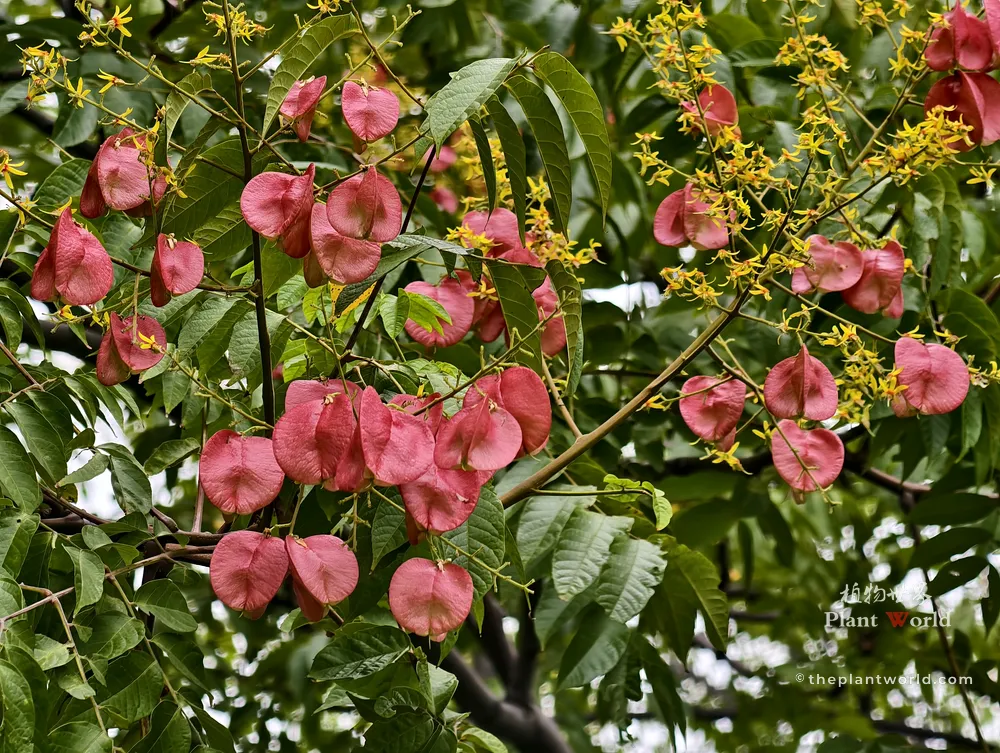
Native to northern and central China and widely naturalized across East Asia, Koelreuteria paniculata was highly prized in imperial courtyards before being introduced to Europe and North America in the 18th century. It is a medium-sized deciduous tree valued for its rare three-season ornamental performance: fresh green summer foliage, golden mid-summer blooms, and rosy lantern-shaped autumn seed pods.
📌 Three Similar “Golden Tree” Species – Critical Distinction
Three entirely unrelated trees carry similar common names worldwide. To ensure botanical accuracy, do not confuse them:
- Koelreuteria paniculata (Golden Rain Tree): Cold-hardy temperate species, classic Chinese garden tree, yellow flower clusters, pink-orange lantern pods.
- Koelreuteria elegans subsp. formosana (Flamegold Tree): Subtropical Taiwanese variant featuring brighter red pods; significantly less cold-tolerant with twice-pinnate leaves.
- Cassia fistula (Golden Shower Tree): A tropical legume with long, drooping flower racemes, completely unrelated to the Koelreuteria genus, rarely surviving temperate winters.
Seasonal Beauty: Blooms, Foliage and Lantern Pods
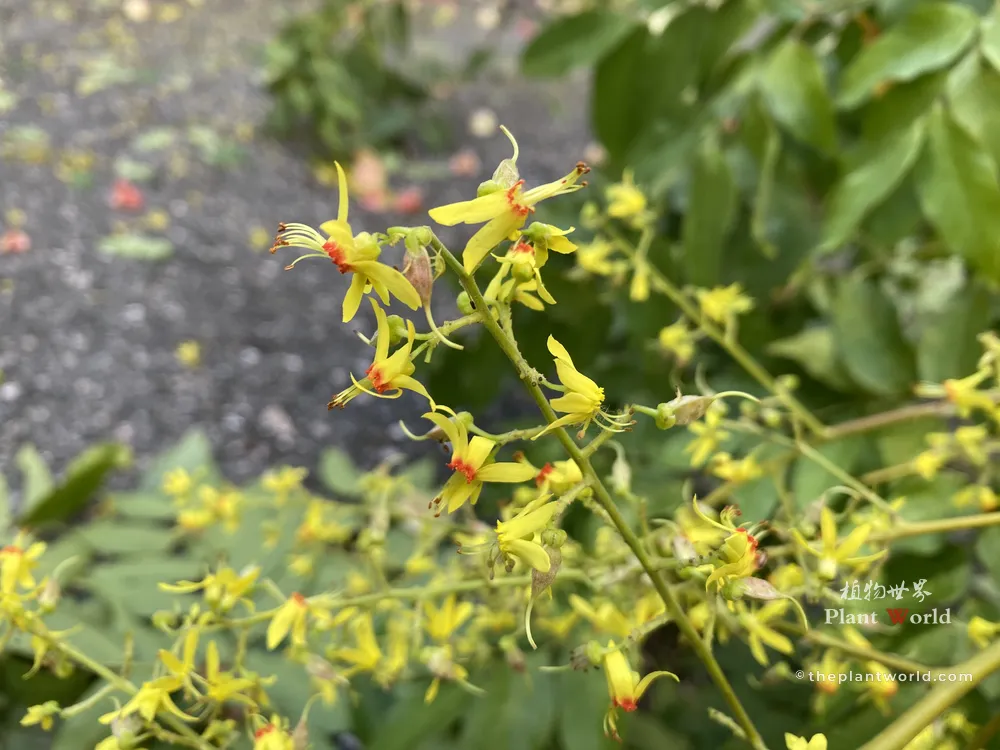
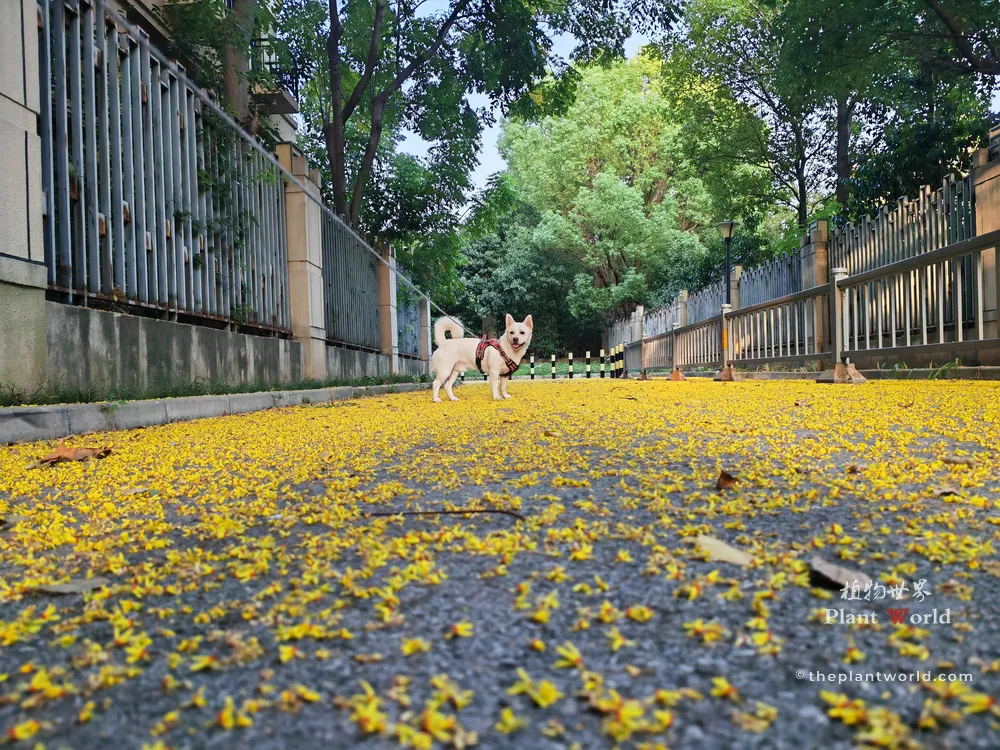
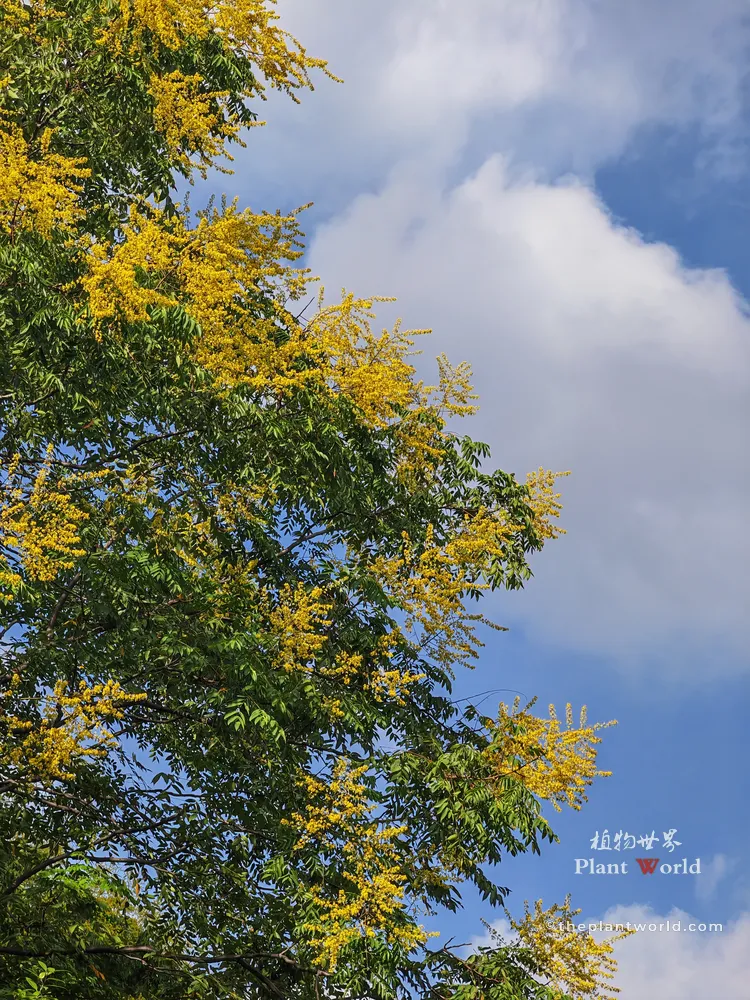
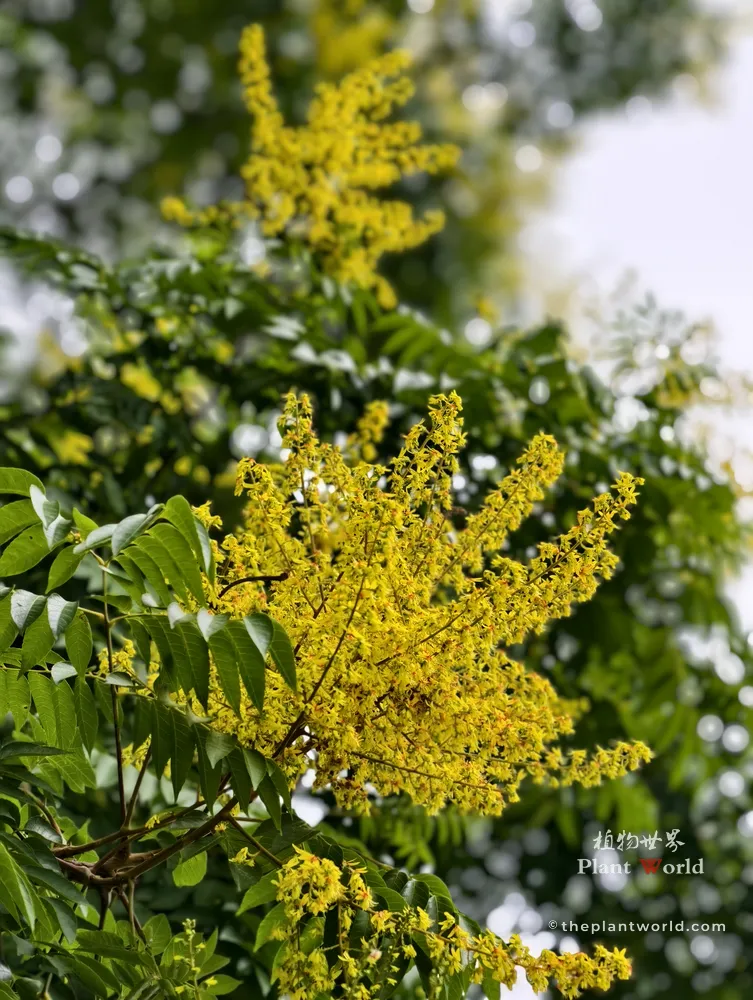
The Golden Rain Tree offers a stunning progressive color transformation throughout the growing season. In mid-summer, abundant tiny golden flowers bloom in large, upright panicles, releasing a delicate sweet fragrance. Countless petals eventually drift down in a gentle wind, covering sidewalks, lawns, and courtyards with a soft golden carpet—the iconic “golden rain” that gives the tree its romantic English name.
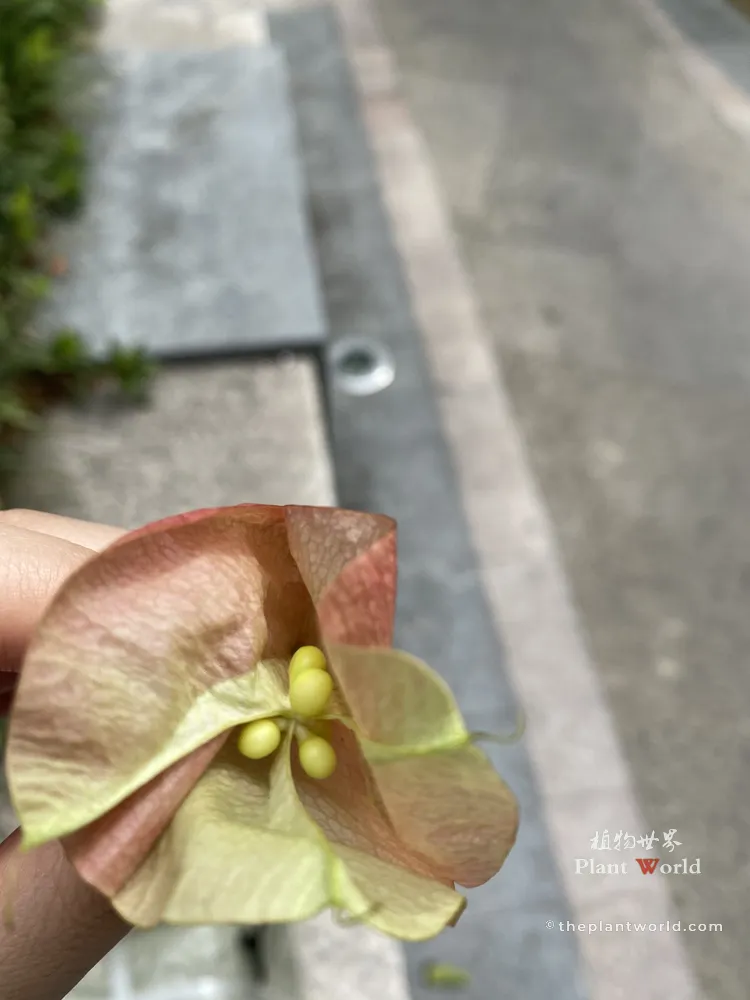
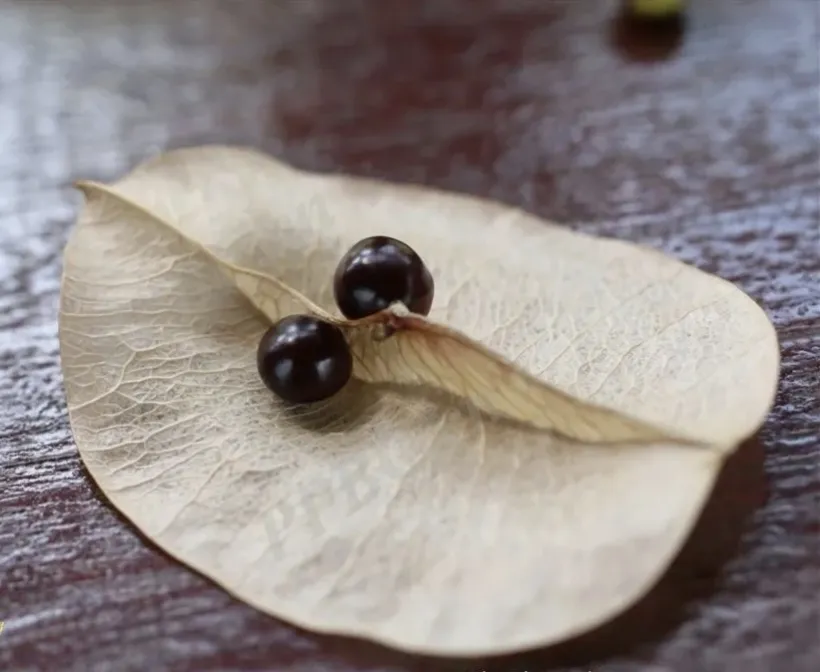
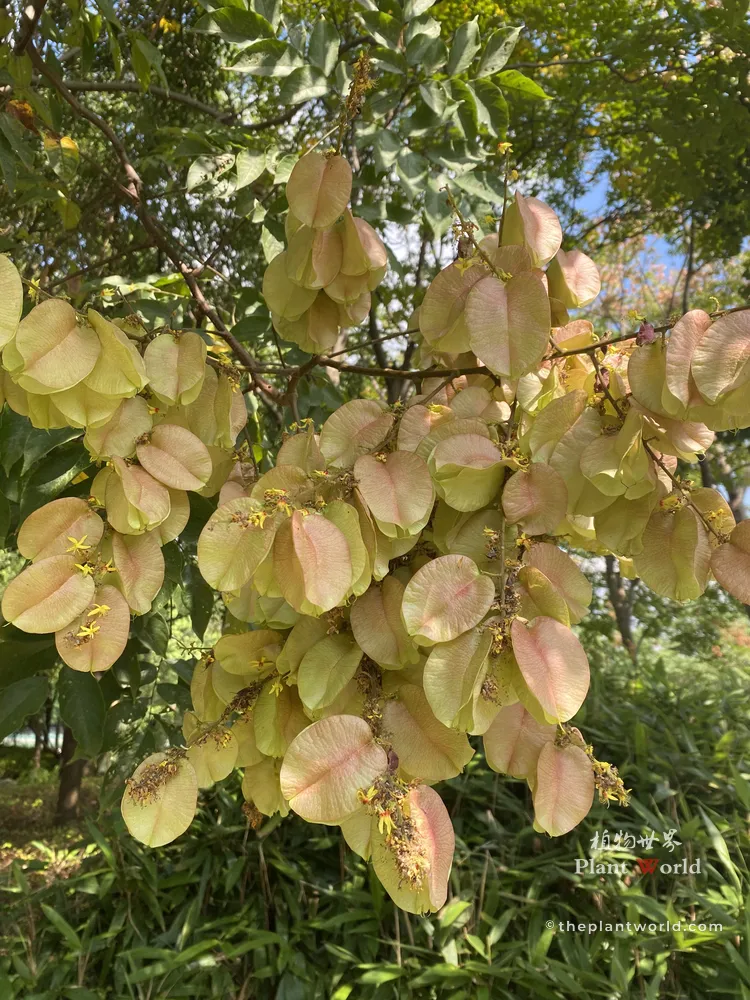
After flowering, green triangular seed pods develop gradually. As autumn sunlight grows brighter and cool winds set in, these papery, three‑sided lantern‑shaped capsules ripen from pale green to soft peach, coral, and finally vivid crimson. Each pod has thin, wrinkled, delicate skin and encloses round, hard, jet‑black seeds inside.
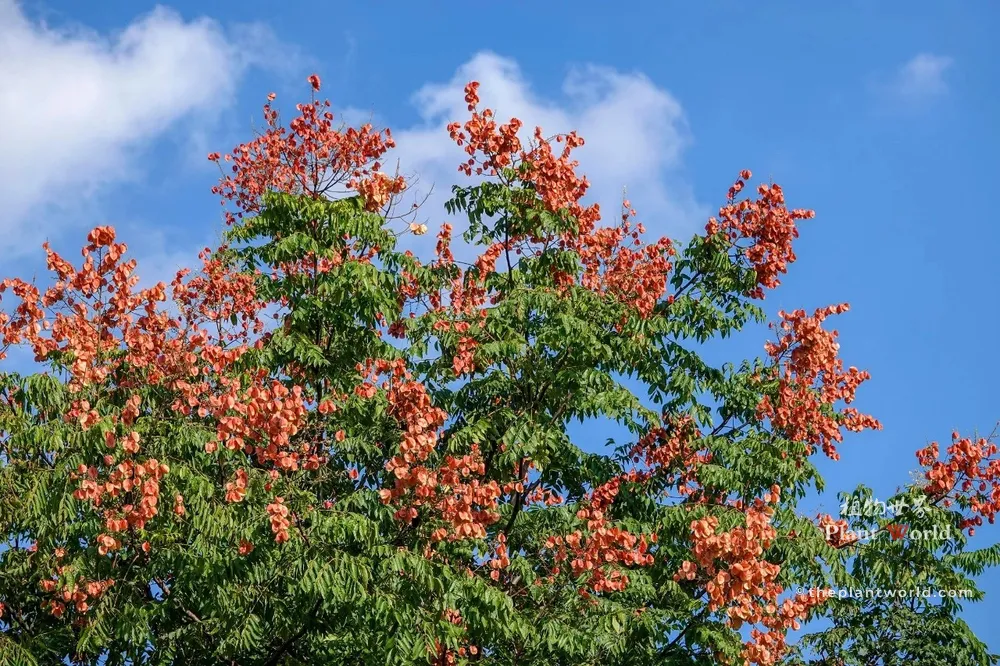
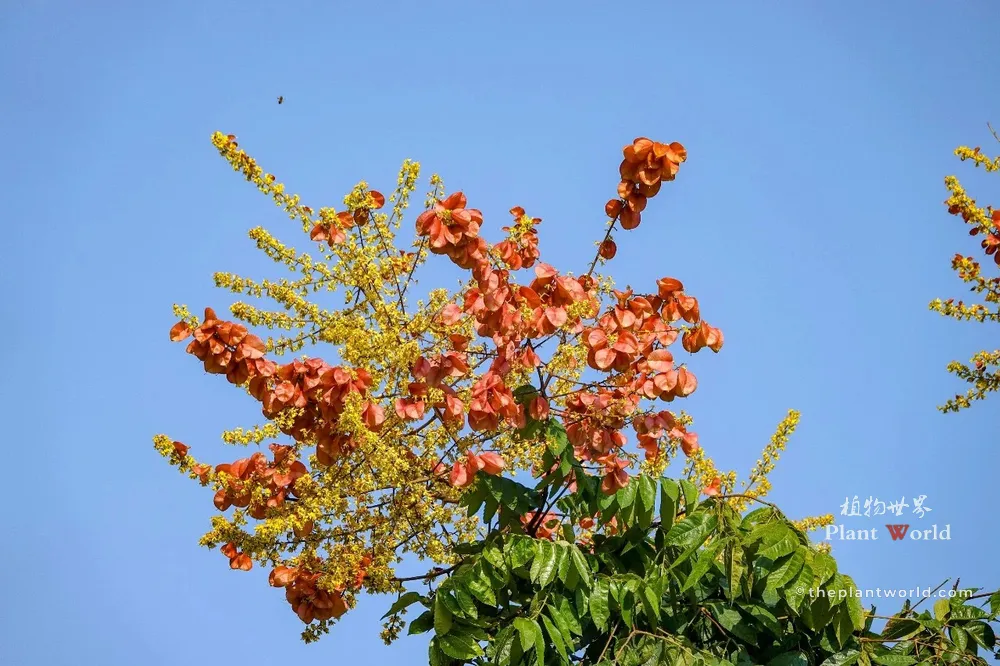
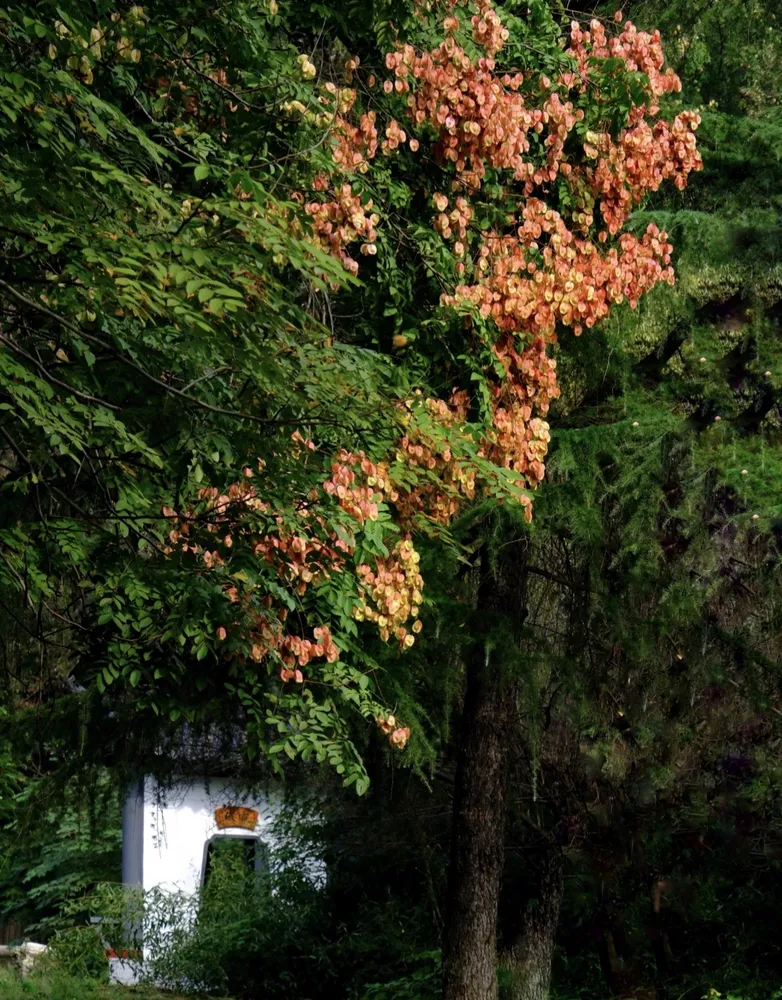
The tree’s most breathtaking phase arrives in early fall, when green leaves, golden late-blooms, and rosy red pods coexist on the same canopy, creating an unrivaled, multi-layered palette.
Cultivation & Care Guide for the Golden Rain Tree
Climate & Hardiness
- USDA Hardiness Zones: 5–9. It is extremely adaptable, highly cold-hardy, and drought-tolerant once established. It easily thrives in poor, compacted, dry, or slightly saline soils, showing remarkable tolerance for limestone ground.
Light & Placement
- Requirements: Prefers full, direct sun (at least 6 hours daily) for maximum summer flowering and intense autumn cone/seed coloration; it can tolerate light partial shade but may become leggy.
- Garden Design: Ideal as a standalone landscape specimen tree, street tree, or courtyard focal point. Its open, airy canopy provides a beautiful, translucent dappled shade that easily accommodates structural evergreens like Buddhist pine for border design without completely suppressing undergrowth flora. Long-valued for centuries, it is a classic Chinese garden plant well-suited for traditional courtyards and oriental-style park layouts.
Soil & Water
- It adapts to almost all well-draining soil types, from acidic loams to alkaline clays. However, you must avoid persistent waterlogging, which quickly causes root rot. Established trees require minimal supplemental irrigation.
Pruning & Maintenance
- Prune in late winter during dormancy to remove weak, crossing, or damaged branches and maintain a neat upright shape. Young trees grow slowly initially, then accelerate growth dramatically with maturity. Regular light trimming promotes a sturdy framework.
⚠️ Important Invasiveness & Self-Seeding Warning:
Koelreuteria paniculata self-seeds aggressively in warm, frost-free regions. The abundant round seeds spread widely via wind and birds. In parts of the southern United States (such as Florida) and warmer zones of Australia, it is classified as potentially invasive. Deadhead spent pods before they split open if self-sowing is unwanted in your region. Watch for fungal wilt disease on aging specimens.
Chinese Cultural Heritage & Ancient Legends
The “Doctor Tree”: Ancient Symbol of Scholar Honor
One of the tree’s most elegant traditional names is the Doctor Tree (大夫树 / Dafu Shu). As recorded in the Eastern Han Dynasty ritual classic Baihu Tong Delun, ancient Chinese imperial hierarchy strictly regulated the specific species of trees planted around tombs to reflect social rank:
- Emperors: Pine trees (Pinus)
- Nobles/Princes: Cypress trees (Cupressus)
- Senior Scholar-Officials (Dafu): Golden Rain Trees (Koelreuteria)
- Lower Scholars: Pagoda trees (Styphnolobium)
- Commoners: Willow trees (Salix)
For millennia, planting a Golden Rain Tree symbolized high scholarship, academic dignity, integrity, and noble status. The famous Tang Dynasty poet Zhang Yue referenced this honored tree in his courtly verses, praising its elegant, structural presence in classical scholar gardens.
Mythic Origin in the Shan Hai Jing
The ancient mythological classic Shan Hai Jing (Classic of Mountains and Seas) records the earliest mystical legend of the vine: On the sacred Yunyu Mountain grew a divine Luan (栾) tree featuring yellow trunks, red branches, and shimmering green leaves, regarded as a holy medicinal tree highly cherished by ancient deities. This pre-Qin textual record proves the tree’s profound cultural status at the dawn of Chinese civilization.
Historical Planting & Traditional Uses
As documented in Shen Kuo’s famous Song Dynasty text Dream Pool Essays, Golden Rain Trees were widely planted in Han-dynasty imperial courtyards as premium shade trees. Centuries later, the Qing Dynasty botanical work Plant Illustrated Manual praised it poetically: “Its crimson glow easily outshines the sunset haze, adorning the mountains earlier than autumn frost leaves.”
Ancient communities utilized every part of the tree:
- Culinary & Dyeing: Young spring shoots were historically eaten after blanching to remove bitterness. The leaves were harvested for a natural blackish‑blue dye, while the golden summer flowers produced a vibrant yellow plant dye, similar to the ancient dye‑making applications of Gardenia jasminoides.
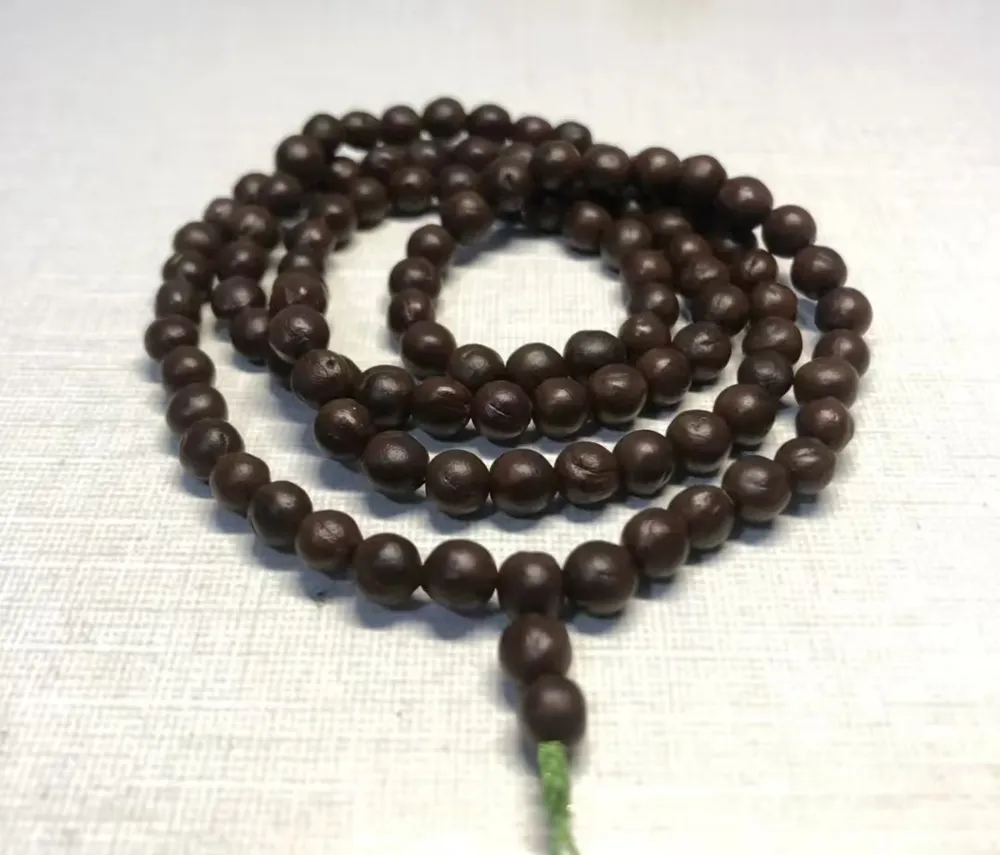
- Prayer Beads: The hard, perfectly round black seeds—colloquially named Muluanzi (木栾子)—were meticulously polished, drilled, and crafted into high-end Buddhist prayer beads and protective bracelets.
The “Lucky Money Tree”
In folk tradition, the tree’s round, inflated seed pods resemble traditional coin pouches, earning it the beloved household nickname Money Tree (摇钱树). Planted in home courtyards, it symbolises incoming good fortune, prosperity, thriving wealth, and joyful family blessings.
Final Conclusion
The Golden Rain Tree (Koelreuteria paniculata) is a tree of quiet botanical duality. For most of the spring and early summer, it remains humble and understated, blending gently into the green background. Yet once late summer turns to autumn, it takes center stage, staging a magnificent seasonal performance with golden floral showers and rosy lantern canopies.
Combining exceptional urban hardiness, low-maintenance vigor, dramatic three-season color shifts, and profound Chinese cultural heritage—serving simultaneously as the dignified Dafu tree for scholars and the auspicious Money Tree for households—it stands as an unparalleled addition for modern landscape designers seeking a tree with deep narrative roots and striking seasonal beauty.
References
- Shan Hai Jing (Classic of Mountains and Seas) & Baihu Tong Delun (White Tiger Hall Discourses): Classical Han Dynasty Imperial Ritual Records.
- Dream Pool Essays (Mengxi Bitan): Written by Shen Kuo (Song Dynasty) — Historical Scientific and Botanical Accounts.
- Plant Illustrated Manual (Zhiwu Mingshi Tukao): Written by Wu Qijun (Qing Dynasty) — Classical Horticultural Classification.
- Royal Horticultural Society (RHS): Koelreuteria paniculata (Golden Rain Tree) Cultivation & Hardiness Profile — London, UK.
- USDA & Center for Invasive Species Ecosystem Research: Ecological Impact Data on Koelreuteria Self-Seeding Tendencies.
Disclaimer
Traditional edible, medicinal, and dyeing uses documented here are shared strictly as historical and cultural folk records. This article serves botanical reference purposes only. Do not consume tree parts or apply homemade plant dyes without professional botanical guidance.
More from The Plant World:
- Chinese Wingnut: The Romantic “Ingot Tree” and Its Cultural Charm
- Plum Blossom Meaning: Symbolism & Cultural Significance
- The Hidden Meanings Behind Red Plum Blossoms
- Chinese Wisteria: History, Symbolism, and Identification
- Peach Blossoms in China: History, Culture, and Symbolism
- Chinese Crepe Myrtle: Guide to Origins & Symbolism
- Ginkgo Leaf Meaning: 5 Secrets of This Ancient Fossil
- Chinese Loquat Tree: Guide to Benefits & History
- Rose of Sharon Tree: Guide to Meaning & Care
- Hosta Plant Benefits: 5 Surprising Uses & Planting Guide
- Strawberry Begonia Care: How to Grow Saxifraga Stolonifera
Discover more from The Plant World
Subscribe to get the latest posts sent to your email.