
Introduction
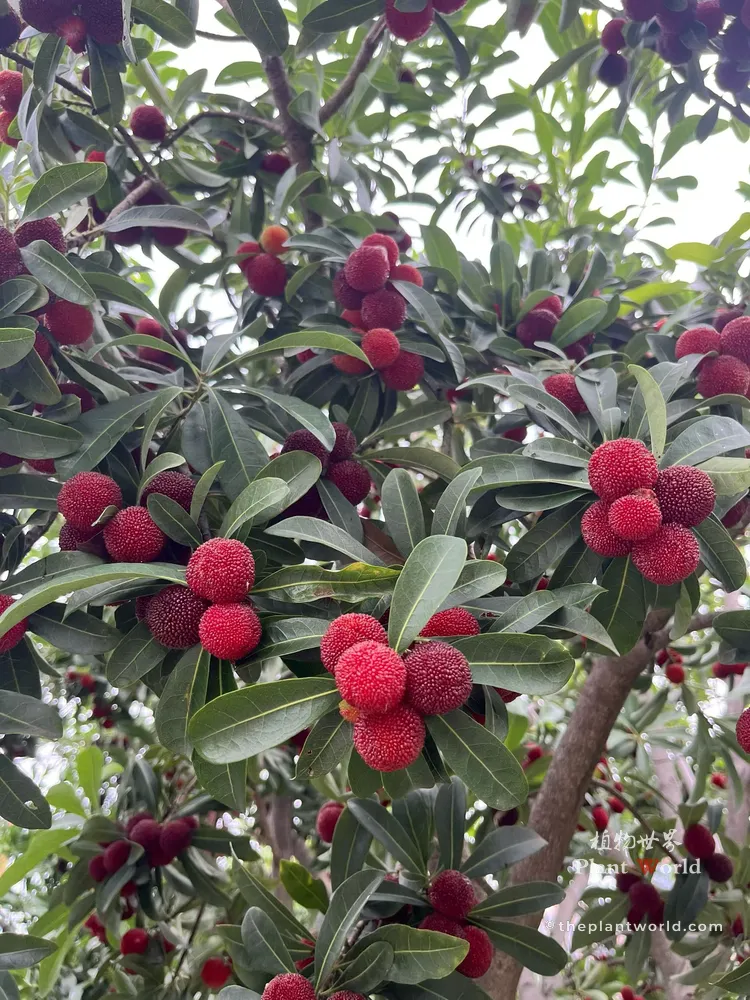
Every June, as the plum rains settle over Jiangnan, something else arrives first — clusters of deep crimson fruit glowing among the evergreen leaves. This is the Chinese Bayberry, known in China as yángméi (杨梅), botanically Morella rubra (formerly Myrica rubra). A round fruit covered in tiny, tender, juice-filled flesh filaments, it bursts on the tongue with a bright, sweet-tart flavor and a cool herbal aroma that belongs to early summer and nowhere else.
The Song Dynasty poet Fang Yue (方岳) captured it perfectly:
“In bamboo baskets, rain-washed, just picked,
Granular and cool, the color of a crane’s crimson crown.
Everyone loves it for its honeyed sweetness,
But the true wonder is that hint of sour.”
A basket of rain-fresh yangmei — red as cinnabar, sweet with just the right edge of acid — is the most anticipated taste of the Jiangnan summer. A member of the Myricaceae family and an evergreen tree native to southern China, the Chinese Bayberry is one of the oldest cultivated fruit trees in Chinese history, with a cultural depth matched by few other fruits. From Sima Xiangru’s Rhapsody on the Imperial Park in the Han Dynasty, over two thousand years ago, to the orchards of Zhejiang and the lake-side hills of Wuxi today, yangmei has always been both a flavor and a feeling.
- Introduction
- Plant Profile: What Is the Chinese Bayberry?
- ⚠️ Toxicity, Pet Safety & Preparation
- Cultivation & Care Guide
- Regional Highlight: Mashan Yangmei (Wuxi)
- Cultural Heritage & Poetic Symbolism
- Practical Traditional Uses
- Health Benefits of Chinese Bayberry
- Garden and Landscape Value
- Conclusion
- References
- More from The Plant World:
Plant Profile: What Is the Chinese Bayberry?
- Scientific Name:Morella rubra Siebold & Zucc. (basionym Myrica rubra (Lour.) Siebold & Zucc.)
- Common Names: Chinese Bayberry, Yangmei, Yumberry, Waxberry, Red Bayberry
- Chinese Name: 杨梅 (yángméi); also 圣生梅 (shèngshēng méi), 白蒂梅 (báidì méi)
- Family: Myricaceae (Bayberry / Sweet Gale Family)
- Genus:Morella
- Native Range: Southeastern and south-central China (south of the Yangtze River), Taiwan, Japan, and the Korean Peninsula
- Growth Habit: Evergreen tree, reaching 15 m or more; grey bark; rounded crown
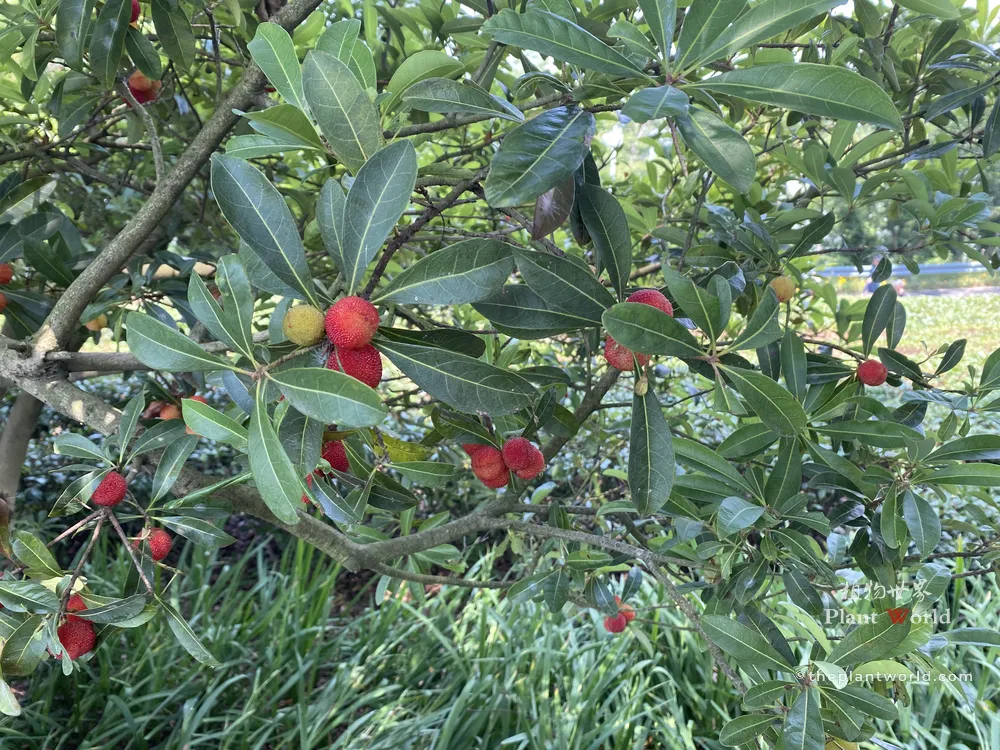
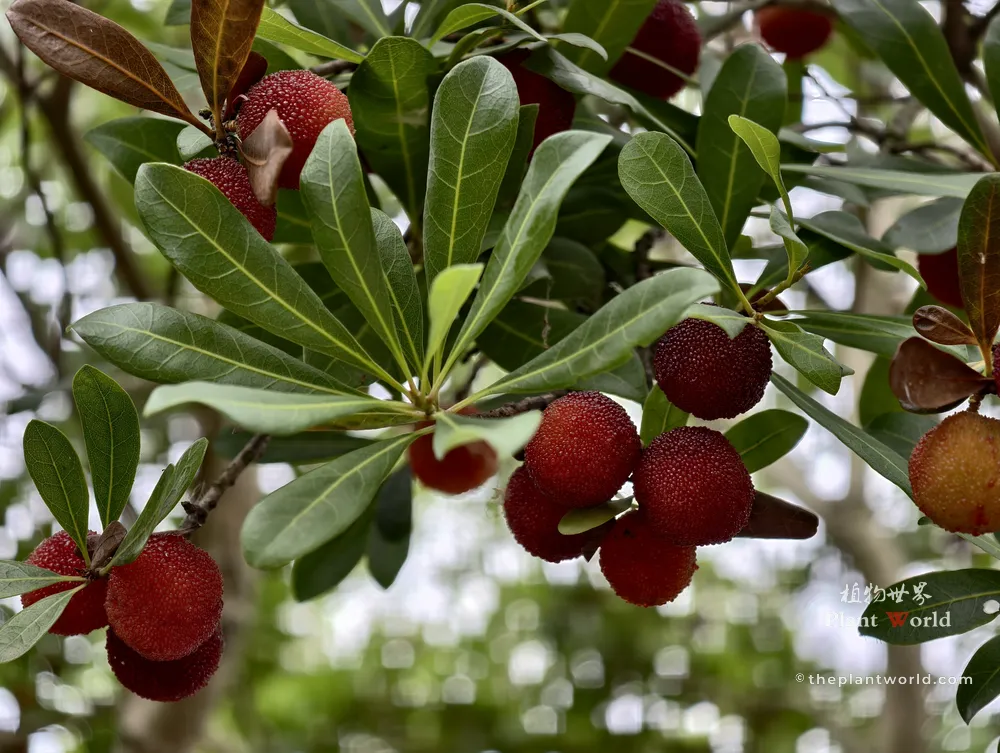
The Chinese Bayberry is a classic subtropical evergreen fruit tree with a graceful form and dense foliage. Its leaves are leathery, oblanceolate or narrowly elliptic, 6–16 cm long, deep glossy green above and paler beneath, with entire or occasionally shallowly toothed margins. The root system is extensive and forms mycorrhizal associations, allowing the tree to thrive in poor, acidic red soils — which is why it is so common on the hillsides of southern China. Along with loquats and citrus, it is one of the most evocative members of the Chinese fruit tree tradition.
The Fruit: A Drupe, Not a Berry
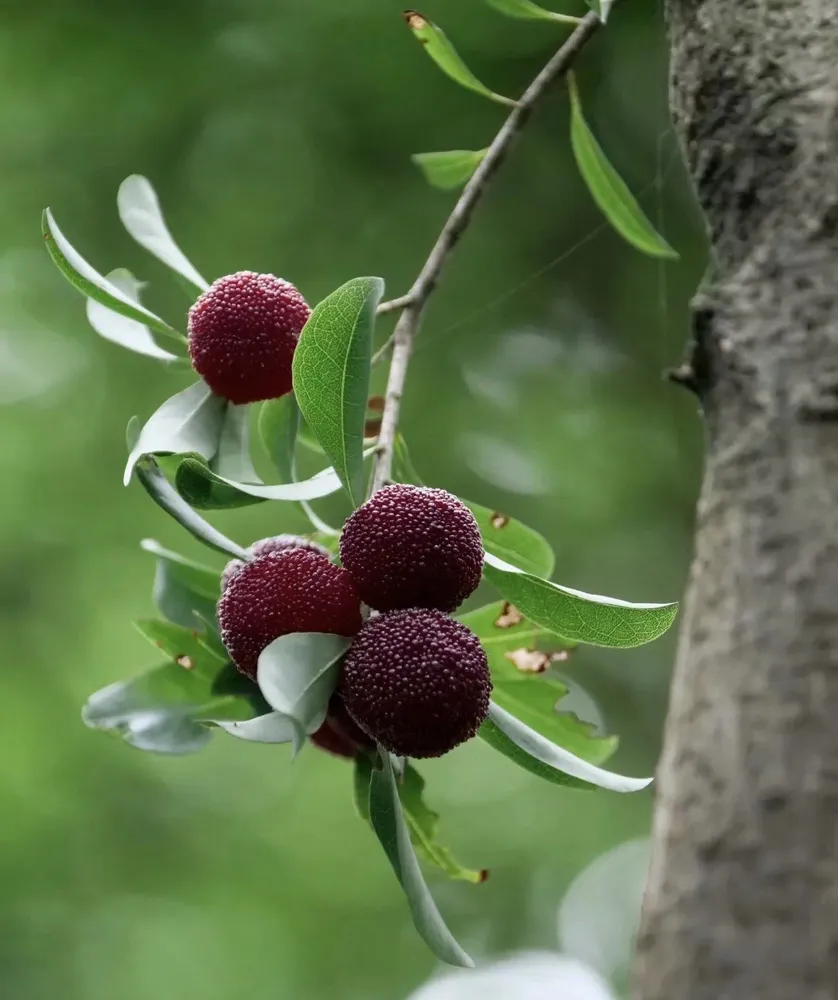
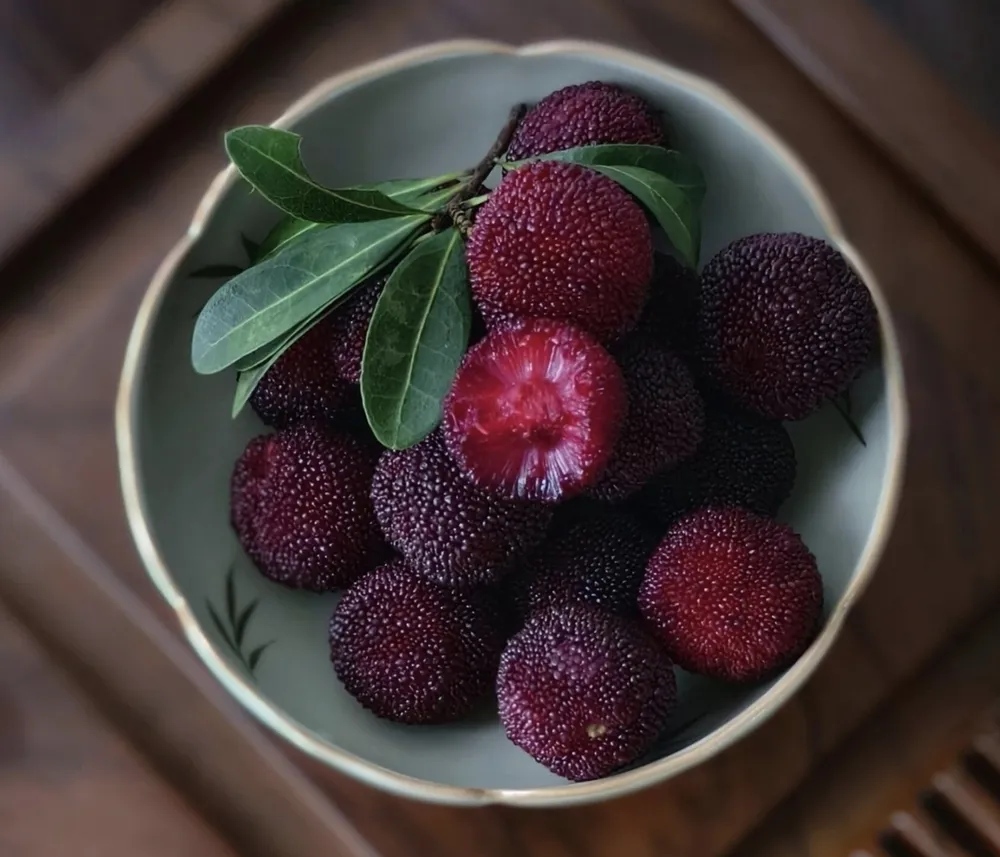
Many people assume yangmei is a berry. Botanically, it is a drupe — a stone fruit. The edible, sweet-tart layer is not flesh in the ordinary sense but the exocarp (outer skin) transformed into countless dense, fleshy, nipple-like projections called “flesh columns” (肉柱). Each projection is a tiny sac of juice and sugar, ripening from pale red to deep crimson, purple, or even near-black.
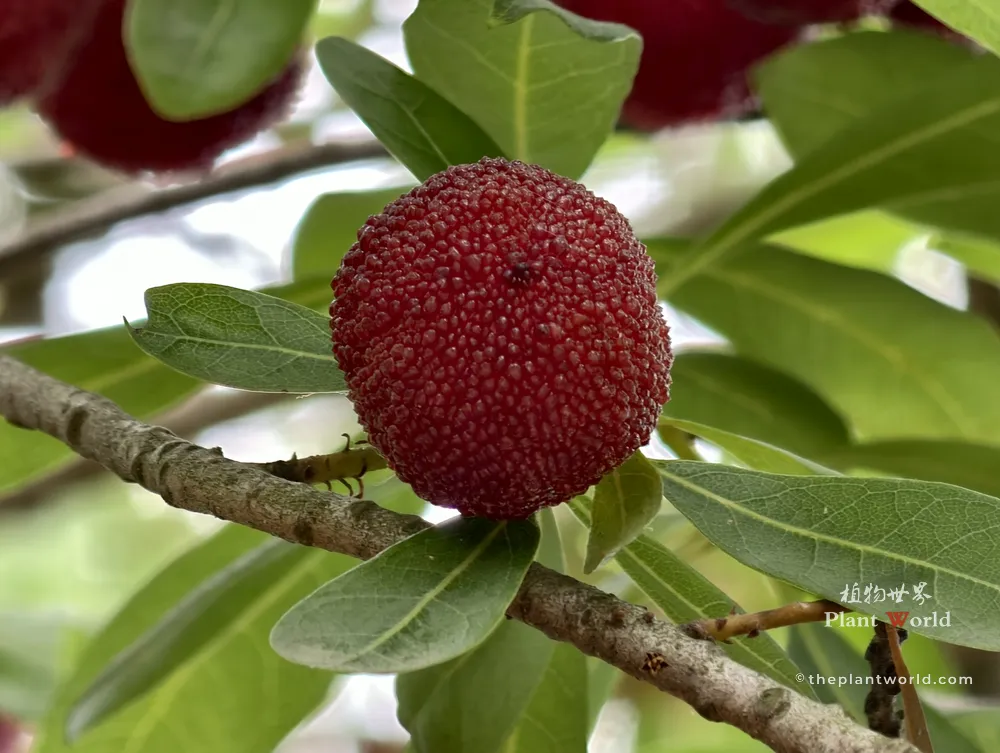
The shape of these projections directly determines texture and flavor: blunt, rounded columns are juicier, sweeter, and softer; pointed columns are tarter and store better. Inside is a hard, broadly oval stone with blunt ridges, which is not eaten.
Dioecy and Wind Pollination
The Chinese Bayberry is dioecious — male and female flowers grow on entirely separate trees. This is not unusual among fruit trees; the equally ancient ginkgo is also famously dioecious. But yangmei‘s flowers are so small and inconspicuous that they are easy to miss entirely.
Male and Female Flowers


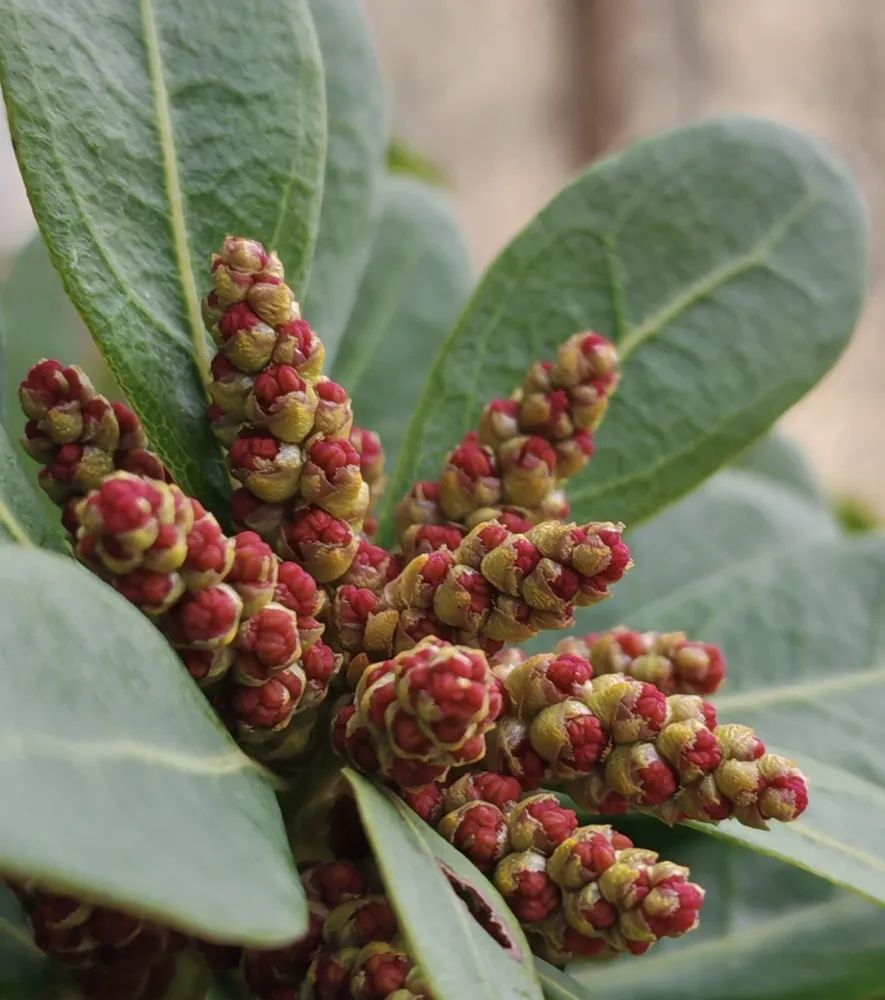
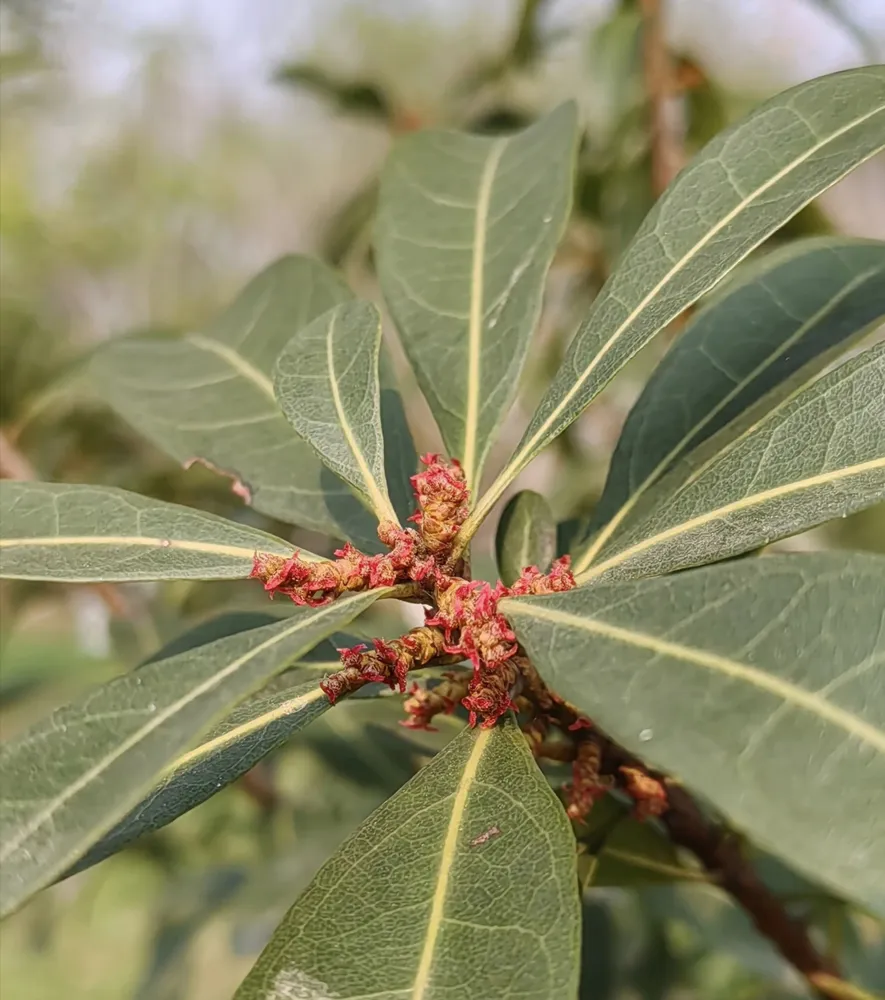
- Male flowers: Born in leaf axils as solitary or clustered catkins, 1–3 cm long, cylindrical, yellowish-brown. Each flower has 2–4 stamens with oval anthers that release vast quantities of pollen at maturity.
- Female flowers: Usually solitary in leaf axils, with much shorter inflorescences only 5–15 mm long, each bearing 4–10 tiny flowers. The ovary is oval with a two-lobed, bright red stigma that protrudes beyond the bracts, perfectly designed to catch airborne pollen.
The Efficiency of Wind
Yangmei does not rely on insects. It is a classic anemophilous (wind-pollinated) plant. In spring — roughly mid-March to early April in Jiangnan — male trees release pollen that is minute, dry, and produced in enormous quantities, capable of drifting tens of kilometers on the wind. The female stigma secretes a sticky mucus that captures pollen grains with remarkable efficiency.
Because of this dioecious, wind-pollinated biology, commercial yangmei orchards always include 1%–5% male trees as pollinizers, or top-graft one or two male branches onto female trees. Wild yangmei groves naturally grow with both sexes intermixed — which is why a single, isolated female tree often flowers but never fruits.
⚠️ Toxicity, Pet Safety & Preparation
Is Chinese Bayberry toxic? The ripe fruit is completely non-toxic to humans and is a beloved seasonal fruit. A few points are worth noting, however:
- The stone (pit): Hard and inedible. Swallowing can cause intestinal obstruction, especially in children and pets.
- Leaves and bark: Contain tannins and myricitrin; not intended for consumption. Large amounts may cause gastrointestinal upset in pets.
- Fruit fly larvae (“Yangmei worms”): The soft, sweet fruit is prone to fruit-fly larvae. These are harmless to humans, but soaking the fruit in lightly salted water for 10–15 minutes before eating will drive them out, followed by a gentle rinse in clean water.
- Pets: A small amount of flesh is not toxic to cats or dogs, but the pit poses choking and obstruction risks, and pesticide residues on the skin must be washed off thoroughly. Yangmei is not recommended as a regular pet treat.
Cultivation & Care Guide
Hardiness & Climate
- USDA Hardiness Zones: 9–11. Yangmei prefers warm, humid conditions with an annual average temperature of 15–21°C. Mature trees tolerate brief winter lows of -8°C to -10°C, but frost during flowering can severely reduce fruit set.
- In China: Cultivated throughout the Yangtze basin and south — Zhejiang, Jiangsu, Fujian, Jiangxi, Hunan, Guangdong, Guangxi, Guizhou, and Yunnan — with Zhejiang as the historic heartland.
Light & Placement
- Yangmei grows well in partial shade to full sun. In hot climates, afternoon shade reduces sunscald; too much shade, however, produces sparse crops and bland fruit.
- Well-drained slopes are ideal. Yangmei hates waterlogging — low-lying sites quickly lead to root rot.
- Soil: Acidic to slightly acidic red or yellow earth (pH 4.5–6.5) is best. Alkaline soils cause iron deficiency and chlorosis.
Water & Fertilizer
- Water: Keep the soil moist during the first year after planting. Mature trees are moderately drought-tolerant, but irrigation during fruit expansion (May) is critical in dry spells — otherwise fruit is small and tart.
- Fertilizer: Thanks to its mycorrhizal roots, yangmei needs less fertilizer than most fruit trees. Use potassium-rich feeds with modest nitrogen and phosphorus. Apply 2–3 times per year: pre-bloom (Feb–Mar), fruit-swell (Apr–May), and post-harvest (Jun–Jul). Avoid excessive nitrogen, which promotes vegetative growth at the expense of fruiting.
Pruning & Pollination
- Pruning: Train young trees into a naturally rounded crown. On mature trees, do light pruning after harvest — thin out crowded, diseased, and crossing branches to maintain airflow and light penetration.
- Pollination: Orchards need 1%–5% male pollinizer trees, or one or two top-grafted male branches per female tree. During prolonged spring rain, hand-collected male pollen can be applied as a supplement.
Propagation
Commercial propagation is by grafting. Rootstocks are yangmei seedlings; scions are taken from proven cultivars. Grafted trees begin fruiting in 3–4 years, reach full production in 7–8 years, and remain economically productive for 50–80 years.
Seed propagation is used mainly for rootstocks and breeding — seedlings vary widely and their sex cannot be determined until flowering.
Major Cultivars
China has an exceptionally rich yangmei germplasm. Notable cultivars include:
- Dongkui (东魁): From Huangyan, Zhejiang. Very large fruit (20–25 g), purplish-red, relatively coarse flesh columns, sweet-tart. The most widely planted large-fruited cultivar.
- Biqi (荸荠种, “Water-chestnut”): From Yuyao, Zhejiang. Medium-sized, purple-black, fine dense flesh columns, juicy and very sweet. Premium for both fresh eating and processing.
- Ding’ao (丁岙梅): From Wenzhou, Zhejiang. Large, purplish-red, long stem — resists dropping after picking and stores well.
- Wusuhe (乌酥核): From Chaoyang, Guangdong. Large, purple-black, thick flesh, small stone, sweet.
- Shuijing (水晶种, “Crystal” / White Yangmei): Rare white or pale-pink fruit at maturity, exceptionally sweet and delicate — the treasure of yangmei connoisseurs.
Regional Highlight: Mashan Yangmei (Wuxi)
In Jiangsu province, the name to know is Mashan (马山), a peninsula reaching into Lake Tai (太湖) on the outskirts of Wuxi. Surrounded on three sides by water, with deep, humus-rich yellow loam and a mild lake-moderated climate, it offers near-perfect yangmei terrain. A local saying goes: “Under heaven, the fruit basket is Mashan; Mashan yangmei is the finest south of the Yangtze.”
Cultivated there for nearly a thousand years and praised in the Ming-Qing Changzhou Prefecture Gazetteer as “the best yangmei from Wujin’s Mashan,” the region is best known for its Wumei (乌梅, “Black Plum”) cultivar — also called Tantuan (“Charcoal Bun”). The fruit weighs around 15 g, with a glossy jet-black skin, thick flesh, a small stone, and a rich, sweet-tart juice. In 2020, “Mashan Yangmei” was granted National Agricultural Geographical Indication protection (AGI02828). Unlike the large-scale orchards of Zhejiang, Mashan still relies on small family groves, and many century-old trees remain scattered through its villages.
Cultural Heritage & Poetic Symbolism
The Chinese Bayberry is far more than a fruit in Chinese culture — it is the taste-symbol of early summer and a recurring image in poetry for nostalgia and quiet contentment.
Han and Tang: From Imperial Park to Jiangnan Specialty
The earliest written record of yangmei dates to the Western Han. Sima Xiangru’s Rhapsody on the Imperial Park (《上林赋》) lists it among the rare fruits of the imperial grove — “梬枣杨梅” — confirming that yangmei had entered the royal gardens over two thousand years ago. The Eastern Han Yuejueshu (《越绝书》) also records “gardens of yangmei” in the Wu-Yue region.
By the Tang Dynasty, yangmei was a celebrated Jiangnan delicacy. Li Bai wrote in Liangyuan Yin (《梁园吟》):
“A jade plate of yangmei set before you,
Wu salt as white as flower snow.”
Serving yangmei with a pinch of fine Wu-region salt was the most elegant Tang-era way to eat it — the salt enhances sweetness and softens acidity, a custom that survives in parts of Jiangnan today.
Song Dynasty: The Gourmet’s Verdict
The Song Dynasty was the golden age of yangmei culture. Su Shi (苏轼), exiled to the far south and well acquainted with lychee, still declared his loyalty to the Jiangnan fruit:
“The grapes of the western Liang, the lychees of Fujian and Guangdong — neither matches the yangmei of Wu and Yue.”
In Su Shi’s ranking, Jiangnan yangmei outshone even the lychee made famous by Yang Guifei. Song writer Zhang Duanyi, in his Gui’er Ji (《贵耳集》), recorded a charming anecdote: a Fujian scholar and a Wu-region official met on the road and each praised his hometown fruit — the Fujianese championed lychee, the Wu man yangmei. A bystander wrote a couplet on the wall: “The Fujian maiden holds ice and snow; the Wu-region star-rider drives a cloud of fire.” The lychee-versus-yangmei rivalry became a celebrated literary joke.
Ming-Qing: Commerce and Festival
By the Ming and Qing dynasties, yangmei had become a major commercial fruit. Wang Xiangjin’s Qunfang Pu (《群芳谱》, 1621) states: “Among yangmei, those from Kuaiji (Shaoxing) are the finest under heaven.” The Yuejun Zhi (《越郡志》) adds: “Kuaiji yangmei is the wonder of the world — large fruit, fine stone, purple in color.”
During the season, scholars gathered for “yangmei banquets” — eating the fruit fresh, making it into wine, jam, and dried preserves. Folk proverbs tied the fruit to the calendar: “At Dragon Boat Festival, yangmei hangs in baskets; at Summer Solstice, yangmei reddens the hills.”
In Jiangnan folk custom, yangmei is the signature fruit of the Summer Solstice (夏至) solar term. As the solstice arrives, yangmei floods the markets; every household buys and shares it, and a basket of fresh yangmei remains the classic early-summer gift between friends and relatives.
Practical Traditional Uses
Traditional Medicine
In Chinese herbal medicine, every part of the yangmei tree is used. Li Shizhen’s Compendium of Materia Medica (《本草纲目》, 1578) records:
“Yangmei is sour and sweet in flavor, warm in nature, non-toxic. It expels phlegm, stops vomiting, aids digestion, relieves alcohol, quenches thirst, harmonizes the five organs, cleanses the stomach and intestines, and dispels irritability and foul qi.”
- Fruit: Generates fluids, quenches thirst, harmonizes the stomach, aids digestion, stops diarrhea and vomiting. Soaked in liquor, it becomes yangmei jiu (杨梅酒), a folk remedy for diarrhea and summer heat.
- Bark and root: Rich in tannins, warm and pungent; used externally to stop bleeding, resolve bruising, and treat fractures and burns.
- Leaves: Yield an aromatic oil; a decoction of young leaves is used as a wash for eczema and dermatitis.
⚠️ Ethnobotanical disclaimer: This information is for historical and cultural reference only and does not constitute medical advice. Always consult a qualified healthcare professional before using any plant medicinally.
Folk Cuisine & Modern Processing
- Yangmei wine (杨梅酒): Fresh fruit, washed and dried, steeped in high-proof white liquor with rock sugar for a month or more. Deep red, fragrant, and slightly sweet — a summer household staple.
- Yangmei jam (杨梅酱): Pitted fruit simmered slowly with rock sugar until thick. Tart-sweet and intense, excellent on bread or yogurt.
- Dried yangmei (杨梅干): Sugar-cured and sun-dried; keeps well and is a traditional tea snack.
- Yangmei juice / soup (杨梅汁): Fresh fruit pressed or simmered with sugar, chilled — the quintessential summer cooler.
Today, yangmei is processed into juice, wine, jam, freeze-dried fruit, and fruit powder. Marketed internationally under the name “Yumberry,” it is increasingly recognized as a superfruit.
Health Benefits of Chinese Bayberry
A 2022 review published in Oxidative Medicine and Cellular Longevity (PMC) summarized that the fruit, leaves, and bark contain a rich profile of bioactive compounds — proanthocyanidins, flavonoids, vitamin C, phenolic acids, and anthocyanins — linked to antioxidant, anti-inflammatory, and metabolic benefits.
Nutrition at a Glance (per 100 g fresh fruit)
| Nutrient | Approximate Content | Note |
| Calories | 30–44 kcal | Low-energy, guilt-free fruit |
| Water | 83–92% | Highly hydrating for early summer |
| Carbohydrates | 6–14 g | Mostly natural glucose and fructose |
| Dietary Fiber | 1–2.5 g | Supports digestion and gut health |
| Vitamin C | 9–42 mg | Varies by cultivar (Dongkui is highest) |
| Potassium | ~149 mg | ~1.8× that of apples; high potassium, low sodium |
| Calcium | 14–17 mg | Essential mineral support |
| Magnesium | ~10 mg | Supports metabolic functions |
| Iron | ~0.7–1 mg | Trace mineral content |
An Antioxidant Powerhouse
The deep crimson-purple color of yangmei comes from anthocyanins. The dominant pigment is cyanidin-3-O-glucoside (C3G), which accounts for 68%–95% of total anthocyanins — a proportion comparable to blackberries and substantially higher than that found in blueberries, cranberries, or raspberries. Total anthocyanin content ranges from roughly 60 to 285 mg per 100 g depending on cultivar, with dark-fruited varieties like Biqi and Dongkui leading the pack.
Cardiovascular, Metabolic & Gut Support
- High potassium, low sodium: With ~149 mg potassium and only ~0.7 mg sodium per 100 g, yangmei offers a favorable electrolyte profile for blood pressure management and summer fatigue relief.
- Blood sugar balance: A study in the Journal of Agricultural and Food Chemistry (PMC3282469) found that C3G-rich extract from Chinese bayberry protected pancreatic beta cells and improved hyperglycemia in diabetic mice.
- Gut Health: Organic acids (citric and malic acids) stimulate digestive juices. A 2022 Frontiers in Nutrition study demonstrated that C3G extracted from Chinese bayberry alleviated antibiotic-associated diarrhea in mice by regulating gut microbiota.
⚠️ Nutritional disclaimer: The health information above is based on published scientific research and is provided for educational purposes only. It does not constitute medical advice.
Garden and Landscape Value
Beyond its role as a fruit tree, the Chinese Bayberry is an excellent ornamental landscape tree.
- Evergreen: Dense foliage, rounded crown, year-round green — a fine shade and background tree in Jiangnan gardens.
- Flowers and fruit: Spring catkins are understated; early summer brings masses of red fruit against deep green leaves, creating a striking visual contrast.
- Adaptable: Tolerates poor, acidic soils with few pest problems — low-maintenance for hillside parks and gardens.
- Cultural atmosphere: In classical Jiangnan gardens, yangmei is often planted with bamboo, banana, and scholar’s rocks to create the effect of “red fruit among green branches.” Ming dynasty Wen Zhenheng noted in Superfluous Things (《长物志》) that yangmei “should be planted by gates and courtyards — in summer, its red fruit catches the eye.” Planted beside the equally Jiangnan-native Chinese loquat, it creates a courtyard with golden loquats in winter and spring and crimson yangmei in early summer — a classic four-season fruiting pairing.
Conclusion
The Chinese Bayberry is one of the rare Chinese fruits that excels in color, flavor, nutrition, and literature. Its crimson is the most intense color of the Jiangnan early summer; its sweet-tart juice is the nostalgia of countless people who grew up south of the Yangtze; its anthocyanin-rich flesh is now drawing the attention of nutrition scientists worldwide; and its name has traveled through two thousand years of poetry and custom to arrive fresh every June.
FFrom Sima Xiangru’s imperial park, to Li Bai’s jade plate and Wu salt, to Su Shi’s verdict that nothing matches Wu-Yue yangmei, to the orchards of Xianju and the lake-side groves of Mashan — yangmei has quietly and steadily defined what “early summer” tastes like in China. One bite, and the sweet-tart juice bursts across the tongue: that is the taste of Jiangnan, of summer, of home, and one of the most vivid chapters in Chinese plant culture.
References
- POWO (2026). Plants of the World Online: Morella rubra (Lour.) Siebold & Zucc. — Royal Botanic Gardens, Kew. (Taxonomic authority, distribution, and synonymy).
- Flora of China (1999). Myricaceae: Morella rubra Species Account — Vol. 4, p. 275. Missouri Botanical Garden Press & Science Press.
- Li, S. (1578). Bencao Gangmu (《本草纲目》, Compendium of Materia Medica). Fruit Section: Historical records on medicinal value and therapeutic properties of Yangmei.
- Ministry of Agriculture and Rural Affairs of PRC (2020). National Agricultural Geographical Indication Registration: Mashan Yangmei (国家农产品地理标志登记:马山杨梅, Reg. No. AGI02828).
- Sun, C. et al. (2022). An overview of the nutritional value, health properties, and future challenges of Chinese bayberry. Oxidative Medicine and Cellular Longevity, Article ID 4712865. (PMC8900607).
- Wu, Q. (1848). Zhiwu Mingshi Tukao (《植物名实图考》) — Morphology and distribution.
- China Fruit Monograph: Yangmei Volume (《中国果树志・杨梅卷》) — Cultivar resources and cultivation.
More from The Plant World:
- Chinese Wingnut: The Romantic “Ingot Tree” and Its Cultural Charm
- Plum Blossom Meaning: Symbolism & Cultural Significance
- The Hidden Meanings Behind Red Plum Blossoms
- Chinese Wisteria: History, Symbolism, and Identification
- Peach Blossoms in China: History, Culture, and Symbolism
- Chinese Crepe Myrtle: Guide to Origins & Symbolism
- Ginkgo Leaf Meaning: 5 Secrets of This Ancient Fossil
- Chinese Loquat Tree: Guide to Benefits & History
- Rose of Sharon Tree: Guide to Meaning & Care
- Hosta Plant Benefits: 5 Surprising Uses & Planting Guide
- Strawberry Begonia Care: How to Grow Saxifraga Stolonifera
Discover more from The Plant World
Subscribe to get the latest posts sent to your email.