
Introduction
Open China’s oldest anthology of poetry, the Book of Songs (《诗经》), and the very first poem is “Guan Ju” (《关雎》). Right after the calling ospreys on the river islet, a plant drifts into view — the yellow floating heart, known in China as xìngcài (荇菜):
Here and there, the yellow floating heart floats,
Left and right, we gather it.
The lovely, virtuous maiden —
Waking and sleeping, I seek her.
Here and there, the yellow floating heart grows,
Left and right, we pluck it.
The lovely, virtuous maiden —
With zither and lute, I court her.
Here and there, the yellow floating heart spreads,
Left and right, we select it.
The lovely, virtuous maiden —
With bells and drums, I delight her.
A young nobleman stands on a river islet, watching a graceful maiden gathering water-lilies left and right in the current. Struck by love, he tosses and turns through sleepless nights. These three short stanzas made xìngcài the very first plant to appear in Chinese literature — earning it the nickname “the First Grass of the Book of Songs.”
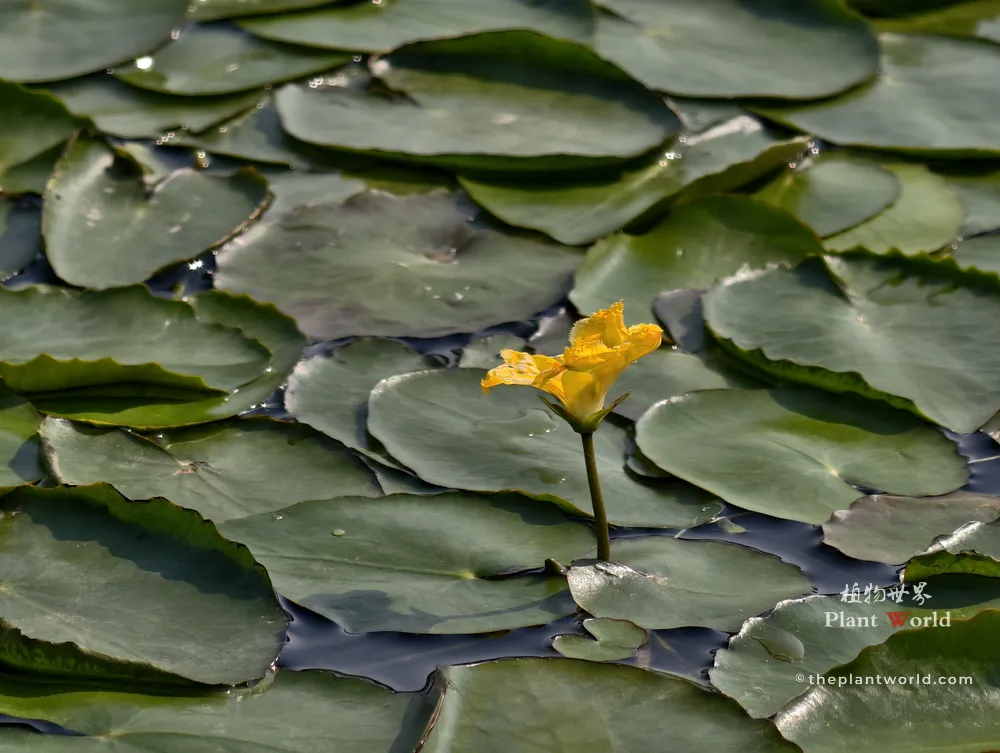
Botanically Nymphoides peltata, the yellow floating heart — also called fringed water-lily or water fringe — is a perennial aquatic herb in the Menyanthaceae family. Its round leaves drift on the surface like miniature water-lily pads; in summer it opens bright golden five-petaled flowers, each petal edged with delicate fringes that glint like crushed gold in the sun. From the reed-fringed riverbanks of three thousand years ago to today’s water gardens and ecological restoration projects, the yellow floating heart has always floated on the surface of Chinese culture — fresh, resilient, and endlessly renewing. It is one of the most evocative plants in Chinese plant culture.
Plant Profile: What Is the Yellow Floating-heart?
Growth Habit: Perennial floating-leaved aquatic herb
Scientific Name: Nymphoides peltata (S.G.Gmel.) Kuntze
Common Names: Yellow Floating-heart, Fringed Water-lily, Water Fringe, Fringed Water Lily
Chinese Name: 荇菜 (xìngcài); also 莕菜,凫葵,水荷叶,杏菜,金莲子,水镜草,驴蹄菜
Family: Menyanthaceae (Bog-bean / Buckbean Family)
Genus: Nymphoides
Native Range: China and temperate Eurasia; widely distributed across the Northern Hemisphere
The yellow floating heart is a classic floating-leaved aquatic plant. Its stems are cylindrical, slender and flexible, much-branched, densely dotted with brown spots, and root at the nodes — either creeping along the bottom or drifting just beneath the surface. Upper leaves are opposite; lower leaves are alternate. The leaf blade is nearly leathery, round or ovate-orbicular, 1.5–8 cm in diameter, with a heart-shaped base and entire margins. The upper surface is glossy emerald green; the underside is often purplish-red, with faint palmate veins. The petiole is cylindrical, 5–10 cm long, with a widened, sheathing base that clasps the stem.
The flower is the yellow floating heart’s most striking feature. Flowers are often numerous, clustered at the nodes, and held above the water surface. The corolla is golden yellow, about 2.5 cm across — the largest flower in the Nymphoides genus. The five petals are deeply divided and spread in a star-like radiate form, and each petal edge is fringed with fine, hair-like filaments. The calyx is also five-lobed, with lanceolate segments. Five stamens are inserted at the sinuses between the corolla lobes. The fruit is a sessile, elliptical capsule that splits open at maturity; the numerous seeds are elliptical with bristly margins, adapted for water dispersal.
Fringed Flowers & Aquatic Survival Strategies
The yellow floating heart may look delicate, but it possesses a remarkably refined set of aquatic survival strategies.
The Secret of the Fringed Petals
Why do the golden petals have such elaborate fringes? It is not mere ornamentation. Botanists suggest that the fringed margins increase the visual surface area of the flower, making it more conspicuous to pollinators — primarily bees and flies — against the glare of reflected water. At the same time, the fringe creates a micro-texture on the petal surface that helps rainwater run off quickly, protecting the pollen from getting wet. For a plant whose flowers open just above the water and are constantly at risk of splashing, this is an elegant adaptation.
Species in the Nymphoides genus also exhibit heterostyly — different individuals within the same species have styles and stamens of different lengths. This is a sophisticated mechanism that promotes cross-pollination and prevents the genetic decline caused by self-fertilization.
Floating and Breathing
The petioles and stems of the yellow floating heart contain well-developed aerenchyma — interconnected air channels that allow oxygen to reach even submerged parts, while also providing buoyancy to keep the leaves floating steadily on the surface. The upper leaf surface has a cuticle; the lower surface is in direct contact with the water and can absorb dissolved nutrients.
Formidable Asexual Reproduction
The yellow floating heart reproduces with remarkable vigor. Beyond seed production, a broken stem segment can grow into an entirely new plant — a small piece of stem with a node, dropped into water, will quickly root and sprout, spreading rapidly. This allows yellow floating heart to form extensive, continuous colonies in suitable waters. However, it is precisely this trait that has made it an aggressive invasive species after being introduced to North America, New Zealand, and parts of Europe, where its sale and cultivation are strictly regulated or banned in certain jurisdictions.
⚠️ Toxicity and Pet Safety
Is yellow floating heart toxic? No. It is a non-toxic plant whose tender stems, leaves, and white rhizomes have been eaten as a wild vegetable since ancient times. A few caveats are worth noting, however:
- Water quality risk: As an aquatic plant, yellow floating heart absorbs and bioaccumulates heavy metals (such as cadmium and zinc) and other pollutants from the water. Never eat wild plants collected from polluted waters — choose only those from clean water bodies or cultivated sources.
- Pets: There are no recorded cases of yellow floating heart toxicity in cats, dogs, or other pets. Small amounts are generally harmless. However, as with any aquatic plant, water quality and parasites are concerns; wild plants should not be fed to pets in quantity.
- Allergies: A very small number of people may be sensitive to the sap or pollen of aquatic plants; try a small amount first if eating it for the first time.
Overall, yellow floating heart is a very safe plant. The main risk comes from the quality of the water it grows in, not from the plant itself.
Cultivation & Care Guide
The yellow floating heart is an extremely low-maintenance plant for water gardens, suitable for ponds, water tubs, and aquascapes.
Water Depth & Environment
- Water depth: Optimal depth is 10–100 cm. It grows most vigorously in shallow water; in deeper water, the leaves may struggle to reach the surface.
- Water quality: Prefers still or slow-moving water; does not tolerate strong currents. Undemanding about water quality, growing best in neutral to slightly acidic water.
- Temperature: Highly cold-hardy. It can overwinter outdoors in most parts of China. The above-ground parts die back in winter, and the plant survives as submerged rhizomes, resprouting in spring.
Light
- Yellow floating heart thrives in full sun, producing abundant flowers and lush leaves under strong light. It tolerates partial shade but flowers less. For indoor water tubs, place near a sunny window or use a dedicated grow light.
Planting Methods
- Pond planting: Simply drop rooted plants or rhizomes into the pond; they will root themselves in the bottom mud. Alternatively, plant in aquatic baskets first for easier control of spread.
- Water tub / container: Use a pot without drainage holes, filled with pond mud or aquatic plant soil. Bury the rhizome in the mud and add water to 10–30 cm above the soil surface. Divide every spring.
- Aquascape: Pair with water lilies, lotus, calamus, and cattails to create a layered aquatic landscape.
Propagation
- Division (most common): In spring, dig up the rhizomes, cut into sections with buds, and replant — very easy to establish.
- Stem cuttings: Cut a healthy stem segment with nodes and float it on water or lay it on wet mud; it will root within days.
- Seed: Collect mature seeds in autumn and sow on the surface of wet mud the following spring, keeping shallow water. Germination takes about 2–3 weeks. Seedlings grow slowly in the first year.
Maintenance Tips
- Yellow floating heart grows quickly and requires regular thinning of excess stems and leaves to prevent it from covering the entire water surface, which would block light from submerged plants and restrict fish movement.
- For container growing, add a small amount of slow-release aquatic plant fertilizer monthly; pond-grown plants generally need no extra feeding.
- In cold northern regions, move water tubs indoors or deepen the water to protect rhizomes over winter.
- ⚠️ Important: Never discard or release yellow floating heart into natural water bodies, especially in regions where it is listed as invasive. Dispose of excess plants properly (dry them or compost them) to prevent ecological invasion.
Poetry & Cultural Symbolism
The yellow floating heart’s place in Chinese culture is almost entirely established by “Guan Ju” in the Book of Songs. As the opening plant of Chinese literature, it carries the earliest Chinese imagination of love, nature, and virtue.
“Guan Ju”: The Gatherer and the Metaphor of Love
The xìngcài in “Guan Ju” is not a randomly chosen background plant. In ancient times, xìngcài was a pure vegetable used in sacrifices. The Zuo Zhuan (《左传》, “Duke Yin, Year 3”) records: “If there is sincere trust, even the plants of mountain streams and ponds — such as water-caltrops, white mugwort, and water weeds — may be offered to spirits and served to lords and dukes.” Xìngcài belonged to this class of water plants “fit to offer to spirits.” Gathering xìngcài was an important activity for noblewomen, requiring deft hands and upright character.
Thus, the actions of “gathering left and right,” “plucking left and right,” and “selecting left and right” in the poem are not merely descriptions of labor — they imply the maiden’s virtue and skill through her graceful, efficient gathering. What the young man loves is not only her beauty but the poise and dexterity she shows while working in the water. The drifting of the xìngcài mirrors the fluctuation of his feelings; the three progressive actions (flowing → plucking → selecting) correspond to the three stages of his emotion (seeking → befriending → delighting), forming a structure of extraordinary refinement.
Later Literary Echoes
After the Book of Songs, xìngcài became a recurring waterside image in literati writing.
- Tang Dynasty, Tang Yanqian (唐彦谦), “Visiting a Friend in Summer”: “Lotus stems smell of white jade; xìngcài stems are crisp as green silk.” A direct description of xìngcài as a crisp summer vegetable.
- Song Dynasty, Ouyang Xiu (欧阳修), “Gathering Mulberries”: The West Lake’s floating xìngcài is a signature scene of late spring and early summer in Jiangnan.
- Qing Dynasty, Nalan Xingde (纳兰性德): The drifting, rootless quality of xìngcài is often used to metaphorize life’s wandering and the pangs of longing.
In these poems, xìngcài is always an image of freshness, purity, and a touch of melancholy — floating on the water, drifting with the current, much like the restlessness of the human heart.
Historical Uses & Folk Cuisine
Food: From Sacrificial Vegetable to Summer Delicacy
Xìngcài is one of China’s oldest edible wild vegetables. The edible parts are primarily the tender stems and leaves, and the white rhizomes growing underwater.
- Pre-Qin period: Xìngcài was an important vegetable in sacrifices and banquets — “fit to offer to spirits, fit to serve to lords.”
- Three Kingdoms period: Lu Ji’s Commentary on the Plants and Trees of the Mao Classic (《毛诗草木疏》) records how to eat it: “The roots grow underwater, as thick as a hairpin, green above and white below. They can be served with wine. Steep the white stems in vinegar — they are crisp and delicious.” Blanched white stems pickled in vinegar were a refreshing appetizer.
- Tang and Song dynasties: Xìngcài was a common summer vegetable in Jiangnan. Tang Yanqian’s line “xìngcài stems are crisp as green silk” confirms it was eaten for its crisp texture. The ancients also made it into “xìng su” (荇酥), seasoned with oil and salt — fragrant, sweet, and smooth on the palate.
- Modern era: In Jiangnan, people still collect tender xìngcài stems for soups and broths, most famously xìngcài and mung bean soup, said to clear summer heat. But as vegetable varieties have multiplied, wild xìngcài has gradually disappeared from the dinner table.
Xìngcài has a slippery, tender texture with a slight clean bitterness, somewhat similar to water shield (莼菜) but crisper. Its white rhizomes taste like lotus root and can be served cold, pickled, or made into soup.
Medicine: A Water Herb That Clears Heat
The entire yellow floating heart plant is used medicinally. The Tang Materia Medica (《唐本草》, 659 AD) first recorded its medicinal value, noting that it “resolves cold and heat, promotes urination.” Later herbal texts further summarized its properties:
- Nature and flavor: Sweet, pungent, cold.
- Functions: Induces sweating to promote rash eruption, promotes urination to relieve strangury, clears heat and resolves toxins.
- Indications: Common cold with fever, measles that fail to erupt, edema, difficult urination, heat strangury, carbuncles and sores, snake and insect bites.
- Usage: Decoction, 15–30 g; external use — appropriate amount of fresh plant, pounded and applied.
In folk practice, xìngcài is decocted and used as a wash for skin sores and eczema; fresh plants are pounded and applied externally for snake and insect bites.
⚠️ Ethnobotanical disclaimer: This information is for historical and cultural reference only and does not constitute medical advice. Always consult a qualified healthcare professional before using any plant medicinally.
Health Benefits & Ecological Value
Nutrition and Health
Yellow floating heart is rich in flavonoids, polysaccharides, vitamin C, and various minerals (potassium, calcium, magnesium). Modern research indicates:
- Antioxidant activity: Flavonoid compounds in xìngcài can scavenge free radicals; its extracts have shown measurable antioxidant activity in in vitro experiments.
- Anti-inflammatory effects: Preliminary studies found that xìngcài extract inhibits inflammatory cytokines, consistent with its traditional use for “clearing heat and resolving toxins.”
- Diuretic effect: Traditionally used to promote urination and reduce edema; modern pharmacological studies have also observed a mild diuretic effect.
- Low-calorie, high-fiber: As an aquatic vegetable, xìngcài is low in calories and rich in dietary fiber — a healthy seasonal wild vegetable.
It should be noted that modern nutritional and pharmacological research on xìngcài remains limited. Most findings come from in vitro experiments and traditional use; more human clinical studies are needed for confirmation.
Ecological Restoration: The Underwater Cleaner
Yellow floating heart’s value in ecological restoration has attracted growing attention in recent years:
- Heavy metal absorption: Its roots effectively absorb heavy metals such as cadmium and zinc from water, making it a promising species for remediating heavy-metal-polluted water bodies.
- Nitrogen and phosphorus removal: Studies show that a combination of yellow floating heart, cattail (Typha), and Scirpus orientalis achieves excellent removal of total nitrogen, ammonium nitrogen, and nitrate nitrogen — highly useful for restoring eutrophic waters.
- Habitat function: Floating-leaved colonies of xìngcài provide spawning, shelter, and refuge for aquatic insects, amphibians, and fish — an important component of aquatic ecosystems.
- Algae suppression: Through shading and root exudates, xìngcài can partially inhibit the overgrowth of cyanobacteria.
⚠️ Health disclaimer: The health information above is based on published research and traditional use, and is provided for educational purposes only. It does not constitute medical advice. Yellow floating heart is a nutritious wild vegetable, but it is not a medicine. Ensure that any plant you eat comes from clean, unpolluted water.
Garden & Waterscape Value
The yellow floating heart is an exceptionally beautiful ornamental aquatic plant, valued for both its foliage and its flowers.
Ornamental Features
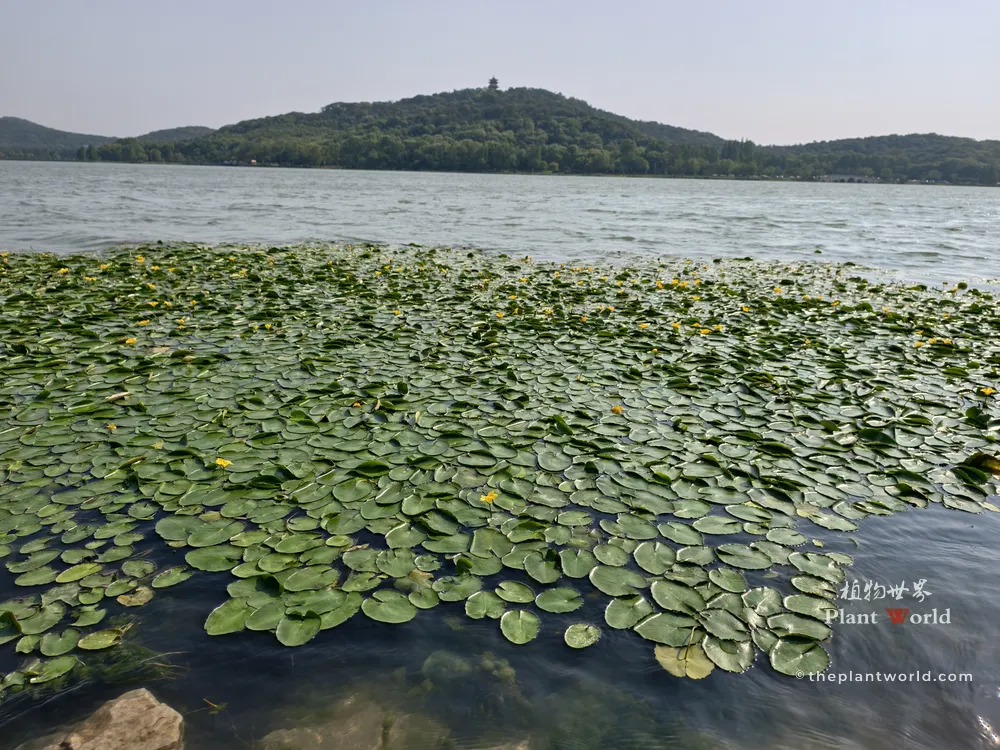
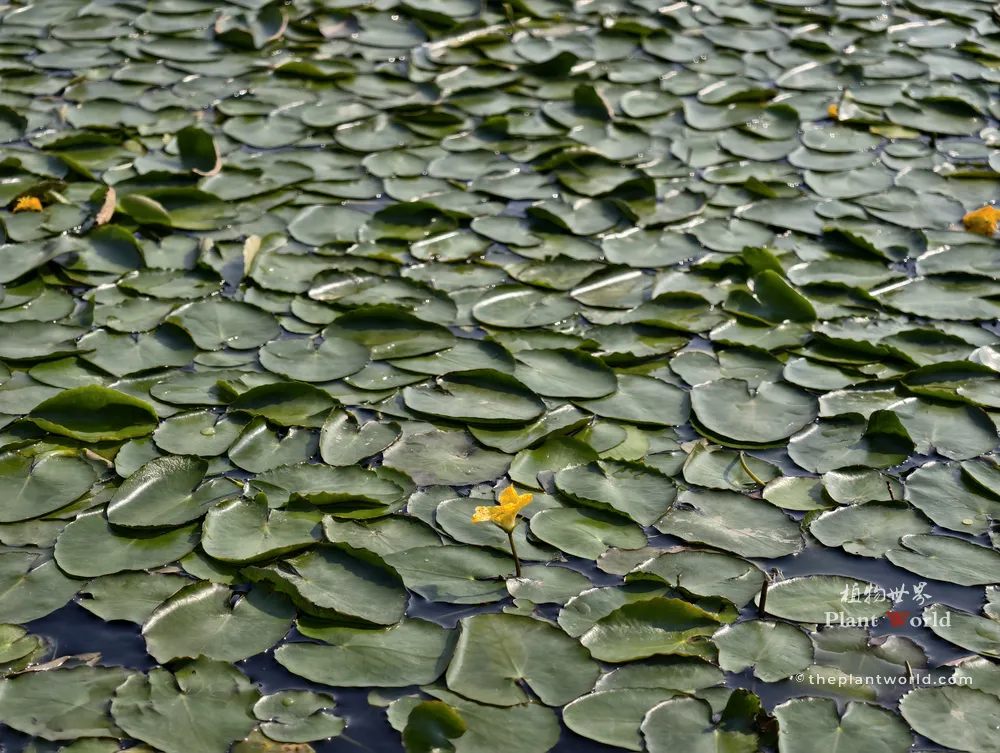
- Foliage: Round leaves floating on the water, glossy green above and purplish-red beneath, resembling miniature water-lily pads. When planted in drifts, they form a green carpet on the water with a delightful wild charm.
- Flowers: In summer, golden flowers rise above the surface with fringed petal edges, sparkling in the sun. The flowering season is long (blooming sporadically from May to October), and it is one of the few yellow-flowered floating-leaved plants for water gardens.
- Cultural atmosphere: With its deep roots in the Book of Songs, yellow floating heart brings a classical “drifting xìngcài” poetic mood to courtyard pools and Chinese-style gardens — especially fitting when paired with Taihu stones, rockeries, and pavilions.
Waterscape Applications
- Ponds: Ideal for planting in drifts in shallow zones or corners of a pond, creating layered heights alongside water lilies and Chinese lotus. Control density to avoid complete surface coverage.
- Water tubs / bowl lotus pots: Plant one or two stems in a small water tub, paired with miniature water lilies, pennywort, and parrot feather for an exquisite miniature waterscape.
- Ecological floating islands: Can be used in artificial floating island plantings, combining landscape value with water purification.
- Chinese-style gardens: In classical waterscapes — winding streams, lotus ponds under moonlight — yellow floating heart is the perfect material for recreating ancient poetic imagery.
The flower language of yellow floating heart might be interpreted as “resilience and purity” — it floats on the water, drifting with the current but never losing its roots; it grows from mud yet opens golden flowers, just like the graceful maiden gathering lilies in “Guan Ju” — composed, pure, and quietly fragrant.
Final Conclusion
The yellow floating heart is a fortunate plant. It has no towering stature, no exotic fragrance — it merely floats quietly on the water. Yet because it appeared in the very first poem of the Book of Songs, people have remembered it for three thousand years.
It is the pure vegetable gathered left and right by the maiden on the river islet; it is the clean melancholy drifting through the verses of poets; it is the crisp bite in a bowl of summer heat-clearing soup; it is the silent underwater cleaner in ecological restoration; and it is that scattering of golden fringed flowers in the water garden. From the river islets of the Book of Songs to today’s ponds, xìngcài has always been there — drifting, uneven, endlessly renewing.
Next time you see round leaves floating on a pond, dotted with small yellow flowers, pause for a moment. It may well be xìngcài — drifted here from a poem written three thousand years ago, China’s earliest witness to love. It remains one of the most charming and culturally resonant of all Chinese aquatic plants, and a beloved member of the Chinese garden plants tradition.
References
- Flora of China (English Edition), Vol. 16: Nymphoides peltata Species Account & Menyanthaceae Taxonomy — Missouri Botanical Garden / Harvard University Herbaria.
- Plants of the World Online (POWO): Nymphoides peltata (S.G.Gmel.) Kuntze Authority & Native Range — Royal Botanic Gardens, Kew.
- Book of Songs (《诗经》), “Guan Ju” (《关雎》) (Pre-Qin) — Earliest literary record of xìngcài.
- Commentary on the Plants and Trees of the Mao Classic (《毛诗草木疏》) by Lu Ji (Three Kingdoms) — Edible uses of xìngcài.
- Tang Materia Medica (《唐本草》) by Su Jing et al. (Tang, 659) — Medicinal record.
- Compendium of Materia Medica (《本草纲目》) by Li Shizhen (Ming, 1578) — Medicinal supplement.
- Zuo Zhuan (《左传》), “Duke Yin, Year 3” — Sacrificial vegetable record.
- Tang Yanqian, “Visiting a Friend in Summer”; Ouyang Xiu, “Gathering Mulberries”; Nalan Xingde, ci poetry — Classical literary references.
- “Heavy metal absorption and water body remediation by Nymphoides peltata” — Environmental science literature.
- USDA / New Zealand Ministry for Primary Industries: Nymphoides peltata invasive species listings.
- ASPCA: Common aquatic plant safety for pets.
More from The Plant World
- Chinese Wingnut: The Romantic “Ingot Tree” and Its Cultural Charm
- Plum Blossom Meaning: Symbolism & Cultural Significance
- The Hidden Meanings Behind Red Plum Blossoms
- Chinese Wisteria: History, Symbolism, and Identification
- Peach Blossoms in China: History, Culture, and Symbolism
- Chinese Crepe Myrtle: Guide to Origins & Symbolism
- Ginkgo Leaf Meaning: 5 Secrets of This Ancient Fossil
- Chinese Loquat Tree: Guide to Benefits & History
- Rose of Sharon Tree: Guide to Meaning & Care
- Hosta Plant Benefits: 5 Surprising Uses & Planting Guide
- Strawberry Begonia Care: How to Grow Saxifraga Stolonifera
Discover more from The Plant World
Subscribe to get the latest posts sent to your email.