
Introduction
The red spider lily — Lycoris radiata, known in East Asia as the “other shore flower” or manjushage — is one of the most symbolically charged flowers in the world. Its blooms appear without leaves, and it often opens around the autumn equinox, right when families visit ancestral graves. These traits have given it wildly different meanings across cultures. In Japan, it is a flower of death and rebirth; in China, it was once an elegant “golden lantern” and a medicinal herb; in Korea, it stands for unrequited love; and in Western pop culture, it has taken on a new aura of mystery through anime.
Spider lily meaning is not a single answer — it is a conversation between countries, centuries, and colors. To truly understand what does a spider lily represent, you have to look at where it grows, who is looking at it, and what color it is. This guide walks through how different cultures interpret this flower, what the spider lily meaning is in each major tradition, and how color changes the symbolism entirely.
A Quick Introduction: The Flower That Blooms Without Leaves
Before diving into spider lily meaning, it helps to know the plant itself.
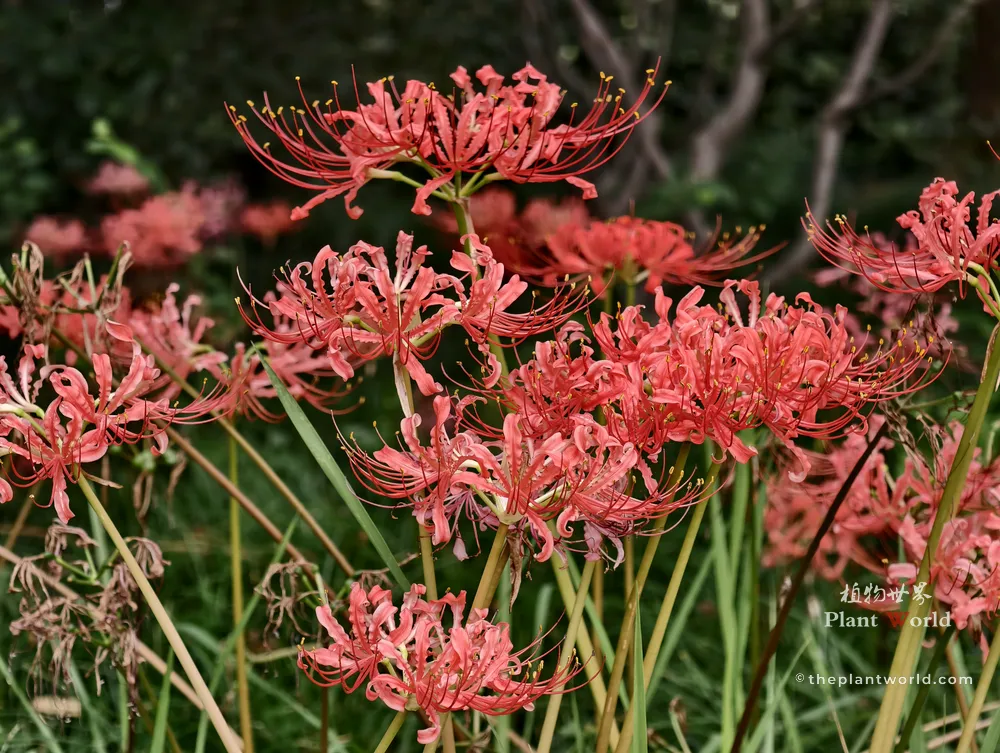
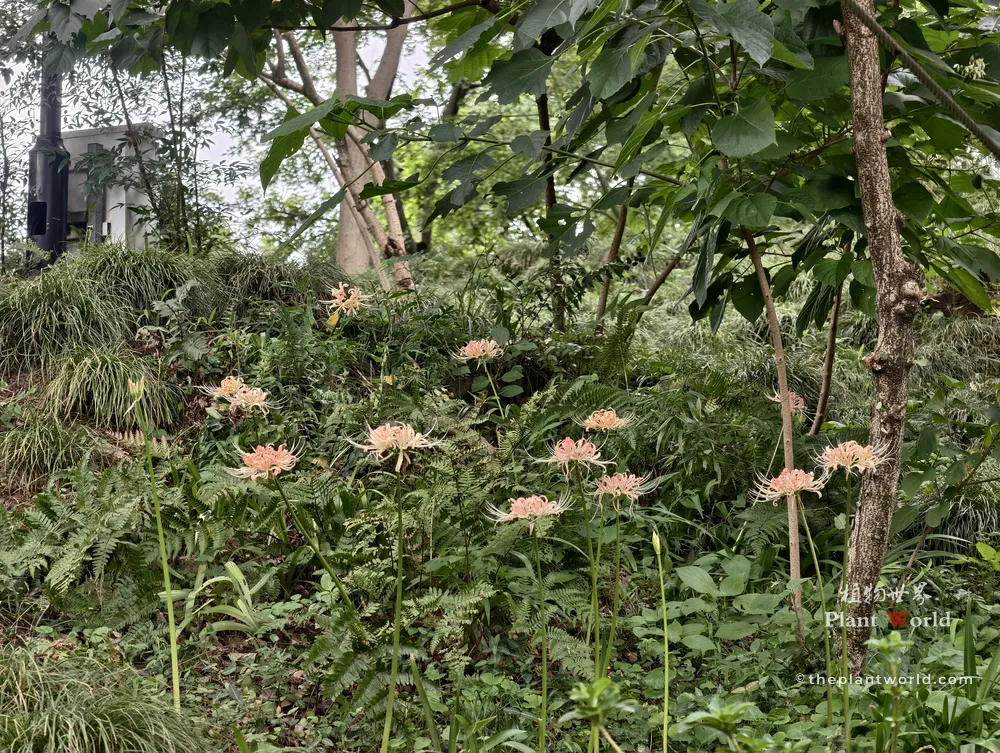
The spider lily is a perennial bulb in the amaryllidaceae family, native to China and Japan. Its most unusual trait is that it flowers before it leafs out. In late summer or early autumn, a bare stalk shoots up from the ground, topped with a cluster of vivid red blooms — curled petals and long, spidery stamens that give the flower its name. Only after the flowers fade do the leaves emerge, staying green through winter and withering the following summer. The flower and leaf never share the same stage. This single biological quirk is the root of nearly all spider lily meaning across every culture.
The genus Lycoris has about 20 species in a range of colors — red, yellow, white, pink, lavender, and more. The entire plant is toxic (the bulb most of all), yet it also contains galantamine, a compound used to treat Alzheimer’s disease. A flower of contradictions, indeed.
Spider Lily Meaning Around the World
Japan: Higanbana, Death, and Rebirth
Japan is where the red spider lily meaning is richest and best known.
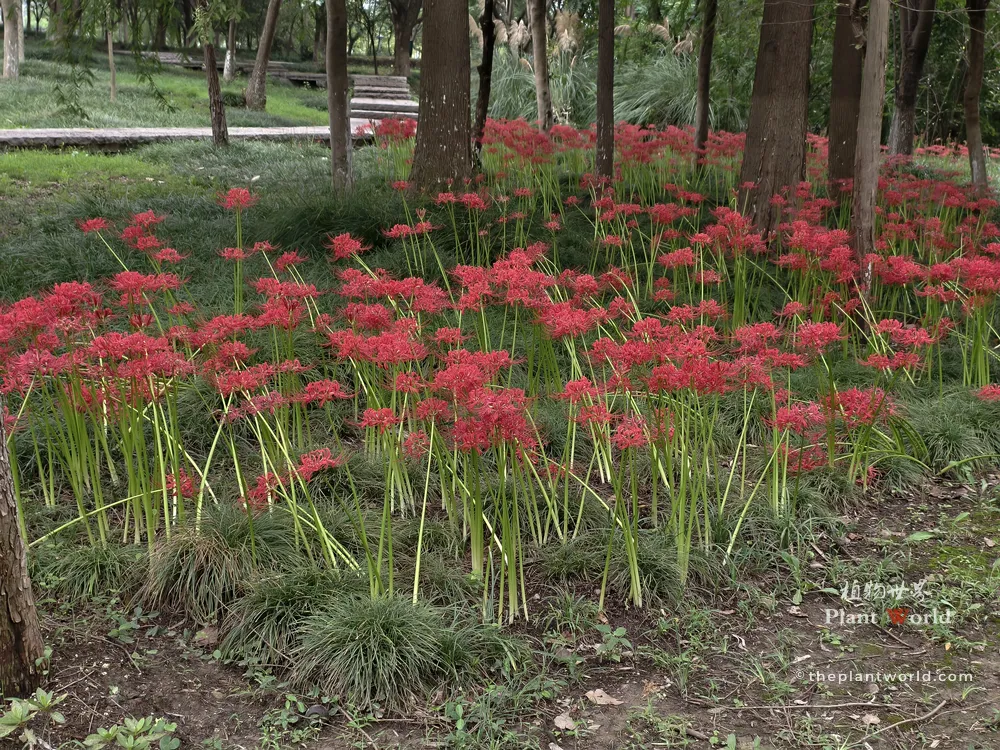
In Japanese, it is called higanbana (彼岸花). Higan (彼岸) is the Buddhist autumn equinox season, when families visit and clean their ancestors’ graves. Spider lilies often grow wild around cemeteries and bloom precisely at this time, so they became known as the flower that marks the boundary between this world and the next.
Japanese folklore says the higanbana blooms along the road to the afterlife, and its fragrance stirs the memories of the dead, guiding souls onward. This legend fits perfectly with mono no aware (物の哀れ) — the Japanese aesthetic of gentle sadness at the transience of all things. A flower that blooms with no leaves, whose leaves arrive only after the flowers are gone, is a natural metaphor for longing and separation.
In Japanese culture, the spider lily meaning centers on:
- Death and rebirth — the soul’s passage from this life to the next
- Separation and farewell — the fate of flower and leaf that never meet
- Sad memories — longing for those who have passed
- Lost love — a bond that cannot be fulfilled
Importantly, the Japanese do not see the higanbana as “unlucky.” It is more of a tender companion to grief — a flower that appears at grave sites as if keeping the departed company.
China: From Golden Lantern to Stone Garlic
Unlike Japan, traditional Chinese spider lily meaning never strongly centered on death.
In ancient China, it had several elegant names:
- Golden Lantern Flower (金灯花): Named for its tall, straight stem and fiery, lantern-like blooms — recorded as early as the Tang Dynasty.
- Red Arrow (赤箭): For its upright stem and scarlet flowers.
- Dragon-Claw Flower (龙爪花): For the curled, claw-like petals.
The Song Dynasty Illustrated Materia Medica gave it the formal name shisuan (石蒜,”stone garlic”), noting that it “grows in damp, rocky places, with a root resembling garlic.” In traditional Chinese culture, it was primarily a medicinal herb and an autumn wildflower — not an omen of ill fortune. The name “golden lantern” even carries connotations of brightness and celebration.
The idea of the spider lily as a “death flower” only entered Chinese consciousness in modern times, flowing back from Japanese pop culture through anime, games, and social media. So in traditional China, spider lily meaning leans toward:
So in traditional Chinese culture, spider lily meaning leans toward:
- Resilience and independence — blooming alone in autumn, with no leaves to adorn it
- Medicinal value — a herb used to clear toxins and reduce swelling
- An elegant autumn bloom — appreciated by scholars for its unusual form
It is one of the most fascinating examples of Chinese flower symbolism — a plant whose meaning shifted dramatically as it traveled across cultures.
Korea: Unrequited Love and Longing
In Korea, the spider lily is called sangsahwa (상사화, 相思花) — the name itself means “flower of longing.”
Korean culture focuses the flower’s meaning on unrequited love, enduring longing, and relationships that cannot be. The flower-and-leaf-never-meet biology is read as two people who love each other but can never be together. Unlike Japan’s death-centered reading, Korea’s interpretation is rooted in romantic heartache.
In Korean flower language, the red spider lily represents:
- Unrequited love
- Enduring longing
- A love that cannot be realized
The West and Pop Culture: From Garden Bulb to Anime Icon
In the West, the spider lily is usually called the red spider lily, hurricane lily, or equinox flower. It is grown as a low-maintenance autumn bulb with no strong negative connotations — many gardeners simply value its bright late-season color.
In recent years, however, Japanese anime and games have spread the “death flower” image globally. The most famous example is Demon Slayer (Kimetsu no Yaiba), whose fictional “blue spider lily” introduced millions of Western viewers to the flower for the first time.
In modern Western pop culture, spider lily meaning tends to be:
- Mystery and exoticism
- Death and the supernatural (influenced by Japanese media)
- Resilience and rebirth (a more botanical reading)
What Does Each Color of Spider Lily Mean?
The genus Lycoris offers far more than red. When exploring spider lily meaning by color, each hue carries its own flower language.
Red Spider Lily (Lycoris radiata)
The classic — the higanbana, the “other shore flower,” the manjushage.
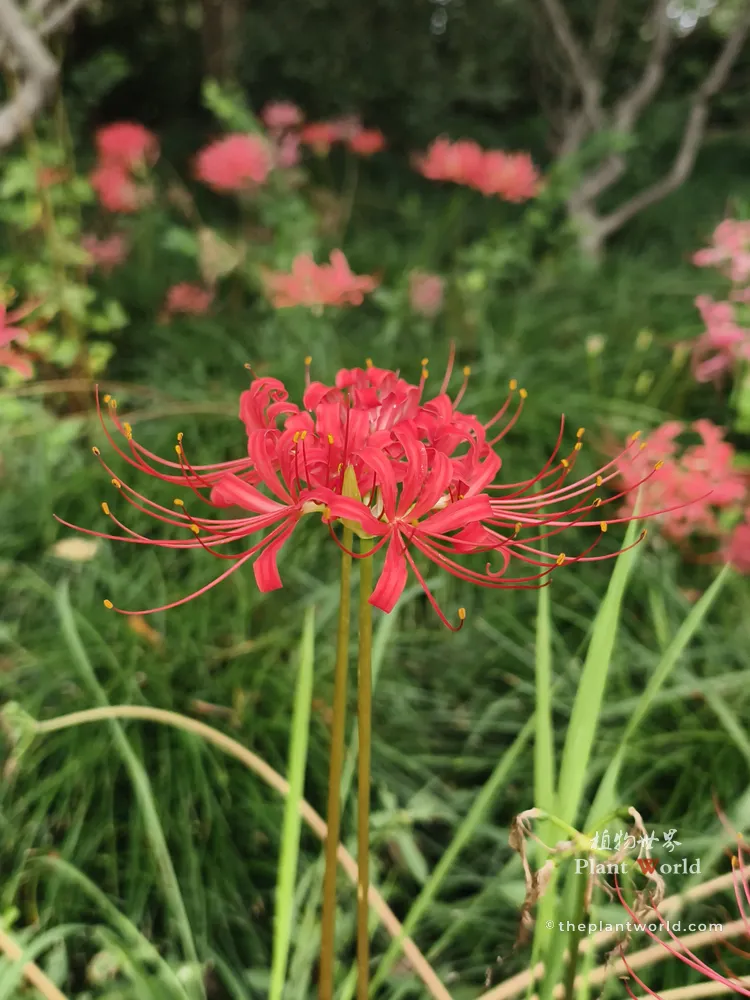
- Meaning: Sad memories, death and rebirth, separation, never-to-meet, desperate love.
- Cultural context: The flower of the afterlife in Japan; the flower of longing in Korea.
- Best for: Memorializing a loved one, expressing a love that cannot be.
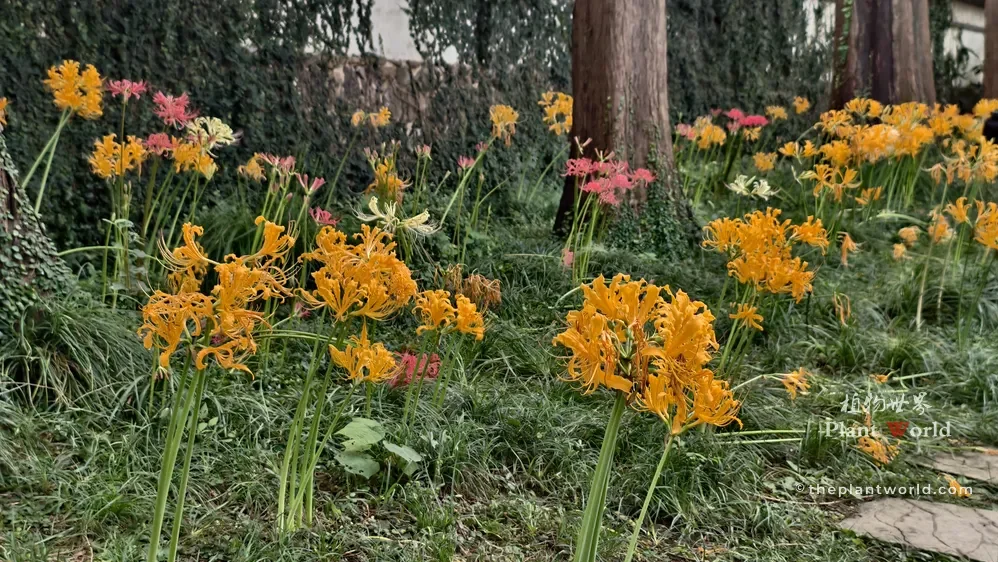
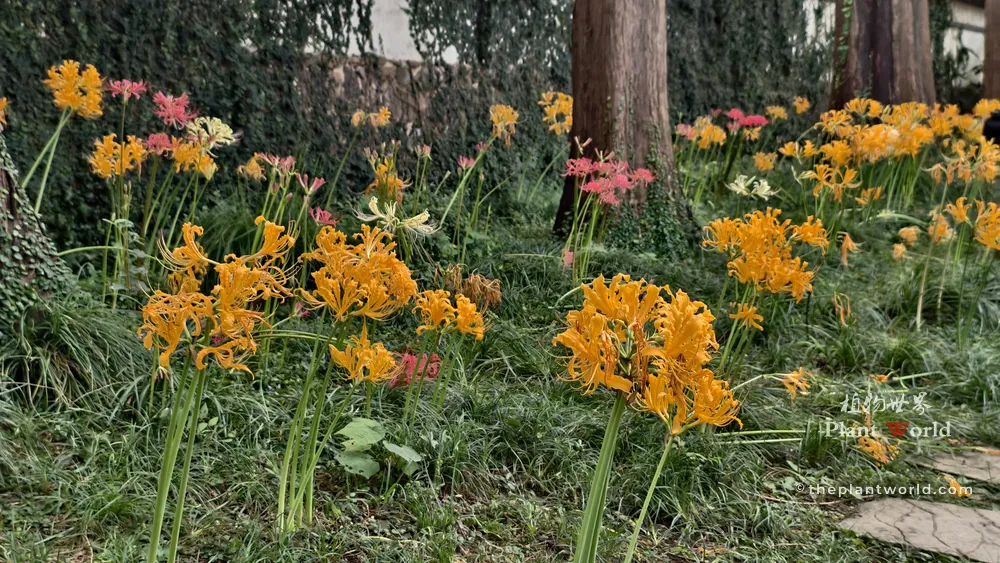
Yellow / Golden Spider Lily (Lycoris aurea — “Sudden Smile”)
The golden spider lily is called hūdìxiào (忽地笑) in Chinese — literally “suddenly smiles” — because its stalk bursts from the ground without warning, as if the plant has laughed out of nowhere.
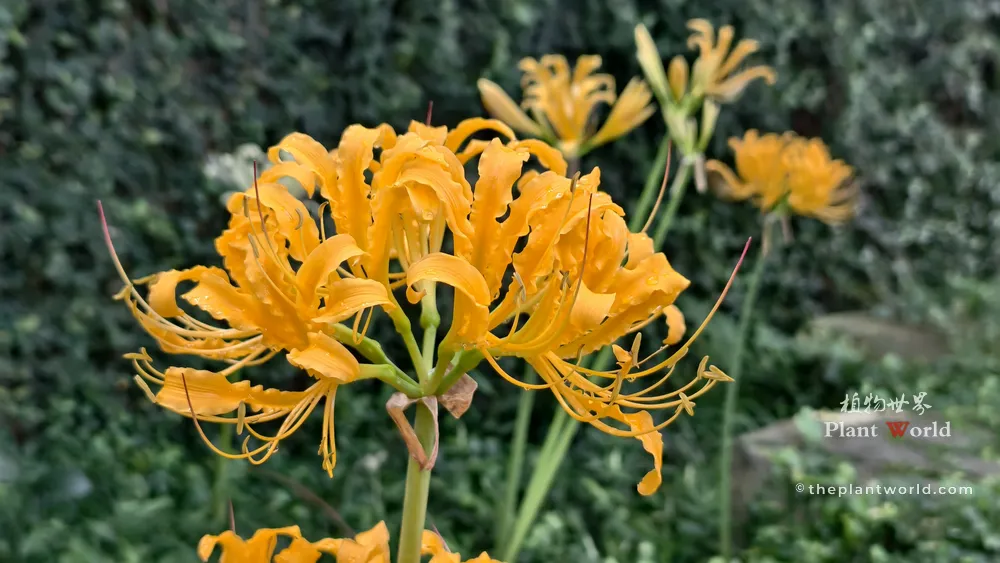
- Meaning: Surprise, joy, happy laughter, unexpected reunion. The unannounced bloom represents a delightful surprise.
- Western symbolism: Wealth, gratitude, cheerfulness, friendship, courage, wisdom.
- Best for: Celebrating a reunion, conveying unexpected happiness.
White Spider Lily (Lycoris albiflora / Lycoris longituba)
Large, pure white flowers, some with a faint pink stripe. In Japan, the white higanbana is called mandarava (曼陀罗华) — the celestial counterpart to the red manjushage, both descended from Buddhist scripture.
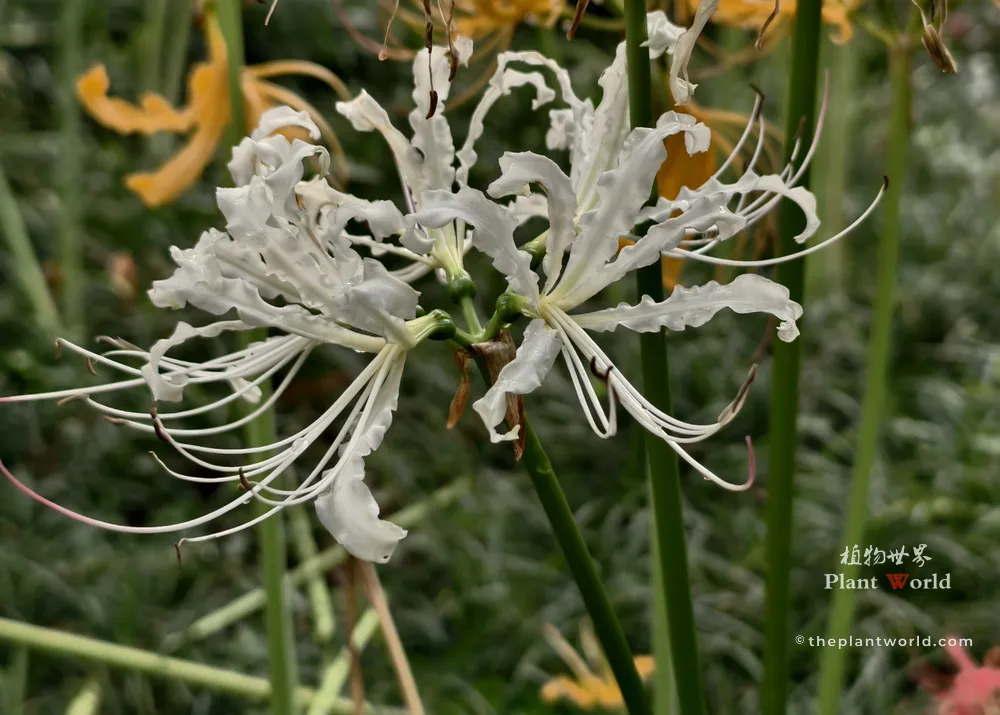
- Meaning: Purity, freshness, new beginnings, simple living, enduring remembrance.
- Cultural context: White in East Asian culture is tied to mourning and remembrance, but also to cleanliness and renewal. The white spider lily has an ethereal, almost otherworldly elegance — the most “celestial” of the genus.
- Western symbolism: Purity, innocence, peace, a fresh start.
- Best for: Sympathy and remembrance, or honoring a pure and gentle spirit.
Pink & Blue Spider Lily (Lycoris sprengeri — “Changing Brocade”)
The most romantic of the spider lilies. Its petals are a soft, hazy pink with pale blue or lavender tips — a watercolor effect that shifts in the light. In the West it is often sold as “Electric Blue Spider Lily.”
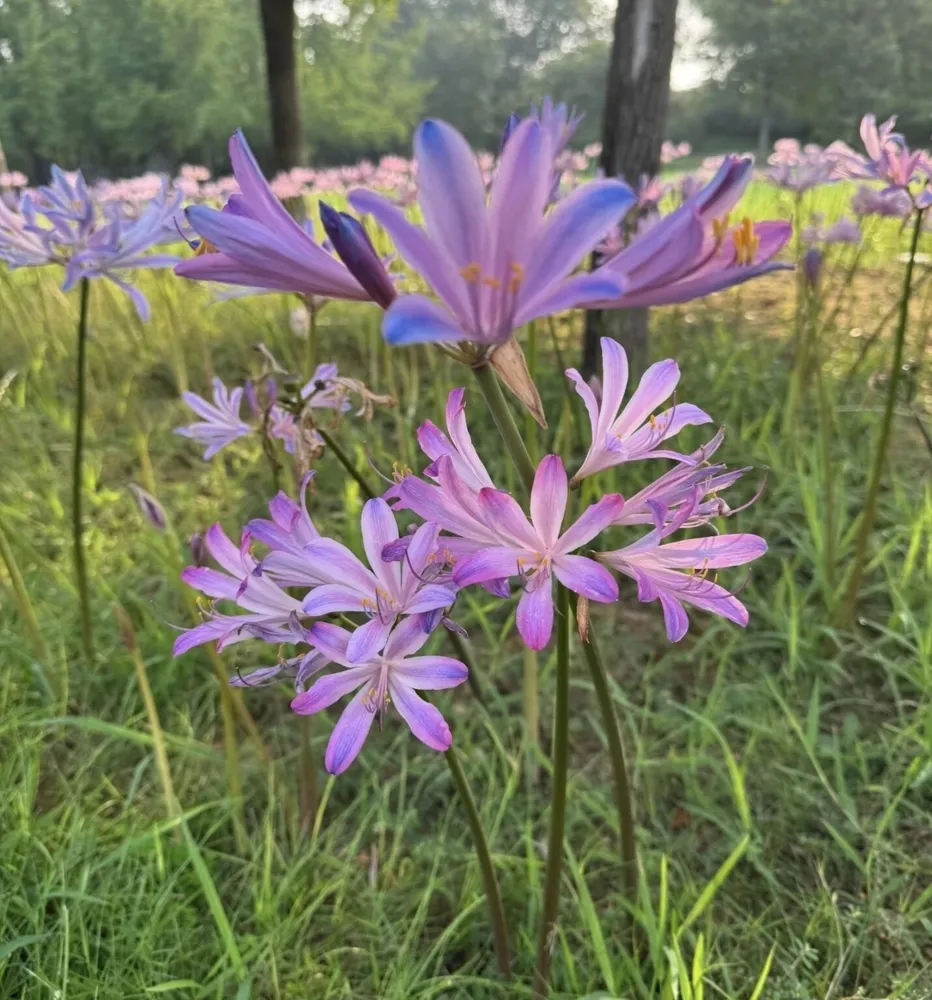
- Meaning: Longing through separation, reunion after long absence, cherishing the present. The old Chinese name huànjǐn (换锦) means “changing brocade” — casting off old colors and putting on new splendor, a metaphor for growing gentle and bright through the years, waiting for each unexpected meeting.
- Western symbolism: Tender love, emotional healing, romance, compassion.
- Best for: Expressing gentle longing, celebrating a reunion, or gifting to someone healing from heartbreak.
Purple Spider Lily
Purple forms are usually variants of Lycoris longituba or rare hybrids, ranging from pale lavender to deep violet.
- Meaning: Spiritual depth, nobility, transformation, mystery.
- Cultural context: Purple has long signified royalty and transcendence in both East and West; the purple spider lily carries an aura of the mystical and refined.
- Best for: Honoring spiritual pursuits, creating an atmosphere of mystery.
Orange Spider Lily
Warm, bright blooms between yellow and red.
- Meaning: Passion, devotion, reunion, vitality, success.
- Cultural context: Orange blends the heat of red with the joy of yellow — a color of positive energy and eager anticipation.
- Best for: Celebrating success, expressing enthusiasm and warmth.
Blue Spider Lily: A Flower That Doesn’t Exist
It is worth stating plainly: no naturally blue spider lily exists in nature. Most “blue spider lily” photos online are digitally altered.
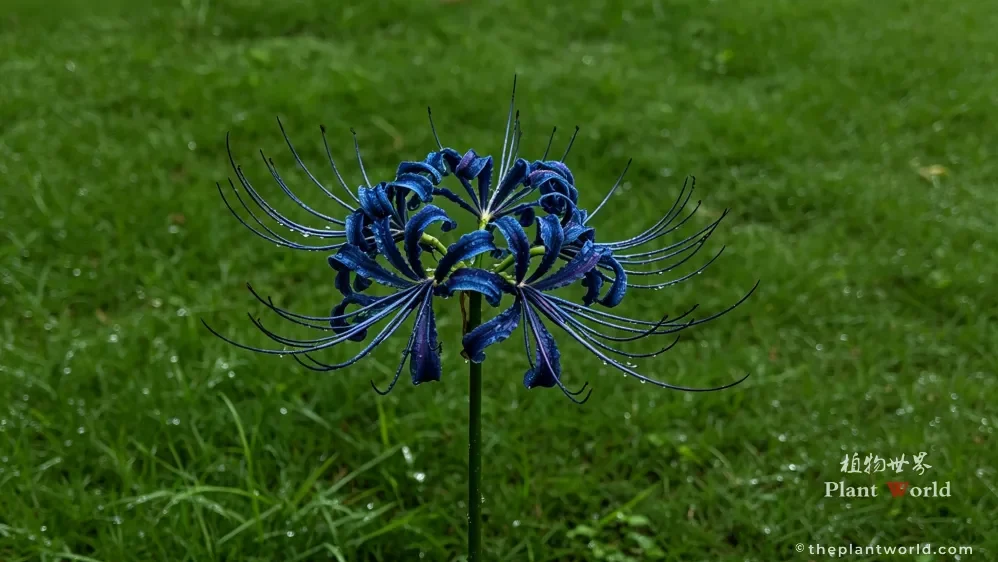
- The closest real thing is Lycoris sprengeri (the pink-and-blue “Changing Brocade” above), but it is not solid blue.
- The fictional “blue higanbana” in Demon Slayer is the rare flower the villain Muzan spends his life seeking — the medicine made from it turned him into a demon and holds the key to overcoming his weakness to sunlight. The show establishes that it blooms only briefly during the day, making it nearly impossible for demons to find.
- Symbolically, blue represents mystery, unattainable dreams, and transformation.
If you see “blue spider lily seeds” for sale online, they are almost certainly a scam.
Final Thoughts: One Flower, a Thousand Meanings
The spider lily’s meaning is so rich precisely because the flower itself is full of contradictions: beautiful yet toxic, blooming without leaves, growing in damp shade yet burning with color.
In Japan, it is the flower that guides souls to the other shore. In China, it was once a golden lantern and a healing herb. In Korea, it is the flower of a love that cannot be. In the West, it has traveled from garden bulb to anime icon. And across its colors, it carries the full emotional spectrum — from grief to joy, from death to new beginnings.
Perhaps that is the spider lily’s greatest charm: it does not define itself. It lets every culture, every person, project their own feelings onto its petals. The next time you see one, which meaning will you choose?
It remains one of the most layered and culturally resonant flowers in the entire tradition of Chinese plant culture, and a striking addition to any collection of Chinese garden plants.
References
- Plants of the World Online (POWO). Lycoris radiata (L’Hér.) Herb. Royal Botanic Gardens, Kew.
- Heinrich, M., et al. (2016). The case of galantamine: repurposing and late blooming of a cholinergic drug. PubMed Central (PMC5137937).
- Su, S. (Song Dynasty, 1061). Bencao Tujing (Illustrated Materia Medica); & Duan, C. (Tang Dynasty). Youyang Zazu (Miscellaneous Morsels from Youyang). Historical Chinese Botanical Texts.
More from The Plant World:
- Chinese Wingnut: The Romantic “Ingot Tree” and Its Cultural Charm
- Plum Blossom Meaning: Symbolism & Cultural Significance
- The Hidden Meanings Behind Red Plum Blossoms
- Chinese Wisteria: History, Symbolism, and Identification
- Peach Blossoms in China: History, Culture, and Symbolism
- Chinese Crepe Myrtle: Guide to Origins & Symbolism
- Ginkgo Leaf Meaning: 5 Secrets of This Ancient Fossil
- Chinese Loquat Tree: Guide to Benefits & History
- Rose of Sharon Tree: Guide to Meaning & Care
- Hosta Plant Benefits: 5 Surprising Uses & Planting Guide
- Strawberry Begonia Care: How to Grow Saxifraga Stolonifera
Discover more from The Plant World
Subscribe to get the latest posts sent to your email.