
Introduction
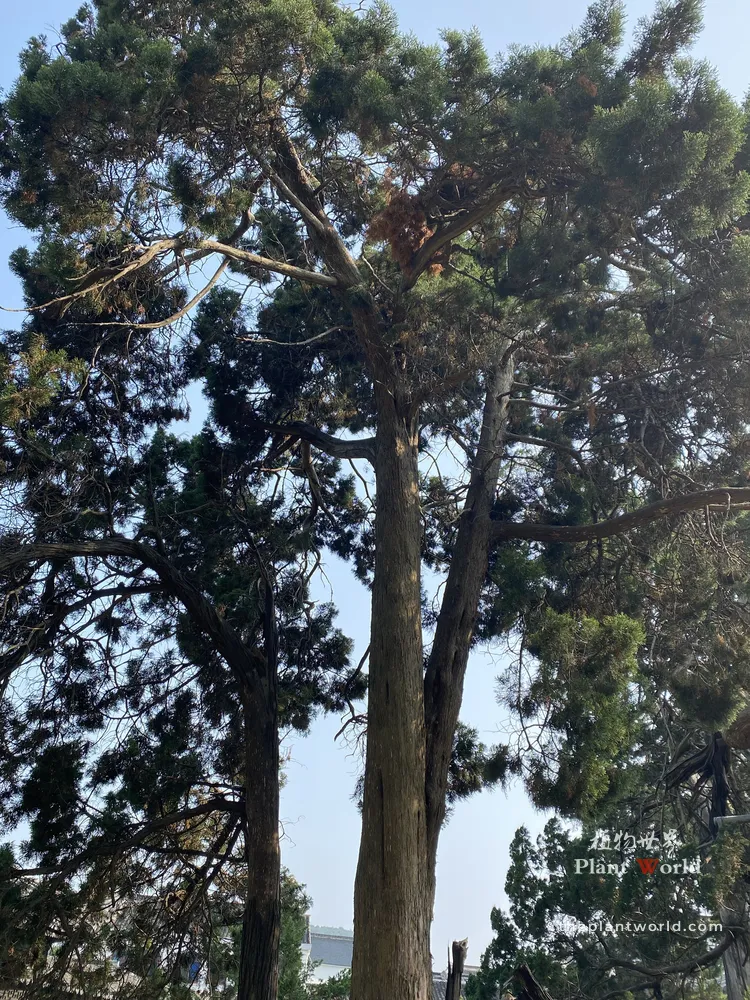
When visiting the ancient Situ Temple in Guangfu, Suzhou, you will encounter four extraordinary living monuments with a history spanning more than 1,900 years—among the oldest and most artistically profound trees in the world. Each of them boasts a wildly unique, twisted silhouette that never fails to amaze visitors and garden historians alike.
Situ Temple is said to be the historical retreat of Deng Yu, the famous Minister of Works of the Eastern Han Dynasty. The four ancient Chinese Juniper trees standing in the courtyard were officially named by Emperor Qianlong during his famous southern tour. Admiring their striking, resilient forms, the Emperor titled them Qing, Qi, Gu, Guai (Clear, Wondrous, Ancient, and Strange):
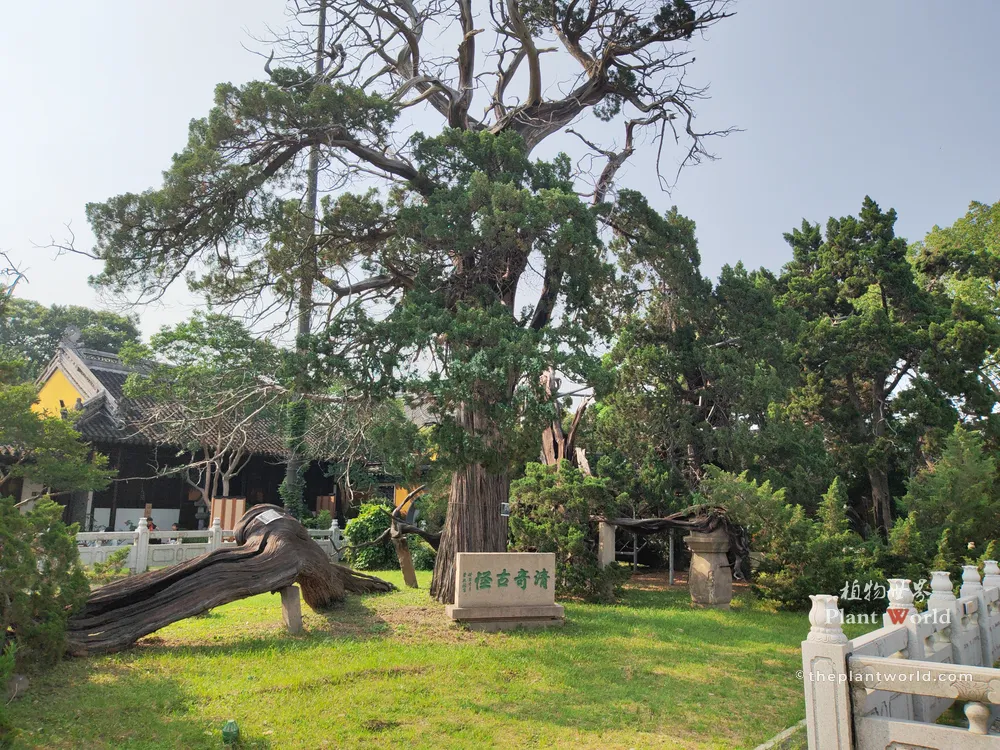
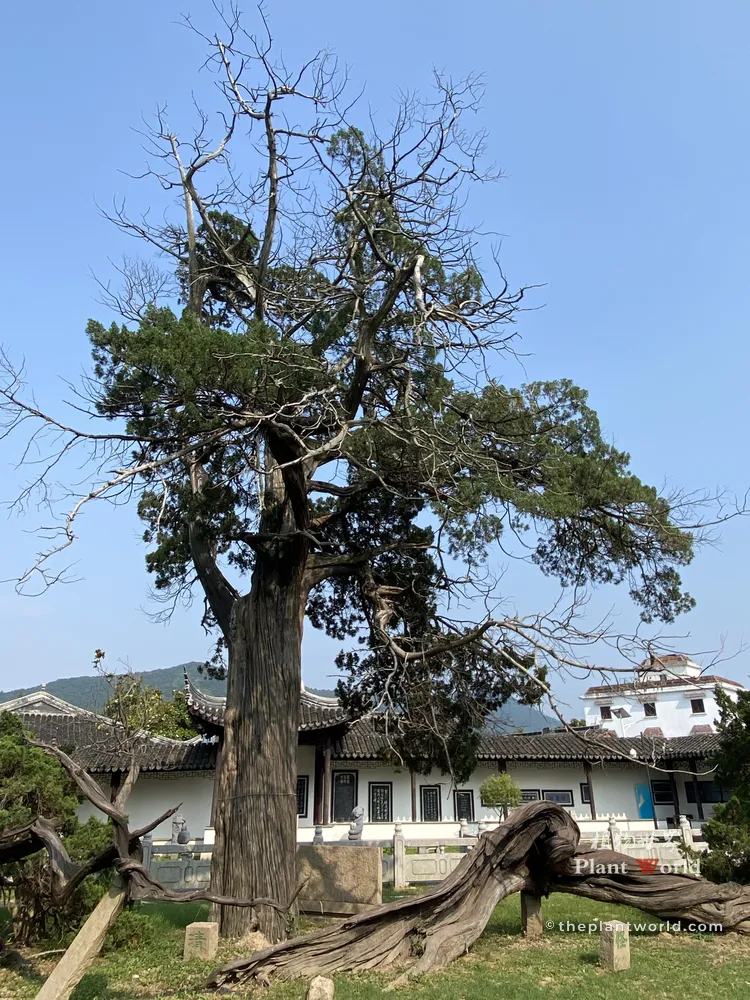
- Qing (Clear): Tall, upright, and exceptionally graceful, rising straight toward the sky, crowned with a lush emerald canopy.
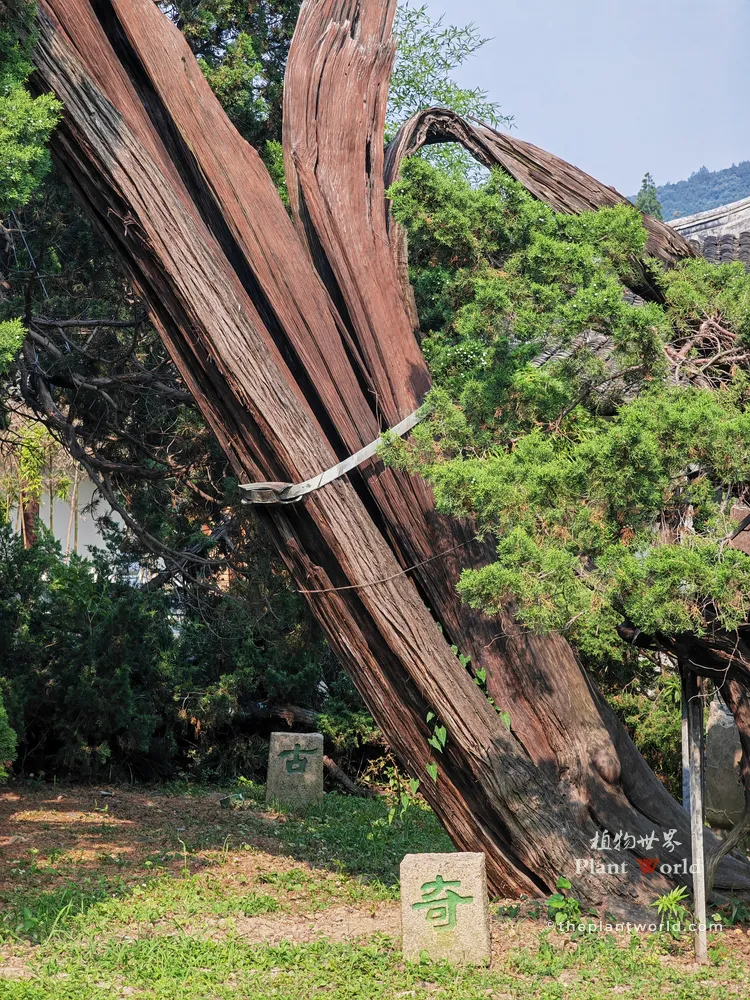
- Qi (Wondrous): Struck by a massive bolt of lightning long ago, its trunk was split wide open. Yet, though hollowed and severely cracked, fresh green shoots continue to burst forth from the aged wood.
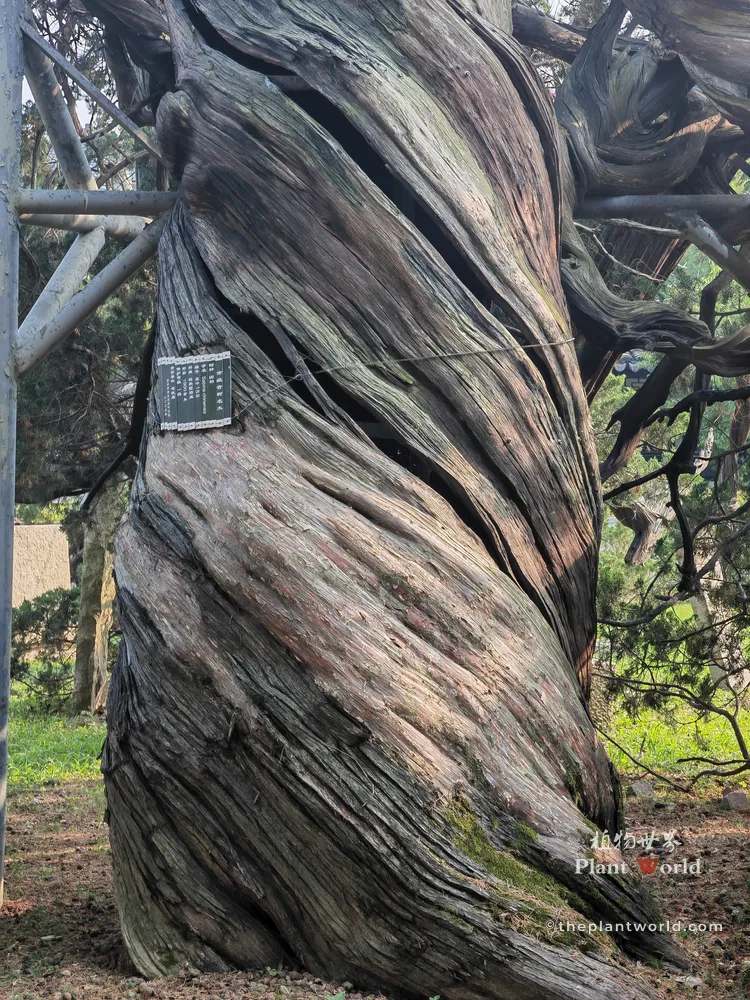
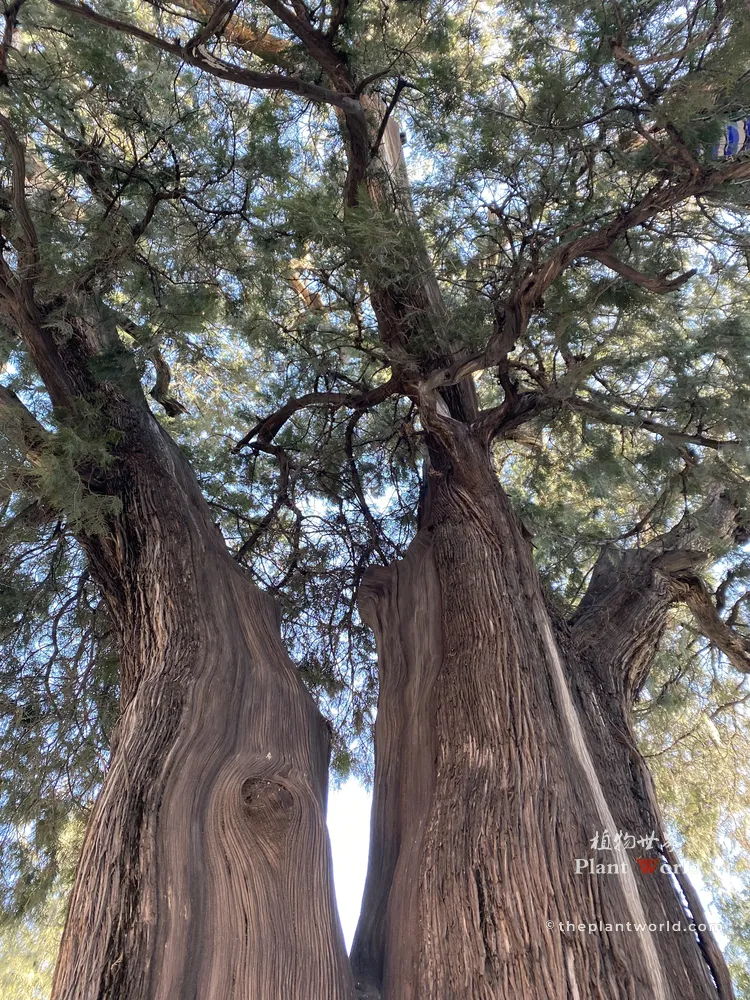
- Gu (Ancient): Featuring deeply twisted, spiraling bark and dense, thriving foliage, it exudes a rugged, timeless strength.
- Guai (Strange): Lying low upon the ground in three massive, sweeping curves, it shapes the striking silhouette of a winding, mythical dragon.
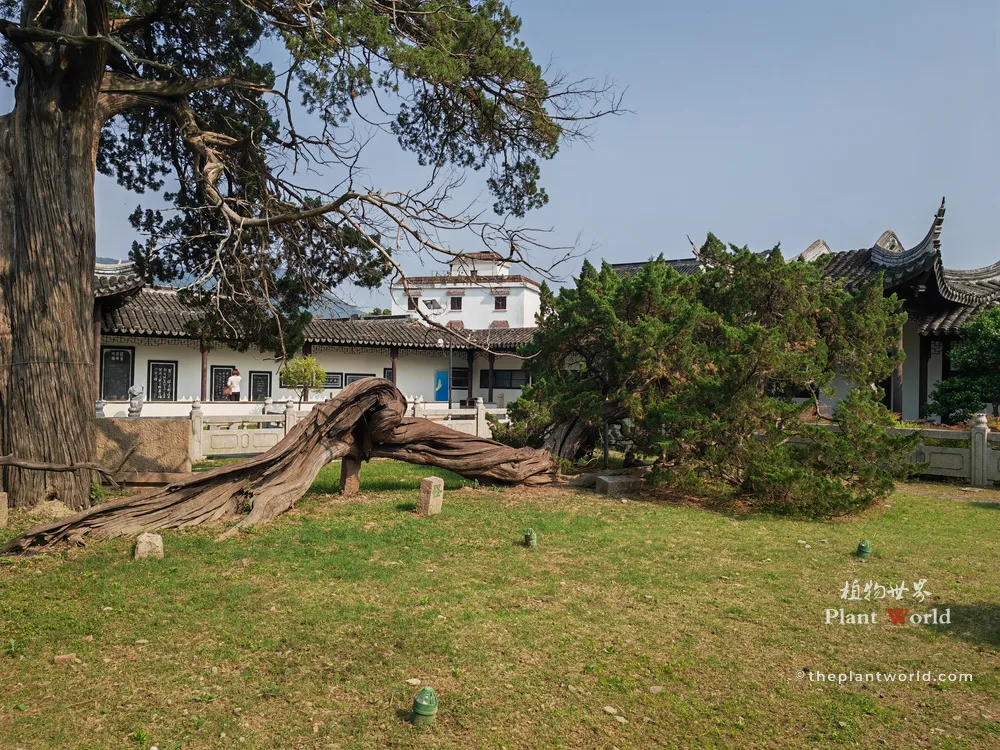
Local legend holds that these trees were planted personally by Deng Yu (AD 2–58) himself after he chose to retire to this quiet temple to spend his remaining years. These rare ancient junipers are praised in a classical line: “Their primeval charm cannot be fully captured in painting; they survive wind, fire, thunder, and storm through endless ages.”
Plant Profile: What Is Juniperus chinensis?
- Scientific Name: Juniperus chinensis L.
- Common Names: Chinese Juniper, Chinese Savin, Yuanbai, Guibai
- Family: Cupressaceae (Cypress Family)
Native to China and documented in agricultural texts since pre-Qin times, Juniperus chinensis is a highly adaptable, long-lived evergreen conifer. It is famous in global horticulture for its extremely variable growth forms—ranging from tall upright trees to low-spreading prostrate shrubs and heavily contorted specimens. This distinct biological trait perfectly explains the wildly different silhouettes of the four Situ Temple ancients. The timber is dense, exceptionally durable, rot-resistant, and carries a pleasant, clean aromatic scent.
📌 Critical Species Distinction for Western Gardeners
Many enthusiasts confuse different evergreen “cypress” trees originating from East Asia. To maintain precision in your garden planning, do not mix them up:
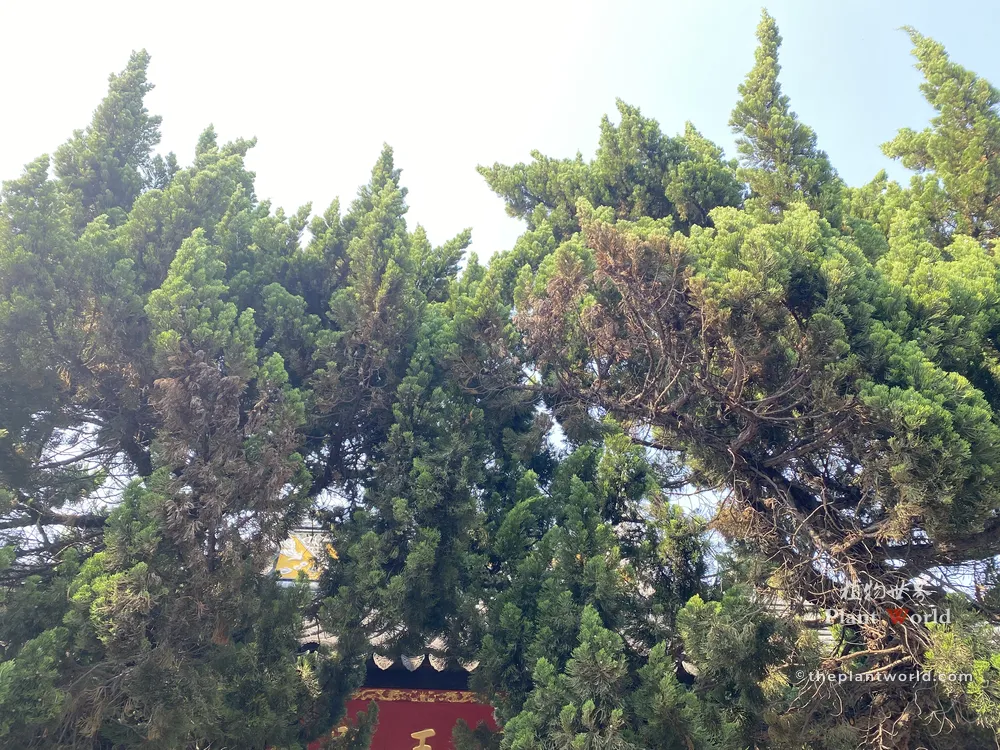
- Juniperus chinensis (Chinese Juniper): The species of the Situ Temple ancients. Features both needle-like juvenile and scale-like adult leaves; highly adaptable, widely used for formal landscapes and artistic bonsai.
- Cupressus funebris (Chinese Weeping Cypress): Features distinctly drooping, weeping branches, commonly planted around historical tomb sites, belonging to a completely different genus.
- Platycladus orientalis (Oriental Arborvitae): Features flat, vertical fan-shaped sprays of scale-like foliage, often colloquially called Chinese arborvitae.
- Cupressus sempervirens (Italian Cypress): The tall, narrow, columnar European cypress commonly seen in Mediterranean designs, completely unrelated to East Asian garden junipers.
Cultivation & Care Guide for the Chinese Juniper
Climate & Hardiness
- USDA Hardiness Zones: 4–9. It stands among the most cold-tolerant and weather-resilient Asian evergreens in cultivation, easily enduring harsh northern winters, heavy snow loads, and deep frost. Concurrently, it copes beautifully with intense summer heat and high humidity, thriving across diverse temperate and subtropical regions worldwide.
Light & Placement
- Requirements: Prefers full, unobstructed direct sunlight (at least 6 hours daily) to develop its densest foliage, richest coloration, and optimal structural health. It can tolerate light partial shade, though its growth may slow.
- Garden Architecture: Remarkably versatile. It works beautifully as a structural specimen tree, formal privacy hedge, windbreak, or focal point in rock gardens. Its rugged, sculptural bark and evergreen presence pair perfectly with mid-tier structural evergreens like a buddhist pine care layout, or as a dark, permanent backdrop to highlight the fiery autumn capsules of a golden rain tree care seasonal design.
Soil & Water
- It adapts to almost all well-draining soil structures, showcasing excellent tolerance for poor, sandy, gravelly, and even slightly alkaline or limestone ground.
- Water Management: Young saplings require regular, deep watering during dry spells to establish their root networks. Once mature, Chinese Junipers gain remarkable drought resistance. You must absolutely avoid permanently waterlogged low ground, as stagnant water will quickly trigger fatal root rot.
Pruning & Bonsai Potential
- Carry out light pruning in late winter to remove dead, broken, or crossing branches. Because it possesses incredible tolerance for structural shearing and artistic shaping, Juniperus chinensis has been prized for over a thousand years as the premier choice for master-level Penjing (Chinese bonsai) cultivation, easily trained into dramatic windswept or cascading silhouettes.
Chinese Cultural Heritage & Symbolism
In traditional Chinese cultural thought, the Chinese Juniper serves as a living symbol of perseverance, moral resilience, endurance, and quiet dignity.
Its biological capability to survive severe ice storms, lightning strikes, structural injury, and prolonged dry periods while remaining vibrantly evergreen is perfectly embodied by the four Situ Temple ancients. Even after intense lightning split the main trunk of the tree named Qi, it continued to sprout fresh, emerald leaves from its charred heart—serving as a powerful, living symbol of life persisting through ultimate adversity.
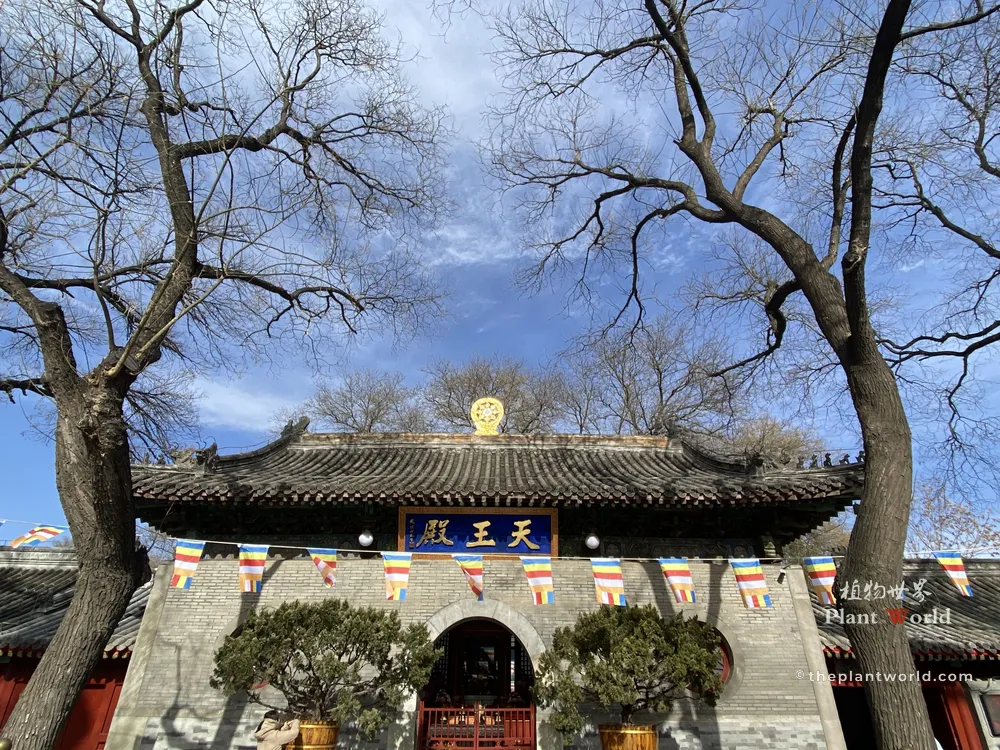
As one of the classic traditional Chinese Garden Plants, it has been admired by literati for millennia for retaining its emerald green foliage even in frigid winters. It serves as a metaphor for noble gentlemen who preserve their moral integrity through tribulations. Widely cultivated in ancient temples, academies and literati courtyards, it evokes a solemn and timeless atmosphere.
Final Conclusion
The Chinese Juniper (Juniperus chinensis) is far more than an ordinary landscape shrub or evergreen screen. With its extreme winter hardiness, unmatched architectural variability, exceptional suitability for both expansive estates and miniature bonsai pots, and rich historical lineage—best represented by the 1,900-year-old Qing, Qi, Gu, Guai specimens—it stands as an elite choice for modern gardeners seeking an evergreen with deep narrative roots, structural grandeur, and absolute low-maintenance vigor.
References
- Flora of China (English Edition): Juniperus chinensis Species Profile & Cupressaceae Taxonomy — Maintained collaboratively by the Missouri Botanical Garden and Harvard University Herbaria.
- Local Heritage & Forestry Archives of Suzhou: Historical Records of the Han Dynasty Junipers at Situ Temple, Guangfu Town.
- Royal Horticultural Society (RHS): Juniperus chinensis Cultivation, Varietal Selection, and Hardiness Data — London, UK.
- Book of the Later Han (Hou Hanshu): Biographical Accounts of Deng Yu and Early Eastern Han Imperial History.
- USDA Natural Resources Conservation Service: Plant Guide and Hardiness Zone Mapping for Juniperus Varieties.
Disclaimer
The historical, cultural, and traditional craft records documented here are shared strictly for educational and botanical reference purposes. This article does not serve as medical or herbal advice. Do not ingest wild plant materials or apply homemade extracts without professional guidance.
More from The Plant World:
- Chinese Wingnut: The Romantic “Ingot Tree” and Its Cultural Charm
- Plum Blossom Meaning: Symbolism & Cultural Significance
- The Hidden Meanings Behind Red Plum Blossoms
- Chinese Wisteria: History, Symbolism, and Identification
- Peach Blossoms in China: History, Culture, and Symbolism
- Crape Myrtle: Origins, Symbolism & Unique Botanical Traits
- Ginkgo Leaf Meaning: 5 Secrets of This Ancient Fossil
- Chinese Loquat Tree: Guide to Benefits & History
- Rose of Sharon Tree: Guide to Meaning & Care
- Hosta Plant Benefits: 5 Surprising Uses & Planting Guide
- Strawberry Begonia Care: How to Grow Saxifraga Stolonifera
- Chinese Tulip Tree Care: Liriodendron chinense & Folklore
Discover more from The Plant World
Subscribe to get the latest posts sent to your email.